Wayehutta’s Day Permit
Wayehutta’s day permit is easy to confuse with vehicle registration or a general pass for riding in North Carolina. It is neither. This guide explains what the permit is for, how to check where and how to get one, what to prepare before you arrive, and what to verify when trail conditions or local procedures change.
What Wayehutta’s day permit covers
Wayehutta is an off-highway vehicle riding area in western North Carolina’s Nantahala National Forest. A day permit is an access requirement for riding there, not a state-issued registration sticker or a title for your machine. Think of it as permission to use the designated riding area under the forest’s current rules.
That distinction matters because an ATV can be properly owned and still not be ready to ride at Wayehutta. A title or bill of sale helps establish ownership; it does not replace a forest permit. Likewise, having a permit does not make a machine street legal or allow you to ride outside authorized trails.
Before planning your trip, check the current requirements for Wayehutta directly with the relevant Forest Service office or official forest information. Permit procedures, sales locations, operating dates, and trail access can change. Start with North Carolina Forest OHV Permits for the broader permit framework, and confirm the details that specifically apply to Wayehutta.
A day permit is generally the option to investigate when you are making a single outing or want to try the area before committing to a longer-term permit. It is not safe to assume that a pass bought for another riding area will work here. Check the permit’s stated coverage and validity before you pay or leave home.
A permit is not vehicle registration
North Carolina’s rules can be confusing because riders may hear that ATVs are not registered in the same way as ordinary road vehicles. That does not mean public riding areas are permit-free. Forest access is a separate issue from state title and registration rules.
If you are sorting out state paperwork as well as forest access, Why North Carolina Has No ATV Registration explains the registration question, while Do You Need a Title for an ATV in North Carolina? covers ownership documentation. Neither document, by itself, grants permission to use a forest trail.
A permit is not a guarantee that trails are open
A permit does not override a closure. A trail may be closed because of weather, maintenance, storm damage, seasonal operations, or another forest-management decision. Trail access can also differ by route, machine type, or posted restriction.
Check conditions close to your departure, not only when you first make plans. North Carolina Trail Conditions Before You Ride and Checking a Forest Alert Before You Drive are useful starting points. If a notice or gate sign conflicts with an older map, a previous trip report, or something you read in a forum, follow the current official notice.
How to find and obtain the right permit
The practical question is often not just whether you need a permit, but where to get one and how the payment or validation works. Do not assume Wayehutta uses the same process as another forest riding area. Depending on current procedures, permits may be available through an official office, an authorized seller, or a self-service system near the riding area. Confirm the current method before you set out.
Where North Carolina Forest Permits Are Sold gives a general overview of permit sources. For Wayehutta, verify the specific location and method with the managing Forest Service office. Ask whether you can buy ahead, whether a permit is available at the access point, what payment methods are accepted, and what you should do if the usual sales location is closed.
If you are considering an annual or seasonal option instead of a day permit, check the coverage dates and the areas it applies to. A pass that works at one forest site may not cover another. The Forest Season Permit in North Carolina explains why it is worth checking the scope and timing rather than treating every permit as interchangeable.
Before leaving home
A short call or check of official information can save you a long drive to a closed gate or a permit location that is not operating. Confirm these points:
- The riding area is open. Check for a closure, temporary restriction, or change in access.
- The trails suit your machine. Verify any limits on vehicle type, width, or other characteristics.
- The permit is available through your planned method. Confirm whether you need to buy in advance or can obtain it at the site.
- You know how to display or carry it. Follow the current instructions rather than guessing.
- You have the right payment method. A remote self-service point may not work like a staffed office.
- You understand the validity period. Confirm whether the permit covers a calendar day, a particular date, or another stated period.
- You have a backup plan. If sales are unavailable or a closure changes your route, know what you will do before towing all the way there.
Use the official contact or information channel for the final word. A social post, old review, or saved screenshot can be useful as a clue, but it may reflect a previous season or a different permit system.
At a self-service permit point
If the current instructions direct you to a self-service station, read all posted directions before filling anything out. Take the time to complete each required field legibly and follow directions about payment, the permit portion you keep, and any portion that must be displayed. If the process is unclear, do not improvise or assume another rider’s setup is correct.
A phone photo of a sign or receipt can help you keep a record, but it is not a substitute for any permit display or paperwork the posted instructions require. Keep the permit in the place specified, and make sure it stays attached or available throughout the ride.
What to prepare for the riding day
A smooth permit process is only one part of being ready. Before loading, check that each machine and rider meets the area’s requirements. Bring any required riding credentials, and keep them accessible rather than buried under gear in a truck or trailer.
For a visitor, it is especially important not to assume a home-state registration, permit, or safety credential automatically satisfies North Carolina requirements. Why North Carolina Has Nothing to Reciprocate explains why riders should check the state’s requirements directly instead of relying on a reciprocity assumption. If a safety certificate applies to you, review North Carolina ATV Safety Certificate Requirements and carry the required proof as instructed.
Check each machine separately
If your group is taking more than one ATV or UTV, confirm whether the permit must be obtained for each machine and how each one must display it. Do not assume one permit covers the whole truckload or riding group. Every Machine Needs Its Own Trailhead Box Permit explains why machine-by-machine permit handling matters at forest riding areas; still, verify the exact current Wayehutta procedure.
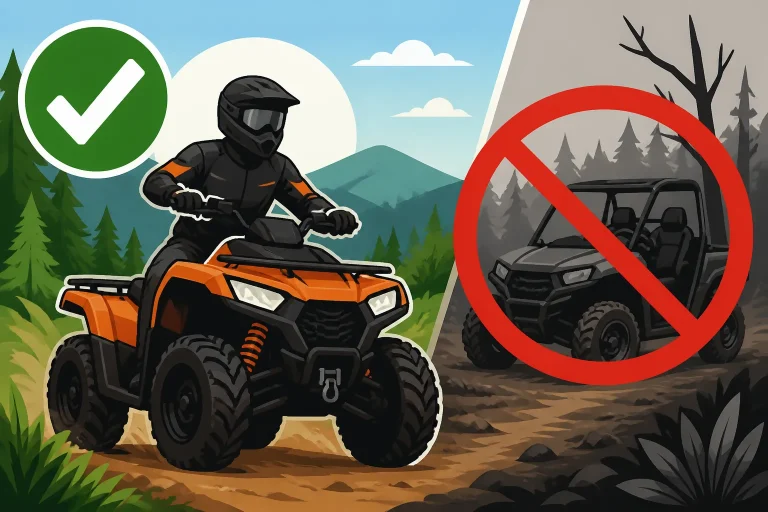
Also check that each machine is allowed on the trails you intend to use. A vehicle’s size, equipment, noise, and type can matter. Do not treat a side-by-side and a small ATV as automatically interchangeable under every trail rule.
Bring a simple kit for the day:
- The permit and any receipt or supporting paperwork
- A map or route information for the authorized trails
- A charged phone, with the understanding that coverage may be unreliable
- Drinking water and basic first-aid supplies
- Appropriate helmet and protective riding gear
- Tools and recovery items suited to your machine and route
- A way to keep documents dry and readable
A waterproof document pouch can keep your permit, notes, and emergency details from getting soaked or covered in mud. If you need one before a trip, Amazon is one place riders may look for basic riding accessories; compare the pouch’s closure and attachment method to how you plan to carry it. Amazon may also have compact first-aid kits, but check that the contents suit your group rather than choosing by package size alone. For maps or other gear ordered through Amazon, make sure the item is actually appropriate for off-road use and does not replace the current official trail map.
Plan for limited services
Do not count on finding every supply you need near the access point. Plan fuel, food, water, and machine maintenance before you leave. Tell someone where you intend to ride and when you expect to return, especially if you are unfamiliar with the area.
Trail conditions can change quickly after heavy rain, and a route that felt straightforward in dry weather may become difficult. Avoid pushing a machine through a section that exceeds your ability or equipment. If the route is closed or marked as unsuitable, turn around rather than trying to find a way around the restriction.
Common permit mistakes and how to avoid them
Most permit problems are preventable. They tend to happen when riders rely on a remembered process, confuse one kind of authorization for another, or wait until they reach the forest to check details.
Assuming another area’s pass applies
A permit associated with one riding area may not be valid at Wayehutta. Before buying a permit elsewhere, read its coverage carefully and ask whether it applies to your planned destination. If the permit wording is unclear, contact the issuing office instead of relying on the seller’s general description.
The same caution applies to a season permit. A season option can be convenient, but its validity may be limited by location, date, or other terms. Do not assume it covers every National Forest trail system in the state.
Treating a state document as a forest permit
A title, affidavit, bill of sale, or registration from another state does not take the place of a required forest permit. Those documents answer different questions. If you are riding as a nonresident, check both your machine’s paperwork and the local access rules. Does North Carolina Honor Out-of-State Registration? can help clarify the state-level issue, but the Wayehutta permit requirement remains a separate matter.
Arriving without checking closures
A trip can be disrupted by a temporary closure even when the trail system is normally open during the season you had in mind. Check official notices shortly before departure and again if weather changes. Do not rely on an old map, a previous visit, or an online comment that does not identify when it was posted.
If you arrive and find a gate closed or a trail marked off limits, respect the closure. A permit does not give permission to ride around a gate, use an unauthorized route, or continue past a posted restriction. For more on the broader consequences, see [North Carolina Fines for Riding a Closed Trail].
Forgetting to display or retain the permit as directed
Buying the permit is only part of compliance. Follow the current directions for displaying or carrying it, and keep any required receipt or permit portion with you. Before unloading, make sure the permit has not fallen off, become unreadable, or been placed where it cannot be checked.
For a group, assign one person to confirm that every machine has the required permit and that each rider knows where it is. This quick check is more reliable than assuming the person who arranged the trip handled every machine’s paperwork.
A simple plan for a Wayehutta day ride
Use this sequence when you are organizing a single visit:
- Confirm access. Check current official information for Wayehutta’s opening status, trail restrictions, and any alerts.
- Confirm the permit process. Find out where the day permit is sold, whether it can be purchased in advance, and what to do if the sales point is unattended.
- Check the coverage. Make sure the permit applies to Wayehutta, the day you plan to ride, and each machine in your group as required.
- Review rider and machine rules. Check the applicable helmet, safety-certificate, vehicle, passenger, and equipment requirements.
- Prepare documents and gear. Keep the permit, required proof, map, water, and emergency supplies accessible.
- Recheck conditions before departure. Look for weather-related changes, closures, or updates that could affect your route.
- Follow signs at the site. Use only authorized access points and trails, and follow the posted instructions for parking, permit display, and riding.
- Keep the ride within the rules. Stay on open routes, respect other users, and turn back if conditions become unsafe.
This approach is useful whether you are riding alone, taking children, or coordinating a small group. If you are bringing younger riders, do not rely only on the machine’s age label or a friend’s recollection of the rules. Review North Carolina Rules for Riders Under 16 and confirm which requirements apply to each rider.
A day permit should be one of the easiest parts of the trip once you have confirmed the current process. The key is to treat it as a site-specific access requirement, not as a substitute for state paperwork or a pass that automatically applies everywhere. Verify the current Wayehutta details before driving, make sure every machine and rider is prepared, and follow the signs and closures you encounter on arrival.
Disclaimer
This article is for general informational purposes only and does not constitute professional advice. Laws, prices and regulations vary by location and change over time. Consult a qualified professional for guidance on your specific situation.