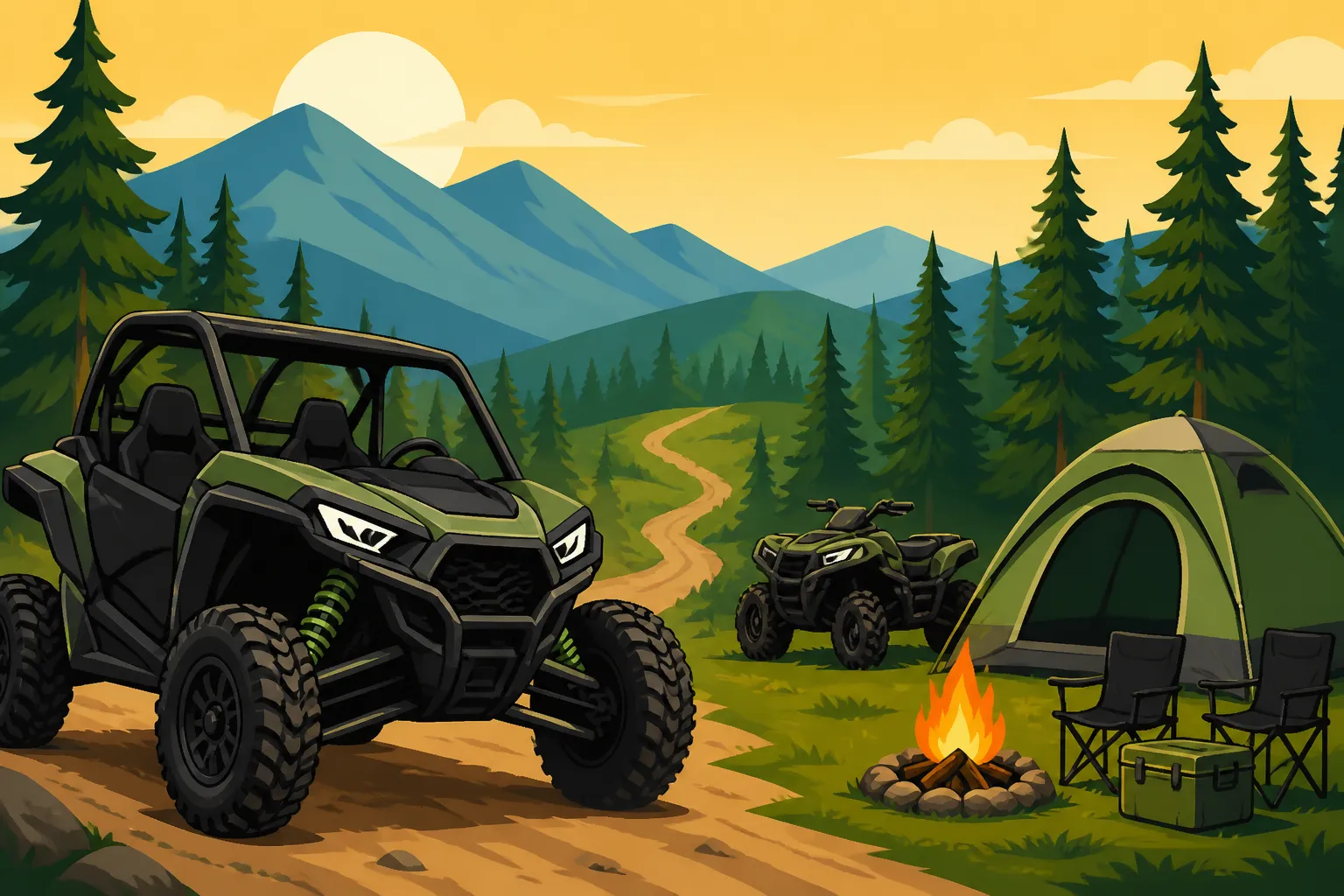
Camping Near a North Carolina Trailhead
Camping near a North Carolina ATV trailhead takes more planning than finding a campsite with a nice view. You also need to confirm where your machine can go, whether the campground allows trailers and off-road vehicles, and how you’ll handle permits, fuel, weather, and trail closures. This guide explains how to match a campsite to your ride and avoid common last-minute surprises.
Start with the trail system, not the campsite
Match your campground to your riding area
In North Carolina, the best campsite depends on which trail system you plan to ride and how you’ll reach it. A site that looks close on a general road map may still leave you with a long drive to a legal trail entrance, a difficult trailer approach, or no practical way to stage your machine. Start by identifying the riding area and its official access points, then look for camping options around those locations.
The Uwharrie National Forest is a popular destination for riders in the central part of the state. Around Badin Lake and the Eldorado area, you’ll find a mix of forest roads, recreation sites, and private campgrounds in the broader region. The name of a campground alone doesn’t tell you whether it offers direct trail access or allows off-highway vehicles on the property. Confirm both details before you book.
For a mountain ride, Brown Mountain OHV Trail System and Wayehutta OHV are different trip-planning problems. Brown Mountain sits in the Grandfather Ranger District, while Wayehutta is in Jackson County in western North Carolina. The drive between a campground and a trailhead can involve winding mountain roads, changing weather, and limited services. Look beyond straight-line distance and plan around the actual route. [Brown Mountain OHV Trail System] and [Wayehutta OHV in Western North Carolina] can help you explore those destinations further.
Check the trailhead and the campground separately
A campground may be near a forest without being near an OHV trailhead. Likewise, a forest road that reaches a trail area is not automatically open to ATVs or side-by-sides. Check the official trail information and campground rules as two separate questions: where you are allowed to ride, and where you are allowed to camp and stage your vehicle.
If you’re using onX Offroad to understand the surrounding roads and terrain, treat it as a planning aid rather than the final word on access. Confirm road status, trail access, closures, and camping restrictions with the relevant land manager or campground before you set out. This extra check matters especially when a route appears to connect a campsite to a trail but crosses a road or parcel with different access rules.
Make a short list before choosing a site: the trailhead you intend to use, the drive time from the campground, the route your truck and trailer will take, and whether the site permits the kind of machine you’re bringing. If any one of those answers is unclear, call the campground or the managing office. A quick confirmation can save you from arriving with a loaded trailer only to learn that the closest entrance isn’t usable for your trip.
Choose the right kind of camping for your ride
Developed campgrounds, private sites, and dispersed camping
Developed campgrounds can be a comfortable choice if you want designated sites, restrooms, or a more predictable setup. Facilities and vehicle rules vary, though, and a campsite that accommodates a regular car may not comfortably fit a truck, trailer, and off-road machine. Ask about the site’s dimensions, parking arrangement, and whether the trailer can remain attached or must be parked separately.
Private campgrounds may offer useful conveniences, including larger sites or easy access to nearby services, but each business sets its own rules. Ask directly whether ATVs or UTVs may be unloaded on site, driven within the property, or parked overnight. “Near the trail” can mean the campground is a short drive away, not that you may ride directly from your campsite to the trailhead.
Dispersed camping can offer a quieter, less developed experience, but it requires more self-sufficiency and careful attention to the land manager’s rules. Don’t assume that an open-looking pull-off, forest road, or clearing is an approved place to camp. Check whether camping is allowed in that location, whether a permit or reservation applies, and whether vehicle access is permitted. If you’re considering a forest campground near Badin Lake, [Camping at Arrowhead Near Badin Lake] is a useful related topic to explore.
| Camping option | Often works well for | Questions to confirm before booking |
|---|---|---|
| Developed campground | Riders who want designated sites and basic facilities | Trailer fit, machine rules, parking, reservations, and operating hours |
| Private campground | Riders seeking a specific location or amenities | Whether off-road machines may be unloaded, stored, or driven on the property |
| Dispersed camping | Experienced campers comfortable with fewer facilities | Whether camping is allowed, access restrictions, fire rules, and waste requirements |
| Cabin or lodge | Groups wanting shelter and a comfortable base | Trailer parking, machine storage, and whether the property allows riding on site |
Plan for trailers, machines, and group size
A campsite can look spacious online and still be awkward once you arrive with a truck, a trailer, camping gear, and one or more machines. Think through the layout before booking. Will the trailer fit without blocking the road? Can you unload on level ground? Is there room to turn around without backing through a crowded campground? These practical details are easy to overlook when you focus only on the campsite’s scenery.
If several people are traveling together, confirm the maximum number of vehicles and sleeping arrangements rather than assuming a site can accommodate the whole group. A family bringing one machine has different needs from a group towing several side-by-sides. You may need neighboring sites, a larger parking area, or a separate place for trailers. Ask about those arrangements before you pay or make a long drive.
Also consider how close you want to be to the trailhead. A site right by a busy access point may make morning staging easier, but it can also mean more vehicle noise and activity. A quieter campground farther away might be more comfortable after a long ride, but it adds driving time and another opportunity for a trail or road closure to disrupt your plan. Choose the tradeoff that suits your group rather than assuming the closest site is automatically best.
Build a practical trailhead camping plan
Check permits, access, and closures before departure
Camping arrangements and riding permissions are separate. A campsite reservation does not necessarily include permission to ride on nearby public land, and a trail permit does not necessarily grant permission to camp. Confirm what applies to your destination and each machine in your group. For public forest trails, check the relevant permit requirements and how they are purchased or displayed. [North Carolina Forest OHV Permits] and [Where to Buy a North Carolina OHV Permit] are useful starting points.
Before leaving home, check for trail closures, access changes, and weather-related updates. A route that was open on a previous trip may be closed temporarily after severe weather, maintenance, or other conditions. Don’t rely solely on a saved map, an old social-media post, or another rider’s memory. onX Offroad can help you review your planned route and surrounding roads, but confirm current access with the appropriate land manager before loading the trailer.
Make a backup plan while you still have time to adjust. Identify another legal route or a different riding area you could use if your intended trail is closed. If the campground is close to only one trailhead, find out what happens if that entrance is inaccessible. You may decide to move your reservation, choose a different destination, or keep the camping trip and plan a non-riding day. Thinking through the alternatives at home is much easier than making the decision from a crowded parking area.
Get the arrival and departure details right
Ask when you can arrive, where you should check in, and whether late arrival is allowed. Trail days can run long, and a delayed drive can push you past a campground’s normal check-in window. Find out where to park if you arrive after staff leave and whether the entrance gate or road has restrictions that could affect a truck and trailer.
Plan your morning so you aren’t trying to solve everything at the trailhead. Fuel the tow vehicle and machines where appropriate, organize helmets and riding gear, and make sure everyone knows the day’s meeting point. Keep registration, permit information, and any required rider documentation accessible rather than buried under camping supplies. If your group needs guidance on what riders may be required to carry, see [Carrying the Certificate on a North Carolina Ride].
At the end of the ride, check the campground’s rules about washing machines, muddy tires, and where to park overnight. Some properties may restrict washing or ask guests to keep mud out of shared areas. If the trail is wet, plan for how you’ll contain muddy gear and keep it away from sleeping areas. A small tarp, a separate storage bin, and a change of clothes can make camp much more pleasant after a day on red clay or a damp mountain trail.
Pack for North Carolina conditions
Prepare for mountain and Piedmont weather
Conditions can feel very different between the Piedmont and the mountains. A warm afternoon near Troy or Badin Lake doesn’t guarantee comfortable temperatures at a higher-elevation campsite, and mountain fog or rain can change visibility and trail conditions quickly. Check the forecast for both the campground and riding area, not just the nearest city. Pack layers and rain protection even when the first forecast you see looks friendly.
Wet weather can affect more than comfort. Muddy approaches may make a campsite or trailer turnaround difficult, while heavy rain can change creek crossings and contribute to trail closures. If the trip includes narrow mountain roads, give yourself extra time and avoid assuming that a route will be as easy with a loaded trailer as it was in a passenger car. A conservative plan is especially helpful when traveling after a storm.
Dry conditions bring their own challenges. Dust can make the ride less comfortable, and warm weather means you’ll need a reliable way to carry water and take breaks. At camp, keep food secured and follow the site’s rules for fires and waste. Use the campground’s designated facilities where available, and don’t leave food or trash outside overnight. These habits protect the area and help keep camp calmer for everyone.
Bring recovery, communication, and comfort essentials
A remote trailhead can make a small problem feel much bigger. Bring a basic tool kit suited to your machine, a tire repair option, a first-aid kit, and enough water for the day. If your group uses radios or another communication method, test it before leaving camp. Cell coverage can be unreliable in parts of the mountains and forest, so don’t make a phone signal your only plan for keeping the group together.
Tell someone outside the riding group where you’re going and when you expect to return. Share the general route and the campground location, and agree on what they should do if they don’t hear from you. Within the group, pick a regrouping point and make sure no rider is left to navigate alone if the group gets separated. A map downloaded for offline use can be helpful, but it should complement—not replace—careful route planning and attention to posted signs.
Comfort matters, too. Pack dry clothes, a towel, a headlamp, and a container for dirty riding gear. If your campsite has limited facilities, bring the supplies that make your evening routine manageable. Parents traveling with children may want snacks, extra layers, and a clear plan for who is responsible for watching each young rider around machines and trailers. For more on choosing an area suited to a family outing, explore [North Carolina Trails Good for Kids].
Avoid the most common trip-planning mistakes
Don’t assume nearby means connected
One of the most frustrating surprises is arriving at a campground that seems close to the trail system, then discovering that riding directly between the two isn’t allowed. Public roads, private property, forest boundaries, and trail restrictions can interrupt what looks like a straightforward route on a map. Confirm the legal way to reach the trailhead and plan to trailer there if riding from camp isn’t permitted.
Be careful with shortcuts suggested by map apps or informal online directions. A narrow road may be unsuitable for a large trailer, and a route that appears passable may have gates, seasonal restrictions, or unclear access. onX Offroad may help you see surrounding routes and terrain, but verify the route with official information and the campground before relying on it. If the access question still feels uncertain, contact the local office rather than guessing.
Respect signs and barriers even when other vehicles appear to have gone around them. A closed gate is not an invitation to find another way in, and a visible trail does not necessarily mean it is open to your machine. Staying on authorized routes protects the riding area and helps avoid a trip-ending citation or conflict with landowners. For more context on where riding is allowed, see [North Carolina Rules for Riding Private Land] and [North Carolina Trespass Rules for Riders].
Don’t leave reservations, fuel, or timing until the last minute
Trailhead camping can be popular during weekends, holidays, and comfortable riding seasons. Waiting to arrange a campsite may leave you with a long drive from the only available option or a site that cannot fit your trailer. Check reservation rules early, especially if several households are coordinating. Ask how cancellations work and whether the campground changes access or operations during certain seasons.
Fuel planning deserves the same attention. Don’t assume there will be a convenient station beside the trailhead or that you can refuel after a full day of riding. Work out where the truck and machines can be fueled, and consider how far the group may travel between services. The answer will depend on your machine, route, and riding style, so use your own expected consumption rather than a rough guess from another rider.
Finally, allow enough time to set up camp before the ride. Unloading in a hurry after dark can lead to misplaced gear, poor parking decisions, or a forgotten permit. If you’re arriving late, organize the trailer so the essentials are easy to reach and confirm that late check-in is permitted. A calmer first evening makes the next morning safer and more enjoyable, especially when the group includes new riders or children.
A final pre-trip checklist
Before you commit to a campsite, confirm that it fits both your camping needs and your riding plan. Check the site’s trailer and machine policies, identify the legal route to the trailhead, and verify permits and access rules for your chosen riding area. Then review weather, closures, fuel options, and the group’s communication plan.
For a Uwharrie trip, make sure everyone understands where the campground is in relation to the chosen access point and whether machines must be trailered there. For Brown Mountain or Wayehutta, account for mountain driving, changing conditions, and the possibility that a route may take longer than expected. If you want more destination-specific planning help, browse [Camping Near a North Carolina Trailhead], [North Carolina Forest Trail Maps], and [North Carolina Trail Conditions Before You Ride].
A good campsite doesn’t have to be the closest one to the trail. It needs to be legal, accessible with your vehicle and trailer, comfortable for your group, and a practical base for the ride you actually plan to do. A few calls and checks before departure can turn a stressful arrival into a smooth start to the weekend.
Disclaimer
This article is for general informational purposes only and does not constitute professional advice. Laws, prices and regulations vary by location and change over time. Consult a qualified professional for guidance on your specific situation.