Do You Need to Register an ATV in North Carolina?
Many folks moving to North Carolina, or even long-time residents buying their first off-road machine, often get tangled up in the question of registration. It's confusing because what's true in one state might be completely different here in the Tar Heel State. This guide is going to clear up that confusion, explaining exactly whether you need to register your ATV or UTV in North Carolina and what steps you should take instead.
The Straight Answer: No General Registration for Off-Road ATVs and UTVs
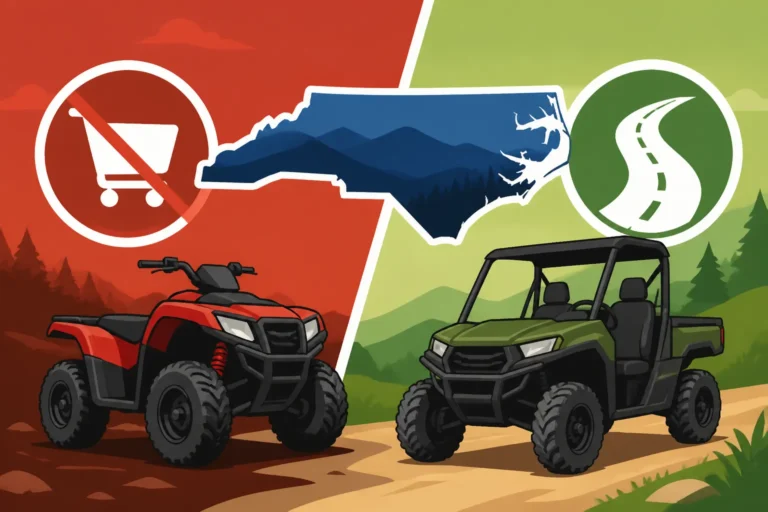
Let's cut right to the chase, because this is where many people get tripped up: No, you do not generally need to register your ATV or UTV for off-road use in North Carolina.
This is often a surprising answer, especially for riders coming from states where registration is mandatory for any off-highway vehicle (OHV), even if it never touches pavement. North Carolina takes a different approach. The state primarily views ATVs and UTVs as off-road recreational vehicles, similar to how many states treat dirt bikes or snowmobiles. Because they are not intended for use on public roads, the traditional vehicle registration process that applies to cars, trucks, and motorcycles simply doesn't apply to them for their primary purpose. This can be a huge relief for some, as it means less paperwork and fewer fees just to enjoy your machine on the trails or your own property. However, it also means there isn't a state-wide database tracking ownership of every single off-road machine, which can present its own challenges. This is also why you won't find a "North Carolina trail sticker" that acts like a registration decal in other states; it just doesn't exist. [Why North Carolina Has No ATV Registration]
Why North Carolina Differs From Other States
The reason North Carolina diverges from many other states on this issue largely boils down to how the legislature has classified these vehicles. Rather than lumping them into a broad "motor vehicle" category that would necessitate registration for all uses, North Carolina differentiates between vehicles designed for highway use and those designed exclusively for off-highway operation. Your standard quad or side-by-side falls squarely into the latter category. This philosophy simplifies things for off-road enthusiasts who only intend to use their machines on private land, dedicated trail systems, or within national forests, where specific permits might be required, but not state registration.
Think about it this way: when you buy a dirt bike that's clearly marked "for off-road use only," you don't register it with the DMV in North Carolina unless you're trying to make it street legal (which is usually a whole other can of worms). ATVs and UTVs operate under a similar principle here. The state recognizes their recreational nature and doesn't impose the same bureaucratic hurdles as it would for a vehicle constantly sharing asphalt with cars and trucks. This is a common point of confusion, especially if you've recently moved from a place like South Carolina or Virginia, where their rules might dictate registration or a specific off-road decal. It often leads to a lot of head-scratching at the dealership or among riding buddies when trying to figure out what paperwork is actually necessary.
Understanding the Difference: Registration vs. Titling in North Carolina
While general registration isn't a thing for most off-road machines in North Carolina, it's absolutely crucial to understand that titling is an entirely separate matter. This distinction is vital, and it's where many new owners, or those buying privately, can get into a real bind if they're not careful.
Registration, as we typically understand it, is about giving a vehicle permission to operate on public roads, and it usually comes with annual fees and a plate or sticker. Titling, on the other hand, is all about establishing and proving ownership of the vehicle. It's like the deed to your house – it's the legal document that says, "This machine belongs to me." In North Carolina, titling an ATV or UTV is often described as "optional" for off-road machines, but I'll tell you right now, it's an option you should strongly consider exercising. [Titling an ATV in North Carolina Is Optional]
Why Titling Your ATV or UTV is a Smart Move
Even though the state doesn't require a title for an off-road ATV or UTV, having one is profoundly beneficial for several reasons. First and foremost, a title is the ultimate proof of ownership. Imagine you bought a fantastic used side-by-side advertised as having "no paperwork." Sounds like a great deal at the time, right? But then, down the road, it gets stolen. Without a title, proving to the police, or your insurance company, that you are the rightful owner can be an absolute nightmare. It's much harder to reclaim a machine, or even make a claim, if you can't definitively show it's yours.
Secondly, if you ever plan to sell your machine, a clean title makes the process infinitely smoother. Buyers are much more confident purchasing a machine with a clear title, as it reduces the risk of buying stolen property or inheriting unforeseen legal issues. It also generally increases the resale value, as it removes a significant hurdle for potential purchasers. Lenders, too, will almost always insist on a titled machine if you're taking out a loan to finance your purchase, as it provides them with the legal collateral they need. [Why a Lender Insists on a Titled Machine] For all these reasons, I always advise folks to get a title if at all possible, even if it feels like an extra step. It's a small investment for peace of mind and future flexibility. You can learn more about the process in [How to Title an ATV in North Carolina].
The Titling Process and Necessary Paperwork
So, how do you go about getting a title for your off-road machine in North Carolina? The process generally involves submitting an application to the North Carolina DMV (Department of Motor Vehicles). You'll typically need to complete North Carolina Form MVR-1, which is the application for certificate of title. If you're buying a used machine, you'll also likely need to fill out [North Carolina Damage Disclosure on Form MVR-1A].
A crucial piece of documentation is the North Carolina Form MVR-60, also known as the "Affidavit of Ownership for an All-Terrain Vehicle or Utility Vehicle." This form is specifically for machines that aren't registered for highway use and helps establish your ownership in the absence of a traditional bill of sale from a previous titled owner. This is particularly important for machines that might have changed hands several times without ever being titled. [North Carolina Form MVR-60 Explained] If you're buying from a private seller, having a robust bill of sale is paramount, especially if there's no existing title. Services like LawDepot offer customizable bill of sale templates that can cover all the necessary details, protecting both the buyer and seller. This document should clearly identify the machine (make, model, VIN), the buyer and seller, the sale price, and the date of sale. It's a foundational document for proving your ownership, whether you pursue a title or not.
You'll also need to pay the state's Highway Use Tax (HUT) when you title the machine. This isn't a sales tax in the traditional sense, but it functions similarly and is calculated as a percentage of the purchase price or value of the machine. [North Carolina's 3 Percent Highway Use Tax] Don't forget that if you're bringing an ATV from out of state, there are specific considerations for that process as well. [Buying an Out-of-State Machine for North Carolina]
The Exception: When Your UTV Becomes a Modified Utility Vehicle (MUV)
Here's where things get a bit more complex, and it's the only scenario in North Carolina where something akin to "registration" becomes mandatory for a side-by-side: when it's legally designated as a Modified Utility Vehicle, or MUV. This is North Carolina's specific pathway to making certain utility vehicles street-legal for limited public road use. It's not for your average quad, and it's far from a simple process.
The MUV classification was created to allow certain types of larger, more robust UTVs to operate on public roads with speed limits of 55 mph or less. However, the requirements are incredibly stringent, and most off-the-shelf side-by-sides simply don't meet them without significant modifications and inspections. This is the closest North Carolina gets to a "street legal ATV" registration process. [North Carolina's Modified Utility Vehicle Route]
Strict Requirements for MUV Status
For your UTV to qualify as an MUV and be eligible for road registration, it must jump through a series of very specific hoops. We're talking about more than just adding a horn and turn signals. Here are some of the key requirements:
- Engine Size: The machine must have an engine displacement of more than 2,400 cubic centimeters. This alone disqualifies a huge number of standard UTVs, as most popular models fall well below this mark. [Why an MUV Needs More Than 2,400cc]
- Dimensions: It needs to meet precise length, width, and height requirements. Specifically, it must be at least 142 inches long (that's nearly 12 feet!), at least 58 inches wide, and at least 70 inches high. [The 142-Inch Length Requirement] [The 58-Inch Width Requirement] [The 70-Inch Height Requirement] These dimensions are usually more akin to a small car or a larger specialty utility vehicle, not your typical recreational side-by-side.
- Speed Capability: The MUV must be capable of exceeding 40 miles per hour. [40 mph to Qualify as an MUV] While many UTVs can do this, combined with the other requirements, it narrows the field considerably.
- Safety Equipment: This is where it starts to feel more like a traditional car. MUVs must be equipped with headlights, taillights, brake lights, turn signals, mirrors, a parking brake, and seat belts for all designated seating positions.
- VIN Assignment: Because many UTVs don't come with a standard 17-digit VIN that's compatible with highway registration, the North Carolina DMV often has to assign a new VIN after inspection, essentially giving the machine a unique identity for road use. [A VIN Assigned by the North Carolina DMV]
- Inspection and Insurance: Once all these requirements are met, the vehicle must pass a safety inspection and carry liability insurance, just like any other street-legal vehicle. [North Carolina MUV Insurance Requirements]
As you can imagine, most side-by-sides simply cannot meet these criteria without extensive and costly modifications. [Why Most Side-by-Sides Miss the Mark] It's a niche path, primarily for very specific, heavy-duty utility vehicles, and not a loophole for casual riders to make their recreational machine street legal.
What You Do Need: Permits, Proof of Ownership, and Safety
So, if general registration isn't required, what is important for ATV and UTV owners in North Carolina? While you won't be slapping a registration sticker on your quad for off-road fun, there are several key things you absolutely need to have in order, depending on where and how you ride. Overlooking these can lead to fines, hassles, or even losing access to your favorite riding spots.
Proving Ownership: Bill of Sale or Title
Even if you choose not to title your off-road machine (which, again, I strongly recommend against), you absolutely must have solid proof of ownership. This is your first line of defense against theft, disputes, or questions from law enforcement. A detailed bill of sale is crucial. This document should include:
- The full names and addresses of both the buyer and seller.
- A clear description of the ATV or UTV, including its make, model, year, and Vehicle Identification Number (VIN).
- The purchase price and date of sale.
- Signatures of both parties.
Using a reliable template, perhaps from a service like LawDepot, can ensure you don't miss any critical information. This becomes your primary record. If the machine does have a title, ensure it's properly transferred into your name, following the instructions on the title itself and through the North Carolina DMV. This is your golden ticket for proof of ownership. [A North Carolina Bill of Sale for an ATV] When you're buying a used ATV in North Carolina, always demand a bill of sale, and if possible, a properly endorsed title. [Buying a Used ATV in North Carolina]
Forest Permits for Public Lands
If your riding adventures take you to North Carolina's incredible national forests, like the Uwharrie, Pisgah, or Nantahala, you'll definitely need a forest permit. These are not state registrations but rather fees paid directly to the U.S. Forest Service for access to designated OHV trail systems. They are typically available as daily or annual passes, and the revenue often goes directly back into maintaining these trails.
These permits are usually vehicle-specific, meaning each machine needs its own. You'll often find kiosks at trailheads, nearby general stores, or district ranger stations where you can purchase them. Riding on these public trails without the proper permit can lead to fines from Forest Service officers, so always check the specific requirements for your chosen riding area before you load up and head out. [North Carolina Forest OHV Permits] For example, [Brown Mountain OHV Permit Cost] and [Badin Lake OHV Permit Cost] are separate fees for those specific trail systems.
ATV Safety Certificates for Younger Riders
North Carolina is serious about rider safety, especially for its younger enthusiasts. If you, or anyone in your household, were born on or after January 1, 1990, and plan to operate an ATV on public lands, you are generally required to possess an ATV Safety Certificate. This certificate is obtained by completing an approved ATV safety course.
This isn't a "license" to operate, but rather proof that you've received formal training on safe riding practices. The course covers everything from basic controls and riding techniques to environmental awareness and state laws. There are typically in-person and online options available, and the courses are designed to be comprehensive and accessible. It's a fantastic way to ensure everyone riding is equipped with the knowledge to stay safe and responsible. [North Carolina ATV Safety Certificate Requirements] It's important to remember that North Carolina does not "reciprocate" certificates from other states, meaning you'll need to meet NC's specific requirements. [Why North Carolina Reciprocates Nothing]
Landowner Permission for Private Property
Most ATV and UTV riding in North Carolina happens on private land, which is perfectly legal as long as you have permission from the landowner. This might seem obvious, but it's often overlooked. Trespassing laws are strictly enforced, and just because a field or woods looks abandoned doesn't mean you have the right to ride there.
Always, always get explicit permission before riding on private property that isn't your own. Ideally, this permission should be in writing, especially if you're riding regularly or with a group. A simple note or agreement, signed by the landowner, can save you a lot of hassle and potential legal trouble. This applies whether you're riding a friend's farm in the Piedmont or a hunting lease in the mountains. [North Carolina Landowner Permission Rules]
Insurance and Equipment Considerations
While not mandated for off-road use, carrying liability insurance for your ATV or UTV is always a smart move. Accidents happen, and having insurance can protect you financially in case of damage to property or injury to others while you're riding. Many homeowner or auto insurance policies can add ATV/UTV coverage as an endorsement, or you can purchase a dedicated policy. It's a small expense that can provide huge peace of mind.
Furthermore, always ensure your machine is equipped with the necessary safety equipment for the conditions you're riding in. This includes a spark arrester if you're on public lands (to prevent wildfires), and appropriate helmets and eye protection for all riders, regardless of age. While North Carolina's laws around helmet use off-road have seen changes, wearing one is always the safest choice. [North Carolina Spark Arrester Requirement]
To help summarize, here's a quick overview of what is (and isn't) generally required for ATVs and UTVs in North Carolina:
| Requirement Category | For Off-Road ATVs/UTVs | For Street-Legal Modified Utility Vehicles (MUVs) |
|---|---|---|
| State Registration | Generally NO | YES (Traditional vehicle registration) |
| State Titling | Optional, but highly Recommended | YES (Required for registration) |
| Highway Use Tax (HUT) | YES (When titling) | YES (When titling) |
| Proof of Ownership | YES (Bill of Sale, Title) | YES (Title required) |
| Forest Permits | YES (For designated public trails) | Not directly, but MUVs generally not permitted on OHV trails |
| Safety Certificate | YES (For riders born Jan 1, 1990 or after on public land) | N/A (MUV operators follow standard driving rules) |
| Liability Insurance | Recommended | YES (Required for road operation) |
| Safety Inspection | N/A | YES (Annual inspection required) |
Understanding these distinctions is key to being a responsible and legal ATV/UTV owner and rider in North Carolina. Don't let the lack of general registration lead you to believe there are no rules or responsibilities!
Disclaimer
This article is for general informational purposes only and does not constitute professional advice. Laws, prices and regulations vary by location and change over time. Consult a qualified professional for guidance on your specific situation.