North Carolina Riding in Hunting Season
Hunting season can make a familiar North Carolina ride feel different: more hunters in the woods, parked trucks near access points, and extra pressure to stay visible and on route. This guide explains how to plan an ATV or UTV ride during hunting season, where to check for restrictions, what visibility precautions to take, and how to share trails respectfully.
What changes when you ride during hunting season
Hunting activity and trail access are separate questions
A national forest may allow both hunting and motorized recreation, but that does not mean every road, trail, or game-land access point is open to ATV and UTV riding. Motorized use depends on the land manager’s rules, the specific route, seasonal operating dates, and any temporary closures. A hunting season opening does not automatically open a trail, and the presence of a trail on a map does not necessarily mean it is open to your machine.
This distinction matters around places such as the Uwharrie National Forest, Pisgah National Forest, and Nantahala National Forest. A designated OHV trail system has its own marked routes and operating rules. Nearby forest roads, wildlife openings, and state game lands may have different restrictions. Check the rules for the exact place you plan to ride rather than assuming that public land is open to motorized travel.
State game lands deserve particular care. Hunting access rules and vehicle rules are not interchangeable: a property may allow hunting while restricting where motor vehicles can go. Review the applicable [North Carolina Rules for Riding Game Lands] before using a road or access area near game land. If a sign, gate, map, or posted notice conflicts with what you expected, treat the restriction as controlling and choose another route.
Seasonal closures can overlap with hunting activity
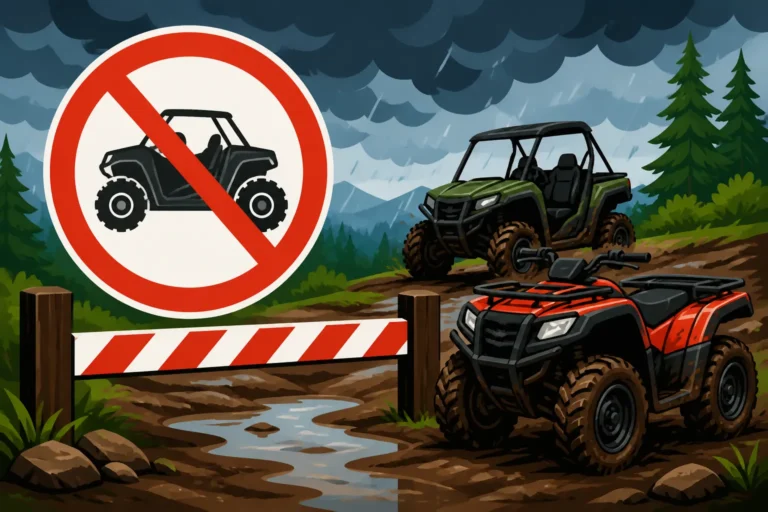
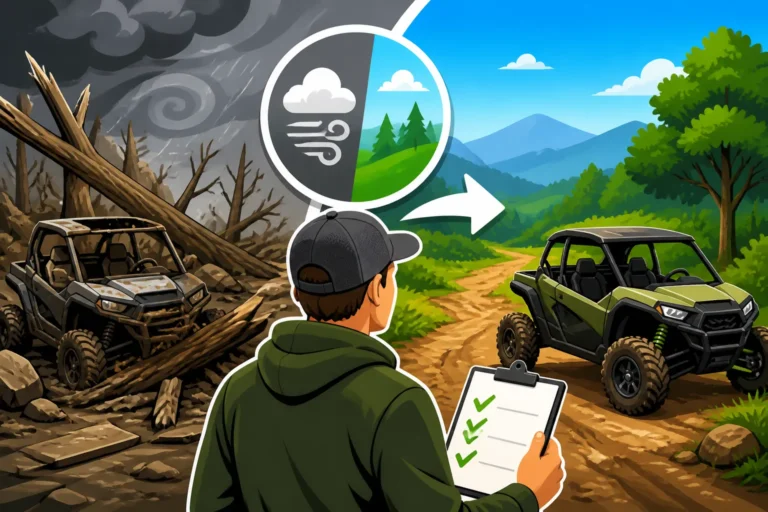
Many riders think first about the hunting calendar, but trail operating dates and weather-related closures can be just as important. Some OHV systems have defined seasons, and a trail may close for reasons unrelated to hunting, including maintenance, erosion, storm damage, or resource protection. Conditions can change after heavy rain or a major storm, so a route you rode earlier in the year may not be available when you return.
Before you load the machine, check the relevant forest or riding-area notices and confirm that your intended route is open to your vehicle type. For more context on what to verify, see [North Carolina Trail Closures to Check] and [North Carolina Forest Trail Maps]. A map helps with route planning, but it should not replace current closure information or posted signs at the trailhead.
Hunting pressure can also make access points busier than usual. A small staging area that feels empty on a summer weekday may have several pickup trucks and trailers parked nearby during a popular hunting period. Allow extra time to park, unload, and sort out your route without blocking gates, roads, or other users’ access.
How to plan a safer ride during hunting season
Check the place, date, and machine before leaving
Start with the exact riding area, not a broad search for “ATV trails near me.” Confirm the trail system’s operating season, vehicle restrictions, permit requirements, and any notices about closures. Then check whether the route passes through or beside game lands, private property, or areas with separate access rules.
A simple pre-trip check can prevent a frustrating drive with a trailer:
- Confirm the riding area is open on your planned date.
- Verify that your ATV or UTV is allowed on the specific trails you plan to use.
- Check permit requirements and how permits must be displayed or carried.
- Look for current closures, storm notices, and access changes.
- Review the route and identify a shorter option in case daylight, weather, or trail conditions change.
- Tell someone where you plan to ride and when you expect to return.
Forest permits are not the same as vehicle registration or permission to ride anywhere on public land. Read [North Carolina Forest OHV Permits] before your trip, especially if you are visiting a system for the first time. A permit for a particular riding area does not override a closure or authorize travel on an undesignated route.
Navigation tools can help you understand where you are in relation to roads, trailheads, and property boundaries. Some riders use onX Offroad to plan a route and keep track of their location, but no mapping app should be treated as proof that a trail is open. Compare the route with official maps and signs, and turn around if the posted information does not match what your screen shows.
Make yourself easier to see without disturbing others
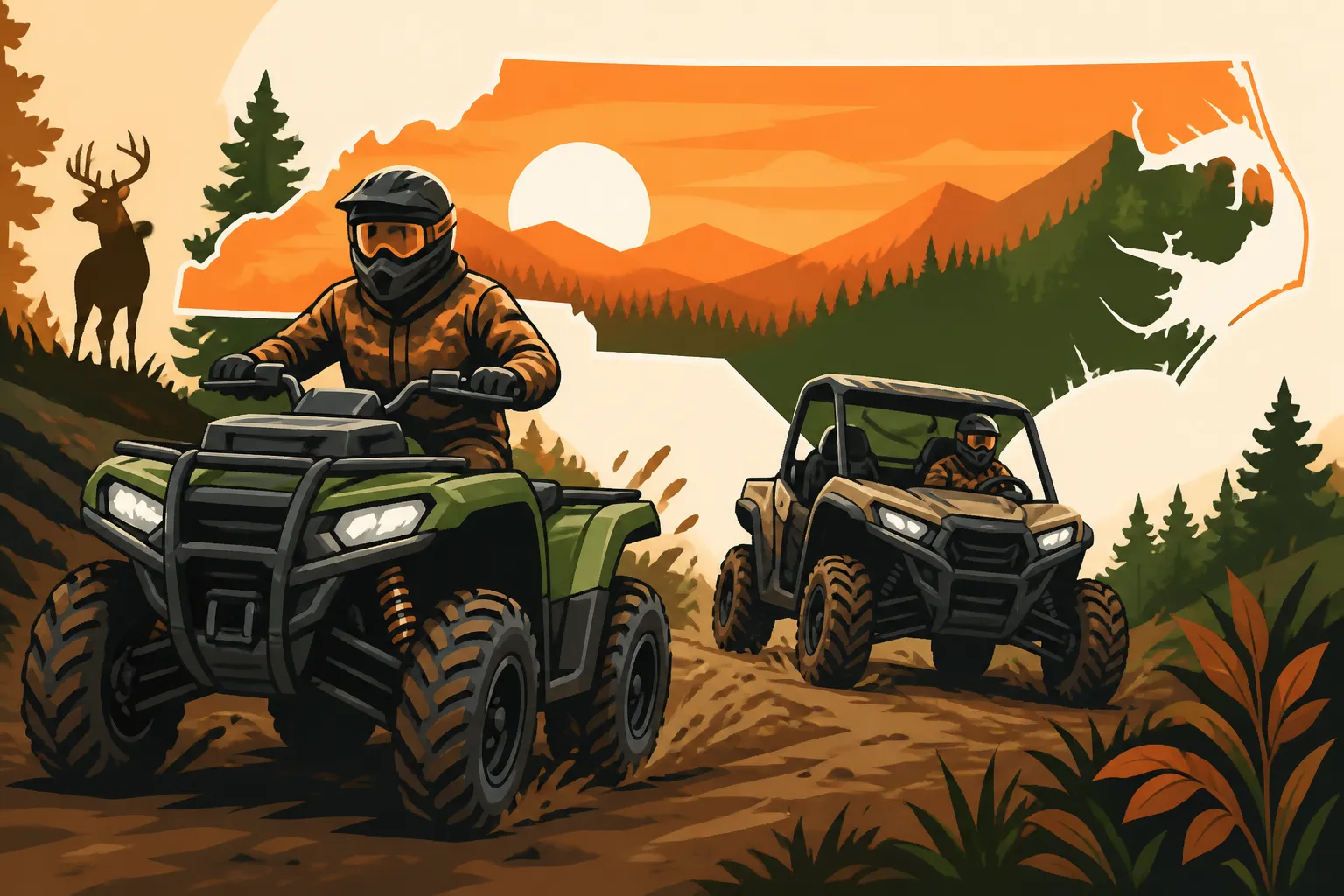
During hunting season, visibility is a courtesy and a practical safety measure. Wear bright, high-visibility clothing, especially when riding near a trailhead, a forest road, or a place where people may be walking between a vehicle and a hunting area. Blaze orange is a recognizable choice for many riders, but do not assume that wearing it changes where you are legally allowed to ride or enter.
Visibility should not depend on clothing alone. Keep headlights in working order, use them when conditions call for it, and avoid riding in low light if you cannot clearly see the route and other people. Do not use a loud, aggressive approach to announce yourself. Slow down, give people room, and let them know you are coming in a calm, understandable way when the situation calls for it.
A few practical steps can make a real difference:
- Choose a bright outer layer that stands out against fall leaves and dark forest cover.
- Keep the machine’s lights clean and functional.
- Slow down near blind curves, trail junctions, parking areas, and road crossings.
- Stop well short of a person on foot instead of squeezing past.
- Keep passengers seated and secured, and make sure everyone in the group knows how to signal a stop.
- Avoid playing music loudly or revving the engine near people who may be hunting.
For a more focused discussion of visibility in the Uwharries, see [Blaze Orange on a November Uwharrie Ride]. It is useful to think of bright clothing as one layer of caution—not a substitute for staying on the trail, controlling speed, and watching for other forest users.
Sharing North Carolina riding areas respectfully
Give hunters and other trail users room
A hunting-season ride calls for patience. You may encounter a parked vehicle along a forest road, a person walking from a parking area, or someone carrying equipment near a trail junction. Do not assume that a vehicle is abandoned or that a person on foot has seen your machine. Reduce speed, make your presence known without startling them, and wait until there is a clear, safe way to continue.
If you see a hunter near your route, do not ride toward the activity to get a closer look. Stay on the designated route, avoid cutting across openings, and do not enter a closed or posted area. If the route feels crowded or you cannot pass safely, pause at a suitable place or turn around. A short delay is better than creating a tense encounter in the woods.
The same courtesy applies to other riders, hikers, cyclists, and people accessing the forest for work or recreation. Keep your group together, but leave room for others to pass. Avoid blocking a gate or narrow road while waiting for a friend. If you stop to check a map, pull fully out of the travel route whenever it is safe to do so.
For more on sharing forest space with hunters, read [Sharing a Forest With Bear Hunters]. The specific season or location may differ, but the core habits—stay predictable, respect distance, and don’t leave the marked route—apply broadly.
Keep the ride on authorized routes
One of the most important ways to prevent conflict is to stay on routes that are specifically open to your machine. A visible track, old logging road, or line on a phone map does not automatically mean motorized travel is allowed. Cutting around a gate, creating a bypass, or riding through a wildlife opening can damage the land and create access problems for everyone.
Use official route markings and follow posted instructions at the entrance. If you come across a closed gate or a sign that leaves you uncertain, do not treat the absence of a physical barrier as permission. Turn around and check with the land manager or choose a confirmed open route. This is especially important where a trail network sits near a state game land, private parcel, or sensitive habitat.
Apps such as onX Offroad can be helpful for route awareness, but map layers may not reflect temporary closures or every local restriction. Use the app as a planning aid, then verify access with official information before riding. If a route crosses a boundary or appears to continue beyond the marked OHV system, stop and confirm that it is authorized for motorized use.
For a ride in the Uwharrie area, start with information specific to the OHV system rather than assuming all nearby forest roads are part of the riding network. [Badin Lake OHV Trail Complex] is one place to learn about the designated riding area, while [Riding Brown Mountain for a Day] offers area-specific planning context for another popular system. Check each destination’s operating notices before you travel.
| Situation | Safer choice | Why it matters |
|---|---|---|
| A trail or road is marked closed | Turn around and use a confirmed open route | Closures may protect people, land, or active work |
| A hunter or other person is near the route | Slow down, give space, and wait if needed | A quiet, predictable approach reduces the chance of startling someone |
| A map app shows an unmarked route | Verify it with official maps and signs | A mapped line does not necessarily authorize motorized access |
| The staging area is busy | Park without blocking gates or roads | Other visitors may need access for vehicles or emergency response |
| Light or visibility is poor | Shorten or end the ride | Being visible and able to see the route is essential |
A practical hunting-season ride checklist
Before you load the trailer
Do your planning at home, when you have time to check details instead of trying to sort them out at a crowded trailhead. Confirm the riding area’s status and rules, review the route, and let another person know your plan. If you are riding with a group, agree on a meeting point and a simple procedure for stopping if someone gets separated.
Pack for a change in conditions. Fall weather in the mountains can shift quickly, and a ride that begins in mild sunshine may end with colder air, fog, or fading daylight. Bring appropriate layers, water, a charged phone, and any basic supplies your group needs. Do not assume you will have dependable cell service in every forest area; download or otherwise prepare the route information you need before leaving.
Check the ATV or UTV as carefully as you would for any trip. Confirm the tires, brakes, lights, fuel, and secure storage. If you are carrying tools or extra equipment, fasten it so it cannot shift or fall onto the trail. A machine that breaks down on a narrow route can create a bigger problem when other riders and hunters are using nearby access points.
At the trailhead and on the ride
Read the signs before unloading, and follow any instructions posted at the entrance. Display or carry the required permit as directed. If the riding area is unexpectedly closed, do not search for an unofficial way around the closure; choose another lawful destination or make a different plan for the day.
Once you are riding, keep a conservative pace around blind corners and shared access points. Leave extra stopping distance on loose gravel, wet leaves, and muddy ground. If your group is large, use a pace that keeps the last rider in sight or establish safe regrouping points where stopping will not block the route. The lead rider should not assume everyone behind them saw a turn or obstacle.
If you encounter a hunting-related sign or a situation that makes you unsure whether the route is open, stop in a safe place and reassess. Do not ride deeper into an uncertain area while hoping it will become clear. Being willing to change the plan is part of responsible riding, not a failed trip.
Hunting season can still be a good time to enjoy North Carolina’s riding areas, provided you prepare for shared use and follow the rules for the exact place you visit. Confirm access, dress to be seen, stay on authorized routes, and give people in the woods the space they need. Those habits help protect both your group and the experience of everyone else using the forest.
Disclaimer
This article is for general informational purposes only and does not constitute professional advice. Laws, prices and regulations vary by location and change over time. Consult a qualified professional for guidance on your specific situation.