Riding in August Humidity in the Piedmont
August rides in North Carolina’s Piedmont can feel harder than the trail map suggests: high humidity makes it tough to cool down, and a shaded route can still be hot, dusty, or slick after rain. This guide covers how to plan a safer ATV or UTV ride, pace your group, prepare for changing trail conditions, and know when it’s time to turn back.
Why August Riding Feels Different in the Piedmont
Heat and humidity can catch riders off guard
On a humid August day, sweat may not evaporate as efficiently as it does in dry weather. That can make a slow climb, a dusty staging area, or a long wait while a group regroups feel surprisingly draining. A helmet, protective clothing, and limited airflow add to the challenge, especially when you’re riding at low speed or stopping often.
The shade along a wooded trail can help, but it isn’t a substitute for taking breaks. Pay attention to how you feel, not just the temperature on your phone. Unusual fatigue, headache, dizziness, nausea, muscle cramps, or feeling weak are reasons to stop, get to a cooler place, and drink fluids. Confusion, fainting, or very hot skin can signal a medical emergency; get help immediately.
Riders often make the mistake of pushing through because they’re close to the next trail junction or want to finish a loop. Instead, agree before leaving that anyone can call a rest stop or turn-around without having to justify it. That simple ground rule is especially helpful for families and mixed-experience groups.
Piedmont conditions can change across one ride
A route near the Uwharrie National Forest may alternate between exposed sections, shaded woods, rocky stretches, and low areas that hold moisture. A trail that feels comfortable early can become more demanding as the day warms up. After rain, damp clay and muddy spots can affect traction, while a stretch that has dried out may kick up dust behind the lead machine.
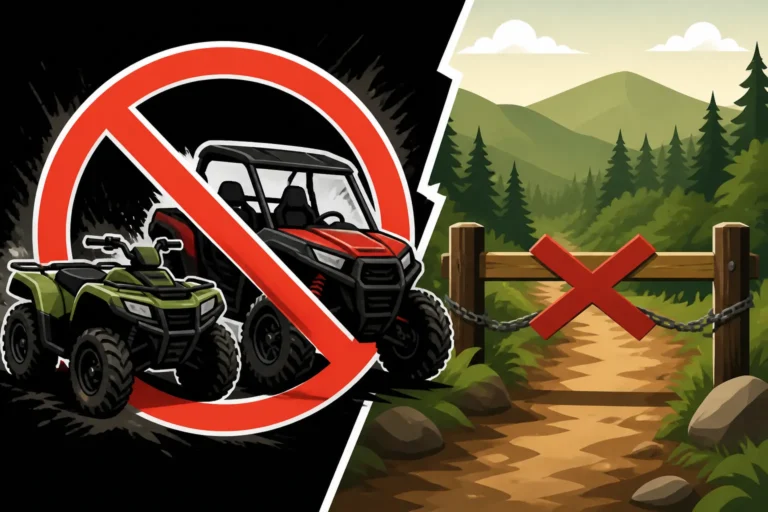
Don’t assume that a forest setting guarantees easy conditions. The terrain, recent weather, traffic, and maintenance can all affect how a route rides. Check the [North Carolina Trail Conditions Before You Ride] and [North Carolina Trail Closures to Check First] before you tow out. If a road or trail is closed, respect the notice rather than trying to find a way around it.
Rain can also leave ruts, soft edges, and muddy dips that are difficult to judge from a distance. For more on evaluating those conditions, see [Uwharrie Mud After a Week of Rain]. If you’re uncertain about a section, stop somewhere safe and assess it before entering. Turning around is often the sensible choice, not a failed ride.
Plan a Heat-Smart Ride Before You Leave
Choose a route and schedule that leave room to adapt
For an August ride, plan around the hottest, most demanding part of the day rather than simply trying to squeeze in the longest possible loop. An early start can reduce the amount of time you spend riding through peak heat, but it still calls for preparation: bring water, check the weather, and allow time for a slower pace. Avoid setting a turnaround time so tight that the group feels pressured to rush.
Pick a route that matches the least experienced rider and the machine with the fewest capabilities. A shorter, familiar loop with clear places to regroup may be a better choice than a long route with limited options to turn back. Read the [North Carolina Trails for Beginners] guide if you’re choosing a first ride or bringing someone who hasn’t ridden this terrain before.
Keep your plan flexible. If the group is moving slowly, someone feels unwell, or rain changes the surface, cut the loop short. Let a person who isn’t riding know where you expect to be and when you plan to return. Before you head out, review [North Carolina Forest Trail Maps] and make sure everyone knows the planned route and regroup points.
Pack for heat, delays, and a change of plan
Bring more drinking water than you think you’ll need, and keep it accessible rather than buried under gear. A group can lose time to a stalled machine, a puncture, a wrong turn, or a long break. Carry a basic repair kit, a first-aid kit, food or snacks, and a way to contact help. Cell service may be unreliable in some wooded or hilly areas, so don’t make a phone the only part of your plan.
A digital map can help with route planning, but it should be treated as a tool rather than permission to travel anywhere shown on a screen. With onX Offroad, review the route before leaving and check whether the map information and app features available to you fit your plan. If you rely on downloaded maps, confirm they are available offline before you lose reception. Carry a paper map or write down key turns if that adds peace of mind.
Use onX Offroad alongside official trail information, posted signs, and any notices at the trailhead. A mapped line does not necessarily mean a trail is open or appropriate for your machine. Keep your group together at intersections, and agree on what to do if someone gets separated. For a longer route, [Planning Fuel Across a Brown Mountain Loop] offers useful planning habits that also apply to rides elsewhere in the state.
| What to plan for | Practical approach | Why it helps |
|---|---|---|
| Heat and humidity | Start with a conservative route and take breaks before anyone feels depleted | Keeps the group from relying on willpower to finish |
| Water and food | Carry enough for the planned ride plus a delay | A mechanical problem or wrong turn can extend the day |
| Trail conditions | Check notices and recent weather before unloading | Rain, closures, and surface changes can affect the route |
| Navigation | Review the route, share regroup points, and prepare for weak cell service | Reduces confusion if riders become separated |
| Group pace | Match the route to the least experienced rider | Makes it easier for everyone to stay comfortable and safe |
Ride at a Pace That Works for the Whole Group
Take breaks before you feel forced to stop
A useful break is more than a quick pause on the machine. Stop in a safe, permitted place, get out of the sun when possible, drink water, and check in with everyone. Ask direct questions: Is anyone dizzy? Does anyone have a headache or cramps? Is anyone feeling unusually tired or nauseated? People sometimes hide discomfort because they don’t want to slow the group down.
Build rest stops into the plan rather than waiting for someone to ask. On a family ride, that could mean checking in at each planned regroup point. With friends, it might mean stopping after a challenging stretch or before heading into an exposed section. Keep the stops practical and avoid blocking the trail or creating a hazard for other riders.
If someone develops symptoms that don’t improve after stopping and cooling down, end that person’s ride and seek appropriate help. Don’t leave a struggling rider alone while the rest of the group continues. For severe symptoms such as confusion, collapse, or loss of consciousness, treat it as an emergency and contact emergency services.
Let trail etiquette and visibility guide your decisions
Dust can linger on busy or dry stretches, and a following rider may have a harder time seeing the trail clearly. Leave enough space between machines to avoid riding directly in another vehicle’s dust cloud. Slow down when visibility drops, and don’t assume the rider ahead can see you. On narrow sections, make room for oncoming traffic and follow posted signs and established right-of-way expectations.
A UTV’s shade or enclosed cab may feel more comfortable than an ATV, but it does not remove the need for regular breaks, water, and attention to heat. Passengers can also become tired or overheated without the driver noticing, so check in with them rather than assuming they’ll speak up. Children and newer riders may need more frequent stops and a shorter route.
Use the same considerate habits when regrouping: pull fully out of the riding line where it is safe and allowed, keep noise and dust in mind, and make sure the entire group is accounted for before moving on. [North Carolina Trail Etiquette on Narrow Trails] is a helpful companion when planning how to share a tight or busy route.
Know When to Shorten or Cancel the Ride
Use a simple decision check at the trailhead
Before unloading, look at the forecast, recent rainfall, trail notices, and how the group is doing. Ask whether everyone has suitable gear, enough water, and a clear understanding of the route. If someone already feels unwell, is unusually tired, or is uncomfortable with the planned difficulty, adjust the plan before entering the trail.
| Trailhead check | If the answer is no |
|---|---|
| Is the planned trail open and appropriate for our machines? | Choose an open, suitable route or postpone |
| Does everyone have water and basic supplies? | Restock before riding |
| Does the route fit the group’s experience and energy? | Shorten it or select easier terrain |
| Can we navigate if phone service drops? | Review offline options and carry a backup plan |
| Are current conditions manageable? | Wait, reroute, or cancel |
A short conversation at the staging area can prevent a stressful decision later. Decide who will lead, who will ride at the back, and where the group will regroup. Make sure everyone knows that no one should leave the marked route or attempt a closed trail simply to keep the ride moving.
If heat, thunderstorms, heavy rain, or poor visibility makes the plan uncomfortable, postponing is a reasonable outcome. A day spent checking conditions and trying again later is better than turning an enjoyable outing into an emergency. Keep [North Carolina Riding in Summer] in mind as part of your seasonal planning, and recheck official notices before every trip rather than assuming conditions are unchanged.
Adjust the plan without making it a failure
Sometimes the best ride is the shorter one. You might reach the first junction, find the group is already tiring, and decide to head back instead of continuing the loop. You might encounter a muddy section that looks manageable from the trail but feels unsafe once you assess it up close. Those decisions show good judgment; they don’t mean the day was wasted.
If a machine develops a problem, prioritize the people first. Move the group to a safe place if possible, keep riders together, and use the communication plan you made before starting. Avoid attempting repairs in a spot where another vehicle could strike you. If you can’t safely continue or reach help, contact emergency services or the appropriate land manager.
After the ride, make a note of what worked: how much water the group used, which sections took longer than expected, and whether the route offered enough places to regroup. That information makes your next August trip easier to plan. A realistic pace, regular check-ins, and willingness to change course are the habits that help Piedmont rides stay enjoyable even when the weather is demanding.
Disclaimer
This article is for general informational purposes only and does not constitute professional advice. Laws, prices and regulations vary by location and change over time. Consult a qualified professional for guidance on your specific situation.