Uwharrie Mud After a Week of Rain
A week of rain can turn a familiar Uwharrie loop into a slow, slippery ride, with slick rock, deep ruts, and standing water hiding what lies underneath. This guide explains how to judge trail conditions, prepare your ATV or UTV, and decide when to turn around—so you can protect your machine, avoid damaging the trail, and get home safely.
What a Week of Rain Can Do to Uwharrie Trails
Mud is only part of the problem
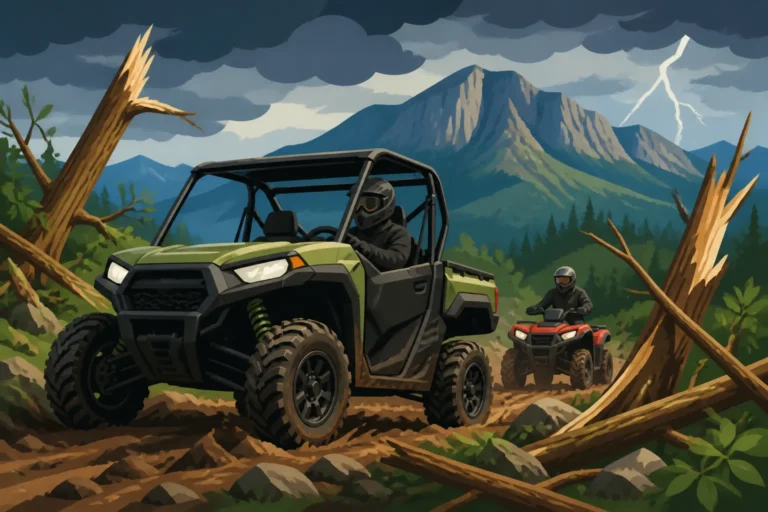
After several wet days, the first muddy patch you see may not tell you much about the rest of the route. Water can collect in low spots, soften the ground beneath leaves, and run across sloped sections. A trail that looked manageable near the staging area may become slicker farther in, where sunlight and drainage differ.
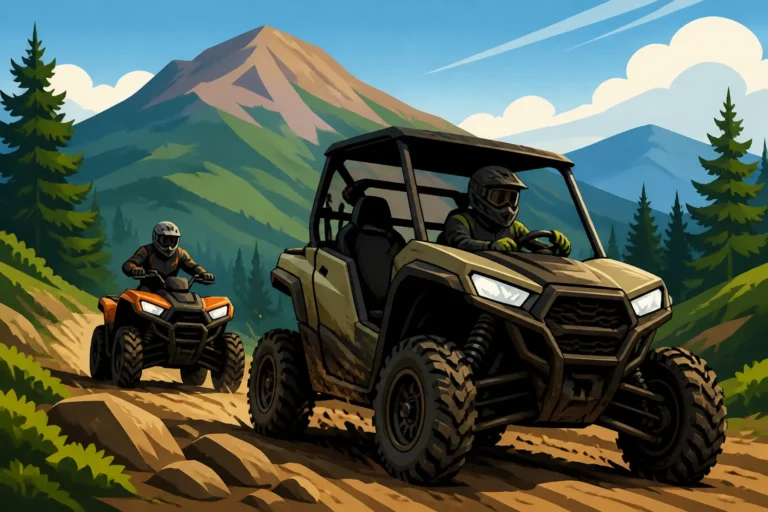
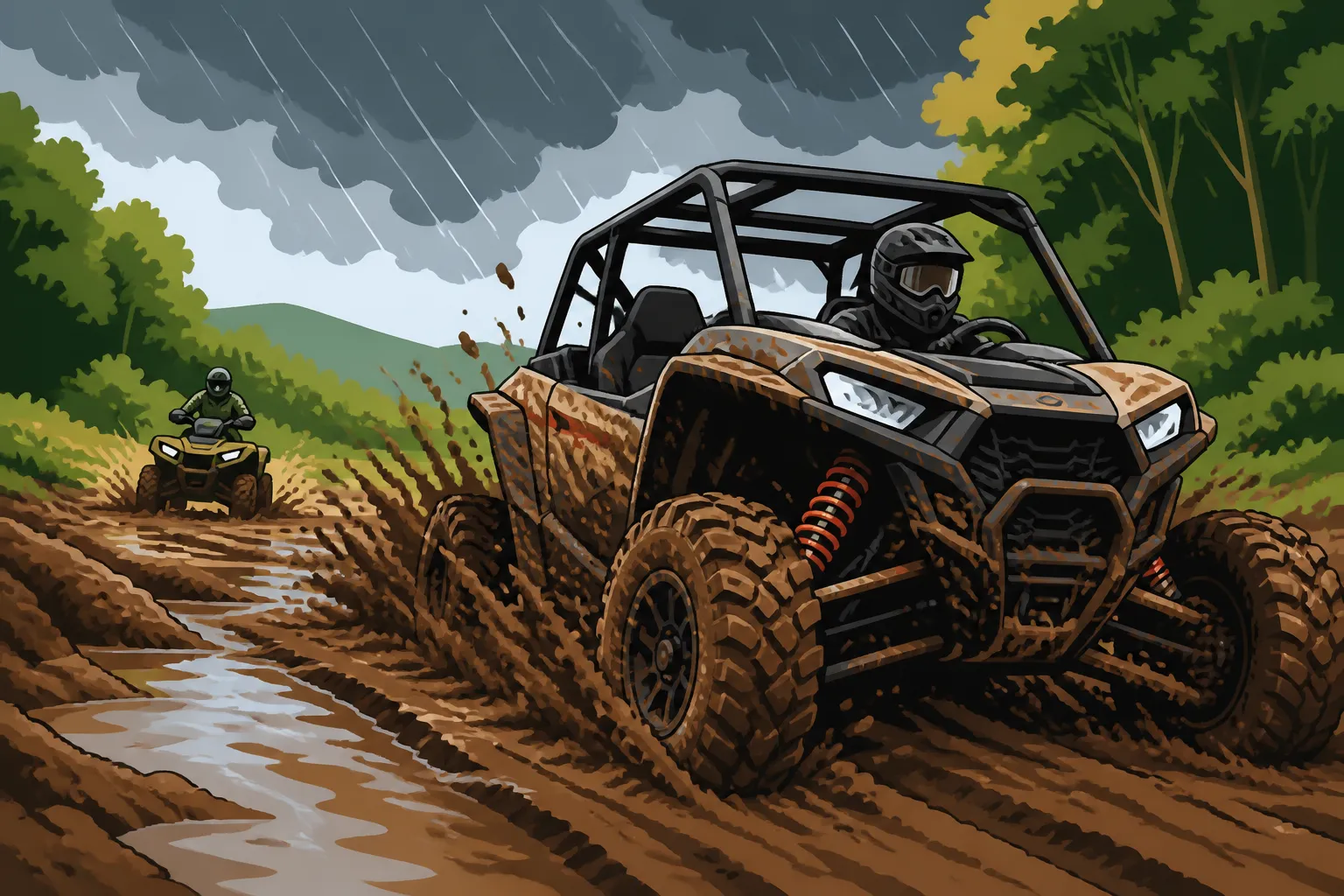
Uwharrie’s mix of rocky ground and Piedmont soils creates changing traction. A tire may grip a dry rock face and then slide on wet clay a few feet later. Mud can also hide rocks, holes, branches, and ruts, making a puddle difficult to judge from the seat. It’s safer to treat unfamiliar standing water as an unknown obstacle, not as a shortcut through the trail.
Rain can also change the shape of a route. Water flowing down a trail may deepen existing ruts or wash loose material across a rocky section. Even when the trail is open, the conditions may be difficult for a stock machine or a rider who is new to mud. For a broader look at how rainfall affects riding decisions, read [North Carolina Riding After Heavy Rain].
Trail access and trail condition are separate questions
An open trail is not necessarily an easy trail. Likewise, a trail that looks passable from the parking area may have a closure farther along. Check the latest forest notices and gate information before unloading, and follow posted signs once you’re on site. If a section is closed, don’t ride around the barrier or create a new route beside it.
Rain-related conditions can prompt temporary restrictions or make a route unsafe even without a closure notice. Look for information about closures and access before driving to the forest, then check again when you arrive. [North Carolina Trail Closures to Check] and [Checking a Forest Notice Before You Load] offer useful reminders about what to verify.
At Badin Lake, don’t assume that a familiar trailhead or loop is operating exactly as it did on your last visit. Read posted notices at the access point, and ask forest staff or the appropriate district office if information is unclear. [Reading the Gate Board at Badin Lake] is a helpful companion when you’re planning around changing access.
How to Decide Whether to Ride
Check the trail, the forecast, and your own experience
Before loading, consider more than whether rain has stopped. Think about how much rain fell, whether more is expected, and how long the ground has had to drain. A brief shower followed by a dry spell can leave different conditions from repeated rain that keeps the soil saturated. Local conditions can vary across the forest, so a clear forecast near home does not guarantee dry trails near the staging area.
Use official forest information for access decisions. A mapping app can help with general route planning, but it shouldn’t replace posted closures or local instructions. onX Offroad can be useful for reviewing a route and keeping track of your position, especially when you’re planning a loop; still, confirm that the route is open and permitted before riding it.
Be honest about your group’s experience and equipment. A beginner riding a two-wheel-drive ATV on slippery ground faces a different challenge from an experienced rider on a well-equipped UTV. A group with children, limited recovery gear, or a tight schedule may be better off postponing the trip. Choosing not to ride is a sensible call when conditions exceed your comfort level, not a failure to make the most of the day.
Use a simple go-or-no-go check
A few observations can help you decide whether to unload, but none guarantees that every section ahead is safe. If you do ride, start slowly and reassess as conditions change.
| What you notice | What it may mean | A safer response |
|---|---|---|
| Water running along or across the trail | Soil may be soft, and traction may change quickly | Reduce speed and avoid entering water you cannot assess |
| Deep, fresh ruts | The trail may be eroding or difficult to navigate | Don’t widen the trail to bypass them; turn back if needed |
| Slick rocks or clay on a slope | Braking and steering may be less predictable | Avoid steep sections beyond your ability |
| A puddle with no visible bottom | Hidden holes, rocks, or debris may be present | Don’t ride through unless its depth and surface are known |
| A closed sign or barrier | The route is not available for riding | Stop and choose an open, permitted route |
| Several riders struggling in the same spot | Conditions may be beyond the group’s safe ability | Don’t add another vehicle to the problem; turn around |
A trail ride also needs a realistic time plan. Mud can slow even a short loop, and a recovery can take much longer than expected. Choose a route you can finish with daylight to spare, and make sure everyone knows where the group will turn around if conditions deteriorate. [Uwharrie Loops You Can Finish Before Dark] can help you think through the time side of trip planning.
Prepare Your Machine and Group for Mud
Set up for traction without making the trail worse
Check your machine before leaving home. Look over the tires for damage, confirm that the brakes work properly, and make sure the steering and throttle respond as expected. Check fluid levels and secure loose cargo. If you’re taking a UTV, confirm that seat belts and doors or nets are in good condition, and that passengers know to stay seated and buckled.
Tire choice matters, but aggressive tires are not a substitute for judgment. Tires suited to rocky terrain can still lose grip on wet clay, and spinning the wheels can dig ruts quickly. Use the manufacturer’s guidance for tire pressure and avoid making adjustments based on guesswork. For more on matching tires to local terrain, see [Tire Choice for Uwharrie Rock].
Carry recovery equipment that you know how to use. A suitable winch, rated recovery points, and a tree-saver strap can help in a difficult spot, but recovery work has its own risks. Never wrap a winch line around a tree without proper protection, and keep bystanders well clear of a tensioned line. If no one in the group is confident using the equipment, don’t count on it as a reason to attempt a route you would otherwise avoid.
Pack for delays and keep the group together
Wet-weather riding often takes longer than planned. Bring water, food, appropriate layers, a basic first-aid kit, and a charged phone or other communication device. Cell service can be inconsistent in forested and mountainous areas, so tell someone where you plan to ride and when you expect to be back. Keep the group together, and agree on a stop-and-wait plan before entering a trail.
Use onX Offroad or another navigation tool as a planning aid, and download or save the route information you’ll need before entering areas with weak service. Keep a paper or offline backup if practical. A map helps you understand your position, but it cannot tell you whether a muddy section is safe to cross or whether a posted closure has changed the route.
If you’re riding with people who have different machines or skill levels, choose a pace and route that work for the least experienced rider. Don’t pressure someone to follow a more capable vehicle through a difficult obstacle. On narrow trails, leave room for other users and avoid blocking the route while figuring out a recovery. [North Carolina Trail Etiquette on Narrow Trails] covers the basics of sharing trail space thoughtfully.
Ride Responsibly and Know When to Turn Back
Avoid widening, cutting, or bypassing the trail
It can be tempting to ride around a mud hole when the center looks deep. But detouring onto the edge can crush vegetation, damage the trail margin, and turn one obstacle into a much wider damaged area. If you can’t safely pass through the marked route, stop and reassess. Turning around is usually better than creating a new line through the woods.
Keep your machine on designated, open routes. Don’t ride into a side path because it appears less muddy, and don’t move barriers or ignore signs. Staying on the trail protects the surrounding land and helps prevent avoidable damage that can lead to restrictions. If conditions are visibly washing out the trail, make a note of the location and report it through the appropriate forest contact rather than trying to fix it yourself.
When you meet another group, slow down and communicate clearly. Muddy trails can make stopping and restarting awkward, especially on a slope. Give other riders room to pass where the trail allows, and avoid accelerating hard enough to throw mud or loose material at people nearby. A courteous pace helps everyone manage the same difficult conditions.
Choose a clean stopping point and plan for the return trip
If you decide to turn around, do it where the trail is wide enough and stable enough to maneuver without damaging the edge. Avoid making a sudden turn on a steep or slick section. If the machine is stuck, pause before spinning the tires; repeated wheelspin can make the hole deeper and recovery harder. Use equipment only when the group can do so safely, and call for assistance if the situation is beyond your ability.
Mud can hide damage until you’re back at the trailer. Once you reach a safe staging area, check for packed material around the wheels, brakes, and suspension, and look for loose parts or new scrapes. Clean the machine where permitted and avoid washing sediment into waterways or drainage areas. Plan where you’ll clean up before leaving; [Where to Wash Before Loading at Uwharrie] can help you think through that part of the trip.
Finally, make the return drive part of the plan. Mud on tires and undercarriage can shift during transport, and a machine that was struggling on the trail deserves another quick inspection before you secure it. Take a few minutes to check tie-downs and make sure no loose gear is left behind. A ride that ends with a careful cleanup and a safe trailer load is a better outcome than squeezing in one more muddy loop.
Disclaimer
This article is for general informational purposes only and does not constitute professional advice. Laws, prices and regulations vary by location and change over time. Consult a qualified professional for guidance on your specific situation.