Why the State Sells You No Sticker
It’s a common scenario for many folks new to the ATV and UTV scene here in North Carolina, or even seasoned riders moving in from other states: you’ve got your new machine, you’re ready to hit the trails or tackle farm chores, and then you start looking for that all-important registration sticker. You might even head to the DMV, expecting to walk out with a plate or a decal, only to be met with blank stares or confusing answers. This guide is here to unravel that mystery and explain why, for most off-road machines, the state of North Carolina doesn’t sell you a traditional registration sticker, and what you need to know and do instead.
The North Carolina Approach: No General ATV/UTV Registration
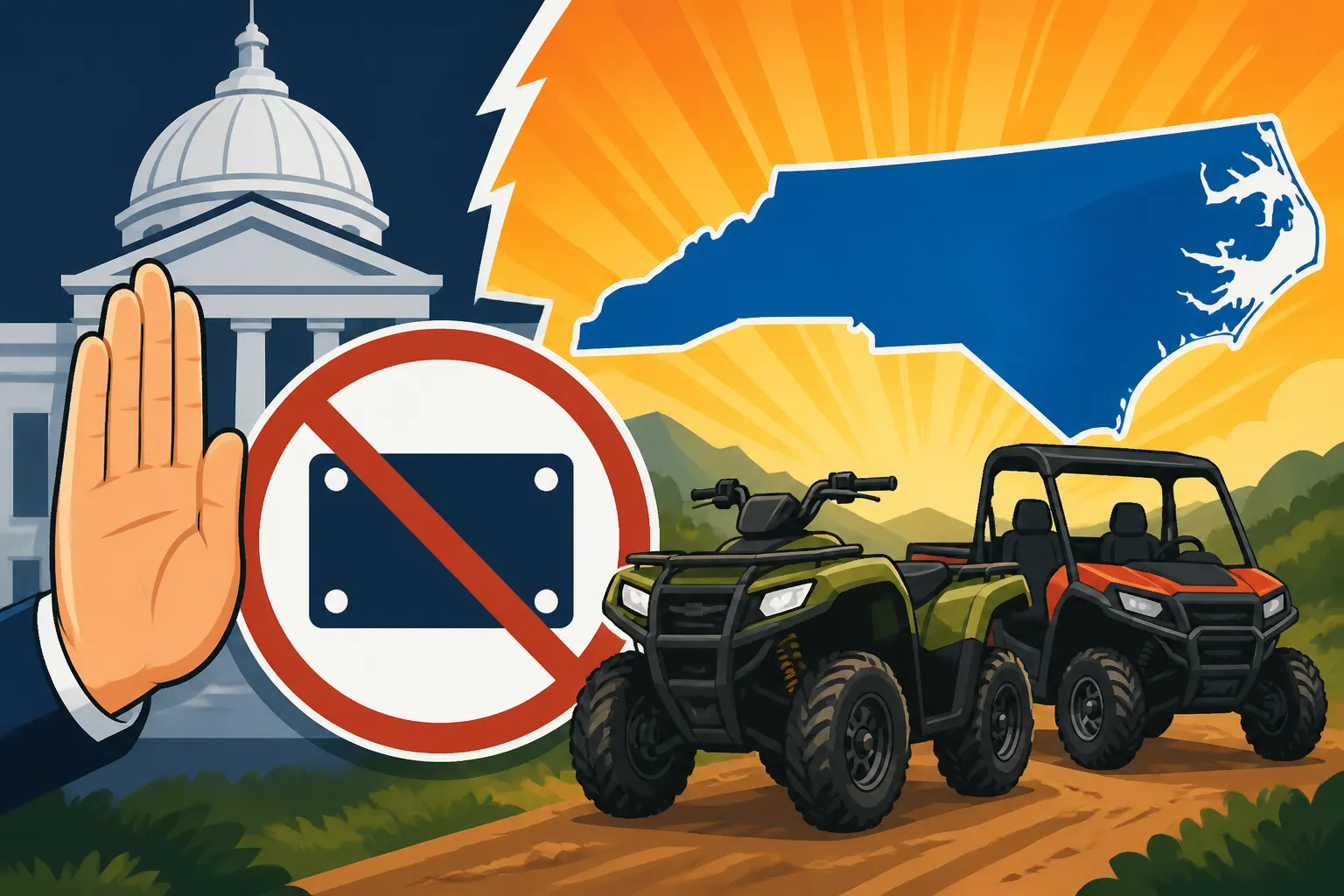
Let’s get right to the heart of the matter: if you’re looking for a general, state-issued registration sticker for your ATV or UTV in North Carolina, similar to what you’d get for a car or even a dirt bike in some other places, you simply won't find one. North Carolina takes a different approach to off-road vehicles that primarily operate off public roads. This can be incredibly frustrating for riders who are used to a clear-cut system, but once you understand the reasoning, it becomes much clearer.
Why the DMV Doesn't Issue ATV Registration Stickers
The core reason North Carolina doesn't issue registration stickers for most ATVs and UTVs boils down to how the state defines and regulates vehicles intended for use off the public highways. Most ATVs and UTVs are classified as “off-highway vehicles” (OHVs), and by their very nature, they are not designed or permitted for routine public road travel. The North Carolina Department of Motor Vehicles (DMV) is primarily concerned with vehicles that operate on the state’s extensive network of roads and highways. Since your typical quad isn't meant for I-40 or even a quiet country road (with a few specific exceptions we'll get to), the DMV doesn't see a need to register it in the traditional sense.
Think of it this way: your lawnmower doesn't have a registration sticker, right? That's because it's an off-road piece of equipment. While an ATV is far more complex and capable, the state's foundational logic places it outside the normal vehicle registration framework. This is a crucial distinction that often trips up new owners. Instead of a registration sticker, the state provides mechanisms to prove ownership and collect certain taxes when a machine changes hands, but it’s not for the purpose of granting permission to operate it on public land or roads. This is also why you'll never find a [Why North Carolina Has No ATV Registration] system in place like you might for a car.
The Core Distinction: Off-Road vs. On-Road Vehicles
North Carolina maintains a very strict line between vehicles designed and intended for public highway use and those meant exclusively for off-road environments. For a vehicle to be registered and licensed for the road, it must meet a long list of safety and equipment standards, including things like turn signals, headlights, taillights, brake lights, mirrors, a speedometer, and often specific weight and dimension requirements. Your average ATV, while it might have lights, simply doesn't meet the full gamut of requirements needed to be considered "street legal" in the same way a car or motorcycle is.
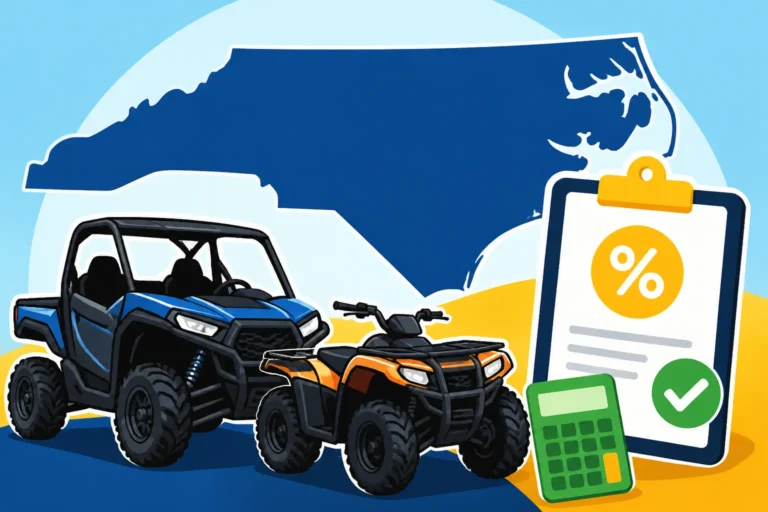
When you buy an ATV or UTV, the purchase is generally not subject to sales tax in the traditional sense. Instead, because it's not considered a highway vehicle that will be registered with a license plate, the state applies a "highway use tax" when you title it. It’s a bit of a misnomer, because it’s applied to vehicles that aren't going to be used on the highway for general purposes, but it’s the mechanism by which the state collects its revenue. You can learn more about [North Carolina's 3 Percent Highway Use Tax] in detail, but just remember that this tax is collected at the point of titling, which itself is optional for many off-road machines.
What North Carolinians Do Instead of Registering Their ATVs
So, if there's no general registration sticker, what do North Carolina ATV and UTV owners do to legally own and operate their machines? It really comes down to proving ownership, complying with specific use-case requirements, and understanding where and how your machine can be ridden. It's less about a universal sticker and more about a combination of documents and permits.
Understanding Optional ATV Titling in North Carolina
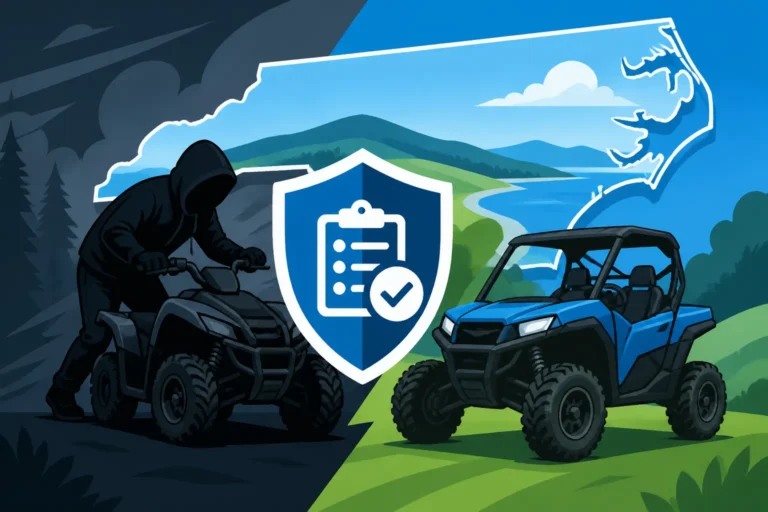
While not strictly required for every ATV, titling your machine is an option in North Carolina, and it’s one that many riders choose for very good reasons. A title is essentially the legal document that proves you are the rightful owner of the ATV. Without it, proving ownership can become a headache, especially if you ever need to sell the machine, get it insured, or, heaven forbid, it gets stolen. Many lenders, for instance, will insist on a titled machine before they'll finance your purchase. Understanding [Why a North Carolina Title Is Worth Having] is key.
The process for titling an ATV involves filling out a form called MVR-1, which is the general [North Carolina Title Application on Form MVR-1]. If your machine doesn't already have a title, you'll also likely need to submit a [North Carolina Form MVR-60 Explained], which is an affidavit affirming your ownership. This form acts as your primary proof of ownership in lieu of a prior title certificate. The cost for titling an ATV includes a standard title fee and, as mentioned, the highway use tax, which is typically 3% of the purchase price or value. You can find more specific details about [What a North Carolina ATV Title Costs] and the [North Carolina ATV Highway Use Tax] by checking the DMV’s current fee schedule, as these figures can shift over time.
Specific Use Cases with Alternative Requirements
Even though a general registration sticker is out of the picture, there are specific situations where your ATV or UTV might require something that looks like registration or a permit. These are for very particular purposes or types of machines.
Modified Utility Vehicles (MUVs)
This is where things get interesting and often lead to confusion. North Carolina does have a specific classification for what it calls a [North Carolina's Modified Utility Vehicle Route]. An MUV is essentially a UTV that has been modified and equipped to meet certain stringent criteria, allowing it to be registered and licensed for limited public road use. This is the only way an ATV or UTV can legally receive a license plate and operate on certain public roads in the state.
To qualify as an MUV, your machine must meet strict requirements for engine size (more than [Why an MUV Needs More Than 2,400cc]), dimensions (such as [The 142-Inch Length Requirement], [The 58-Inch Width Requirement], and [The 70-Inch Height Requirement]), and be capable of a certain speed (able to top [40 mph to Qualify as an MUV]). Additionally, MUVs must have all the safety equipment typically found on a car, including turn signals, brake lights, a parking brake, and a speedometer. If your UTV meets all these requirements and you go through the MUV registration process, you will receive a license plate and a registration, but this is a rare exception, not the rule for most off-road machines.
Forest Permits and Safety Certificates
If your plan is to ride your ATV or UTV on designated public off-road trails in North Carolina’s national forests, like the Uwharrie or Pisgah, you won't need a state registration sticker. Instead, you'll need specific permits issued by the U.S. Forest Service. These are typically day-use or annual permits purchased at ranger stations or authorized vendors near the trailheads. Additionally, depending on when you were born, you might need to show proof of having completed an approved ATV safety course. This [North Carolina ATV Safety Certificate Requirements] ensures that riders have a basic understanding of safe operation. These permits and certificates are about access and safety on specific lands, not general state-wide registration. [Do You Need a Permit for North Carolina Forest Trails?] is a common question, and the answer is usually yes for public lands.
Navigating the Paperwork Without a Sticker
The absence of a universal registration sticker doesn't mean you can just ignore all paperwork. In fact, it makes understanding and keeping track of your ownership documents even more critical. Proper documentation is your best friend when it comes to buying, selling, insuring, or even just proving your right to ride your ATV.
Proving Ownership Without a State Registration
When there’s no official state registration with your name on it, your ownership documents become paramount. The most fundamental piece of paperwork you’ll need is a strong [A North Carolina Bill of Sale for an ATV]. This document records the transfer of ownership from the seller to you, detailing the machine’s make, model, VIN, and the agreed-upon price. It’s a vital record for both parties and serves as your initial proof of purchase. Companies like LawDepot offer customizable templates for bills of sale, making it easier to ensure you have all the necessary information covered. Even if you choose not to title your ATV immediately, having a meticulously filled-out bill of sale is non-negotiable.
Beyond the bill of sale, the strongest proof of ownership you can have is a North Carolina Certificate of Title. As we discussed, [Titling an ATV in North Carolina Is Optional], but it’s highly recommended. The title is a permanent record of who legally owns the machine, making it much harder for someone else to claim it or for you to accidentally buy a stolen one. If your machine doesn't have a title, you'll likely use the [North Carolina Form MVR-60 Explained], the All-Terrain Vehicle Affidavit, to declare your ownership to the state. This affidavit is a sworn statement, and understanding [What the All-Terrain Vehicle Affidavit Actually Proves] is crucial. It asserts that you are the owner and provides detailed information about the machine, serving as a substitute for a prior title when one doesn't exist.
Why the "Sticker" Confusion Lingers
The persistent confusion around ATV/UTV registration stickers in North Carolina often stems from a few factors. Firstly, many riders move here from states like Virginia, South Carolina, or Tennessee, where ATVs do have some form of registration or decal system. They expect a similar process upon arrival, leading to frustration when it doesn't exist. For a [A Visitor From a Registering State in North Carolina], it can be quite a surprise to learn that their home state's registration means little here.
Secondly, the terms "registration" and "titling" are often used interchangeably in casual conversation, even though they refer to distinct legal processes. Registration typically grants permission to operate on public roads and is renewed periodically, while titling is about proving ownership and is usually a one-time event (unless ownership transfers). Because North Carolina does offer titling for ATVs, it can seem like a partial form of registration to some, adding to the mix-up. Finally, the existence of MUV registration, which does result in a license plate and sticker, creates a false impression that all UTVs or even ATVs can achieve a similar status, which simply isn't true due to the very specific MUV requirements.
When dealing with insurance companies or potential lenders, it's essential to explain North Carolina's unique system clearly. You can explain that while there's no general registration, you possess a valid Certificate of Title (if you chose to get one) or a robust bill of sale and MVR-60 affidavit, which are the state's accepted forms of ownership proof. When creating a loan agreement or lease, a solid bill of sale is critical, and a template from a service like LawDepot can ensure all the legal bases are covered, even without a state-issued sticker.
Here’s a quick overview of how North Carolina's approach compares to traditional vehicle registration:
| Feature | Traditional Vehicle Registration (e.g., Car) | North Carolina ATV Titling/Permits (Typical ATV) |
|---|---|---|
| Purpose | Permission to operate on public roads | Proof of ownership; specific access permits for public trails |
| Issued By | DMV (usually) | DMV (for titles), U.S. Forest Service (for trail permits) |
| Sticker/Plate | Yes, license plate & registration sticker | No general registration sticker; MUVs get a plate, trail permits are decals |
| Mandatory | Yes, for road use | Titling is optional; trail permits are mandatory for public land use |
| Renewal | Annually/biennially | Titles are one-time; trail permits are day/annual |
| Primary Document | Registration card, license plate | Certificate of Title (if opted), Bill of Sale, MVR-60 Affidavit, Permits |
| "Sales Tax" Collected | At registration (Highway Use Tax) | At titling (Highway Use Tax) |
| Proof of Ownership | Title, Registration Card | Certificate of Title, Bill of Sale, MVR-60 Affidavit (LawDepot templates helpful for Bill of Sale) |
Understanding these distinctions will help you navigate the system effectively and avoid any misunderstandings about your ATV or UTV ownership and riding privileges in the Tar Heel State.
Disclaimer
This article is for general informational purposes only and does not constitute professional advice. Laws, prices and regulations vary by location and change over time. Consult a qualified professional for guidance on your specific situation.