The North Carolina DMV and Off-Road Machines
You've just bought an exciting new ATV or UTV, or maybe you're looking to sell your current one, and suddenly you're faced with a swirling vortex of questions about the North Carolina Department of Motor Vehicles (DMV). Do you register it? Do you need a title? It can feel like you're trying to navigate a muddy trail blindfolded. This guide is here to clear the dust, explaining the specific, and sometimes surprising, role the North Carolina DMV plays when it comes to your off-road machine.
The North Carolina DMV: A Titling Hub, Not a Registration Office
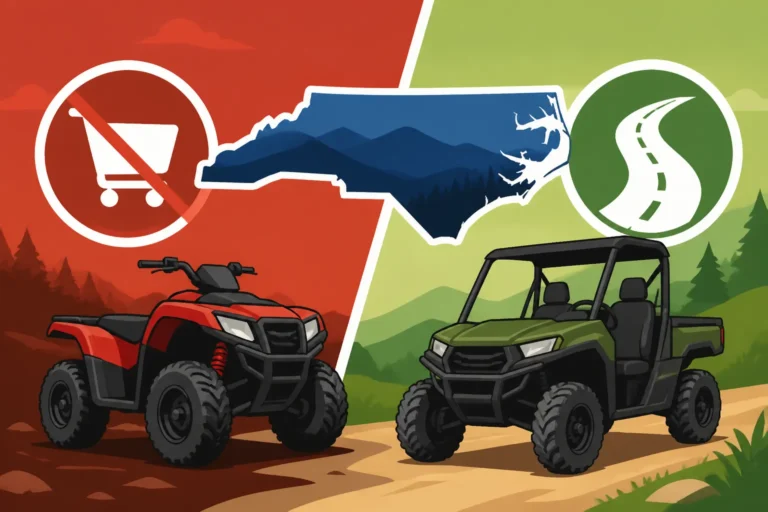
It’s a common point of confusion for riders across North Carolina. You bought an off-road machine, and naturally, your mind goes to "registration," much like you would for a car or truck. However, when it comes to your typical ATV or UTV, the North Carolina DMV operates a bit differently. They're primarily a titling agency for these machines, not a registration one. This distinction is crucial to understand from the get-go to avoid unnecessary frustration.
Understanding North Carolina's "No Registration" Stance
Many states require you to register your ATV or UTV, often providing a sticker or plate that indicates it's legal to operate on designated trails or specific public lands. This is why so many new owners in North Carolina expect the same process. They head to the DMV, paperwork in hand, ready to get their "off-road tags." The reality, however, is that North Carolina does not have a statewide registration system for privately owned ATVs or UTVs used exclusively off public roads. You won't be getting a yearly decal or a license plate for your quad to rip around the trails in Uwharrie or Badin Lake.
This can be a real head-scratcher, leaving many riders wondering how the state keeps track of these machines. The simple answer for most ATVs and UTVs is: it doesn't, in the same way it tracks cars. The DMV’s lack of a registration system for these vehicles means there's no central database tracking every ATV owner for off-road use, no annual renewal fees, and no state-issued number to display on your machine. This often leads to the question of what exactly you do need to do to legally own and operate your machine, and that brings us squarely to the concept of titling. If you want to dive deeper into why this is the case, you might find [Why North Carolina Has No ATV Registration] helpful.
The Essential Role of Titling for Off-Road Machines
While "registration" might be off the table for most ATVs and UTVs in North Carolina, "titling" is very much on it, and it's where the DMV comes into play in a big way. A title is the legal document that establishes ownership of your machine. Think of it as the deed to your property, but for your quad or side-by-side. It doesn't grant you permission to ride on public roads (that's a whole other can of worms!), but it absolutely proves that the machine belongs to you, and not someone else.
The DMV is the issuing authority for these titles. When you buy a new ATV from a dealer in, say, Greensboro, or a used UTV from a private seller down in Brunswick County, the process of transferring or obtaining that title usually goes through the DMV. This is a critical step that validates your ownership and provides a record should you ever need it. Without a title, proving you are the rightful owner can become an uphill battle, especially if there's ever a dispute or a theft. In essence, the DMV isn't concerned with whether your ATV is "registered" for trail use, but rather whether its legal ownership is properly documented. You can learn more about this by reading [Titling an ATV in North Carolina Is Optional].
Why You Should Strongly Consider Titling Your North Carolina ATV
Even though titling an ATV in North Carolina is technically optional for many off-road machines, it's a decision with significant implications. Many riders, especially those new to the off-road scene, might skip this step, thinking it's an unnecessary hassle or expense since there's no "registration" requirement. However, that choice can lead to a host of headaches down the road. Taking the time to title your machine is one of the smartest moves you can make as a responsible owner in the Tar Heel State.
Protecting Your Investment and Proving Ownership
Your ATV or UTV is a significant investment, often costing as much as a used car. Imagine purchasing a new side-by-side only for it to be stolen from your property in the mountains. Without a title, proving to law enforcement or your insurance company that the machine was yours can be incredibly difficult, if not impossible. The title acts as irrefutable evidence of your ownership, providing a clear paper trail from the manufacturer or previous owner to you. This becomes critical in cases of theft recovery, helping authorities return your machine if it's found.
Beyond theft, a title offers peace of mind in other situations. If you ever need to use your machine as collateral for a loan, lenders almost universally require a clear title. In the unfortunate event of a legal dispute over ownership, or if you pass the machine down to a family member, the title simplifies everything, leaving no room for ambiguity. It's truly the bedrock of secure ownership for your off-road vehicle. For more on the value of a title, check out [Why a North Carolina Title Is Worth Having].
Facilitating Smooth Sales and Purchases
Buying or selling a used ATV or UTV without a title in North Carolina is like trying to buy a house with no deed – it's fraught with risk and can deter legitimate buyers or sellers. When you're buying a machine, the seller presenting a clear, signed-over title immediately instills confidence. It confirms they are the legal owner and have the right to transfer the machine to you. This protects you from inadvertently purchasing a stolen vehicle or one with hidden liens. Imagine finding a fantastic deal on a quad near Raleigh, only to discover the seller has no title and can't prove legitimate ownership. That "deal" quickly becomes a huge liability.
Conversely, if you're selling your ATV, having a title makes the process much smoother and faster. Buyers are far more likely to pay a fair price and proceed with the sale when they know they're acquiring a legitimate machine with proper documentation. You can also use a robust bill of sale to supplement the title, particularly for details not found on the title itself. Services like LawDepot offer customizable bill of sale templates that can cover all the crucial details for your specific transaction, providing an extra layer of protection for both parties. Without a title, potential buyers might offer significantly less, or simply walk away, because of the perceived risks. Whether you're selling or [Buying a Used ATV in North Carolina], a title is your best friend.
Decoding the Titling Process: Your Steps at the North Carolina DMV
Okay, so you're convinced that titling your ATV or UTV is the smart move. Great! Now, let's talk about how you actually navigate the North Carolina DMV to get it done. The process, while specific, isn't overly complicated if you come prepared with the right information and paperwork. It generally involves gathering several key documents, filling out forms accurately, and understanding where and how to submit everything. Don't worry, it's not as daunting as it might seem.
Gathering the Necessary Paperwork and Information
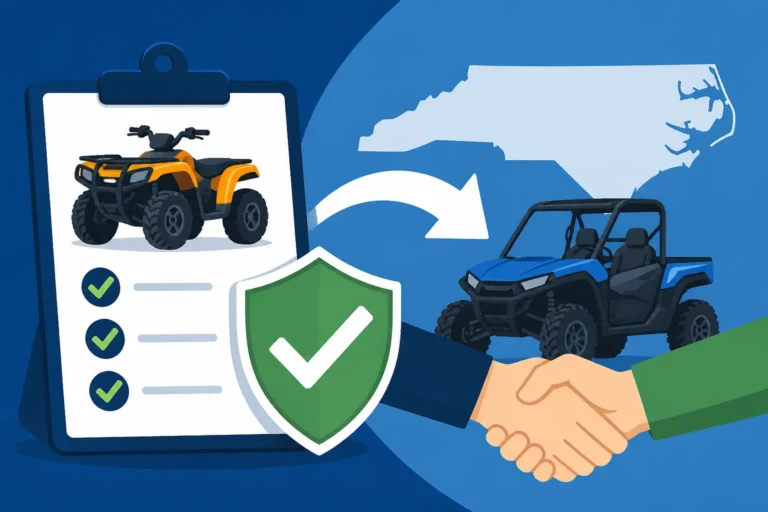
Preparation is key when dealing with the DMV. Before you even think about heading to a tag office or mailing anything in, make sure you have all your ducks in a row. The primary document you'll need is the Application for Certificate of Title, known as Form MVR-1. This is the bedrock of your titling application. If you purchased a used machine, you'll also need the previous title, properly signed over to you by the seller. For new machines bought from a dealer, they will typically handle much of this initial paperwork for you, but you'll still be involved in providing information.
Beyond the MVR-1 and previous title (if applicable), you’ll need a bill of sale, especially for private transactions. This document details the sale, the purchase price, and the parties involved. LawDepot can be a valuable resource here for creating a professional and legally sound bill of sale. You’ll also need your valid North Carolina driver's license or identification card. Make sure the Vehicle Identification Number (VIN) from your machine is readily available, as it will be required on all forms. For used machines, there’s also the North Carolina Damage Disclosure Statement (Form MVR-1A), which the seller needs to complete, detailing any damage exceeding a certain percentage of its fair market value. Having all of this [North Carolina ATV Title Paperwork] organized beforehand will save you immense time and potential re-trips.
Completing Your Application and Submitting It
Once you’ve assembled your paperwork, the next step is to accurately complete Form MVR-1. Pay close attention to every field, ensuring all information matches your supporting documents precisely. Any discrepancies can lead to delays or rejection of your application. You'll need to detail the machine's make, model, year, and crucially, its VIN. You'll also declare the purchase price, which is used to calculate the Highway Use Tax. If you’re adding a lienholder (like a bank that financed your purchase), their information will also need to be included.
After completing MVR-1 and any other required forms (like MVR-1A for damage disclosure), you have a couple of options for submission. You can take all your documents to a local North Carolina license plate agency (often referred to as a "tag office"). This is often the preferred method for many, as a clerk can review your paperwork on the spot, collect fees, and sometimes even catch errors before they become problems. Alternatively, you can [Mailing a Title Application to the North Carolina DMV], though this usually entails a longer processing time and less immediate feedback on your application's completeness. Regardless of how you submit, always make copies of all your documents for your records before handing them over. This simple step can be a lifesaver if anything gets lost in transit or requires follow-up.
Unpacking the Costs: Fees and Taxes for Titling Your Machine
Nobody likes surprise expenses, especially when dealing with official paperwork. While the act of titling your ATV or UTV in North Carolina doesn't involve annual registration fees, there are still costs associated with obtaining that initial title. It's important to understand these charges beforehand so you can budget accordingly and avoid any sticker shock at the DMV counter. The primary cost you'll encounter isn't a "sales tax" in the traditional sense, but rather something called the Highway Use Tax, along with a few other minor fees.
Understanding the Highway Use Tax
This is often the most substantial cost associated with titling an ATV or UTV in North Carolina. Instead of a sales tax, the state levies a "Highway Use Tax" on vehicles that require a title, even if those vehicles are primarily used off-road. The rationale here is a bit nuanced, but for our purposes, it's what you'll pay. This tax is calculated at 3 percent of the vehicle’s purchase price or fair market value, whichever is greater. So, if you bought a shiny new side-by-side for $15,000, you're looking at a $450 Highway Use Tax payment.
What happens if you got a great deal, or received the machine as a gift? The DMV won't just take your word for it if the stated price is unusually low. They have guidelines to assess the fair market value, often using valuation guides for vehicles. So, even if you paid $500 for a machine that's clearly worth $2,000, the tax might be calculated on the higher amount. This can sometimes catch people by surprise, so always be prepared for the tax to be based on the realistic value of the machine. The good news is that this is typically a one-time tax at the time of titling. Learn more about this specific tax by reading [North Carolina's 3 Percent Highway Use Tax].
Other Fees You'll Encounter
In addition to the Highway Use Tax, you'll also pay a specific title fee. This is a much smaller, flat fee for the actual processing and issuance of the title document itself. It covers the administrative costs for the DMV to create and mail your official proof of ownership. While this amount isn't typically large, it's an essential part of the overall titling expense.
If you financed your ATV or UTV purchase, and there's a lien on the machine (meaning the lender holds an interest until you pay off the loan), you'll likely incur a small lien recording fee. This fee allows the DMV to officially note the lien on the title document, protecting the lender's interest. This is standard procedure for any financed vehicle, whether it's an off-road machine or a passenger car. Finally, keep in mind that fees can occasionally change, so it's always a good idea to check the official North Carolina DMV website or call your local tag office for the most current figures before you go. Understanding these fees helps you budget accurately for [North Carolina ATV Title Cost].
Beyond Standard ATVs: When the DMV Gets More Involved
While the general rule in North Carolina is "no registration, optional titling" for most off-road machines, there are specific circumstances and types of vehicles where the DMV's involvement expands significantly. These exceptions are crucial to understand, as misunderstanding them could lead to legal issues or prevent you from operating your machine as intended. It's not a one-size-fits-all situation, and North Carolina law has carved out specific categories that require a different approach.
The Special Case of Modified Utility Vehicles (MUVs)
Here's where things get interesting and a bit more complex. North Carolina law defines a category of vehicle called a "Modified Utility Vehicle," or MUV. These are machines, often side-by-sides, that can be legally registered and operated on public roads under very specific conditions. Unlike your typical ATV or UTV, an MUV requires registration with the DMV, meaning you will get a license plate and be subject to annual renewals, just like a car. This is a significant departure from the "no registration" rule.
To qualify as an MUV, a machine must meet a very stringent set of criteria regarding engine size, dimensions (length, width, height), top speed, and specific safety equipment (like turn signals, a speedometer, and a parking brake). Most factory-standard side-by-sides simply don't meet all these requirements without modifications. The DMV ensures these machines are titled, registered, and properly equipped before they can hit the pavement. If you're hoping to make your side-by-side "street legal" in North Carolina, you're looking at going through the MUV classification process with the DMV, which is a much more involved undertaking than simply titling an off-road ATV. You can delve into the specifics of this route by checking out [The Modified Utility Vehicle in North Carolina].
Handling Unique Titling Scenarios
Beyond the standard purchase of a new or used ATV, the DMV also provides pathways for titling machines in more unique situations. For instance, if you've inherited an ATV after the passing of a loved one, the process involves providing specific documentation like a will, death certificate, and possibly probate court orders, along with the MVR-1 application. This ensures the machine is legally transferred into your name. See [Titling an Inherited Machine in North Carolina] for more information.
Another common scenario is dealing with a machine that has a lien. If you're paying off a loan on your ATV, the lender will likely hold the physical title or be listed as the lienholder on it. Once the loan is paid in full, you'll need to work with your lender to get a lien release, which you then submit to the DMV to obtain a clear title in your name. Then there's the frustrating event of a [Replacing a Lost North Carolina ATV Title]. The DMV has a process for applying for a duplicate title, which typically involves filling out a specific form and paying a fee, but it's much easier if you have your VIN and can prove previous ownership. Even if you've bought a machine from out-of-state, the North Carolina DMV has procedures to title it here, often requiring the out-of-state title and an inspection to verify the VIN. All these scenarios highlight the DMV's central role as the record-keeper for vehicle ownership, even for machines primarily ridden off the beaten path.
| Form Name (Example) | Purpose | Who Fills It Out | Key Information Needed |
|---|---|---|---|
| MVR-1 | Application for Certificate of Title | Buyer/Owner | VIN, Make, Model, Year, Purchase Price |
| MVR-1A | Damage Disclosure Statement | Seller | Details of damage exceeding 25% FMV |
| Bill of Sale | Documenting the sale transaction for private purchases | Buyer & Seller | Purchase Price, Date, Buyer/Seller Info |
| Previous Title | Proof of ownership transfer from prior owner | Previous Owner (signs over to new owner) | VIN, Owner Names, Signature |
| Lien Release | Document confirming a loan is paid off | Lender | VIN, Loan Account Number |
Disclaimer
This article is for general informational purposes only and does not constitute professional advice. Laws, prices and regulations vary by location and change over time. Consult a qualified professional for guidance on your specific situation.