What North Carolina Counts as an ATV
Navigating the world of off-road vehicles in North Carolina can feel like trying to solve a riddle wrapped in red tape, especially when you're just trying to figure out what your machine actually is in the eyes of the law. Many folks assume "ATV" covers any four-wheeled, off-pavement ride, but our state's Department of Motor Vehicles (DMV) has specific criteria. This guide is here to untangle that confusion, walking you through exactly what North Carolina considers an all-terrain vehicle and why that definition is so crucial for every owner and rider.
Understanding North Carolina's Core Definition of an ATV
The term "ATV" gets thrown around a lot, often loosely, to describe a wide range of vehicles designed for dirt, mud, and trails. But in North Carolina, when we talk about an All-Terrain Vehicle, we're actually referring to a very specific type of machine as defined by state law. This isn't just bureaucratic jargon; it directly impacts everything from whether you need a title to where and how you can legally ride. Getting this definition straight is the first, most important step in being a responsible and informed off-road enthusiast in the Tar Heel State.
The Basic Characteristics of an All-Terrain Vehicle
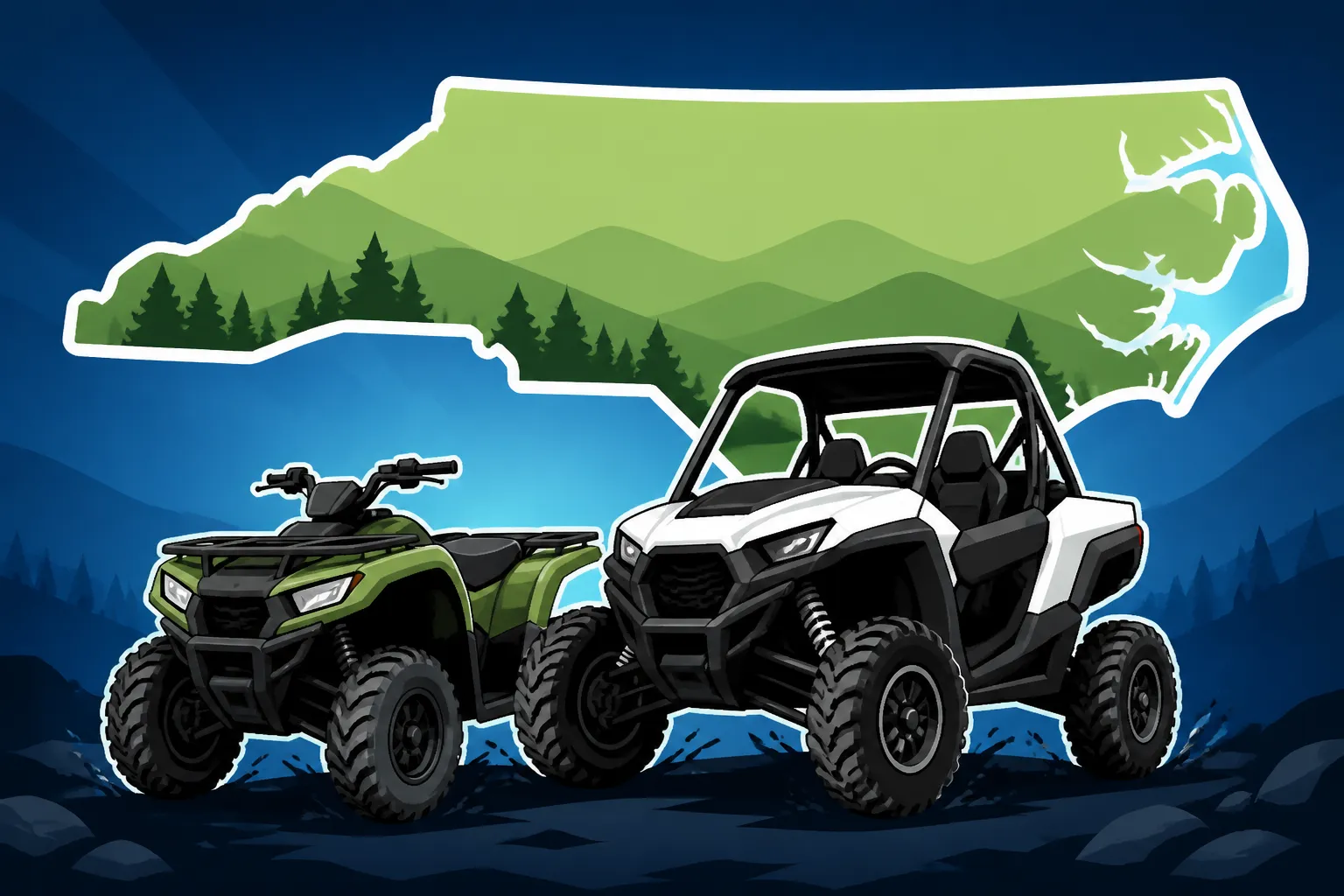
At its heart, North Carolina defines an ATV as a motorized vehicle designed primarily for off-highway use. It typically has three or more low-pressure tires, a seat designed to be straddled by the operator, and handlebars for steering. Think of your classic quad or three-wheeler – those are the images the state's definition conjures. The key here is "straddled" and "handlebars." This immediately sets it apart from vehicles where you sit in a seat with a steering wheel, which we'll delve into a bit later. These machines are built for navigating rugged terrain, often without much suspension travel compared to their larger UTV cousins, and are generally lighter and more agile for single-operator maneuvering.
The law is focused on the design and intended use of the vehicle. If it looks like a traditional quad, handles like a quad, and is sold as an ATV, chances are good that's how North Carolina will classify it. This foundational understanding is crucial because it informs every other aspect of ownership, from safety requirements to whether you'll ever interact with the DMV beyond an optional titling process. It’s not about how you use it, but how the manufacturer designed it and how the state interprets that design.
How North Carolina Distinguishes ATVs from Other Off-Road Machines
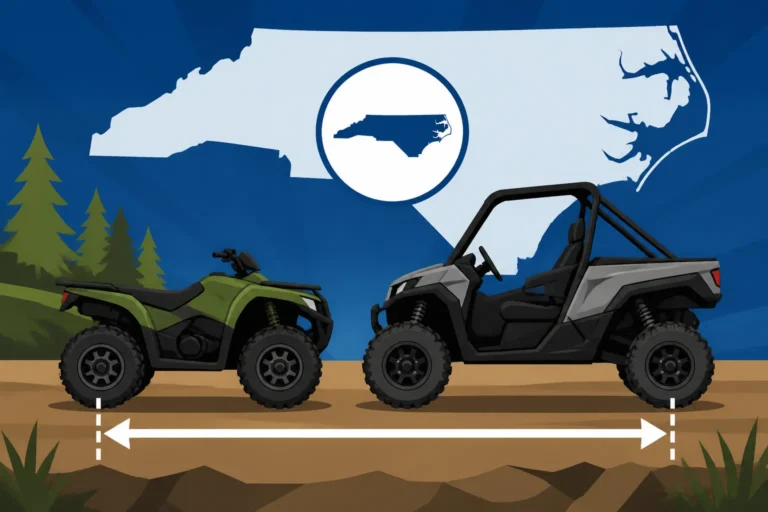
This is where the nuances really come into play. North Carolina’s definition of an ATV is quite specific, and it helps to differentiate it from other popular off-highway vehicles like side-by-sides (UTVs), golf carts, or even dirt bikes. The crucial distinction lies in the operator's posture and control input. With an ATV, you're straddling the machine like a motorcycle, using handlebars to steer, and typically operating it as a single rider, or occasionally with a specifically designed factory two-up seat. Dirt bikes are two-wheeled, so they're easily distinguishable. Golf carts are designed for low-speed, often paved, recreational use and have bench seats and a steering wheel.
Side-by-sides, or UTVs, are perhaps the most common point of confusion. While also designed for off-highway use, they feature side-by-side seating (hence the name), a steering wheel, and often seat belts, much like a small car. Because of these distinct design elements – seating arrangement and steering mechanism – UTVs do not fall under the general North Carolina definition of an ATV. This distinction is vital because the rules for operating UTVs, especially regarding street legality, can be very different, as we'll explore when we discuss the concept of a [Modified Utility Vehicle in North Carolina]. Understanding these subtle differences can save you a lot of headache and potential legal trouble down the road.
Why the DMV's Definition Matters for Owners
You might be thinking, "Who cares what the DMV calls it, as long as I can ride?" Well, the state's classification has profound implications for you as an owner. For starters, North Carolina has [Why North Carolina Has No ATV Registration], which means you generally won't be registering your ATV with the state in the same way you would a car. However, if your machine doesn't fit the ATV definition and instead falls into another category, like an MUV, then registration, titling, and even insurance become mandatory.
Beyond basic administrative tasks, the definition directly impacts safety regulations. Different vehicle types have different rules regarding helmet use, age restrictions, and passenger allowances. Knowing your machine's official classification ensures you're adhering to the correct laws and keeping yourself and your passengers safe. It also affects [Titling an ATV in North Carolina Is Optional], but if your machine isn't an ATV, a title might be absolutely required. This means if you ever plan to sell your machine, understanding its legal standing is paramount for a smooth transaction.
The "Off-Highway Vehicle" Umbrella and Its Subcategories
In North Carolina, the term "Off-Highway Vehicle" (OHV) acts as a broad umbrella, encompassing a variety of motorized vehicles built for adventures beyond paved roads. While "ATV" is often used colloquially as an all-encompassing term, legally speaking, it's just one specific type under this larger category. Understanding this hierarchy is key to navigating the state's regulations, as different subcategories within the OHV family can have unique rules, especially when it comes to where you can ride and what paperwork you might need. It’s like understanding that a retriever is a type of dog – it’s specific but also part of a broader group.
Where ATVs Fit in the OHV Landscape
Under North Carolina's OHV umbrella, you'll find a range of machines. This includes your traditional ATVs with straddle seats and handlebars, but it also extends to dirt bikes, which are two-wheeled OHVs. Then there are utility task vehicles (UTVs), commonly known as side-by-sides, which are often grouped with ATVs by enthusiasts but are distinct in the eyes of the law due to their steering wheel, bench or bucket seating, and roll cages. Even some specialized off-road motorcycles fall under this broad OHV definition. The common thread for all these machines is their primary design for unpaved terrain and their exclusion from most public roadways.
The categorization matters because while all these are OHVs, their specific definitions dictate compliance. An ATV might have one set of age restrictions for riders on public lands, while a dirt bike or a UTV might have slightly different ones. Similarly, when it comes to riding on state or national forest trails, while a general OHV permit might be required, the specific type of machine can sometimes influence permissible trails, especially regarding width restrictions. Therefore, even though they share the "off-highway" designation, the specific subcategory can still lead to different rules and requirements, making it crucial to know exactly what kind of OHV you own.
The Importance of Designated Off-Road Use
A critical component of North Carolina's ATV definition, and indeed the broader OHV category, is the emphasis on "designed primarily for off-highway use." This isn't just a suggestion; it's a fundamental characteristic that separates these vehicles from street-legal automobiles or even low-speed vehicles like golf carts, which have very different regulatory frameworks. An ATV is built for trails, fields, and rough terrain, not public roads. Its suspension, tire type, and lack of certain safety features (like turn signals or rearview mirrors, which are standard on road vehicles) all point to this specialized purpose.
This designated use is why you often see limitations on where ATVs can be operated. Generally, riding an ATV on public roads in North Carolina is prohibited, with very narrow exceptions, such as [North Carolina Rules for Crossing a Road] or specific [North Carolina's Farming Operations Exception]. Trying to use an ATV as a commuter vehicle or a general transportation method on paved surfaces will quickly lead to citations. The state is very clear: if it's an ATV, it belongs off-highway. This focus on intended use reinforces the need for riders to understand the capabilities and limitations of their machines within the confines of state law.
Machines That Don't Quite Fit the ATV Mold
It's common for some machines to blur the lines, making it tricky for owners to definitively classify them. What about specialized electric off-road vehicles? Or highly modified side-by-sides? Even custom-built buggies can cause confusion. North Carolina's general definition for ATVs—straddle seat, handlebars, low-pressure tires—is typically rigid enough to exclude most of these. Electric vehicles, for instance, still need to meet the fundamental design criteria to be considered an ATV; merely being electric doesn't change its classification. If it has a steering wheel and bucket seats, it's likely not an ATV, regardless of its power source.
The term What North Carolina Counts as an ATV is specific. For machines that don't quite fit, like a UTV, the state might have alternative classifications, such as the aforementioned Modified Utility Vehicle (MUV), which opens up a different set of rules for limited road use. However, achieving MUV status requires very specific modifications and DMV approval, making it a distinct category from a standard ATV. Therefore, if your machine doesn't perfectly align with the core ATV characteristics, it's essential to investigate its specific classification to avoid inadvertently breaking rules or missing required paperwork.
Engine Size, Weight, and Other Technical Specifications
When people talk about ATVs, discussions often turn to engine size, cubic centimeters (cc), horsepower, and overall weight. While these specs are certainly important for performance and understanding your machine's capabilities, they aren't always the primary factors North Carolina uses to define an ATV legally. There are some common misconceptions out there, and it’s important to separate the myths from the reality of state law, especially since technical specifications can sometimes trigger different rules, particularly for youth riders.
Dispelling Myths About Engine Displacement
One prevalent myth is that an ATV's classification hinges solely on its engine size. Many riders believe that anything over a certain cc, say 500cc or 700cc, automatically becomes something "more" than a basic ATV, or that smaller engines are somehow treated differently in terms of definition. In North Carolina, this isn't the case for the general definition of an ATV. The state's core definition, focusing on the straddle seat, handlebars, and low-pressure tires, doesn't typically include a specific engine displacement cutoff for adult machines. An ATV is an ATV, whether it's 250cc or 1000cc, as long as it meets those fundamental design characteristics.
Where engine size does become relevant is in the context of [North Carolina Rules for Riders Under 16]. Manufacturers often provide age recommendations based on engine size, and while North Carolina doesn't strictly legislate a maximum engine size for minors on private land (they used to have a 70cc rule that was repealed), these recommendations are crucial for safety. For the purposes of defining the vehicle type itself, however, simply having a larger or smaller engine doesn't change its status as an ATV under North Carolina law. It remains an ATV, designed for off-highway use, irrespective of its power plant's displacement.
The Role of Weight and Passenger Capacity
Similar to engine size, the raw weight of an ATV isn't a primary factor in North Carolina's definition of what constitutes an ATV. Whether your quad weighs 400 pounds or 700 pounds, if it has a straddle seat, handlebars, and low-pressure tires for off-highway use, it's an ATV. However, weight, along with overall dimensions, can become a distinguishing factor when a machine starts to approach the size and bulk of a UTV or when we talk about the specialized category of Modified Utility Vehicles (MUVs), which have specific weight and dimension requirements.
Passenger capacity is another element that can sometimes lead to confusion. Traditionally, ATVs were designed for a single rider. However, manufacturers now produce "two-up" ATVs specifically designed to carry a driver and one passenger, often with an extended seat and footrests for the passenger. As long as these machines retain the straddle seat and handlebar steering, North Carolina still classifies them as ATVs. The presence of a passenger seat doesn't suddenly transform it into a UTV or another category. For details on carrying riders, you might want to review [North Carolina Rules for Carrying a Passenger]. The critical element remains the fundamental design, not merely the ability to carry an extra person.
Manufacturer Labels and North Carolina Law
When you purchase a new ATV, it comes with a Manufacturer's Certificate of Origin (MCO) and usually plenty of warning labels. These documents and stickers are incredibly important because they reflect how the manufacturer intended the vehicle to be classified and used. The MCO will explicitly state if the vehicle is an "All-Terrain Vehicle" or a "Utility Vehicle" (UTV), among other designations. North Carolina's DMV largely defers to these manufacturer classifications when determining a vehicle's primary type. If the MCO says "ATV," that's generally what the state will consider it.
These labels also often contain age recommendations and other safety warnings, which, while not direct state laws regarding the vehicle's definition, are often referenced by state officials and are legally significant. For instance, the age warning sticker on a youth ATV isn't just a suggestion; it carries weight in determining appropriate use. Therefore, always keep your MCO and pay attention to the manufacturer's designations. They are your first and best indicators of how your machine is classified, and they align very closely with What North Carolina Counts as an ATV.
The Rise of the Side-by-Side: Are UTVs ATVs in North Carolina?
The popularity of side-by-sides (UTVs) has exploded over the past couple of decades. These machines, with their automotive-style controls and seating, offer a different off-road experience than traditional ATVs. This has led to a lot of confusion among riders: Are UTVs just bigger, fancier ATVs? In North Carolina, the answer from a legal standpoint is a definitive "no." While they share the "off-highway" designation, the state differentiates UTVs from ATVs due to distinct design features, and this distinction has significant consequences for owners.
Distinguishing UTVs from Traditional ATVs
The core difference between a UTV and a traditional ATV in North Carolina's eyes boils down to design. An ATV, as we've established, is defined by its straddle seat and handlebar steering. A UTV, on the other hand, is characterized by its side-by-side seating arrangement (often with a bench seat or multiple bucket seats), a steering wheel, and usually foot pedals for acceleration and braking – much like a golf cart or a small car. UTVs also typically come equipped with roll-over protection structures (ROPS) or full cages and often include seat belts, all features not inherent to the basic ATV definition.
This fundamental design difference means that despite both being designed for off-highway adventures, they are treated as separate classes of vehicles by the North Carolina DMV. This impacts everything from titling requirements to potential road-use options. You wouldn't apply for an ATV title for a UTV, for example, because the forms and classifications are distinct. Understanding this separation is crucial for any UTV owner to ensure they're complying with the correct set of rules and regulations in the state.
When a UTV Might Be Classified Differently
While a UTV isn't an ATV, it can sometimes fall into other specific classifications in North Carolina that come with their own set of rules. The most prominent of these is the "Modified Utility Vehicle" (MUV) category. An MUV is essentially a UTV (or a similar off-road utility vehicle) that has been modified and equipped to meet specific street-legal requirements, allowing it limited access to certain public roads. This is a very different path than standard ATV ownership and involves a much more rigorous process.
For a UTV to become an MUV, it must meet stringent criteria, including minimum engine size, specific dimensions (length, width, height), and the addition of various safety equipment like turn signals, a speedometer, rearview mirrors, and a parking brake. You can read more about these criteria in guides like [North Carolina MUV Registration Requirements] or [North Carolina MUV Engine Size Requirement]. The key takeaway is that while a UTV is not an ATV, it might, through extensive modification and state approval, transform into an MUV, thereby gaining a limited form of street legality not available to a typical ATV. This path is complex and involves careful attention to detail.
The "Modified Utility Vehicle" Exception
The MUV classification is a unique path in North Carolina for UTV owners who wish to operate their machines on public roads under specific conditions. It's a complex process that demands not only physical modifications to the UTV but also a rigorous inspection and approval process by the North Carolina DMV. Unlike an ATV, which remains an off-highway vehicle, an MUV gains a "street-legal" status, albeit a restricted one. This means MUVs are subject to titling, registration, and insurance requirements, much like a traditional car, which are generally not applicable to ATVs.
This exception is not for every UTV, nor is it a simple matter of bolting on a few accessories. The specific dimensions, such as [North Carolina's 58 Inch Width Limit] or [The 142-Inch Length Requirement], along with critical safety equipment, must be met. The MUV route is essentially North Carolina acknowledging the growing utility and recreational use of UTVs and providing a tightly controlled pathway for limited road integration. If you own a UTV and are considering this option, thoroughly understanding the [North Carolina MUV Street Legal Requirements] is absolutely essential, as it’s a distinct process from anything related to an ATV.
Implications of Classification: Titling, Safety, and Permitting
Understanding whether your machine is classified as an ATV, a UTV, or an MUV in North Carolina isn't just an academic exercise. This classification has direct, tangible implications for how you interact with state authorities, what paperwork you need, where you can legally ride, and what safety gear you must use. Ignoring these distinctions can lead to fines, citations, or even forfeiture of your machine, making it vital for every off-road enthusiast to be well-informed.
Titling an ATV in North Carolina Is Optional
One of the most significant implications of North Carolina's ATV definition is how it impacts titling. For most standard ATVs, obtaining a title from the North Carolina DMV is entirely optional. This is a common point of confusion for new owners, especially those coming from states where ATV titling is mandatory. Our state doesn't require a title for off-highway ATVs unless you're moving from a state that did title it or if you wish to finance it through a lender who requires a title as collateral. This flexibility can be a double-edged sword; while it reduces bureaucracy, it also means many privately bought machines may not have formal title documentation, which can complicate proving ownership.
Even though it's optional, many experienced riders and dealers still recommend titling your ATV. A title serves as irrefutable proof of ownership, which can be invaluable if your machine is ever stolen or if you decide to sell it. Without a title, a simple bill of sale might be your only proof, which can be less robust. You can find detailed steps on [How to Title an ATV in North Carolina] if you choose to pursue this. But remember, this optionality applies specifically to vehicles that meet the state's definition of an ATV, not necessarily UTVs or MUVs, which may have different requirements.
Safety Regulations Tied to ATV Definition
The classification of your machine directly dictates which safety regulations apply to you and your riders. North Carolina has specific [North Carolina Helmet Law for ATV Riders] and [North Carolina Eye Protection Requirement] rules for ATV operators, especially for those under the age of 18. Similarly, there are distinct rules regarding [North Carolina Rules for Riders Under 16] and continuous adult supervision. These rules are tailored to the dynamics of riding a straddle-seat, handlebar-steered ATV, where balance and body positioning are crucial.
For UTVs or MUVs, which feature roll cages, seat belts, and steering wheels, the safety regulations might shift. For instance, while helmets are generally recommended for UTVs, the specific legal requirements can differ from ATVs, especially if the UTV is operating as a registered MUV. The presence of seatbelts and a roll cage in a UTV means different safety considerations are at play. Therefore, knowing your machine's classification is paramount to ensuring you and your passengers are equipped with the correct safety gear and adhering to all applicable laws designed for your specific type of vehicle.
Permitting for Public Land Use
Another critical implication of ATV classification arises when you want to ride on public lands, such as our beautiful national forests. While many trails are designated "OHV trails," meaning they're open to off-highway vehicles, specific rules and permits often apply based on the type of OHV. You'll typically need to obtain a permit, often a [North Carolina Forest Day Permit] or season permit, to ride these trails. These permits are usually required per machine, regardless of its specific subcategory within OHV.
However, sometimes trail systems might have restrictions based on machine width, which can impact wider UTVs or customized vehicles. The underlying ATV definition ensures that the trail systems are designed for and can safely accommodate the typical ATV. If you have a UTV, or a particularly wide ATV, you might need to check specific trail rules to ensure your machine is permitted. Always check the rules for the specific area you plan to ride, such as [Brown Mountain OHV Trail System] or [Badin Lake OHV Trail Complex], as permits and specific vehicle restrictions can vary.
Common Misconceptions and Edge Cases
The world of off-road vehicles is constantly evolving, with new designs and power sources emerging regularly. This innovation can sometimes lead to confusion regarding how these machines fit into established legal definitions, especially when state laws might not keep pace perfectly. Understanding common misconceptions and how North Carolina addresses certain "edge cases" can help you avoid surprises and ensure your compliance, even with less conventional machines.
Electric Machines and ATV Status
With the rise of electric vehicles, many riders wonder how electric ATVs and UTVs are classified in North Carolina. Do they fall under the same rules as their gasoline-powered counterparts? Generally, yes. North Carolina's definition of an ATV focuses on the vehicle's design and intended use – straddle seat, handlebars, low-pressure tires, designed for off-highway use. The power source, whether gasoline, diesel, or electric, typically doesn't alter this fundamental classification. An electric quad that looks and handles like a traditional ATV will almost certainly be considered an ATV by the state.
The same logic applies to electric UTVs. If it has a steering wheel and side-by-side seating, it's generally a UTV, regardless of whether it's battery-powered. While the environmental impact and noise profile of electric machines are different, their legal classification usually remains tied to their physical design characteristics. So, if you're eyeing an electric off-road machine, assume it will follow the same titling, safety, and operational rules as its internal combustion engine equivalent based on its physical form factor.
Youth ATVs and Their Specific Rules
Youth ATVs are a special category that often lead to specific questions. While they are still fundamentally "ATVs" in North Carolina's definition (straddle seat, handlebars, off-highway design), the state has additional regulations specifically aimed at protecting young riders. While the old 70cc engine rule for riders under 12 was repealed, the spirit of safe operation for minors remains strong. There are still [North Carolina Rules for Riders Under 16], which include age-appropriate supervision requirements, such as [Continuous Visual Supervision Under North Carolina Law], and mandatory helmet and eye protection for those under 18.
It’s important to remember that manufacturers also have age recommendations printed directly on youth ATVs. While these aren't directly state law regarding the vehicle's definition, they are heavily considered for safe operation. A 90cc youth ATV is still an ATV, but its operation by a minor is subject to more stringent oversight and safety gear requirements than an adult on an adult-sized machine. Always prioritize safety and adhere to manufacturer guidelines when purchasing and operating youth ATVs, even if the engine size itself doesn't change the vehicle's core classification.
Homebuilt Machines and DMV Scrutiny
What if you've pieced together your own off-road creation? A homebuilt machine can present unique challenges for classification. If your custom build closely mimics the design of a traditional ATV – straddle seat, handlebars, low-pressure tires – then it will likely be considered an ATV. However, the lack of a Manufacturer's Certificate of Origin (MCO) can make it difficult to prove its origins and intended use, especially if you ever choose to pursue optional titling. The DMV typically relies on the MCO for initial classification.
If your homebuilt machine deviates significantly from the standard ATV design, say it has a steering wheel or multiple seats, it might fall into a more ambiguous "special construction" vehicle category or, if it meets specific criteria, could be considered a "Modified Utility Vehicle" if street-legal intentions exist. In such cases, you might face closer scrutiny from the DMV, potentially requiring inspections or even a VIN assignment if you seek a title. It's always best to consult with the North Carolina DMV directly if you have a unique, homebuilt off-road machine and are unsure of its classification or potential titling requirements.
What a North Carolina ATV Is NOT (and Why It Matters)
Just as important as understanding what North Carolina does count as an ATV is knowing what it doesn't. Misclassifying your vehicle can lead to unexpected legal issues, from fines for operating an unregistered vehicle on public roads to improper insurance coverage. Many vehicles are designed for off-road use, but their fundamental design and purpose place them in different categories, each with its own set of rules and regulations.
Golf Carts, Low-Speed Vehicles, and ATVs
One of the most common mistakes people make is confusing golf carts or Low-Speed Vehicles (LSVs) with ATVs. While a golf cart might be used off-road on a golf course or private property, and some are modified for more rugged terrain, they are fundamentally different from ATVs in North Carolina's eyes. Golf carts are designed for low-speed travel, typically on manicured courses or very limited public roads, and feature bench seating and a steering wheel. LSVs are street-legal vehicles that meet specific federal safety standards and have a top speed of 20-25 mph, also with automotive-style controls.
Neither golf carts nor LSVs are classified as ATVs in North Carolina. This distinction is crucial because golf carts and LSVs have very specific rules regarding road use, registration, and driver licensing that are entirely different from ATV regulations. For instance, an LSV requires registration and a license to operate on approved public roads, while an ATV generally does not (unless it's an MUV). Trying to operate your ATV under golf cart rules, or vice versa, will quickly put you in violation of state law.
Farm Equipment Exemptions
North Carolina, being an agricultural state, often provides specific exemptions for vehicles used primarily for farming operations. This can sometimes lead to the misunderstanding that any ATV or UTV used on a farm is automatically exempt from all regulations. While there are indeed specific allowances, particularly regarding limited use on public roads for agricultural purposes (see [North Carolina's Farming Operations Exception]), this doesn't change the classification of the vehicle itself. An ATV used on a farm is still an ATV, and a UTV used on a farm is still a UTV.
The exemption typically applies to how the vehicle can be used, not what the vehicle fundamentally is. For example, a farmer might be permitted to cross or even briefly travel on a public road in their ATV for farm business, where a recreational rider would be cited. However, this doesn't mean the farm ATV is suddenly street-legal or reclassified. It simply means a specific legal exception applies to its operation under very defined circumstances. Always understand the scope of these exemptions, as they are often narrow and situation-specific.
Dirt Bikes and Motorcycles Versus ATVs
Another clear distinction needs to be drawn between dirt bikes (off-road motorcycles) and ATVs. While both are OHVs designed for rugged terrain, their number of wheels sets them apart. Dirt bikes have two wheels, requiring different riding skills, balance, and often leading to different safety considerations. North Carolina's laws and definitions typically treat two-wheeled off-road motorcycles separately from four-wheeled ATVs.
While they share many similar regulations regarding off-highway use, public land access, and safety gear like helmets, their fundamental vehicle classification remains distinct. This means that if you're looking for information on specific regulations, always ensure you're referencing the rules for an "ATV" if you own a quad, and "motorcycle" or "off-road motorcycle" if you own a dirt bike. The difference is clear-cut, and trying to apply rules from one category to the other can lead to confusion or non-compliance.
Verifying Your Machine's Status
After reading through all this, you might be thinking, "How do I definitively figure out what my machine is in North Carolina's eyes?" This is a perfectly valid question, especially if you've bought a used machine without much paperwork or if it's an older model. Fortunately, there are reliable ways to verify your vehicle's classification, ensuring you're operating within the bounds of North Carolina law.
Reviewing Your Manufacturer's Certificate of Origin
The absolute best place to start when verifying your machine's classification is its Manufacturer's Certificate of Origin (MCO). When a new vehicle rolls off the assembly line, the MCO is its birth certificate, declaring its type, VIN, engine size, and other critical details. This document will explicitly state if your vehicle is an "All-Terrain Vehicle" (ATV), a "Utility Vehicle" (UTV), or some other designation. The North Carolina DMV relies heavily on this document for initial classification and any potential titling.
If you bought your machine new, you should have received the MCO. If you bought it used, the previous owner should have either provided you with the MCO (if it was never titled) or a North Carolina title that mirrors the MCO's classification. Always request this document when purchasing a machine, especially privately, as it's the strongest proof of your vehicle's original classification. Keeping this document safe and accessible is a smart move for any off-road vehicle owner.
Consulting the North Carolina DMV
If you don't have an MCO, or if you have a particularly unusual or homebuilt machine, the North Carolina Division of Motor Vehicles (DMV) is your ultimate authority. While dealing with any DMV can sometimes feel like a bureaucratic labyrinth, they are the official arbiters of vehicle classification. You can contact your local DMV office or visit one in person with any available paperwork you have, such as a bill of sale, and the vehicle's Vehicle Identification Number (VIN). Provide them with as much detail as possible about your machine's design and features.
The DMV can often look up a VIN to see if a previous title or registration existed, which would indicate its classification. For machines without a clear history or MCO, they might provide guidance on whether an inspection is needed or how to proceed with establishing its status. While it might take a bit of effort, getting a definitive answer directly from the source will give you peace of mind and prevent future complications regarding [North Carolina ATV Title Paperwork] or operational legality.
Legal Documentation and Bills of Sale
Beyond the MCO or a direct consultation with the DMV, other legal documentation can help affirm your machine's status. A well-drafted bill of sale, especially for a private purchase, should ideally include the VIN and clearly state the type of vehicle being sold (e.g., "1998 Honda FourTrax 300 ATV"). While a bill of sale isn't a classification document itself, it helps establish the shared understanding between buyer and seller regarding the machine's type at the time of sale. You might even find templates on platforms like LawDepot that help you create a clear and comprehensive bill of sale, stating the vehicle type.
If you are buying a used machine and the seller claims it's an ATV, but you have doubts, compare its features to the core characteristics discussed here. Does it have a straddle seat and handlebars? Or a steering wheel and bucket seats? If the latter, it's likely a UTV, not an ATV. When in doubt, asking for the MCO or checking with the DMV is always the safest course of action. A good bill of sale from a reputable source, possibly using a template from a service like LawDepot, can provide a layer of protection and clarity, especially when no formal title exists for an optional-title ATV.
Here’s a quick overview of how North Carolina generally sees different off-road machines:
| Vehicle Type | Steering Control | Seating Position | Primary Intended Use | NC ATV Classification? | Typical Titling Requirement | Common Road Use (NC) |
|---|---|---|---|---|---|---|
| Traditional ATV | Handlebars | Straddle | Off-highway | Yes | Optional | Generally Illegal |
| UTV (Side-by-Side) | Steering Wheel | Side-by-side | Off-highway / Utility | No | Not as an "ATV" | Generally Illegal |
| Modified Utility Vehicle (MUV) | Steering Wheel | Side-by-side | Off-highway / Utility | No | Mandatory (as MUV) | Limited, per rules |
| Dirt Bike | Handlebars | Straddle | Off-highway | No (Motorcycle) | Optional | Generally Illegal |
| Golf Cart | Steering Wheel | Bench/Side-by-side | Golf Course / Low-Speed | No | Not required | Limited, per rules |
This table provides a general snapshot, but remember that specific rules and exceptions always apply. Always consult the most current North Carolina DMV guidelines for your specific situation.
Disclaimer
This article is for general informational purposes only and does not constitute professional advice. Laws, prices and regulations vary by location and change over time. Consult a qualified professional for guidance on your specific situation.