The 142-Inch Length Requirement
Oh, the joys of trying to make sense of North Carolina's rules for off-road machines! It often feels like you need a law degree just to figure out if your beloved side-by-side can legally touch a paved road. Many folks get excited about the prospect of making their UTV "street legal," only to hit a wall of very specific requirements. One of the most head-scratching of these is the exact length your machine needs to be to qualify as a Modified Utility Vehicle, or MUV. This guide is going to meticulously break down that critical 142-inch length requirement, helping you understand what it means, why it exists, and whether your machine can realistically meet it in our great state.
Understanding North Carolina's MUV Definition
Let's start by laying the groundwork for what an MUV even is in North Carolina, because without that context, the 142-inch requirement is just a number floating out there. The state saw a growing trend of people wanting to use their beefier utility vehicles for more than just off-road fun or farm work, especially in rural areas where pavement might be the only way to get from one section of land to another. But regular ATVs and UTVs aren't designed for road travel, and they certainly aren't built to the same safety standards as cars. So, North Carolina carved out a very specific niche.
What Exactly is a Modified Utility Vehicle?
In essence, a Modified Utility Vehicle (MUV) is North Carolina's answer to bridging the gap between an off-road utility vehicle and a traditional road-legal automobile. It's an attempt to acknowledge the practical needs of residents who own machines that are more robust than a golf cart but not quite a car. The state legislature essentially said, "Okay, if you want to drive your powerful utility machine on certain public roads, it needs to meet a minimum set of safety and design criteria to ensure it's somewhat compatible with other vehicles on the road." This isn't about making every UTV street legal; it's about defining a specific type of utility vehicle that, through its original design or modifications, can safely share the road in limited circumstances.
Think of it this way: your standard recreational side-by-side, straight from the dealership, is likely considered an ATV by North Carolina law for most purposes, even if it has four seats and a steering wheel. It's designed for dirt, trails, and rough terrain. An MUV, however, is a utility vehicle that has been modified or originally manufactured to meet a series of dimensions, performance metrics, and safety equipment standards that North Carolina believes make it acceptable for limited public road use. It's a highly particular classification, not a blanket approval. This is your path to [North Carolina's Modified Utility Vehicle Route].
Why North Carolina Created the MUV Category
The creation of the MUV category wasn't just arbitrary; it came from a very real need and observation. Across our state, from the mountains to the coast, utility vehicles are incredibly popular. Farmers use them to tend fields, landowners use them to maintain property, and enthusiasts use them for recreation. For many, taking a UTV a short distance down a paved road to reach another field, a neighbor's property, or even a local store is far more practical than loading it onto a trailer. Yet, prior to the MUV classification, this was largely illegal, exposing riders to potential fines and safety risks.
The legislature recognized that simply banning all off-road vehicles from roads wasn't practical, nor did it fully address the capabilities of some of the larger, more stable utility vehicles on the market. They also couldn't just throw open the gates, because public safety is paramount. So, the MUV category was born out of a desire to create a regulated pathway for certain machines to become road-worthy, albeit with strict conditions. It’s a compromise, allowing for greater utility for owners while attempting to maintain safety for everyone on the road. It ensures that if a utility machine is going to operate alongside cars and trucks, it must at least have a certain footprint, a certain level of power, and certain safety equipment. This legal framework defines [What Makes a Machine an MUV in North Carolina].
Deciphering the 142-Inch Length Requirement
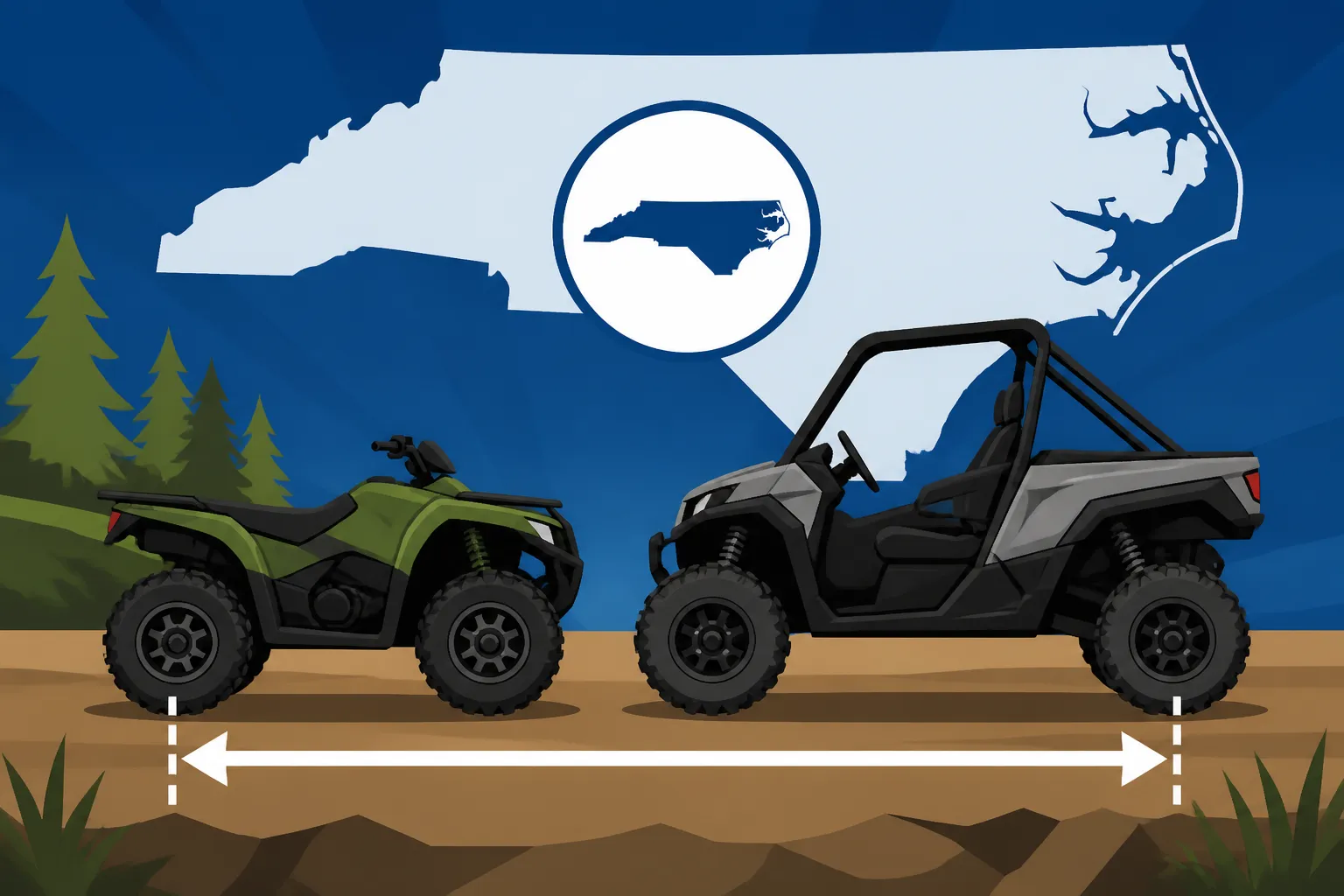
Now, let's get down to the nitty-gritty: the 142-inch length. This is one of those numbers that can trip up even the most diligent owner. It's not just "long enough"; it's a very specific measurement that your machine must meet or exceed to be considered an MUV in North Carolina. This isn't just a suggestion; it's a hard line.
How to Accurately Measure Your Machine's Length
Measuring your machine accurately is paramount, and it's not always as straightforward as grabbing a tape measure and stretching it from bumper to bumper. North Carolina law defines the length as the total distance from the foremost point of the vehicle to the rearmost point, including any permanently attached bumpers, hitches, or accessories. This means you can't just measure the frame; you need to account for anything that genuinely extends the machine's overall length.
Here’s a practical approach:
- Park on a Level Surface: This ensures you get a true measurement without any incline or decline skewing the results.
- Clear Obstructions: Remove anything temporarily attached, like coolers, jerry cans, or temporary cargo on racks, that aren't considered permanent fixtures of the vehicle itself.
- Use a Long Tape Measure: A 25-foot or even 50-foot tape measure is ideal. You want to avoid having to reposition and guess where you left off.
- Enlist a Helper: One person holds the end of the tape at the extreme front (e.g., the tip of the front bumper), while the other extends it to the extreme rear (e.g., the tip of the rear bumper or hitch receiver, if it's permanently part of the machine). Make sure the tape is taut and parallel to the ground.
- Be Precise: Read the measurement carefully. If your machine has a tow hitch that extends beyond the frame, that counts. If it has a front winch mount that protrudes, that counts. The goal is the absolute longest point to the absolute longest point. Don't round down; if it's 141.5 inches, it's not 142.
It might seem tedious, but getting this right is crucial. When you present your machine for inspection or submit paperwork, the numbers need to align with the actual vehicle.
The Rationale Behind the 142-Inch Limit
So, why 142 inches? This specific number isn't pulled out of thin air; it's a legislative choice aimed at achieving a certain level of safety and visibility on public roads. The intent behind this length requirement is largely about making sure MUVs have a substantial enough presence to be easily seen and recognized by other drivers. A shorter machine might be mistaken for something else or simply blend into blind spots more easily.
Here's a breakdown of the likely reasoning:
- Visibility and Road Presence: A longer vehicle is generally more visible. It occupies more space on the road, making it harder for drivers of cars and trucks to overlook, especially during lane changes or in traffic. This is critical for preventing accidents.
- Stability: While length isn't the sole factor in stability, a longer wheelbase can contribute to a more stable ride, particularly at the higher speeds an MUV is expected to achieve (remember the [40 mph to Qualify as an MUV] rule?). This makes the machine more predictable and safer in a mixed-traffic environment.
- Distinction from Smaller Machines: The 142-inch requirement, along with the [North Carolina's 58 Inch Width Limit] and [70 Inches From the Ground] requirements, helps differentiate MUVs from smaller, purely recreational ATVs and even some compact UTVs. It creates a clearer class of vehicle that, by its very dimensions, should be more capable of road use.
- Avoiding Misclassification: By setting specific dimensional standards, North Carolina aims to prevent individuals from registering smaller, less suitable machines for road use. It draws a clear line in the sand, ensuring that only machines meeting a certain "heavy-duty" or "utility" profile can qualify.
This precise measurement isn't just about making your life difficult; it's a deliberate design choice in the law to enhance safety and ensure MUVs aren't undersized for the public road environment they're being permitted to enter.
Practical Implications for Side-by-Side Owners
This 142-inch length requirement has significant practical implications, especially for those who own or are considering purchasing a side-by-side with the hope of making it street legal in North Carolina. It's often where the dream of cruising down a paved road hits a brick wall.
Most Stock Side-by-Sides Don't Meet the MUV Length
Here's the frustrating reality for many side-by-side owners: a vast majority of stock utility vehicles, even the larger four-seater models, simply do not meet the 142-inch length requirement straight from the factory. Manufacturers design these machines for off-road performance, maneuverability, and cargo capacity, not necessarily for a specific state's MUV length rules.
Consider popular models. Many two-seater side-by-sides fall well short of this mark, often coming in at 110-125 inches. Even many four-seaters, while longer, still frequently hover in the 130-140 inch range, tantalizingly close but still falling short of the required 142 inches. This is why you often hear the lament that [Why Most Side-by-Sides Miss the Mark]. It's not a design flaw on the manufacturer's part; it's just that their design objectives differ from North Carolina's very specific MUV criteria.
This means if you're pulling a brand-new side-by-side off a dealer's lot in Statesville or buying a used one advertised in the Uwharries, you need to check those specs against the MUV requirements before you get your heart set on road legality. Assuming it's long enough because it "looks big" is a common mistake that can lead to disappointment and wasted effort when it comes to [Registering a Side-by-Side in North Carolina].
Modifications to Meet the Length Requirement
Given that most stock side-by-sides don't meet the 142-inch length, the obvious question is: can you modify your machine to meet it? The answer is possibly, but it comes with a host of considerations, challenges, and potential drawbacks.
Modifying a vehicle's length isn't as simple as adding a longer bumper. Any modification needs to be substantial, permanently attached, and structurally sound.
- Extended Bumpers/Hitches: This is the most common thought. You might consider fabricating or purchasing heavy-duty bumpers, both front and rear, that extend the overall length. However, these must be robust and securely mounted, not flimsy add-ons. They become part of the vehicle's permanent structure.
- Cargo Racks or Beds: Some owners might look into fabricating an extended cargo bed or rack system that is permanently affixed to the frame. Again, this isn't about strapping a temporary cargo box on; it needs to be an integral, permanent part of the machine.
- Professional Fabrication: For serious modifications, you'll likely need the help of a professional fabrication shop. They can ensure that any extensions are safe, durable, and don't compromise the structural integrity or handling of the vehicle. This means extra cost and time.
Pros of Modification:
- It might be your only path to making your existing side-by-side an MUV.
- It could add utility, such as a stronger bumper or more cargo space.
Cons of Modification:
- Cost: Fabrication and installation can be expensive.
- Complexity: It's not a DIY project for most.
- Structural Integrity: Improper modifications can compromise the vehicle's safety and handling.
- Aesthetics: Extended bumpers might not always look great or fit with the machine's original design.
- Other Requirements: Remember, length is just one piece of the MUV puzzle. You still need to meet engine size ([Why an MUV Needs More Than 2,400cc]), width, height, speed, and safety equipment requirements. Even if you extend the length, you might still fall short on other critical criteria.
Before embarking on costly modifications, thoroughly research all MUV requirements and realistically assess whether your machine can meet them. Sometimes, it might be more cost-effective and less hassle to simply accept that your current machine isn't an MUV or to consider purchasing a utility vehicle specifically designed to meet these types of requirements.
The Bigger Picture: MUV Requirements Beyond Length
While the 142-inch length requirement is a significant hurdle, it’s critical to remember that it's just one piece of a much larger puzzle. North Carolina defines a Modified Utility Vehicle through a comprehensive set of criteria, and missing even one means your machine won't qualify for road registration. You truly have to meet all of them.
Engine Size and MUV Qualification
One of the most defining characteristics of an MUV, besides its dimensions, is its engine. North Carolina specifies that an MUV must have an engine displacement of [More Than Twenty-Four Hundred Cubic Centimeters] (2,400cc). This is a substantial engine size, far larger than what you'll find in most recreational ATVs and many smaller side-by-sides.
The rationale here is again rooted in safety and road compatibility. A machine with a larger engine is generally more capable of maintaining traffic speeds and accelerating safely in a road environment. It ensures that an MUV won't be a hazard by being excessively slow on roads where other vehicles are moving at 35-55 mph. A 2,400cc engine suggests a certain level of power and torque, making the machine less likely to impede traffic flow on permissible roads. This requirement immediately disqualifies countless popular side-by-sides that typically come with engines in the 800cc to 1,200cc range, even if they're otherwise large. This is a very firm prerequisite for MUV status.
Width and Height Considerations for MUVs
Beyond length, your MUV also needs to fit within specific width and height parameters. North Carolina states that an MUV must have a width of at least [North Carolina's 58 Inch Width Limit]. This means the machine, from its widest point (typically including tires, fenders, or mirrors), must measure 58 inches or more. This prevents narrow, more agile recreational machines from qualifying, favoring wider, more stable utility platforms. A wider stance contributes to better stability and a more substantial presence on the road.
Complementing the width, there's also a height requirement: an MUV must be at least [70 Inches From the Ground]. This measurement is typically taken from the lowest point of the tires to the highest point of the vehicle, which often includes the top of the roll cage or roof. A machine that is at least 70 inches tall is more likely to be seen by drivers of larger vehicles and trucks, reducing the risk of it being overlooked in traffic. It ensures the MUV isn't too low-slung, making it more visible and contributing to its "road presence." So, your side-by-side must be both wide and tall enough to meet these criteria.
Speed and Other Safety Features
Finally, an MUV must be capable of reaching certain performance thresholds and outfitted with specific safety equipment. As mentioned, the machine must be able to achieve a speed of at least [40 mph to Qualify as an MUV]. This is a crucial functional requirement, ensuring the MUV can keep pace with traffic on roads posted for 35-55 mph. Without this capability, even if it meets all other dimensions, it would be considered a hazard on public roads.
In addition to speed and dimensions, North Carolina's MUV laws include a host of equipment requirements designed to bring the utility vehicle closer to the safety standards of a conventional automobile. These typically include:
- Seat belts: For all occupants.
- Headlamps and taillamps: Working lights, often with turn signals.
- Brake lights: Functional and visible.
- Mirrors: Side mirrors and often a rearview mirror.
- Horn: An audible warning device.
- Speedometer: To monitor speed accurately.
- Parking brake: To secure the vehicle when stopped.
These are not optional extras; they are mandatory features for an MUV to be legally registered and operated on public roads. Trying to find a comprehensive checklist can be daunting, but often these forms can be sourced from the DMV website or from resources like LawDepot, which provides templates for various legal documents, including potentially a bill of sale which would be critical for verifying features if you buy used. Any machine hoping to gain MUV status must be meticulously inspected to ensure it possesses all these necessary safety components.
The Registration and Titling Process for MUVs
Once you've done all your homework, measured every inch, checked the engine specs, and made sure all the required safety equipment is in place, you’re ready to tackle the actual paperwork. This is where your journey takes you to the North Carolina Division of Motor Vehicles (DMV).
Applying for an MUV Title and Registration
The process of getting an MUV titled and registered is distinct from how you might handle a regular ATV, primarily because a standard ATV does not require registration in North Carolina. For an MUV, you are essentially going through a modified version of the vehicle titling and registration process that traditional cars and trucks undergo.
Here’s a general outline of what you can expect and the paperwork involved:
- Application for Certificate of Title (MVR-1): This is the core document. You'll need to fill this out completely, providing details about your machine, including its make, model, VIN, and odometer reading (if applicable). This is where you declare your machine as an MUV.
- Manufacturer's Certificate of Origin (MCO) or Previous Title: If you're the original owner, you'll present the MCO. If you bought it used, you'll need the properly assigned title from the previous owner. If the machine never had a title, you might need to pursue a bonded title or other specific procedures, which can be complicated.
- Highway Use Tax Form (MVR-60): North Carolina levies a Highway Use Tax (HUT) in lieu of sales tax when you title a vehicle. You'll need to submit this form and pay the applicable tax, which is typically a percentage of the purchase price or fair market value of the machine.
- Damage Disclosure Statement (MVR-1A): If the machine is used and relatively new, a damage disclosure might be required.
- Proof of Insurance: Just like a car, a registered MUV requires liability insurance. You'll need to provide proof of coverage from a valid insurance provider.
- Inspection (if required): While MUVs don't undergo the same annual safety inspection as cars, the initial qualification might involve a physical inspection by the DMV or a designated agent to verify it meets all the MUV requirements, including that crucial 142-inch length, the [North Carolina MUV Engine Size Requirement], and all safety equipment.
- Payment of Fees: Be prepared to pay the title fee, registration fee, and the Highway Use Tax.
It’s always a good idea to check the official North Carolina DMV website or visit a local tag agency for the most current forms and requirements for [North Carolina MUV Registration Requirements]. The process requires careful attention to detail, as any missing information or discrepancies can lead to delays.
The Importance of Accurate Documentation
Throughout this entire process, accurate and complete documentation is your best friend. From the moment you purchase your machine to the day you present it to the DMV, every piece of paper tells a story about its ownership and specifications.
- Bill of Sale: This is critical, especially for used machines. A clear, comprehensive bill of sale should include the buyer's and seller's names, addresses, date of sale, purchase price, and the machine's VIN. It's not just a receipt; it's legal proof of transfer of ownership. You can find reliable templates for a bill of sale through services like LawDepot, which ensures all the necessary legal fields are included, making your transaction legitimate.
- Manufacturer's Specifications: Having official documentation from the manufacturer detailing your machine's original dimensions, engine size, and weight can be incredibly helpful. This can serve as supporting evidence if there are any questions about its inherent qualifications for MUV status.
- Modification Records: If you've had modifications done to meet length or other requirements, keep meticulous records of those modifications, including receipts, work orders, and any certifications from the fabricator. This proves that changes were made professionally and are permanent.
- Affidavits: In some specific cases, you might be asked to provide an affidavit to attest to certain facts about the machine or its history. While not always common for MUVs, understanding when an affidavit is needed, perhaps from forms like [North Carolina MVR-59 Requirements], can save you headaches. Again, templates for such documents are often available through legal document services like LawDepot, which can help ensure they are properly structured.
The DMV relies on documentation to verify that your machine meets all the legal requirements for an MUV. Any inconsistencies or missing paperwork can stall your application, sometimes indefinitely. Taking the time to gather and organize everything upfront will make the titling and registration process smoother and increase your chances of successfully getting your MUV on the road.
Navigating the Road with a North Carolina MUV
Congratulations! You've navigated the maze of requirements, measured precisely, completed the paperwork, and successfully titled and registered your machine as a Modified Utility Vehicle in North Carolina. Now, the adventure truly begins: taking your MUV onto the public roads. However, having an MUV plate doesn't mean the road is your oyster. There are still very specific rules about where and how you can operate it.
Where an MUV Can Legally Be Driven
This is a critical distinction that many MUV owners must fully grasp: a registered MUV is not a street-legal car. North Carolina law places clear limitations on where MUVs can operate. You won't be cruising down the interstate or tearing through downtown Raleigh in your MUV.
Specifically, MUVs are generally restricted to roads with a posted speed limit of 55 mph or less. This immediately excludes major highways and interstates. Furthermore, even on roads with a speed limit of 55 mph or less, some local municipalities might have their own ordinances restricting MUV use within city limits. It's always wise to check local laws if you plan to operate your MUV in a particular town or city, even if the state allows it on that type of road.
The intention behind these restrictions is safety. While MUVs meet certain dimensional and equipment requirements, they are still not designed for high-speed highway travel or navigating complex urban traffic. Their purpose is primarily for local travel, connecting properties, or accessing trailheads where a full-size vehicle might be less practical. Understanding [Which North Carolina Roads Are Open to an MUV] is essential to avoid fines and ensure your own safety. Stick to the back roads, rural routes, and secondary highways where traffic speeds are lower and the environment is less congested.
Insurance and Inspection Requirements for MUVs
Just like any other registered motor vehicle in North Carolina, your MUV isn't exempt from the standard requirements for liability insurance. Once your machine is titled and has a license plate, you are legally obligated to carry minimum liability insurance coverage. This protects you and others in the event of an accident on public roads.
- Proof of Insurance: When you go to register your MUV, you will need to provide proof of insurance. Ensure your policy specifically covers the machine as a registered motor vehicle, not just as an off-road toy. Insurance companies will classify it based on its MUV status. Your agent can help you ensure you have the correct coverage. For more details, you can look into [North Carolina MUV Insurance Requirements].
- No Annual Safety Inspections (Generally): This is a small relief! Unlike cars and trucks, North Carolina MUVs are generally exempt from the annual safety and emissions inspections that regular vehicles undergo. This doesn't mean you can let safety slide, however. You are still responsible for ensuring your MUV remains in safe operating condition, with all required safety equipment (lights, brakes, horn, mirrors, seatbelts, etc.) fully functional. While the state doesn't mandate an annual check, it's prudent to conduct your own regular checks. When it comes to [North Carolina MUV Inspection Requirements], the onus is on the owner to maintain the vehicle's roadworthiness.
Operating an MUV on public roads is a privilege, not an inherent right. Adhering to these rules regarding road types, insurance, and continuous maintenance of safety equipment is paramount. Enjoy the added utility your MUV offers, but always do so responsibly and within the confines of North Carolina law.
Comparative Table of Key MUV Requirements
To help you get a quick overview, here's a table summarizing the main requirements for a machine to qualify as a Modified Utility Vehicle in North Carolina. This can be a useful checklist when evaluating your current machine or considering a purchase.
| Requirement | North Carolina MUV Standard | Typical Stock Side-by-Side (Example) | Common Challenge |
|---|---|---|---|
| Length | 142 inches or more | 110-140 inches | Most machines too short, requiring extensions. |
| Width | 58 inches or more | 55-70 inches | Many are just under or barely meet the minimum. |
| Height | 70 inches or more | 68-75 inches | Some might need a lift kit or taller tires. |
| Engine Size | 2,400cc or more | 800cc-1,200cc | Major disqualifier for most recreational UTVs. |
| Top Speed | Capable of 40 mph or more | 50-70 mph | Most powerful UTVs easily meet this. |
| Safety Equipment | Headlamps, taillamps, brake lights, turn signals, mirrors, horn, speedometer, parking brake, seatbelts | Often missing turn signals, speedometer, parking brake, full mirror set | Significant additions/modifications usually needed. |
| Roads Permitted | Posted speed limit of 55 mph or less | N/A (off-road only) | MUVs are not for interstates or high-speed highways. |
| Insurance | Required | Optional (off-road) | Mandatory for MUV registration. |
Disclaimer: This table provides a general overview. Always refer to the most current North Carolina General Statutes and DMV regulations for precise and up-to-date information.
Disclaimer
This article is for general informational purposes only and does not constitute professional advice. Laws, prices and regulations vary by location and change over time. Consult a qualified professional for guidance on your specific situation.