Where North Carolina Title Fees Go
It's completely understandable to feel a bit bewildered when you walk into the North Carolina DMV with a stack of paperwork for your ATV or UTV. You pay your fees, get your title, and then you're left wondering: "Where exactly did that money go?" You're not alone in that thought. This guide will pull back the curtain on those fees, clarifying their purpose and shedding light on where your hard-earned dollars are actually directed within the state.
Understanding the Initial Outlay at the DMV
When you title your ATV or UTV in North Carolina, whether it's a brand new machine from a dealership or a used quad you just picked up from a private seller, there are a few distinct charges you'll encounter. It's not just one big lump sum; these fees are itemized because they serve different purposes. Knowing what each charge is for can make the whole process feel a lot less opaque.
The Standard Titling Fee
First up, there's the basic titling fee. Think of this as the administrative cost for simply getting a piece of paper that says you legally own your machine. This isn't a complex tax or a fund-raiser for specific programs; it's more like a service charge for the DMV to process your application, verify your ownership, and issue you that official document. It covers the cost of the staff, the printing, the database entry, and all the bureaucratic heavy lifting involved in formalizing your ownership.
For many riders, this fee feels like a necessary evil, a small hurdle to clear to get that official paper in hand. It’s the cost of doing business with the state to establish clear legal ownership, which is crucial for everything from insurance claims to reselling your machine down the road. If you’ve ever had to replace a lost title, you’ll pay a similar fee, demonstrating its role as a processing charge. These funds generally go into the state's general operating budget for the Department of Motor Vehicles, ensuring they can continue to provide titling services to all vehicle owners, not just ATV and UTV enthusiasts. Getting your [North Carolina ATV Title Paperwork] in order is the first step, and this fee is part of that journey.
Additional Administrative Fees
Sometimes, you might encounter other minor administrative fees depending on the specifics of your transaction. This could include things like a lien recording fee if you financed your machine, or perhaps a notary fee if certain documents need to be notarized and you opt to do it right there at the tag office. These small charges are usually quite modest and directly tied to the specific service rendered.
These smaller fees are also typically funneled back into the operational costs of the DMV or the specific county tag agency where you conduct your business. They help cover the overhead for these offices to function, pay their staff, and maintain their facilities. While individually small, they collectively contribute to the network of offices that make vehicle and machine titling accessible across the state. Using a service like LawDepot can sometimes help you prepare documents accurately, potentially reducing the need for on-the-spot corrections or specific notary services, if you arrive fully prepared.
The North Carolina Highway Use Tax: More Than Just a Title Fee
This is often where the biggest chunk of your money goes, and it's also the most commonly misunderstood charge. The North Carolina Highway Use Tax, or HUT, is a levy collected when a motor vehicle is titled in the state. And yes, your ATV or UTV is considered a "motor vehicle" for this specific tax purpose, even if it's not street-legal for general road use. It’s a very important part of [North Carolina ATV Title Cost].
Why It's Called the "Highway Use Tax"
Despite ATVs and UTVs largely being off-road machines, this tax is still applied. The name can be a bit misleading because it sounds like it should only apply to vehicles that use the highway. However, the North Carolina General Assembly defined it broadly to apply to most motor vehicles when they are transferred or titled. The rationale behind it is that even off-road vehicles benefit indirectly from the state's infrastructure, or they might eventually be trailered on state roads, cross public roads, or even operate on designated public ways under specific exceptions.
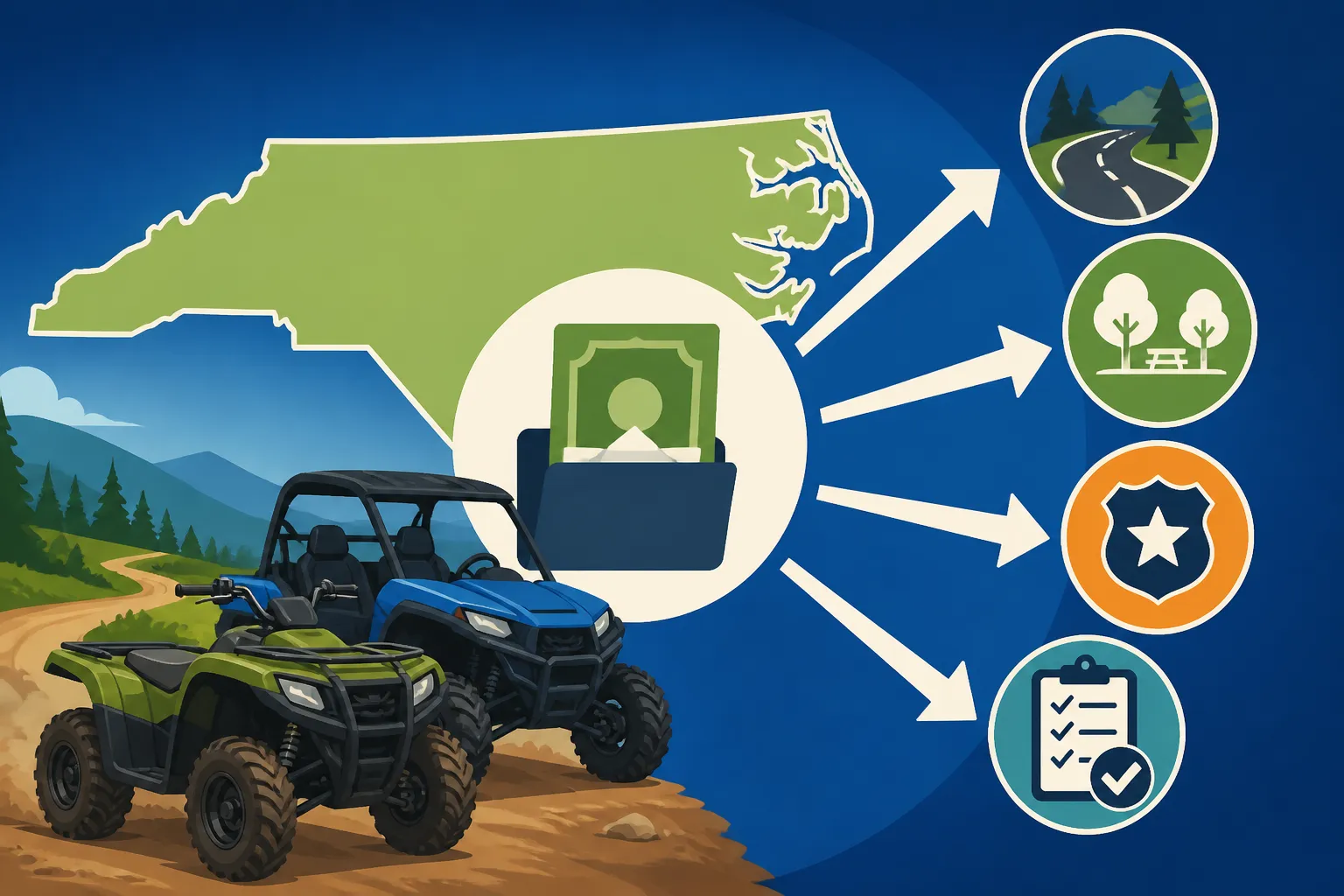
The Highway Use Tax isn't just an arbitrary charge; it’s a foundational piece of funding for the state's transportation system. Unlike a general sales tax that goes into the state's overall budget, the HUT is specifically earmarked. Its funds are primarily directed toward the Highway Fund, which supports the construction, maintenance, and repair of roads, bridges, and other transportation infrastructure across North Carolina. This means that while your quad might not typically be tearing up I-40, the tax you pay helps ensure that the roads you use to get to the trails, or the bridges you cross on the way to your favorite riding spot, are in good condition. You can read more about [North Carolina's 3 Percent Highway Use Tax] to truly grasp its impact.
How the Highway Use Tax Is Calculated
The amount of Highway Use Tax you pay is generally calculated as a percentage of the purchase price or the fair market value of your ATV or UTV. If you buy from a dealer, it's usually based on the sale price. If you buy privately, it might be based on the agreed-upon price, but the DMV can also use an established fair market value if the declared price seems unusually low. This ensures a consistent and fair collection of the tax.
It's critical to understand that this tax is collected at the time of titling, not necessarily at the point of sale itself, unless the dealer handles all the paperwork for you. This means if you buy a machine from a private seller and then go to the DMV, you'll pay this tax there. This is a common point of confusion for buyers and sellers of used machines. It's not a sales tax in the traditional sense, but rather a use tax on the privilege of using the state's highways, levied upon the transfer of title. For more details on this distinction, you might find [Highway Use Tax Instead of Sales Tax in North Carolina] helpful. When drafting a bill of sale, especially for private transactions, tools like LawDepot can help ensure you include all necessary details that align with DMV requirements, helping you accurately determine the tax base.
Here’s a simplified breakdown of common titling costs and their general destinations:
| Fee Type | Basis / Calculation | Primary Destination of Funds | Purpose |
|---|---|---|---|
| Standard Titling Fee | Flat Fee per Title | North Carolina DMV General Operating Budget | Cover administrative costs of processing and issuing titles |
| Highway Use Tax (HUT) | Percentage of purchase/market value | North Carolina Highway Fund (DOT) | Fund construction, maintenance, and repair of state roads & bridges |
| Lien Recording Fee | Flat Fee (if applicable) | North Carolina DMV / Register of Deeds Operating Budget | Cover cost of recording a security interest on the machine's title |
| Notary Fee | Flat Fee (if applicable) | Notary Public's service fee | Compensate the notary for verifying signatures and identities |
The Broader Impact: Where Those Funds Make a Difference
Beyond the direct administrative costs of the DMV, the funds generated from your ATV and UTV titling fees, particularly the Highway Use Tax, cast a much wider net in terms of impact across North Carolina. It's not just about paving roads; it's about supporting a huge network of services and infrastructure that benefits everyone in the state, including off-road enthusiasts.
Contributing to Public Safety and Infrastructure
The Highway Fund, which benefits significantly from the Highway Use Tax, supports a myriad of initiatives that enhance public safety. This includes funding for state troopers who patrol our highways, emergency services that respond to accidents, and programs designed to improve road safety through better signage, clearer markings, and advanced traffic management systems. While you might be riding off-road, having safer and more efficient roads to transport your machine to the trailhead is a direct benefit.
Furthermore, these funds are vital for maintaining the vast network of secondary roads and rural routes that crisscross North Carolina. Many of us load our ATVs onto trailers and head to remote areas, often utilizing these very roads to get to our destinations. The upkeep of these less-traveled paths ensures access to recreational areas, farmlands, and small communities, all of which are important for the overall quality of life and economic activity in our state. Even if you're only using your machine on private land, the ease of access to that land often depends on well-maintained public infrastructure.
Indirect Support for Recreational Access
While the Highway Use Tax doesn't directly funnel money into specific ATV trail development or maintenance (that's typically handled through other permit fees and grants), the general improvement of state infrastructure can indirectly benefit recreational riders. Better roads mean easier access to the national forests and private parks where you can ride. It facilitates commerce and tourism in areas that might rely on outdoor recreation, potentially leading to more investment in amenities and services that cater to riders.
Think about it: when you're planning a trip to the Uwharrie National Forest or the Brown Mountain OHV Trail System, you're driving on state-maintained roads to get there. The gas stations, restaurants, and lodging options you might use along the way also rely on this infrastructure. So, even though it's not a direct trail fee, your contribution helps to keep the wheels of North Carolina's outdoor recreation economy turning smoothly. Understanding Where North Carolina Title Fees Go can sometimes feel like a puzzle, but knowing the broader picture helps.
The Long-Term Significance for North Carolina Riders
It's easy to feel like these fees are just another cost of owning your favorite machine. But when you zoom out, the funds generated by ATV and UTV titling play a crucial role in maintaining the state you love to explore. These aren't just one-time payments; they're investments in the system.
Ensuring Clear Ownership and Preventing Fraud
Beyond the financial contributions, the act of titling itself serves a critical purpose for every ATV and UTV owner. A title is your indisputable proof of ownership. This might seem academic until you try to sell your machine, need to make an insurance claim, or worse, if your ATV is ever stolen. Without a proper title, proving ownership can become a nightmare, making it difficult to recover a stolen machine or to sell it legitimately.
The titling system, supported by these fees, creates a statewide record of ownership transfers. This helps deter theft and fraud, as it makes it much harder for someone to sell a machine they don't legally own. So, while the fees contribute to the state's coffers, the titling process itself provides a fundamental layer of protection for you as an owner. This is precisely [Why a North Carolina Title Is Worth Having]. When dealing with private sales, platforms like LawDepot can provide customizable bill of sale templates, which, when properly executed, streamline the titling process and reinforce legal ownership for the new buyer, thus protecting both parties.
Supporting Future Generations of Riders
Ultimately, the steady collection of these titling fees and the Highway Use Tax provides a predictable revenue stream for North Carolina's transportation needs. This predictability allows the state to plan for long-term projects, address maintenance backlogs, and invest in innovations that will benefit future generations. For current ATV and UTV riders, this means a consistent level of quality in the infrastructure that supports their passion.
It ensures that the roads leading to cherished riding areas are well-maintained, that bridges are safe, and that essential services can reach remote locations. While it's true that North Carolina doesn't have an ATV registration system or a statewide trail sticker, the titling process still connects your off-road machine to the state's broader infrastructure funding mechanisms. So, the next time you pay your titling fees, you can take a small measure of satisfaction knowing you're contributing to the overall health and functionality of North Carolina, the very state that offers such incredible opportunities for off-road adventure. Remember to check out [What a North Carolina ATV Title Costs] for current figures and specific breakdowns.
Navigating the Titling Process and Fees
The process of titling an ATV or UTV in North Carolina, while straightforward, does require attention to detail, especially when it comes to understanding and paying the associated fees. Knowing what forms you need and what to expect can save you time and hassle.
Essential Forms and Where to Get Them
To title your ATV, you'll generally need to complete a North Carolina Title Application, which is Form MVR-1. This form gathers all the pertinent information about you, the owner, and your machine. If you're buying a used machine, you'll also need a bill of sale, and possibly a damage disclosure statement (Form MVR-1A) if the machine is newer than five model years. The key is to have all your ducks in a row before you head to the DMV or a licensed tag agency.
Having all your documents prepared and accurate before you go can make a world of difference in how quickly your transaction is processed. If you're buying a used machine, ensuring the previous owner has properly endorsed the existing title is crucial. Any discrepancies or missing information can lead to delays and additional trips. Resources like LawDepot can be very helpful for creating legally sound documents such as a bill of sale, ensuring all the required information for the titling process is included, which can prevent issues with calculating the Highway Use Tax. Take a moment to understand [North Carolina Form MVR-1 Explained] to be fully prepared.
Where to Pay Your Fees
You can typically handle your ATV or UTV titling and pay the associated fees at any North Carolina Division of Motor Vehicles (NCDMV) office or a licensed tag agency. These agencies are authorized by the state to perform these services on behalf of the DMV, often providing more localized and convenient options for residents. When you visit, ensure you have all your forms filled out, your identification ready, and the means to pay the fees.
It's a good practice to call ahead or check the NCDMV website for current operating hours and any specific requirements, as these can sometimes change. They can also often provide you with an estimate of the fees you'll owe based on the machine's value. For more on the logistics, consider reading [Where to Title an ATV in North Carolina]. Remember, regardless of where you pay, the fees collected – particularly the Highway Use Tax – are remitted to the state and contribute to the same funds we’ve discussed.
Disclaimer
This article is for general informational purposes only and does not constitute professional advice. Laws, prices and regulations vary by location and change over time. Consult a qualified professional for guidance on your specific situation.