North Carolina ATV Title for a Dealer Demo
Bringing home a "new-to-you" ATV, especially one that served as a dealer demonstration model, can come with a unique set of questions when it's time to handle the paperwork. You might think it's treated like a brand-new machine, or perhaps like a standard used one, but the truth often lies somewhere in between, leading to understandable confusion. This guide aims to clear up all the nuances of titling a dealer demo ATV in North Carolina, ensuring you navigate the process smoothly and with confidence.
The Unique Nature of a Dealer Demo ATV in North Carolina
When you're eyeing an ATV that's been on the showroom floor, taken for a few test spins, or even used by dealership staff, it occupies a bit of a grey area in the world of vehicle ownership. It's not fresh off the factory line, still in its crate, nor has it had a private owner who's now trading it in. This distinction is crucial when it comes to the North Carolina titling process.
What Qualifies as a Dealer Demo?
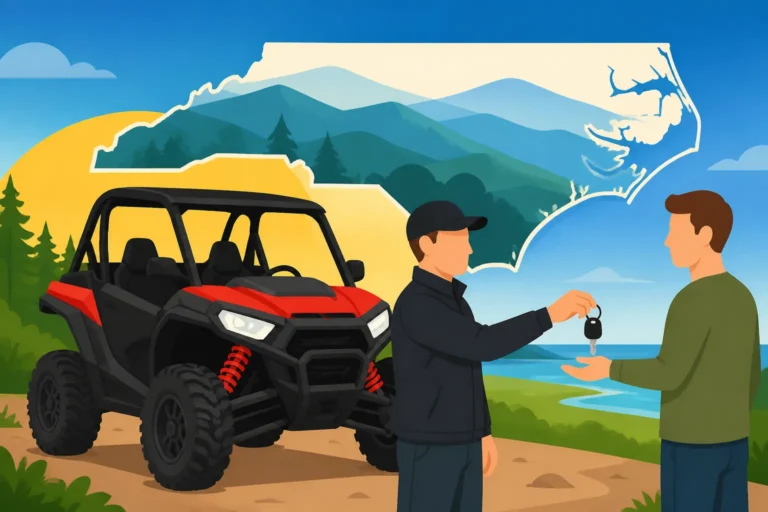
A dealer demo, or demonstration model, is precisely what it sounds like: a machine the dealership has used for showcasing to potential buyers. Think of it as the display model you get to test drive before making a commitment. It's been ridden, often for short periods, and perhaps attended a few local events. While its mileage or hour meter readings will be low, they won't be zero. It's seen some action, but typically under controlled conditions and always maintained by the dealership's service department.
Crucially, a dealer demo hasn't been sold to a private individual before. It remains the property of the dealership, intended for sales and marketing activities. This makes it different from a "truly new" machine that arrives at the dealer untouched and still requires assembly. It also sets it apart from a "used" machine, which would have been previously owned, titled, and ridden by a private party before being traded in or sold on consignment. The history of a demo machine, while involving some use, is usually well-documented and entirely within the dealer's purview.
Why Titling a Demo Differs from a New or Used Purchase
The primary difference when titling a dealer demo in North Carolina hinges on whether the dealership itself ever formally titled the machine in their name. For most ATVs in North Carolina, which are not registered for road use, dealers typically do not title their demo machines. They hold them under what's called a Manufacturer's Statement of Origin (MSO) or Manufacturer's Certificate of Origin (MCO), which is the document that proves the machine's birth and original ownership from the manufacturer.
If the dealer hasn't titled it, your purchase of the demo ATV becomes the "first sale" to a private owner for titling purposes. This simplifies things considerably, as you're essentially applying for the original title, much like you would for a brand-new machine. However, if, for some unusual reason, the dealer did title it in their name (perhaps they used it extensively as part of a rental fleet or for long-term staff use), then you would be applying for a [North Carolina ATV Title Transfer], similar to buying a used ATV from a private seller. It's vital to clarify this point with the dealership to avoid any unexpected hiccups. Always ask the dealer about the machine's title status. You'll also want to understand [Titling a Machine Bought at a North Carolina Dealer] to prepare yourself for the process.
Navigating the North Carolina Titling Process for Your Demo ATV
So, you've found the perfect dealer demo and are ready to make it yours. Now comes the paperwork. The North Carolina Division of Motor Vehicles (NCDMV) has a clear process, but knowing which forms you need and how to complete them correctly can save you a lot of time and frustration.
Essential Forms and Documentation
To title your dealer demo ATV, you'll need a few key documents. The most important is the North Carolina Title Application on Form MVR-1. This is the official form where you, as the new owner, will provide all your information, the machine's details (make, model, VIN), and indicate that you are applying for a new title. You'll need to fill this out accurately, ensuring all fields are completed.
Next, you'll absolutely need a comprehensive Bill of Sale from the dealership. This document is your proof of purchase and is critical for establishing the sales price, which the NCDMV uses to calculate taxes. The bill of sale should clearly list the dealer's information, your information, the ATV's Vehicle Identification Number (VIN), and the agreed-upon purchase price. While LawDepot offers templates for general bills of sale, a reputable North Carolina dealership will have its own standard form that covers all the necessary legal details. Make sure it explicitly states that the machine was a "dealer demo."
For any machine that has seen some use, including a demo, you'll also need a North Carolina Damage Disclosure on Form MVR-1A. Even if the damage is minor – a scratch from a test ride or a ding from being moved around – the dealer is legally obligated to disclose it. If there's no damage, the form should state that. Finally, for the calculation of the Highway Use Tax, you'll need the North Carolina Form MVR-60 Explained, which is the Affidavit of Facts for the Highway Use Tax. This form declares the purchase price or fair market value of the machine for tax assessment. All of these documents together form your [North Carolina ATV Title Paperwork].
The Role of the Highway Use Tax
North Carolina doesn't impose a traditional "sales tax" on vehicle purchases. Instead, it levies a North Carolina ATV Highway Use Tax (HUT) when you title a vehicle. This tax is paid directly to the NCDMV at the time of titling, and it effectively takes the place of sales tax. For a dealer demo ATV, the HUT will typically be calculated as 3 percent of the purchase price you paid the dealership.
The dealer's bill of sale is paramount here, as it provides the NCDMV with the official figure for the transaction. If, for some reason, the NCDMV believes the stated purchase price is unusually low compared to the machine's fair market value, they could ask for further documentation or reassess the value. However, for a legitimate dealer demo sale, the price on the bill of sale is generally accepted. Understanding [3 Percent of What the Machine Is Worth] is key, as this calculation is applied consistently across most vehicle titling in the state. So, be prepared for this expense when you head to the NCDMV, as it's a mandatory part of getting your title. This is clearly explained on the [North Carolina ATV Highway Use Tax] documents.
Submitting Your Application and Awaiting Your Title
Once you have gathered all the necessary forms—the MVR-1, the bill of sale, MVR-1A, and MVR-60—and completed them accurately, you're ready to submit your application. You have two main options: visit your local NCDMV office in person or mail the completed package to the NCDMV in Raleigh. Many folks prefer the in-person route, especially for a first-time title application, as a clerk can review your forms and ensure everything is in order before you leave. This can prevent delays due to missing information or incorrect entries.
At the NCDMV office, you will pay the required titling fee and the Highway Use Tax. The titling fee is usually a modest flat rate, while the HUT, as mentioned, is 3 percent of your purchase price. Make sure you have the funds available for both. After submission, the NCDMV will process your application. You won't receive the title on the spot; instead, it will be mailed to you. The [North Carolina ATV Title Processing Time] can vary, but generally, you can expect to receive your official title certificate in the mail within a few weeks. It's always a good idea to keep copies of all your submitted documents for your records until your title arrives. For a complete overview, check out [How to Title an ATV in North Carolina].
Important Considerations and Practical Advice
Purchasing a dealer demo ATV can be a great way to get a nearly-new machine at a potentially reduced price. However, like any significant purchase, it pays to be thorough and ask the right questions. Being prepared can save you headaches down the road and ensure a smooth ownership experience.
Verifying the Dealer's Ownership and History
Even though you're buying from a reputable dealership, it's always smart to confirm the machine's clear ownership. For a true dealer demo, the dealer should present you with the Manufacturer's Statement of Origin (MSO) that was issued to them. This document is essentially the "birth certificate" of the ATV and proves it hasn't been titled by any other individual. Make sure the VIN on the MSO matches the VIN on the machine itself and on your bill of sale.
It's also a good practice to perform a VIN check. This can help ensure that the ATV hasn't been reported stolen or involved in any major incidents, even as a demo. While highly unlikely for a machine directly from a dealership, these checks offer an extra layer of peace of mind. A clean VIN history ensures there are no surprises when you go to title the machine or try to sell it later. A comprehensive guide on [Checking a VIN Before a North Carolina Purchase] can provide more detailed steps for this important verification.
Asking the Right Questions at the Dealership
Before you finalize your purchase, don't hesitate to ask the dealership specific questions about the demo ATV. Inquire about how long it served as a demo, how it was primarily used (e.g., test rides, staff transportation, specific events), and if any significant repairs or maintenance were performed beyond routine service. This history can give you a better understanding of the machine's condition and lifespan.
Crucially, confirm with the dealer whether they ever titled the machine in their name. As previously discussed, this is rare for ATVs, but if they did, the titling process shifts from a "first-time" title application to a [North Carolina ATV Title Transfer], similar to buying a used machine. Also, ensure they will provide all the necessary paperwork: the MSO (if applicable), the official bill of sale, and any other forms needed for your NCDMV trip. Getting these assurances upfront will prevent any confusion or missing documents when you apply for your title. For more advice on dealing with dealerships, see [Buying a Machine Bought at a North Carolina Dealer]. You should also familiarize yourself with [North Carolina ATV Bill of Sale Requirements].
Why Titling Your Dealer Demo is a Smart Move
While North Carolina does not require ATVs to be registered for general off-road use, obtaining a title for your dealer demo machine is highly recommended and offers numerous benefits. The most fundamental reason is proof of ownership. Your title certificate is the undeniable legal document that states you are the owner of the ATV. This is invaluable for preventing disputes, especially if the machine were ever lost or stolen.
Having a title also significantly simplifies future transactions. If you decide to sell your ATV down the road, a clear North Carolina title makes the process straightforward for both you and the buyer. Most buyers, especially private ones, will insist on a titled machine. Furthermore, a title is often a prerequisite for obtaining comprehensive insurance coverage, which can protect your investment against damage or theft. Even if you only ride on private land, the security and peace of mind that come with a properly titled machine are well worth the effort. Learn more about the advantages in [Why a North Carolina Title Is Worth Having] and [How a Title Proves You Own the Quad]. In the unfortunate event of theft, [Why a Title Matters After Your Quad Is Stolen] becomes abundantly clear.
Here's a quick reference table to help clarify the differences in paperwork for various ATV purchase scenarios:
| Item | New ATV (from dealer) | Dealer Demo ATV | Used ATV (private sale) |
|---|---|---|---|
| NCDMV Form MVR-1 (Application) | Required | Required | Required |
| Bill of Sale | Required (from dealer) | Required (from dealer) | Required (from private seller) |
| Manufacturer's Statement of Origin (MSO) | Required (to dealer, then to buyer) | Required (to dealer, then to buyer) | Not applicable (previous title used) |
| Previous Title (Signed by Seller) | Not applicable | Not applicable (unless dealer titled) | Required (signed by previous owner) |
| NCDMV Form MVR-1A (Damage Disclosure) | N/A (should be pristine) | Recommended (for any minor wear/tear) | Required (for any known damage) |
| NCDMV Form MVR-60 (HUT Affidavit) | Required | Required | Required |
| Proof of Identity & Residency | Required | Required | Required |
| Odometer/Hour Meter Disclosure | Not typically required for ATVs | Not typically required for ATVs | Not typically required for ATVs |
Disclaimer
This article is for general informational purposes only and does not constitute professional advice. Laws, prices and regulations vary by location and change over time. Consult a qualified professional for guidance on your specific situation.