North Carolina MUV Seat Belt Requirements
It can be incredibly confusing to figure out what safety gear your off-road machine needs, especially when you start venturing onto public roads. Many riders assume that if a machine looks like a side-by-side, the rules are the same everywhere. But North Carolina has a specific category for street-legal off-roaders called Modified Utility Vehicles (MUVs), and they come with distinct seat belt requirements that are essential to understand for your safety and legal compliance. This guide will walk you through exactly what those requirements are, why they exist, and how to ensure your MUV is up to par.
The Unmistakable Rule: Why MUVs Need Seat Belts in North Carolina
When you're out on the trails, especially on private land or designated OHV parks like Brown Mountain or Badin Lake, seat belt use might be optional depending on your machine and personal preference (though highly recommended!). But the moment your machine transforms into a street-legal Modified Utility Vehicle (MUV) in North Carolina, the game changes entirely. The state isn't just suggesting you wear seat belts; it's mandating them, and for good reason. This isn't just about avoiding a ticket; it's about integrating these machines safely into the flow of public road traffic, where the risks and speeds are far different from a dirt trail.
The Core Difference: MUVs vs. Off-Road Machines
Think about your typical ATV or UTV. These machines are designed for rugged terrain, tight turns, and often lower speeds in an off-road environment. They might have a roll cage, but seat belts aren't always a standard or legally required feature for off-road use. Now, consider the definition of a Modified Utility Vehicle in North Carolina. This is a specific class of UTV that has been modified or manufactured to meet certain criteria, allowing it to be registered and driven on public roads that are posted 55 mph or less. Suddenly, your machine is sharing asphalt with cars, trucks, and motorcycles. The dynamics of a collision at even 35 mph are vastly different than a slow-speed tip-over on a trail.
This distinction is crucial because it reclassifies your machine in the eyes of the law, bringing with it a whole new set of responsibilities and safety standards. An MUV is treated much more like a traditional automobile when it comes to on-road safety features, and seat belts are at the top of that list. The state wants to ensure that if you're going to use these machines on shared roadways, they offer a baseline level of occupant protection similar to what you'd expect in any other road-going vehicle. It's about minimizing injury in the event of an accident, which, unfortunately, is always a possibility when you're on public thoroughfares.
The Legal Foundation: What Makes Seat Belts Mandatory
North Carolina General Statute 20-4.01(27) is where you'll find the specific definition of a Modified Utility Vehicle, and nestled within the requirements for transforming a UTV into an MUV are stringent safety mandates. These aren't suggestions; they are explicit requirements that your vehicle must possess to be deemed street-legal. The state outlines a list of equipment that must be present and fully functional, and seat belts are a key component of this list. Without them, properly installed and in good working order, your machine simply doesn't qualify as an MUV.
This legal framework exists to protect not only the occupants of the MUV but also other drivers on the road. The state views an MUV as a unique vehicle that needs to bridge the gap between off-road capability and on-road safety. Just as a traditional car needs functioning brakes, lights, and mirrors, an MUV requires its specific safety apparatus, including seat belts, to be compliant. These rules are designed to elevate the safety profile of these machines when they enter a more dangerous environment than their original design intended. You can learn more about [North Carolina's Modified Utility Vehicle Route] in another one of our posts.
Navigating the Specifics: What "Seat Belt Compliant" Actually Means
It's not enough to simply have a seat belt in your Modified Utility Vehicle; it needs to be the right type, properly installed, and fully functional for every seating position. North Carolina’s requirements for MUVs are designed to ensure that these vehicles offer a baseline of safety equivalent to other on-road vehicles. This means understanding the nuances of what constitutes a compliant seat belt system, from the kind of belts to how many you need. This attention to detail is vital for passing inspection and, more importantly, for keeping everyone in your MUV safe on the road.
Type and Functionality: More Than Just a Strap
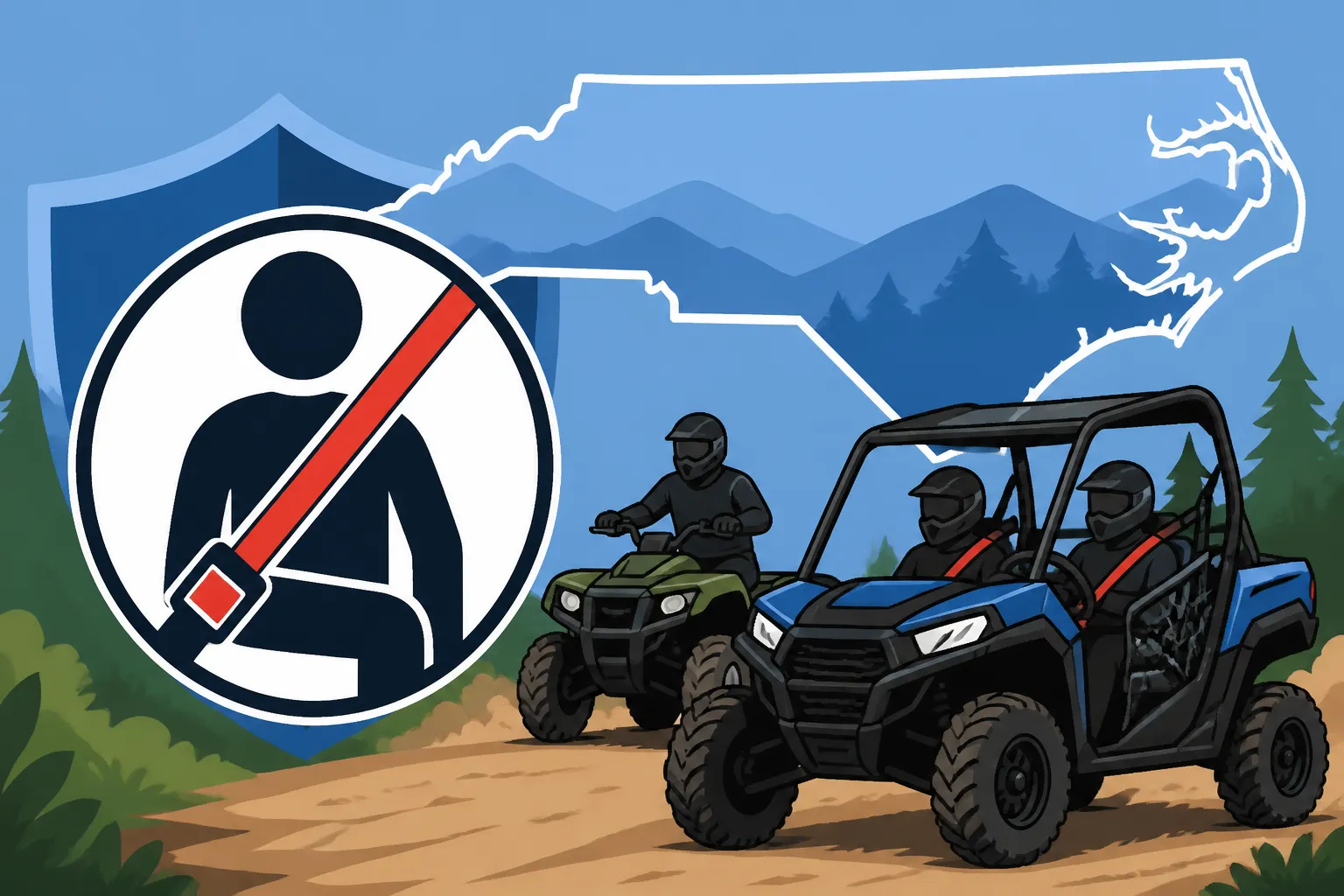
For MUVs, North Carolina expects seat belts that are robust and designed for occupant restraint in a crash. This generally means a three-point lap and shoulder belt system, similar to what you'd find in a standard passenger car. While a simple lap belt might seem sufficient for some, the added security of a shoulder harness is critical for preventing upper body injuries and ejection in the event of a collision. These belts must be securely anchored to the vehicle's frame or a sturdy, approved mounting point, not just bolted to a flimsy plastic panel. The mounting points themselves are often reinforced in factory-built MUVs or require professional installation for conversions.
Beyond the type of belt, functionality is paramount. The seat belts must be in excellent condition, free from fraying, tears, or excessive wear. The buckles need to latch and unlatch smoothly without sticking, and the retractors must work properly, allowing the belt to extend and retract freely, yet lock firmly when subjected to a sudden stop or impact. Any issues with the belt material, buckles, or retractors would render the system non-compliant and could be a reason for failing an MUV inspection. A non-functioning seat belt is essentially no seat belt at all when it comes to safety and legal requirements. These are often checked during [North Carolina MUV Inspection Requirements].
Occupant Capacity and Seat Belt Matching
Here’s where it gets really specific: every designated seating position in your MUV must have a corresponding, functional seat belt. If your MUV is designed to seat two people side-by-side, it must have two sets of seat belts. If it’s a four-seater, then four seat belts are required. You cannot carry more passengers than there are functional seat belts in your MUV. This directly links the vehicle's passenger capacity to its safety equipment, ensuring that every occupant has the necessary protection.
This requirement means you can't, for example, cram three people into a two-seater MUV, even if they're small children. Each person riding in the MUV on public roads must have their own dedicated and properly functioning seat belt fastened. This is a common point of confusion for riders transitioning from pure off-road use, where carrying extra passengers might be more lenient (though often still unsafe). When your machine becomes an MUV, it's about adhering to passenger restraint standards for highway use. If you have questions about specific capacity, it's always best to consult the North Carolina Department of Motor Vehicles (DMV) guidelines or an authorized MUV dealer to ensure your machine and its modifications meet these precise standards.
Real-World Implications: From Inspection to Roadside Checks
Understanding the North Carolina MUV seat belt requirements isn't just about reading the rulebook; it's about living by them every time you fire up your machine and hit the pavement. From the initial process of getting your MUV registered to routine stops by law enforcement, your seat belts are a constant point of scrutiny. Being unprepared can lead to frustrating delays, failed inspections, or even citations that put a damper on your riding experience. It’s crucial to treat these requirements with the same seriousness as any other safety feature on a road-legal vehicle.
Preparing for MUV Inspection and Registration
Before you can legally drive your MUV on North Carolina roads, it has to go through an inspection process to confirm it meets all the state's requirements. This is where your seat belts will be thoroughly checked. An inspector will look for specific things: are there enough seat belts for every designated seating position? Are they securely mounted? Do the buckles work? Are the belts free of damage like fraying, cuts, or excessive wear? Do the retractors engage and release properly, and do they lock in place during a sudden pull? This is the moment of truth for your MUV's seat belt system.
If your MUV fails inspection due to non-compliant seat belts, you won't be able to proceed with registration until the issues are corrected. This can mean delaying your plans, incurring repair costs, or even needing to replace entire seat belt assemblies. For those converting an existing UTV, it’s paramount to ensure that any aftermarket seat belts or modifications are installed by a reputable professional and meet all state and federal safety standards. Don't assume a generic "racing harness" will pass muster if it's not specifically designed for street-legal occupant restraint and compliant with the MUV definition. Ensuring everything is in order beforehand will make the [North Carolina MUV Registration Requirements] process much smoother.
Staying Compliant During Everyday Road Use
Once your MUV is registered and has its tag, the responsibility to maintain seat belt compliance continues every single time you drive. This means ensuring everyone in the vehicle is buckled up. Just like in a car, law enforcement can issue citations for unbuckled occupants in an MUV. These aren't just minor infractions; they can carry fines and potentially impact your driving record. Imagine cruising down a scenic backroad near the Uwharrie National Forest, only to be pulled over and ticketed because a passenger wasn't wearing their seat belt. It's a quick way to ruin a perfectly good day.
Furthermore, if you're involved in an accident and your seat belts are found to be non-compliant or unused, it can have serious implications for insurance claims and liability. Insurance companies might balk at paying out if a fundamental safety requirement was ignored. Always do a quick check before you pull away: are all occupants properly buckled into their designated seats? Are the belts snug and free of twists? Making this a routine habit can save you a lot of hassle and, more importantly, prevent serious injury in an unforeseen event. Remember, when you're on the road, your MUV is operating under the same safety expectations as any other vehicle, and that includes proper seat belt use.
Beyond the Law: The Critical Role of Seat Belts for Your Safety
While legal compliance is a significant driver for ensuring your MUV has and utilizes proper seat belts, the most fundamental reason goes far beyond avoiding fines or passing inspections. It boils down to one simple, undeniable truth: seat belts save lives and prevent severe injuries. When you’re riding an MUV on public roads in North Carolina, you’re operating a vehicle with a higher center of gravity and different handling characteristics than a typical car, which means occupant restraint is even more critical. Ignoring seat belt use is a gamble with your well-being and that of your passengers, a gamble that no rider should ever take.
Protecting Yourself and Your Passengers
Think about the forces at play in a collision, even at lower speeds on a local road. Your body continues to move forward at the vehicle's speed until something stops it – whether that's the dashboard, the windshield, or being ejected from the vehicle entirely. A properly functioning three-point seat belt system is designed to distribute these forces across the strongest parts of your body, like your hips and shoulders, slowing your momentum gradually and keeping you securely inside the vehicle's protective cage. This significantly reduces the risk of impact with interior components, secondary collisions with other passengers, or being thrown from the MUV.
For MUVs, which might have roll-over potential in certain scenarios or present different impact dynamics than enclosed cars, staying contained within the vehicle’s structure is paramount. It allows the roll cage to do its job and prevents occupants from being crushed or severely injured outside the vehicle. This protective measure extends to all passengers, including children, for whom proper restraint is even more critical. Making seat belt use a non-negotiable rule in your MUV ensures that everyone has the best possible chance of walking away from an incident with minimal or no injury. Your adventures on the road are meant to be fun, and safety should always be the priority.
Common Misconceptions About MUV Safety
One common misconception is that the roll cage alone is enough to protect occupants. While a roll cage is a vital safety feature that helps maintain the integrity of the passenger compartment in a rollover, it cannot keep you inside the vehicle. Without a seat belt, you could be ejected from the MUV during a crash or rollover, negating the protective benefits of the cage. Another myth is that you can brace yourself effectively in an impact. The forces involved in even a low-speed collision are far too great for human muscles to withstand, making bracing essentially useless.
Some riders also believe that because MUVs often operate on slower roads, the risk is minimal. However, even impacts at 25-35 mph can cause severe injuries or fatalities if occupants are unrestrained. The presence of larger vehicles like trucks and SUVs on shared roads also increases the potential severity of any incident involving an MUV. It's important to remember that the seat belt requirements for MUVs in North Carolina are not arbitrary bureaucratic hurdles. They are carefully considered safety measures, born from crash data and engineering principles, designed to keep you and your loved ones as safe as possible while enjoying the freedom of a street-legal Modified Utility Vehicle. Embrace these safety measures as part of the MUV experience, rather than an inconvenience.
Here's a quick overview of key MUV requirements in North Carolina:
| Requirement Category | Description | Why It Matters for On-Road Use |
|---|---|---|
| Seat Belts | 3-point lap and shoulder belts for all designated seating positions, fully functional and securely mounted. | Essential for occupant restraint in collisions and rollovers, preventing ejection and severe injury. |
| Headlights | At least two, white in color, visible from 200 feet, operational high/low beams. | Ensures visibility to other drivers, especially at dawn, dusk, or night. |
| Taillights | At least two, red in color, visible from 200 feet, operational brake lights. | Indicates presence and braking action to trailing vehicles. |
| Turn Signals | Front and rear, amber/red, clearly visible. | Crucial for communicating intentions to other drivers when changing lanes or turning. |
| Mirrors | At least one rearview mirror (driver's side or center). | Provides awareness of traffic approaching from behind. |
| Windshield | Required, made of safety glass. | Protects occupants from road debris, wind, and weather; essential for visibility. |
| Wipers | Functional windshield wipers. | Maintains visibility in rain or adverse weather. |
| Horn | Audible from 200 feet. | For warning other drivers or pedestrians. |
| Brakes | Fully functional braking system. | Critical for safely stopping and controlling the vehicle. |
| Tires | DOT-approved for highway use. | Ensures proper grip and durability at road speeds. |
| Speedometer | Operational. | Allows driver to monitor and adhere to posted speed limits. |
| Dimensions | Specific limits on length, width, and height. | Ensures the vehicle fits safely within standard road lanes and infrastructure. |
| Engine Size | Greater than 2400cc. | Relates to power necessary for highway speeds and maintaining traffic flow. |
| Top Speed | Capable of exceeding 40 mph. | Enables the MUV to keep pace with traffic on roads up to 55 mph. |
Remember, this table provides a general overview. Always check the official North Carolina DMV resources for the most current and complete list of [North Carolina MUV Registration Requirements] and specific details.
Disclaimer
This article is for general informational purposes only and does not constitute professional advice. Laws, prices and regulations vary by location and change over time. Consult a qualified professional for guidance on your specific situation.