When a Clerk Insists on the Original Affidavit
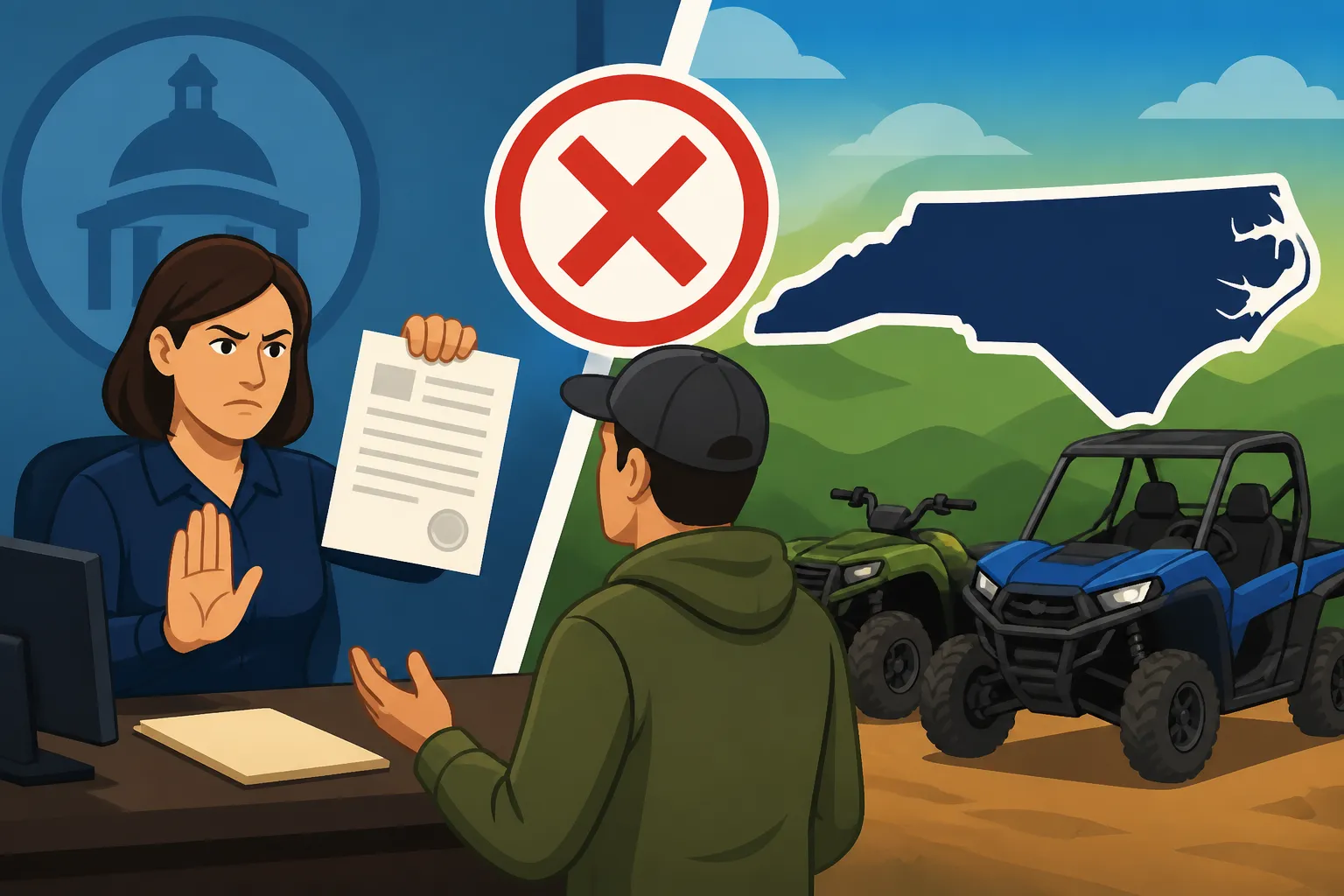
It's incredibly frustrating, isn't it? You've got your ATV or UTV, you're ready to make it officially yours, and then a clerk at the North Carolina DMV looks at your meticulously gathered paperwork and insists on the "original affidavit." You might be thinking, "What original affidavit? I thought I had everything!" This guide is here to walk you through exactly what that means, why it’s so important in North Carolina, and how to navigate this often-confusing hurdle so you can get your title without a hitch.
Understanding North Carolina's Unique Approach to ATV Ownership Paperwork
North Carolina has a somewhat distinct system when it comes to off-road vehicles like ATVs and UTVs. It's not like registering your car or truck for road use, and that difference can often lead to confusion when you're trying to get your ducks in a row.
Why There's No Registration for Off-Road Machines
One of the biggest sources of head-scratching for new and even experienced ATV owners in North Carolina is the fact that the state doesn't actually require traditional registration for off-road use. This is a fundamental difference from many other states that demand a specific registration, plate, or sticker just to hit the trails. Instead, North Carolina focuses primarily on titling, which is a different beast entirely. You won't find yourself needing to renew an annual registration or attach a specific tag just for riding in the woods or on private land. This often leads people to think that less paperwork is involved overall, but that's not quite the case.
Because there’s no formal state-level registration for an ATV used off-highway, other documents and processes take on a heightened importance for establishing and proving who actually owns the machine. This is where the title, and the affidavit that supports it, comes into play. Without the kind of ongoing state record that registration provides, the initial documentation becomes paramount. It's really the only official way the state has of acknowledging your machine's existence and linking it directly to you. This unique setup is part of [Why North Carolina Has No ATV Registration], which emphasizes why other forms of documentation become so crucial for off-road enthusiasts here.
The Importance of Titling Even if It's Optional
While North Carolina doesn't require registration, it does offer the option to title your ATV or UTV. And let me tell you, even if it's technically optional, you should absolutely do it. Think of it this way: a title is your ultimate proof of legal ownership. Without it, you might have a bill of sale or a handshake agreement, but the state doesn't formally recognize you as the owner. This seemingly small detail can have massive repercussions down the line.
Imagine your prized quad gets stolen. Without a title, proving to the police and your insurance company that it was yours to begin with can turn into a nightmare of affidavits and anecdotal evidence. Or, consider when you're ready to sell your machine. Most informed buyers will want to see a clear title to ensure they're not buying a stolen vehicle or inheriting a messy ownership dispute. A title makes the transaction smooth, legitimate, and gives both parties peace of mind. It really is an essential safeguard for your investment. This is precisely why [Titling an ATV in North Carolina Is Optional] is a choice you should always make in favor of titling. It streamlines everything from proving [How a Title Proves You Own the Quad] to ensuring a smooth [North Carolina ATV Title Transfer] when it’s time to upgrade.
The MVR-60: North Carolina's All-Terrain Vehicle Affidavit
So, what is this "original affidavit" that the DMV clerk keeps mentioning? It's a very specific form, and understanding its purpose is key to navigating the North Carolina titling process.
What Exactly is the MVR-60 and Why Is It Necessary?
The form in question is the North Carolina Division of Motor Vehicles (NCDMV) Form MVR-60, officially known as the "All-Terrain Vehicle Affidavit." This isn't just a generic form; it's a critical piece of paperwork specifically designed for off-road vehicles that aren't registered for highway use. Its primary purpose is to provide the state with the necessary details about your ATV or UTV so that it can be formally titled in your name. Think of it as the foundational document that establishes your machine's identity and its initial link to you, the owner.
The MVR-60 asks for a lot of specific information: the vehicle identification number (VIN), the make, model, year, and even the engine size. It also requires your personal information as the owner, and in some cases, details about how you acquired the machine. Because ATVs and UTVs don't go through the regular vehicle registration process, this affidavit serves as the formal declaration to the state that this particular machine exists and belongs to you. It's how the NCDMV creates a record of your off-road vehicle, even if it's never going to see highway pavement. Without a properly completed and submitted MVR-60, the DMV simply cannot issue a title for your ATV or UTV. It’s an indispensable step, as detailed further in [North Carolina Form MVR-60 Explained].
Why the "Original" Affidavit is Non-Negotiable
This is where many people run into trouble. When the clerk asks for the "original" MVR-60, they mean exactly that: the physical, first-generation document, typically with original signatures, not a photocopy or a digital printout of a scan. Government agencies, and especially departments dealing with property ownership like the DMV, have strict protocols in place to prevent fraud and ensure the legal validity of transactions. An original document provides a higher level of authenticity and security compared to a copy.
Consider a scenario where you bought your ATV from a private seller, and they gave you a photocopy of their MVR-60 from when they originally titled the machine. Or perhaps you inherited the ATV, and the family only had a scan of the document. While these might seem perfectly legitimate to you, the DMV clerk is following regulations that demand the tangible original. The reason is simple: copies can be altered, faked, or misused more easily than an original. The MVR-60 often involves declarations made under penalty of perjury, and the state needs the physical document to verify the integrity of those declarations. If you’re preparing supplementary documents, such as a [North Carolina Bill of Sale Requirements] when selling your machine, a resource like LawDepot can help ensure you have all the necessary forms in order. However, even with robust supporting paperwork, it won’t replace the requirement for the physical MVR-60 when you’re at the DMV counter applying for a title.
Navigating DMV Challenges and Ensuring You Have the Right Paperwork
Dealing with DMV paperwork can be daunting, especially when a crucial original document seems to be missing. But don't despair – there are steps you can take.
What to Do If You Don't Have the Original MVR-60
If you're standing at the DMV counter and realize you don't have the original MVR-60 that the clerk is asking for, take a deep breath. Your first and best course of action is to try and obtain the original from the previous owner. If you bought the ATV or UTV from a private party, reach out to them immediately. Explain the situation and ask if they still have the original form. Sometimes, people simply file it away and forget its importance. A detailed [North Carolina ATV Bill of Sale Requirements] that clearly lists the previous owner's contact information can be a lifesaver here. Tools like LawDepot can assist you in creating a comprehensive bill of sale that includes all the necessary details to facilitate future contact, though it won’t directly help with retrieving the MVR-60 itself.
If contacting the previous owner isn't an option, or they no longer have it, the situation becomes more challenging. The DMV might require you to complete a new MVR-60, but you'll need strong alternative proof of ownership to support it. This could include a notarized bill of sale, canceled checks, or other transactional documents that clearly show the transfer of ownership to you. In some cases, especially if the ownership chain is unclear, the DMV might require additional affidavits or a more extensive verification process. It's often best to call your local NCDMV office beforehand to explain your specific situation and ask what alternative documentation they might accept to initiate a new title in your name. They might be able to guide you on the exact forms or procedures required. Be prepared for a potentially longer process, as the state will need to establish a clear chain of ownership without that initial key document. This is especially true when [Buying a Used ATV in North Carolina] where ensuring all original paperwork transfers with the machine is critical.
Best Practices for Future ATV/UTV Paperwork
To avoid the stress of a missing original affidavit in the future, it's wise to adopt some best practices for all your ATV and UTV paperwork. First and foremost, always keep your original documents in a secure, fireproof location, such as a home safe or a bank safe deposit box. While it's tempting to store everything in a binder in your garage, environmental factors or unforeseen accidents can damage or destroy critical papers.
Secondly, always make digital copies of all your important documents. Scan them and save them in a secure cloud storage service or on an external hard drive. These digital backups won't replace the original at the DMV, but they can be invaluable for insurance purposes, personal records, or to help you remember specific details if you ever need to fill out a new form. When you're buying an ATV or UTV, especially from a private seller, always insist on receiving all original paperwork, including the MVR-60 if one was previously filed. If the seller doesn't have it, consider that a red flag and proceed with extreme caution, or be prepared for a potentially complicated titling process yourself. Proactive record-keeping, possibly by leveraging platforms like LawDepot to generate legally sound purchase agreements and other supporting documents, can significantly smooth out future transactions and interactions with the DMV.
Why This Affidavit Matters Beyond the DMV Counter
The MVR-60 affidavit might seem like just another piece of paper for the DMV, but its importance extends far beyond the day you get your title. It's a foundational document that protects your investment in various ways.
Proving Ownership and Protecting Your Investment
Once your MVR-60 is processed and you receive your official North Carolina title, that title becomes the indisputable legal record of your ATV or UTV ownership. And the MVR-60 is the document that paved the way for that title. This means that in any situation where ownership needs to be legally established, that chain of documentation starting with the affidavit is critical. For instance, if your machine is ever stolen, having a title backed by a properly filed MVR-60 allows law enforcement to easily verify you as the rightful owner, aiding in its recovery. Without this clear ownership established by the state, it can be incredibly difficult to prove the machine was yours.
Beyond theft, think about insurance. In the unfortunate event of an accident or total loss, your insurance company will need clear proof of ownership to process your claim. A clear, state-issued title, obtained through the correct submission of the MVR-60, provides that necessary legal proof. Any ambiguity in ownership can lead to significant delays, disputes, or even denial of your claim. Even though [North Carolina Has No ATV Registration], having that title, initiated by the MVR-60, is your strongest legal defense and protection for your off-road investment.
Facilitating Future Sales and Transfers
When the time comes to sell your ATV or UTV, having a clear and valid North Carolina title will make the process infinitely smoother for both you and the buyer. An informed buyer will always insist on seeing the title to ensure they are purchasing a legitimate machine with no hidden liens or ownership disputes. The MVR-60, being the stepping stone to that title, is part of the clean history that gives a buyer confidence. If you don't have a title, or if the chain of ownership is murky because an original MVR-60 was never properly filed or was lost without replacement, you could face significant hurdles.
A lack of clear, original documentation can drastically reduce the resale value of your machine, or even make it nearly impossible to sell to someone who understands the importance of proper paperwork. Think of it from the buyer's perspective: they don't want to go through the headache of trying to title a machine with missing forms. Having all your original documents, including the MVR-60 that led to your title, ensures a quick, clean [North Carolina ATV Title Transfer], benefitting both you as the seller and the new owner. For additional protection during the sale, consider using a reputable service like LawDepot to create a comprehensive bill of sale. This doesn't replace state forms like the MVR-60, but it provides a legally robust record of the transaction itself, further safeguarding both parties.
| Document Type | Purpose for North Carolina ATV Titling | Original Required? | Notes |
|---|---|---|---|
| MVR-60 (Affidavit) | Declares vehicle details and owner for title | Yes | Essential for establishing initial state record of ownership; proves vehicle identity. |
| MVR-1 (Title App) | Application to receive the official NC Title | Yes | Filed with the MVR-60 and other supporting documents to formalize the titling request. |
| Bill of Sale | Proof of transaction between buyer and seller | Highly Recommended | Helps establish purchase chain, even if not always strictly required for title by the state. |
| Proof of Identity | Verifies applicant's identity | Yes | Your valid driver's license or state-issued ID is required for verification at the DMV. |
| Proof of Tax Paid | Highway Use Tax (if applicable) | Yes | Receipt or calculation of the 3% Highway Use Tax; must be paid at the time of titling. |
Dealing with DMV paperwork for your North Carolina ATV or UTV can certainly be a headache, especially when you encounter specific requirements like the "original affidavit." But by understanding the crucial role of the MVR-60, maintaining meticulous records, and preparing thoroughly, you can navigate the process with confidence. Don't let a missing piece of paper stand between you and enjoying your off-road adventures legally and without worry!
Disclaimer
This article is for general informational purposes only and does not constitute professional advice. Laws, prices and regulations vary by location and change over time. Consult a qualified professional for guidance on your specific situation.