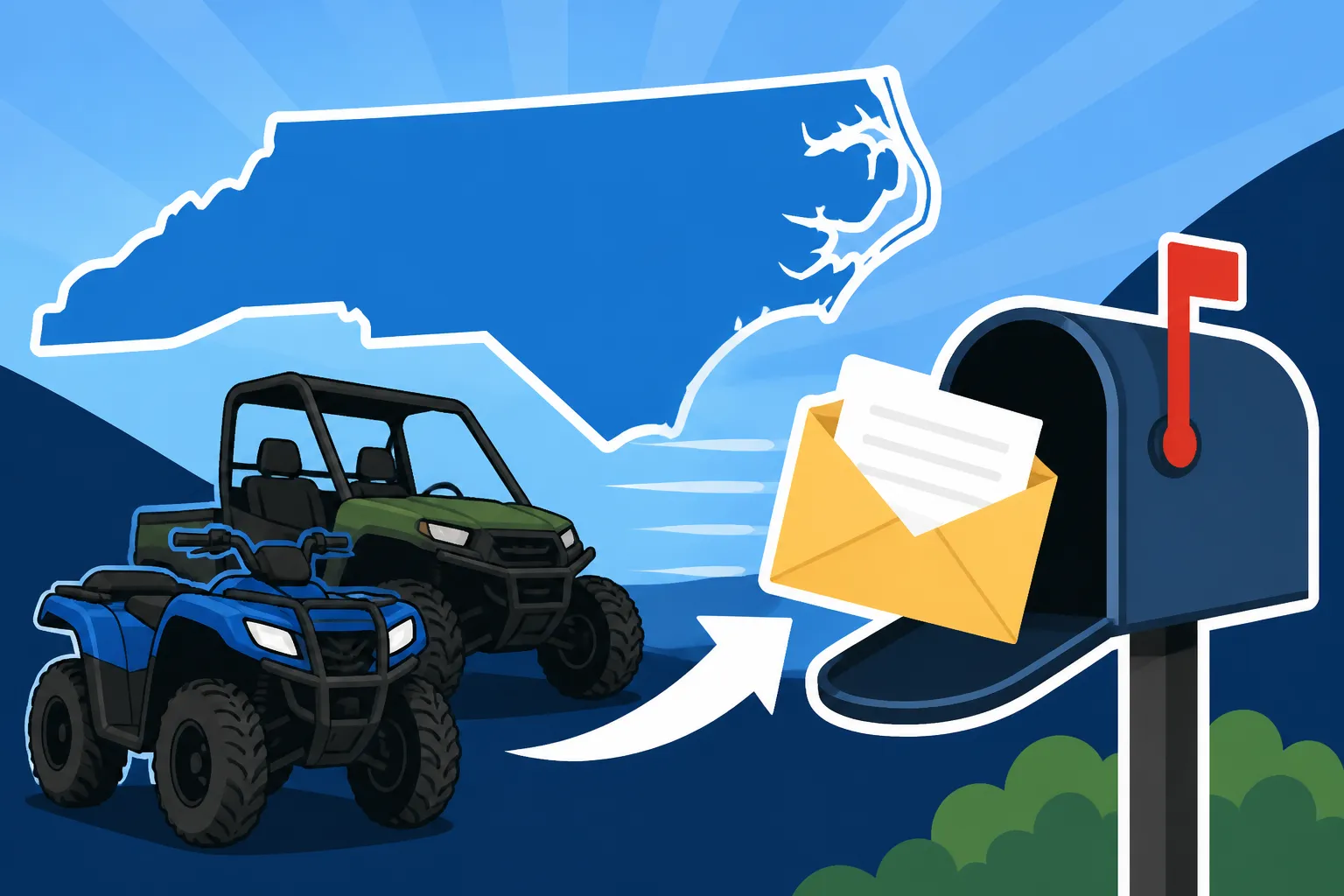
Mailing a Title Application to the North Carolina DMV
Dealing with DMV paperwork for your ATV or UTV in North Carolina can feel like navigating a muddy trail after a heavy rain – confusing, slow, and full of potential detours. For many riders, the thought of saving a trip to the local license plate agency by simply dropping a title application in the mail is incredibly appealing. This guide will walk you through everything you need to know about preparing and sending your ATV or UTV title application directly to the North Carolina Division of Motor Vehicles, helping you avoid common pitfalls and get that title in your hands without unnecessary delays.
Deciding to Mail Your ATV/UTV Title Application in North Carolina
When it comes to titling your off-road machine in North Carolina, you essentially have two main options: making a trip to a local license plate agency or sending your paperwork through the mail. Each approach has its own set of considerations, and for many busy folks, the idea of avoiding a potentially long wait in an office is a huge draw. However, mailing your application isn't just about tossing some papers in an envelope; it requires meticulous attention to detail and a clear understanding of the process to ensure success.
The Allure and Reality of Mailing Your Documents
Let's be honest, the convenience factor of mailing documents is a major pull. Imagine getting all your forms together at home, perhaps with a cup of coffee on a quiet evening, rather than rushing during your lunch break or sacrificing a precious Saturday morning to stand in line. It feels efficient, doesn't it? However, this convenience comes with a trade-off: a lack of immediate feedback. When you submit your application in person, a clerk can often catch a missing signature or an incorrect date right then and there. Mailing means any error, no matter how small, could send your application into a lengthy review process or, worse, get it rejected and sent back to you, delaying your title significantly. For those who need their title quickly, say for financing purposes or an upcoming sale, this delay can be a real headache. Knowing [How Long the DMV Takes to Mail a Title] can help set realistic expectations.
When Mailing Might Be Your Best Bet
Despite the potential for delays if something isn't quite right, mailing your application can still be a smart choice in certain situations. If you live in a rural area far from a license plate agency, the time and fuel saved by not driving a long distance can be substantial. Similarly, if your schedule is simply too packed to make it to an office during business hours, mailing offers a flexible alternative. It can also be a good option if your application is straightforward, such as for [Titling an Inherited Machine in North Carolina] or if you're replacing a lost title and you're confident all your information is perfectly in order. Just remember, the DMV cannot accept cash through the mail, so your payment method will need to be carefully considered. It’s a good idea to consider [Why a North Carolina Title Is Worth Having] regardless of how you submit the application.
Gathering the Right Paperwork for Your Mailed Application
The success of your mailed title application hinges entirely on sending a complete and accurate packet of documents. Missing even one form or a crucial piece of information can lead to your application being returned, prolonging the wait for your title. Think of it like packing for a long trail ride; you wouldn't want to forget your helmet or a basic tool kit. This section will break down the essential forms and supporting documents you'll need, ensuring your packet is as robust as your machine.
The Core Forms: MVR-1, MVR-60, and MVR-1A
At the heart of every North Carolina ATV or UTV title application are several key forms. First up is the Form MVR-1, Application for Certificate of Title. This is where you, as the new owner, provide all your personal details, information about the machine, and details of the sale. It's crucial that every blank is filled out accurately and legibly. If you're transferring a title, ensure the previous owner has properly signed and dated their section on the back of the existing title before you even start filling out the MVR-1.
Next, for off-road vehicles like ATVs and UTVs (that aren't otherwise being registered for road use as a Modified Utility Vehicle), you'll need the Form MVR-60, Affidavit of Ownership for an All-Terrain Vehicle. This form is specifically for machines that aren't intended for highway use and helps the state identify off-road vehicles for titling purposes, as North Carolina doesn't require ATVs to be registered in the traditional sense. Understanding [North Carolina Form MVR-60 Explained] is vital, as it confirms your ownership for a machine that lacks traditional registration. You're simply titling it to prove ownership, not to get a license plate or registration sticker.
Finally, if you're titling a used ATV or UTV, you'll likely need to include Form MVR-1A, Damage Disclosure Statement. This form is designed to inform buyers of any significant damage the vehicle has sustained, such as frame damage, flood damage, or if it was deemed a total loss. Even if your machine has no damage to disclose, you might still need to complete the form, checking the appropriate boxes to indicate its condition. This protects both buyers and sellers, ensuring transparency in sales. Make sure to review [North Carolina Damage Disclosure on Form MVR-1A] carefully.
Supporting Documents and Fees
Beyond the core forms, you'll need to include several supporting documents to complete your application. If you bought your ATV or UTV from a private seller, a bill of sale is absolutely essential. This document proves the transaction, specifies the purchase price, and often includes the machine's VIN. You can find templates for a bill of sale online, and services like LawDepot can help you generate a robust, legally sound document that covers all the necessary details. Even if you received the machine as a gift, a bill of sale (or a gift affidavit) indicating a nominal price might be needed to determine the highway use tax.
Speaking of taxes, don't forget the North Carolina Highway Use Tax. Even though your ATV or UTV isn't going on public roads, North Carolina assesses a highway use tax on titled vehicles, which acts much like a sales tax. It's typically a percentage of the purchase price or fair market value of the machine. You'll need to include a separate check or money order for this amount. Ensure you understand [North Carolina's 3 Percent Highway Use Tax] and calculate it correctly. Also, include the title fee, which is a separate, much smaller fee for the titling process itself.
If you purchased a used machine that already has a title from North Carolina or another state, you must include the original title certificate, properly assigned to you by the previous owner. For a machine that previously had a lien against it, such as if the previous owner financed it, you will also need the original lien release document from the lender, proving the lien has been satisfied. Without this, the DMV won't issue a clean title in your name. Always make copies of everything before you mail it – this cannot be stressed enough.
Assembling and Sending Your North Carolina Title Packet
Once you've meticulously gathered all your forms and supporting documents, the next critical step is to assemble your packet correctly and send it off to the North Carolina DMV. This isn't just about putting papers in an envelope; it's about safeguarding your important documents and ensuring they reach the right destination in a way that facilitates smooth processing. A little extra care here can prevent major headaches later.
Preparing Your Envelope for the DMV
First, double-check that every single form is fully and accurately completed, with all necessary signatures and dates. Any blank fields or inconsistencies could cause delays. Ensure your payment for the highway use tax and the title fee is in the form of a check or money order, made out to the "North Carolina Division of Motor Vehicles." Remember, they will not accept cash through the mail. Write the machine's VIN clearly on the memo line of your check or money order to ensure it's properly attributed to your application. Some people find it helpful to make a photocopy of the check for their records as well.
Before sealing your envelope, organize your documents logically. A good order might be: Form MVR-1 on top, followed by Form MVR-60, then MVR-1A (if applicable), the original title (if transferring), bill of sale, lien release (if applicable), and finally, your payment. Use a sturdy envelope, ideally a large one (9×12 or larger) so you don't have to fold your documents too many times, which can make them harder to process. Consider using a paper clip or a binder clip to keep all the documents together, but avoid staples, as they can sometimes tear documents or jam scanning equipment.
Mailing It Off: Address and Tracking
The North Carolina DMV has a specific mailing address for title applications. It's not your local license plate agency, but a central processing unit. The correct mailing address for title-only applications is usually listed on the MVR-1 form itself or on the official NCDMV website. Always verify this address before sending your packet.
For peace of mind and proof of mailing, I highly recommend using a trackable mailing service. Options like Certified Mail with a return receipt from the US Postal Service, or package tracking from FedEx or UPS, provide undeniable proof that your application was sent and received. This small extra cost is well worth it if there's ever a question about your application's delivery. Imagine needing to provide [What the All-Terrain Vehicle Affidavit Actually Proves] but your application is lost in the mail; tracking can save you a lot of hassle. Keep your tracking number in a safe place.
Here’s a quick checklist to help you before you seal that envelope:
| Document/Item | Required for Mailing | Notes |
|---|---|---|
| Form MVR-1 (Title Application) | Yes | Fully completed, signed, and dated. |
| Form MVR-60 (ATV/UTV Affidavit) | Yes | Fully completed, signed, and dated. Essential for off-road machines. |
| Form MVR-1A (Damage Disclosure) | Yes (if applicable) | Disclose damage or confirm no damage. |
| Original Certificate of Title | Yes (if transferring) | Properly assigned by previous owner. |
| Bill of Sale | Yes | Include VIN, purchase price, buyer/seller info. (LawDepot can help) |
| Lien Release | Yes (if applicable) | Original document from lender. |
| Check/Money Order (HUT) | Yes | Separate payment for Highway Use Tax, payable to NCDMV. |
| Check/Money Order (Title Fee) | Yes | Separate payment for title fee, payable to NCDMV. |
| Copies of all documents | Highly Recommended | Keep for your records. |
| Sturdy Envelope | Yes | Large enough to avoid excessive folding. |
| Tracking Number | Highly Recommended | For proof of mailing and delivery. |
What Happens After Your Application is Mailed to the North Carolina DMV
You've meticulously prepared your application, made all your copies, written the checks, and sent it off with tracking. Now comes the hard part: waiting. Understanding the typical processing times and knowing how to follow up can ease some of the anxiety. It’s also crucial to be aware of common reasons why applications get rejected and how to handle such a setback, ensuring your path to a titled ATV or UTV remains as smooth as possible.
Processing Times and What to Expect
Once the North Carolina DMV receives your mailed application, it enters a queue for processing. Unlike an in-person visit where a title certificate can sometimes be printed on the spot, mailed applications typically take a few weeks to process. The exact timeframe can vary depending on the volume of applications the DMV is receiving at any given time, but you should generally anticipate a waiting period. It's not uncommon for it to take anywhere from two to six weeks, or sometimes even longer, for your new title to arrive in the mail. Keep in mind that holidays or specific times of the year might extend these waits. During this period, your tracking number is your best friend, confirming that your packet at least made it to the DMV. You can learn more about [North Carolina ATV Title Processing Time] to manage your expectations.
You might not hear anything from the DMV during this processing period unless there's an issue with your application. If everything is in order, your newly issued title will simply arrive in your mailbox. This official document is typically a secure, specialized paper, so keep an eye out for it. Once you receive it, double-check all the information – your name, address, the machine's VIN, and any lienholder information – to ensure it's all accurate.
Common Reasons for Rejection and How to Follow Up
Despite your best efforts, sometimes a mailed application hits a snag. The most common reasons for rejection include:
- Missing Signatures: Forgetting to sign any required field on the MVR-1, MVR-60, or MVR-1A.
- Incorrect Dates: Dates that are missing or don't logically align with the purchase date.
- Missing Documents: Failing to include the original assigned title, bill of sale, or lien release.
- Incorrect Payment: Wrong amount for the highway use tax or title fee, or an uncashed check due to insufficient funds.
- Illegible Information: Handwriting that's too difficult to read, leading to errors or rejections.
- Incomplete MVR-60: Not fully understanding [North Carolina MVR-60 Requirements] can lead to blanks on the form.
If your application is rejected, the DMV will usually send it back to you with a letter explaining the reason for the rejection. Don't panic! It's frustrating, but it's a chance to correct the error. Review their letter carefully, fix the issue, make new copies of everything, and resubmit your packet.
If you haven't received your title within a reasonable timeframe (say, after six weeks), and your tracking confirms delivery, you can try to follow up with the North Carolina DMV's Title and License Plate Section. Be prepared with your machine's VIN, the date you mailed your application, and your tracking number. While direct phone contact can sometimes be challenging, persistence pays off. Remember, your goal is to secure [How a Title Proves You Own the Quad], which is incredibly important whether you're planning a sale down the road or protecting yourself in case of theft.
Disclaimer
This article is for general informational purposes only and does not constitute professional advice. Laws, prices and regulations vary by location and change over time. Consult a qualified professional for guidance on your specific situation.