North Carolina MUV Turn Signal Requirement
It's incredibly frustrating when you're looking at your trusty ATV or UTV, dreaming of taking it on paved roads for a quick run to the store or to access a different trail, only to hit a wall of confusing regulations. North Carolina offers a specific pathway to make certain utility vehicles street-legal through what's called a Modified Utility Vehicle (MUV) designation. This guide is all about one crucial piece of that puzzle: the North Carolina MUV turn signal requirement, breaking down exactly what you need to know to get those signals blinking legally.
Understanding the MUV and its Road-Legal Path in North Carolina
Before we dive into the nitty-gritty of turn signals, let's set the stage. You've got an ATV or UTV, and like many riders across the Tar Heel State, you've probably heard the buzz about "street-legal" options. The truth is, most standard ATVs and UTVs are designed for off-road use, and taking them on public streets is a definite no-go. However, North Carolina has carved out a unique exception for a class of vehicles known as Modified Utility Vehicles, or MUVs. This isn't just a casual modification; it's a specific designation with a strict set of rules that transform an off-road machine into something that can legally share the asphalt.
Why MUVs are Different from Standard ATVs/UTVs
Think of a standard ATV or UTV as a wild horse – powerful and built for rugged terrain, but not exactly suited for city parades. It lacks many of the safety and visibility features required for highway travel. These machines typically don't have headlights bright enough for road use, proper taillights, rearview mirrors, speedometers, or, crucially for our discussion, turn signals. They’re built for dirt, mud, and rocks, not cruising down Main Street.
An MUV, on the other hand, is that same wild horse, but now it's been outfitted with a saddle, bridle, and all the necessary gear to make it compliant and safe for public roads. The MUV designation acknowledges that some larger, more robust UTVs can be adapted for road use if they meet stringent criteria. It's a recognition that modern side-by-sides often have capabilities beyond typical recreational ATVs, blurring the lines between off-road and utility vehicles. The entire point of the MUV pathway is to ensure that if you are going to put one of these machines on the road, it's equipped with the same fundamental safety features as any other road-going vehicle, protecting both the rider and other motorists. You can delve deeper into what vehicles qualify by looking at [What North Carolina Counts as an ATV].
The Core Purpose of MUV Street-Legal Requirements
The state isn't just throwing hoops for you to jump through for fun. Every single requirement for an MUV, including the turn signal mandate, serves a vital safety purpose. Public roads are busy, and they demand a common language of communication between drivers. Without turn signals, how would other drivers know if you're planning to turn left into that gas station in Asheboro, or right onto a gravel road in the Uwharrie National Forest? It would be pure guesswork, leading to dangerous situations.
The goal is to integrate these modified machines into the existing traffic flow as safely as possible. This means they need to signal their intentions clearly, be visible day and night, and be able to stop reliably. The MUV requirements transform your off-road toy into a legitimate vehicle for specific public road use. This allows you to legally travel between trails, run errands in towns like Troy or Candor, or even use your machine for legitimate farming or utility work that requires brief road travel. It's about safety, clear communication, and ensuring all road users are on the same page. You can read more about the overall process in [North Carolina's Modified Utility Vehicle Route].
North Carolina's Specific Turn Signal Mandate for MUVs
When it comes to outfitting your MUV for the road, the turn signal requirement is non-negotiable. It's not enough to simply point your hand out the side (which, let's be honest, is hard to do in most side-by-sides anyway); the state demands actual, functional, and visible turn signals. This isn't just about having a light, but having the right kind of light in the right place, operating correctly.
What the Law Expects: Visibility and Functionality
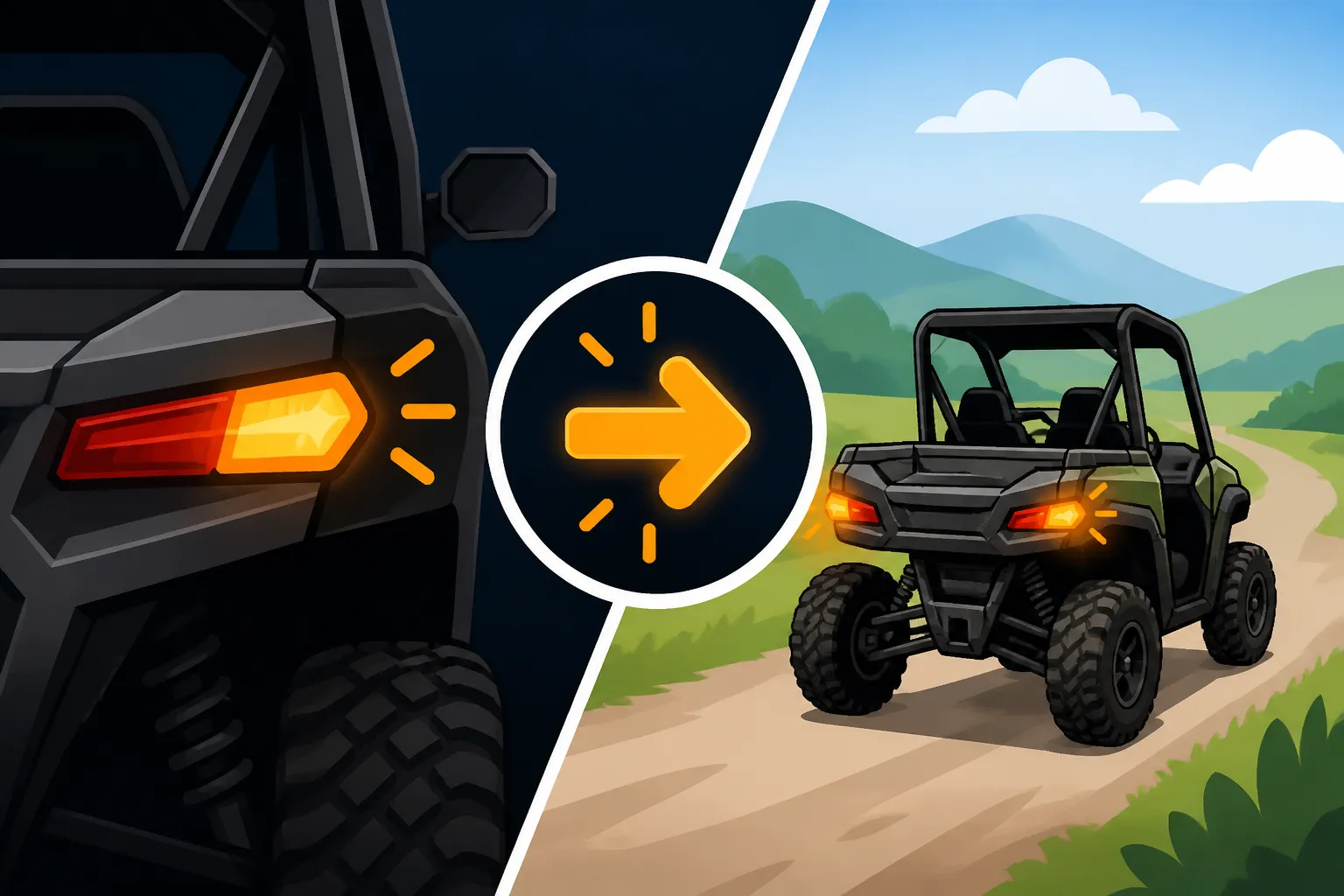
North Carolina's laws are pretty clear that a Modified Utility Vehicle must be equipped with working turn signals. These signals need to be installed on both the front and rear of the vehicle, on both the left and right sides. Imagine driving behind an MUV that only has turn signals on one side – it would be incredibly confusing and dangerous. So, you'll need a full set: two forward-facing turn signals (one for each side) and two rear-facing turn signals (again, one for each side).
Crucially, these signals must be visible from a reasonable distance, both day and night. This typically means they need to be amber in color for the front, and amber or red for the rear, though amber is most common for aftermarket kits and provides universal clarity. They must flash consistently when activated and be bright enough to cut through sunlight or be clearly seen in low-light conditions. A dim, flickering light might as well not be there at all. When you hit the switch, those lights need to declare your intentions unmistakably to anyone else on the road.
Furthermore, the turn signals must be part of a system that includes a switch to activate them (a lever or button, typically) and an indicator on your dashboard or instrument cluster that lets you, the driver, know they are engaged. This prevents you from driving for miles with your left turn signal blinking, oblivious to the confusion you're causing other drivers. This complete system approach ensures both external visibility for others and internal confirmation for you.
Choosing the Right Turn Signal Kit for Your MUV
With the legal requirements in mind, your next step is selecting a turn signal kit. The market is flooded with aftermarket options, and it can feel a bit overwhelming. You'll want to look for kits specifically designed for UTVs, as these often come with the necessary wiring harnesses and components that are more compatible with your machine's electrical system.
Here are some key things to consider when choosing a kit:
- LED vs. Incandescent: LED lights are generally brighter, draw less power, and last longer than traditional incandescent bulbs. While often a bit pricier upfront, the longevity and performance are usually worth it.
- Wiring Harness Quality: A good kit will have a well-designed, often "plug-and-play" wiring harness that minimizes the need for extensive electrical work. Look for kits with waterproof connectors, as your MUV will undoubtedly see some mud and moisture.
- Switch Type: Most kits come with a column-mounted turn signal stalk (like in a car) or a dashboard-mounted rocker switch. The column-mounted stalk is often more intuitive and easier to use while driving.
- Horn Feature: Many turn signal kits for UTVs also integrate a horn. While the horn isn't directly part of the turn signal requirement, it is another crucial piece of the MUV puzzle for road legality, so combining them makes sense.
- DOT Compliance: While not always explicitly stated for every component of an MUV, choosing lights that are "DOT compliant" (meaning they meet Department of Transportation standards for brightness and visibility) is a good practice and offers an extra layer of assurance that they'll meet local regulations.
Don't just grab the cheapest kit you find. Read reviews, consider your machine's make and model for compatibility, and prioritize quality and reliability. After all, these aren't just cosmetic additions; they're safety features that will dictate whether your MUV is truly road-legal and safe to operate on North Carolina's public thoroughfares.
Installation Insights and Common Pitfalls
So, you've chosen your turn signal kit. Now comes the fun part: getting it installed. For some, this might seem like a daunting task involving electrical wires and drilling into your beloved machine. But with a little patience and the right approach, it's definitely achievable.
DIY vs. Professional Installation: What to Consider
This is a classic dilemma. Do you tackle it yourself, or do you take it to a pro?
DIY Installation:
- Pros: Cost savings on labor, the satisfaction of doing it yourself, and gaining a deeper understanding of your machine's electrical system. Many kits come with detailed instructions, and there are tons of online tutorials.
- Cons: Requires some mechanical and electrical aptitude. You'll need basic tools (wire strippers, crimpers, drill, multimeter, etc.). Mistakes can lead to electrical issues, blown fuses, or even damage to your MUV's electrical system. It can also be time-consuming, especially if you encounter unexpected challenges. If you're not comfortable routing wires cleanly, drilling holes, or working with your vehicle's power system, you might get halfway through and wish you'd gone to a professional.
- Tips: If you go the DIY route, disconnect your battery before starting any electrical work. Test all connections before buttoning everything up. Use zip ties and loom wrap to secure and protect wires, keeping them away from hot engine parts, moving components, and sharp edges. Don't rush!
Professional Installation:
- Pros: Peace of mind that it's done correctly, often with a warranty on the labor. Faster turnaround time, as professionals have the tools and experience. They can also address any unforeseen issues or integrate the new wiring seamlessly into your existing system. Many local UTV dealerships or specialized accessory shops in places like Charlotte or Raleigh offer these services.
- Cons: The main drawback is the cost of labor, which can add a significant amount to your overall project.
- Tips: Shop around for quotes. Ask about their experience with MUV conversions or UTV accessory installations. Ensure they understand North Carolina's specific MUV requirements.
Ultimately, the decision depends on your comfort level, skill set, and budget. If you're handy and enjoy tinkering, DIY is a rewarding path. If you'd rather spend your free time riding and want the assurance of expert installation, a professional is the way to go.
Ensuring Your Turn Signals Pass Inspection
Once your turn signals are installed, you'll want to do a thorough check to make sure they'll pass muster when your MUV is inspected for road legality. Remember, this isn't just about functionality; it's about meeting the spirit of the law for road safety.
Here's a checklist for your turn signal system:
- All Four Corners: Do you have working turn signals at the front-left, front-right, rear-left, and rear-right positions?
- Visibility: Are they bright enough to be clearly seen from a distance during the day? Stand 50-100 feet away and check. Are they clearly visible at night?
- Color: Are the front signals amber? Are the rear signals amber or red?
- Flash Rate: Do they flash at a consistent, non-rapid rate? A very fast flash often indicates a bulb outage or an issue with the flasher relay.
- Dashboard Indicator: Does the indicator light on your dash (if equipped) or the audible clicker (if present) activate when the turn signals are on?
- Hazard Lights: Does your kit include a hazard light function (all four signals flashing simultaneously), and does it work correctly? While not always a specific MUV requirement, it's a valuable safety feature and often part of a comprehensive kit.
- Secure Mounting: Are the lights securely mounted and not wobbly? Vibrations from off-road riding can loosen poorly installed components.
- Clean Wiring: Is the wiring protected, neatly routed, and free from potential pinch points or exposure to excessive heat or water?
If you're unsure about any aspect of the installation or whether your signals meet the requirements, don't hesitate to consult with a reputable MUV conversion specialist or even call your local DMV or state highway patrol for clarification. Getting it right the first time can save you a lot of hassle down the road (pun intended!). And when it comes to documenting all your modifications and ensuring your vehicle is legally set up for future sale, resources like LawDepot can provide you with templates for bills of sale or other legal forms that reflect the specific modifications and legal status of your MUV. Having all your paperwork in order is just as important as having your lights working.
Beyond Turn Signals: A Holistic View of MUV Road Readiness
While turn signals are a critical component, they're just one piece of the larger puzzle when it comes to making your UTV a legitimate MUV in North Carolina. The state has a comprehensive list of requirements designed to ensure these vehicles are as safe and visible as possible when operating on public roads. Neglecting any one of these can put you at risk of fines, accidents, or losing your MUV designation.
Other Essential Equipment for MUV Road Use
To be fully road-legal, your MUV will need more than just proper turn signals. Here's a quick rundown of other key requirements:
- Headlights and Taillights: These must be fully functional, meeting specific brightness and visibility standards for road use, not just basic trail lights. The taillights often need to include brake lights.
- Brakes: A reliable braking system that can stop the vehicle effectively is paramount. This includes a parking brake as well. You'll definitely want to look into [North Carolina MUV Parking Brake Requirement].
- Windshield: An adequate windshield is usually required to protect the driver and passengers from road debris.
- Wipers: If your MUV has a windshield, it will likely need functional windshield wipers.
- Mirrors: A rearview mirror and side mirrors are essential for situational awareness on the road. Missing mirrors can make you a hazard on the road. Find out more about [North Carolina MUV Mirror Requirement].
- Speedometer: You need to know how fast you're going to adhere to posted speed limits. A working speedometer is a must. See [North Carolina MUV Speedometer Requirement] for details.
- Horn: A functional horn for signaling other drivers or pedestrians.
- Seat Belts: All occupants must have access to and use appropriate seat belts.
- Tires: Road-appropriate tires are generally expected. Off-road-only tires might not meet the safety standards for highway speeds and grip.
- Engine Size and Dimensions: Your UTV must meet specific engine size (more than 2,400cc!) and dimension requirements (length, width, height) to even qualify as an MUV in the first place. These are strict limits, and many side-by-sides, even larger ones, often miss the mark. Understanding [North Carolina MUV Engine Size Requirement] and [North Carolina MUV Dimension Requirements] is crucial before you start modifying anything.
- Insurance: Just like any other registered vehicle, an MUV must carry liability insurance. For more on this, check out [Insurance a Registered MUV Carries].
The full list is extensive, and it’s critical to address each item meticulously. Trying to cut corners will only lead to trouble.
Maintaining Compliance for Continued Street Legality
Getting your MUV registered and titled is just the first step. To maintain its street-legal status, you need to ensure ongoing compliance with all regulations. This means regular checks and maintenance of all the required equipment. For example, a broken turn signal light or a non-functional horn will revert your MUV to off-road-only status on public roads.
Think about annual inspections, which are standard for most road-legal vehicles in North Carolina. Your MUV will likely be subject to these, and inspectors will be looking closely at all the safety features, including your turn signals. Keep all your documentation, including proof of modifications, insurance, title, and registration, neatly organized. If you ever decide to sell your MUV, having all this paperwork in order, perhaps using templates from LawDepot for a comprehensive bill of sale, will make the process much smoother and ensure the buyer knows exactly what they're getting.
The rules for MUVs are designed to create a safer environment for everyone on North Carolina roads. By understanding and adhering to all the requirements, especially for crucial items like turn signals, you ensure not only your safety but also the longevity of your MUV's street-legal privileges. It's a commitment, but one that opens up new possibilities for your off-road machine.
| MUV Equipment Requirement | Description | Why it Matters |
|---|---|---|
| Turn Signals | Front (amber), Rear (amber/red), Left/Right, Flashing, Visible, Dash Indicator | Essential for communicating turns and lane changes to other drivers. |
| Headlights | Functional, bright, road-legal for day/night vision | See the road and be seen by oncoming traffic. |
| Taillights/Brake Lights | Functional, visible, red for rear. Brake lights activate with braking. | Be seen from behind, signal stopping. |
| Brakes (Foot & Parking) | Primary foot brake, independent parking brake. | Safe stopping power, secure parking on inclines. |
| Windshield & Wipers | Protective shield for occupants, functional wipers for visibility. | Shield from debris, maintain visibility in rain. |
| Mirrors | Rearview mirror, two side mirrors. | Critical for situational awareness and safe lane changes. |
| Speedometer | Accurate display of current speed. | Adhere to speed limits, avoid traffic violations. |
| Horn | Audible warning device. | Alert pedestrians or other drivers to your presence. |
| Seat Belts | Required for all occupants. | Crucial safety restraint in case of collision. |
| Engine Size (>2400cc) | Specific minimum engine displacement. | Ensures adequate power for road speeds. |
| Dimensions (L/W/H) | Max 142" length, 58" width, 70" height. | Fits within typical vehicle road envelopes. |
Disclaimer
This article is for general informational purposes only and does not constitute professional advice. Laws, prices and regulations vary by location and change over time. Consult a qualified professional for guidance on your specific situation.