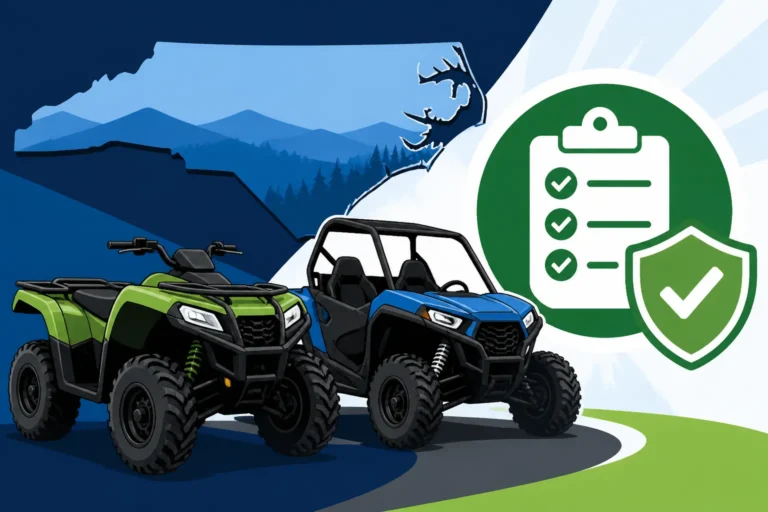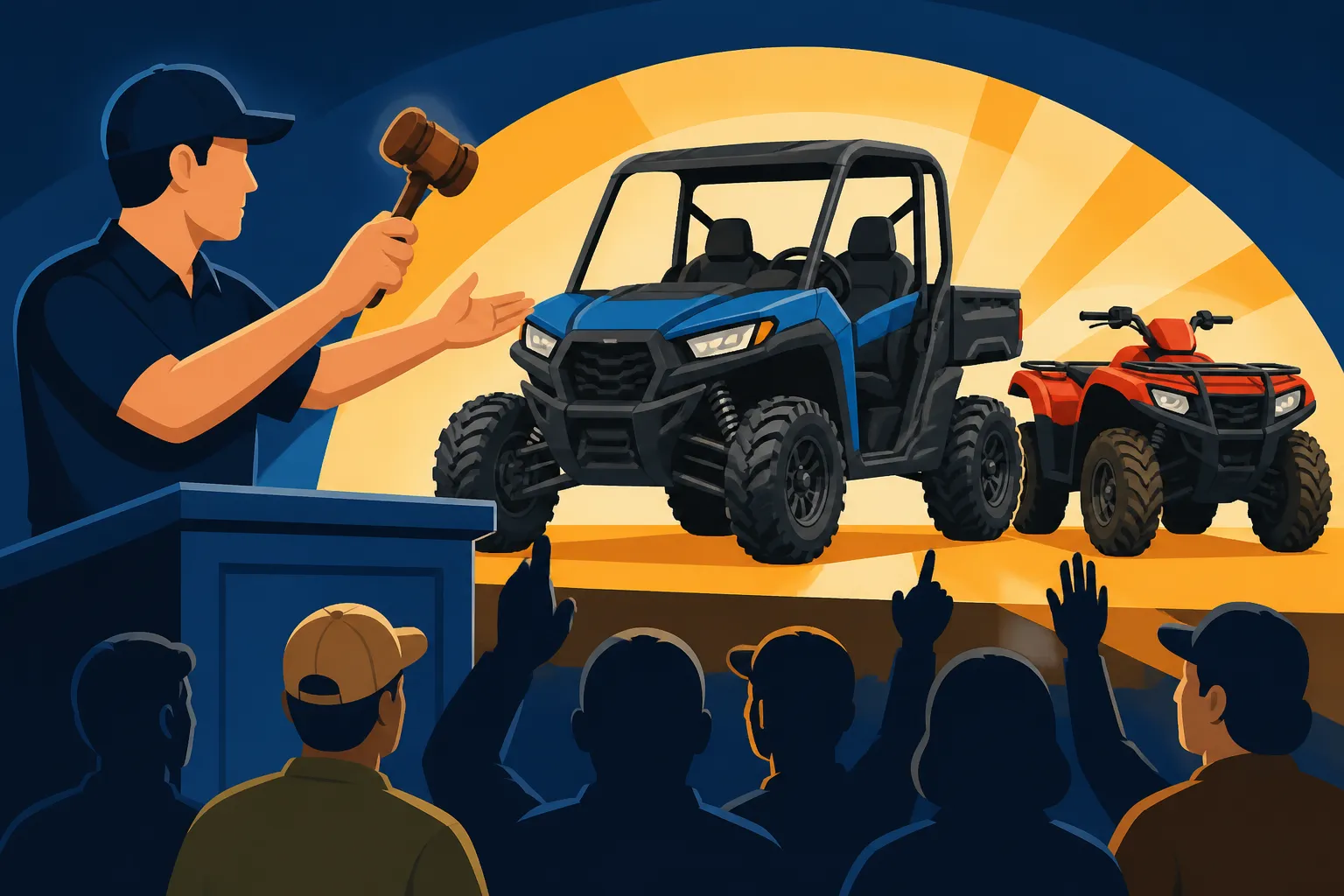
Buying at a Piedmont Auction
There's a special kind of thrill that comes with the hunt for a great deal, and often, that hunt leads folks to the exciting, fast-paced world of auctions. Whether you're looking for a workhorse for the farm, a machine to hit the trails, or just a project to tinker with, buying an ATV or UTV at a Piedmont auction in North Carolina can seem like a golden opportunity. But that excitement can quickly turn to a confusing mess if you're not prepared for the unique challenges of buying a used machine, especially when it comes to the all-important paperwork. This guide will walk you through everything you need to know before the gavel falls and after you've won your bid, focusing on title, ownership, and how to avoid those dreaded post-purchase headaches.
The Lure and the Risks of Piedmont Auctions
There’s no denying the appeal of an auction, especially in the heart of North Carolina's Piedmont region. From smaller, local events often tied to farm equipment sales to larger, specialized vehicle auctions, you can find a surprising variety of ATVs and UTVs. The promise of snagging a machine at a price well below retail, the sheer diversity of models on offer—sometimes including machines you might not find easily elsewhere—and the undeniable rush of the bidding process itself are all powerful draws. Many times, you’ll find machines that have been used for agricultural purposes, meaning they might have a lot of wear but also potentially a lot of life left if they’ve been maintained. Other times, you might find recreational machines that have seen varying degrees of trail abuse, or even salvaged vehicles that require significant work.
However, it's crucial to remember the age-old auction adage: "Buyer Beware." When you buy at auction, you're almost always purchasing items "as-is, where-is," with no warranties, no guarantees, and typically no opportunity for a test drive. This means any hidden mechanical issues, undisclosed damage, or even problems with the machine's ownership history become your responsibility the moment the hammer drops. It’s easy to get swept up in the competitive spirit and the desire for a bargain, but that dream deal can quickly become a costly nightmare if you're not careful and haven't done your homework.
Spotting a Good Deal Versus a Money Pit
Before you even think about raising your paddle, you absolutely must make the most of any pre-auction inspection period. This is your only real chance to assess the machine you're interested in. Look beyond the shiny tires and a quick wash. Get down and dirty with your inspection. Check for obvious signs of heavy wear, such as cracked plastics, deeply gouged skid plates, or bent A-arms. Look underneath for fluid leaks – oil, coolant, brake fluid – as these can indicate serious underlying issues. Examine the frame for cracks or poor repairs, which could signal a past accident or extreme stress. If the engine looks like it's been submerged in mud or has obvious signs of recent, sloppy repair work, proceed with extreme caution.
Sometimes, if the auction allows, you might even be able to start the machine. Listen carefully. Does it start easily? Are there any knocking sounds from the engine, excessive smoke from the exhaust, or strange grinding noises from the transmission? These are all red flags. Common auction pitfalls include buying a machine based solely on online photos without a physical inspection, letting emotions drive your bidding higher than the machine's actual value, or simply ignoring those little red flags you might spot in the hope that it's "nothing serious." Remember, a small problem on an ATV can quickly escalate into a major, expensive repair, and you have no recourse after the sale.
Understanding Auction Rules and Fees
Auctions operate under their own specific set of rules, and knowing them beforehand is just as important as inspecting the machine itself. One of the most common surprises for first-time auction buyers is the "buyer's premium." This is an additional percentage of your winning bid that gets added to your final price. So, if you bid $3,000 on an ATV and the buyer's premium is 10%, your actual cost for the machine is $3,300 before any taxes or other fees. This can quickly make what looked like an incredible bargain turn into a regular price, or even more, so always factor it into your maximum bid.
Beyond the premium, you need to be clear on acceptable payment methods. Most auctions will require cash, a cashier's check, or a wire transfer, often immediately after the auction concludes. Personal checks are rarely accepted unless you've made prior arrangements and have a rock-solid reputation with the auction house. Finally, pay close attention to the pickup times. Auctions often have strict deadlines for when purchased items must be removed from the premises. If you miss these windows, you could be facing hefty daily storage fees, eating further into any savings you might have thought you snagged. Remember, these are "as-is, where-is" sales, meaning what you see is what you get, and once you've paid, the machine is yours, for better or worse.
Essential Paperwork: What to Demand and What to Expect
Now, let's talk about the real make-or-break aspect of buying a machine at a Piedmont auction: the paperwork. North Carolina has some unique rules when it comes to ATVs and UTVs, particularly regarding titles, which can be a real head-scratcher for new buyers or those coming from other states. The good news is that understanding these requirements upfront can save you a ton of stress, time, and money down the road. The bad news is that auctions, by their nature, don't always come with a perfect paper trail. Don't let that deter you, but empower yourself with knowledge!
The Holy Grail: A North Carolina Title
While you might hear that a title isn't always required for an ATV in North Carolina, it truly is the "holy grail" of ownership documents. A title is official proof that you legally own the machine. Without it, proving ownership can become a significant challenge, making it difficult to resell the machine, obtain financing, or even recover it if it's stolen. For more on this, you might find [Why a North Carolina Title Is Worth Having] really helpful.
The previous owner, especially for a machine that has changed hands a few times, really should have a title. If the auction listing explicitly states that the machine comes with a clear North Carolina title, that's a huge positive. However, if the listing says "no title" or "bill of sale only," you're stepping into trickier territory. It's not impossible to deal with, but it absolutely requires more effort on your part to establish clear ownership. In some cases, you might even need to apply for a title for a machine that has never been titled before, which involves a specific process at the DMV. If you're faced with buying a machine with no title, our guide on [Titling a Machine With No Papers] goes into much greater detail about how to navigate that situation.
To give you a clearer picture, here's a quick comparison of what you might encounter at a Piedmont auction:
| Feature | Machine with a North Carolina Title | Machine with "Bill of Sale Only" |
|---|---|---|
| Proof of Ownership | Clear, definitive, legally recognized. | Relies on a strong bill of sale; potentially open to dispute. |
| Resale Value | Generally higher, easier to sell, more appealing to buyers. | Lower, harder to sell, raises questions for potential buyers. |
| Theft Recovery | VIN clearly linked to your ownership in state records. | Recovery relies heavily on bill of sale and police reports. |
| Lien Attachment | Lender can easily record a lien, making financing simpler. | Lenders are highly unlikely to finance an untitled machine. |
| Titling Process | Straightforward transfer at the DMV using form MVR-1. | Requires additional steps to establish ownership, potentially an affidavit. |
| Highway Use Tax (HUT) | Paid at the time of title transfer. | Paid if and when you successfully apply for a title. |
The Bill of Sale and Its Importance
Even if a machine comes with a title, a solid bill of sale is still an absolute necessity. If there’s no title, the bill of sale becomes arguably the most crucial document you possess. It’s your legal record of the transaction, detailing who bought what from whom, when, and for how much. For North Carolina specifically, where ATV titles have historically been optional for many machines, a robust bill of sale is often the primary document to prove your ownership. You'll want to check out [A North Carolina Bill of Sale for an ATV] for a deeper dive into what makes a good one.
At a minimum, your bill of sale should include:
- The Vehicle Identification Number (VIN) of the ATV or UTV. Never accept a bill of sale without a VIN!
- The make, model, and year of the machine.
- The full legal names and contact information of both the buyer and the seller.
- The date of the sale.
- The purchase price.
- A clear statement that the machine is sold "as-is, where-is," acknowledging that no warranties are implied or given.
- Signatures of both parties.
While auction houses typically provide their own version of a bill of sale, it's not a bad idea to be prepared with your own template. Services like LawDepot offer customizable bill of sale forms that can be tailored to include all the essential details and ensure you have a legally sound document. Having a comprehensive bill of sale is critical not just for your records, but also for any future interactions with the DMV, especially if you plan to eventually title the machine.
Understanding North Carolina's Highway Use Tax (HUT)
Here's another point that often catches buyers off guard, particularly those who are used to sales tax being calculated differently. In North Carolina, instead of a traditional sales tax on vehicle purchases, you'll pay a "Highway Use Tax" (HUT) when you title your machine. This tax applies to ATVs and UTVs that are being titled, even if they're used off-road. It acts very much like a sales tax, so don't think you're escaping it just because it has a different name. You can learn more about this in our article [North Carolina ATV Highway Use Tax].
The HUT is generally assessed at 3% of the purchase price or the fair market value of the machine, whichever is greater, up to a certain cap. For an auction purchase, the price you paid at the auction is typically considered the purchase price. This is why having that clear, undeniable purchase price on your bill of sale is so important. Many buyers feel a pang of frustration when they realize this is an unexpected cost, especially if they thought they were getting a "no sales tax" deal at the auction. It's a mandatory part of the titling process, and you absolutely need to factor it into your overall budget when you're bidding. For more on the specifics, check out [3 Percent of Retail Value in North Carolina].
Post-Auction Steps: Securing Your Investment
Congratulations! The gavel has fallen, you're the proud new owner of an ATV or UTV from a Piedmont auction. But don't just load it up and forget about the details. What you do in the days and weeks immediately following your purchase is just as important as your diligence at the auction itself. These steps ensure your investment is legally sound and protected.
Titling Your Newly Acquired Machine
This is often the first and most important step after an auction purchase, even if you acquired the machine with a "bill of sale only." To title your machine, you'll need to gather all your paperwork – the auction's bill of sale, any previous title documents you received, and your personal identification. Your next stop will be a North Carolina Department of Motor Vehicles (DMV) office. We have a comprehensive guide on [How to Title an ATV in North Carolina] that walks you through the entire process.
The primary form you'll need is the Application for Certificate of Title, known as Form MVR-1. This form will ask for details about the machine, its previous owner (if known), and your information as the new owner. You can find more specific guidance in [North Carolina Title Application on Form MVR-1]. If you were lucky enough to receive a previous title, the transfer is usually quite straightforward. However, if you bought a machine "with no papers" or "bill of sale only," the process can be more involved. You might need to provide additional documentation to prove continuous ownership or even obtain a VIN verification. In some cases, if there are gaps in the ownership history, or if the machine has never been formally titled, you may need to submit a sworn affidavit. This is another situation where a service like LawDepot can be invaluable, helping you draft legal documents that solidify your claim of ownership. Keep in mind that there are fees associated with titling, which can add up, so be sure to factor in [What a North Carolina ATV Title Costs] as well.
Performing a VIN Check and Damage Disclosure
Even if you did a quick VIN check before the auction, it's absolutely vital to perform a more thorough one after your purchase, especially if you didn't get a chance to do so properly in the rush of the auction environment. A VIN check helps confirm that the machine isn't stolen and doesn't have any outstanding liens against it. Imagine buying a machine only to find out later it was reported stolen or has a financial claim against it – that's a headache you definitely want to avoid! Our article on [Checking a VIN Before a North Carolina Purchase] provides excellent advice on how to do this.
Additionally, when you apply for a title, you'll likely encounter the Damage Disclosure Statement (Form MVR-1A). This form requires you to disclose if the vehicle has sustained certain types of damage, particularly if it was deemed salvage or a total loss. While this is more common for road vehicles, it can apply to off-road machines if they've been severely damaged. You can find more information about this requirement in [North Carolina Damage Disclosure on Form MVR-1A]. This is particularly important for auction-bought machines, as many are sold due to previous damage. Discovering serious, undisclosed issues after the purchase is a common lament among auction buyers, so a thorough VIN and damage history check is critical for your peace of mind. All the essential documents you'll need for this whole process are outlined in [North Carolina ATV Title Paperwork].
Planning for Transport and Storage
Don't let the excitement of your win overshadow the practicalities of getting your new machine home safely and securely. You'll need a suitable trailer and proper tie-downs to transport your ATV or UTV. Remember, you generally cannot just drive an ATV home from an auction on public roads in North Carolina, unless it qualifies as a Modified Utility Vehicle (MUV) and is properly registered and insured. Even then, an auction site is not the place for an impromptu maiden voyage.
Once you have it home, immediate secure storage is crucial. Thieves often target newly purchased machines, especially if they're left in easily accessible areas. Consider where you'll keep it, whether that's a locked garage, a secure shed, or a well-lit area with security cameras. Think about how you’ll protect your new acquisition from both the elements and potential theft. This often overlooked step is key to preserving your investment, especially if there's a delay in the [North Carolina ATV Title Processing Time].
Buying an ATV or UTV at a Piedmont auction can indeed be a fantastic way to find a machine that perfectly suits your needs, whether for work or play. However, it's not a decision to be taken lightly. The thrill of the deal must be tempered with careful planning, meticulous inspection, and a thorough understanding of North Carolina's specific titling and tax requirements. By being diligent, knowing what paperwork to expect (and what to demand), and following through with the necessary post-purchase steps, you can turn that auction win into a truly satisfying ownership experience.
Disclaimer
This article is for general informational purposes only and does not constitute professional advice. Laws, prices and regulations vary by location and change over time. Consult a qualified professional for guidance on your specific situation.