A Farm-Only Quad and North Carolina Titling
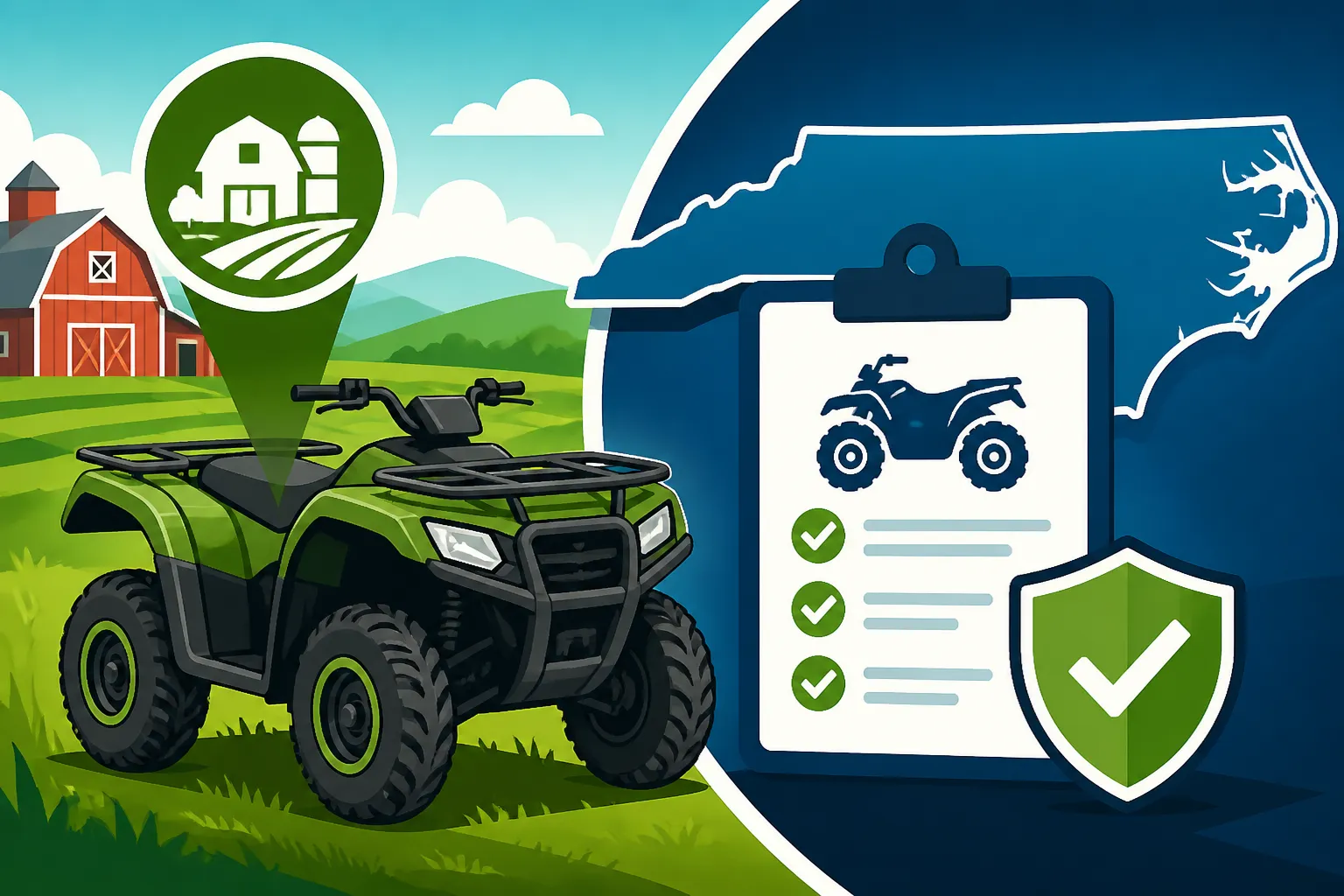
You've got a quad or a side-by-side that lives its life entirely on the farm, hauling feed, checking fences, or just making chores a whole lot easier. Naturally, you might think, "This isn't for the roads, so why would I need to bother with the DMV?" It’s a completely understandable assumption, but the reality of titling an ATV in North Carolina, even for a machine strictly used on private agricultural land, can be a bit more nuanced than you might initially believe. This guide will help you understand whether a title is truly necessary for your farm-only ATV and walk you through the process if you decide to get one.
The Common Misconception: "Farm Use" Means No Paperwork
It's a common and very valid thought among folks running farms here in North Carolina: "My ATV is a workhorse, not a recreational toy that leaves the property. Surely, it's exempt from all the usual DMV rigmarole?" And in a way, you're right about some things, but not entirely about others. Many assume that because the machine is exclusively used for farming operations, it exists in a kind of legal gray area where formal documentation isn't required. This sentiment often comes from the fact that other farm equipment, like tractors or combines, rarely needs titling in the same way a car does.
However, the North Carolina Division of Motor Vehicles (DMV) has specific rules regarding off-highway vehicles (OHVs), which include ATVs and many UTVs. While it's true that North Carolina doesn't actually register ATVs or UTVs for off-road use, which is a major point of confusion for many riders, the question of titling is separate. [Titling an ATV in North Carolina Is Optional], regardless of whether it's a weekend warrior or a dedicated farm machine. This optional nature means you won't be fined for not having a title for your farm ATV, but it doesn't mean a title holds no value or couldn't save you a headache down the line. It's about understanding the benefits of clear ownership, even for a machine that never sees a public road or trail.
Understanding North Carolina's Unique Approach to ATV Documentation
North Carolina stands out from many other states because it doesn't have a mandatory registration system for off-road vehicles like ATVs and UTVs. This means you won't find yourself needing to slap a license plate or a yearly sticker on your machine just to ride it on your own land or designated trails. This absence of mandatory registration is often the root of the confusion when it comes to titling, especially for farm equipment. People naturally conflate registration with titling, assuming if one isn't required, neither is the other.
However, titling is distinct from registration. A title is essentially a proof-of-ownership document issued by the state. While registration grants permission to operate a vehicle on public lands or roads, a title simply declares who legally owns it. For all ATVs in North Carolina, including those exclusively used on farms, acquiring a title is an option, not a requirement. This means your farm ATV can live its entire life without a state-issued title, and you won't be breaking any laws. The state won't be knocking on your door to demand paperwork for your trusty ranch hand.
The Modified Utility Vehicle (MUV) Exception
It’s crucial to distinguish between a standard ATV/UTV used for farm work and a Modified Utility Vehicle (MUV). An MUV is a specific category of vehicle in North Carolina that can be registered and titled for limited on-road use. However, most farm-only ATVs and UTVs, especially older models or those not specifically modified to meet stringent highway safety standards, will not qualify as MUVs.
MUVs have very specific requirements, including engine size, dimensions, and safety features like seatbelts, turn signals, and a speedometer. If your farm machine isn't designed or outfitted to meet these exact specifications, then the MUV rules don't apply to you. Your standard farm quad remains an OHV, for which titling is still entirely optional. This is an important distinction, as sometimes the MUV discussion can further muddy the waters for farm owners simply trying to understand their options for a non-road-legal farm vehicle.
Why a Title for Your Farm ATV Can Still Be a Smart Move
Even if North Carolina doesn't demand a title for your farm-only ATV, there are compelling reasons why proactively getting one can save you a world of trouble down the line. Think of it as an extra layer of protection and clarity for a valuable asset, much like keeping detailed records for your livestock or crop yields.
Ironclad Proof of Ownership
Imagine a scenario where your beloved farm ATV goes missing. Without a title, proving that machine legally belongs to you can become incredibly difficult. While a bill of sale or other purchase records might help, a state-issued title is the undisputed gold standard for proving ownership. It’s a document recognized by law enforcement, insurance companies, and courts. If you ever need to involve the authorities in a theft investigation, having a title streamlines the process significantly, making it much easier for them to track and return your property. This also extends to disputes; if there's ever a question of who owns the machine, the title provides definitive proof.
Easing Future Sales and Transfers
When the time comes to upgrade, downsize, or pass your farm ATV on to a family member, having a title makes the transaction much smoother. Buyers, even for a farm-only machine, often prefer to see a clear title. It offers them peace of mind that they are purchasing a legitimate machine with no hidden liens or ownership disputes. Without a title, a potential buyer might be wary, assuming there could be issues. You might find yourself having to go through a more complicated process of proving ownership to reassure them, potentially even impacting the resale value. For internal transfers, such as through an inheritance, a title significantly simplifies the legal process, especially when dealing with estates. [Selling an ATV in North Carolina] is much easier with a clear title in hand.
Meeting Lender and Insurance Requirements
If you financed the purchase of your farm ATV, your lender almost certainly required a title. They want their lien officially recorded on the title to protect their investment. Without a title, it would be difficult for them to secure their interest in the machine. Even if you paid cash, your insurance provider might prefer or even require a title for comprehensive coverage, especially if the ATV is a significant asset on your farm. While not always a hard requirement for off-road machines, having a title can sometimes simplify the claims process should your machine be damaged or stolen. [Why a Lender Insists on a Titled Machine] is a common industry practice across all types of vehicles.
Peace of Mind and Streamlined Record Keeping
Ultimately, having a title provides peace of mind. It’s a definitive document that confirms your legal claim to the machine. This simplifies your record-keeping for tax purposes, asset tracking, and ensures that all your farm equipment is properly documented. While it might seem like an unnecessary step for a machine that rarely leaves the property, the security and clarity it offers often outweigh the minimal effort involved in obtaining it. It’s about being prepared, rather than scrambling for proof when an unexpected situation arises.
The Process: How to Title a Farm ATV in North Carolina
So, you've weighed the pros and cons, and you've decided that getting a title for your farm-only ATV is the right move for you. The good news is that the process isn't overly complicated, though it does require a trip to your local North Carolina DMV office or authorized tag agency. You'll need to gather a few key documents and be prepared to pay a few fees, including the state's Highway Use Tax.
Required Documentation
The main application form you’ll need to complete is the [North Carolina Title Application on Form MVR-1]. This form asks for details about the ATV, the owner, and how it was acquired. Along with the MVR-1, you’ll need to provide proof of ownership. This is absolutely critical. If you bought the ATV new from a dealer, you’ll typically have a Manufacturer's Statement of Origin (MSO) or Manufacturer's Certificate of Origin (MCO). This document is basically the birth certificate of your ATV.
If you bought the ATV used, you’ll need the previous owner's signed-over title. If the machine was purchased used without a title – a common scenario for farm equipment – you'll need a strong [A North Carolina Bill of Sale for an ATV]. This bill of sale should include the buyer's and seller's names, addresses, the sale date, the purchase price, and a detailed description of the ATV, including its Vehicle Identification Number (VIN). While not always mandatory for optional titling, a solid bill of sale, especially one created using a template from a service like LawDepot, can serve as crucial evidence of transfer of ownership. Additionally, you may need to submit [North Carolina Form MVR-60 Explained], which is an affidavit to attest to ownership if certain title documents are missing. Make sure to have a clear and legible VIN readily available, as the DMV will need it. [North Carolina ATV Title Paperwork] can seem daunting, but breaking it down helps.
The Highway Use Tax and Other Fees
One of the most important aspects of titling any vehicle in North Carolina is the Highway Use Tax. Despite its name, this tax applies even to vehicles that won't see highway use, including ATVs. The tax is 3% of the purchase price or the fair market value of the ATV, whichever is greater. So, if you bought your farm ATV for $5,000, you’ll owe $150 in Highway Use Tax. This is a one-time tax paid at the time of titling. There is also a nominal title fee that [What a North Carolina ATV Title Costs] outlines. The good news is that these costs are generally quite reasonable, especially when you consider the long-term benefits of having a clear title.
It's important to be transparent about the purchase price on your bill of sale. If the DMV suspects the stated price is artificially low, they may refer to their own valuation guides to determine the fair market value and assess the tax based on that figure. So, don't try to lowball the value just to save a few dollars on the tax. For private sales, a detailed bill of sale, which you can easily generate using reputable online services like LawDepot, will help substantiate the declared purchase price and avoid questions from the DMV.
Where to File and What to Expect
Once you have all your documents in order and are ready to pay the applicable fees, you’ll need to visit a North Carolina DMV office or an authorized license plate agency. These agencies handle title applications and are usually more convenient than a main DMV office for routine transactions. Be prepared for a bit of a wait, especially during peak hours.
When you present your paperwork, the clerk will review everything, process your payment, and issue you a temporary receipt. The actual title will then be mailed to you, usually within a few weeks. It's important to keep your temporary receipt as proof that you've applied for the title until the physical document arrives. If you're [Titling a Machine Bought Privately in North Carolina], the process is essentially the same as for any other ATV. Always remember to check the [North Carolina ATV VIN Requirements] before heading to the DMV to ensure your machine's identification number is clear and valid.
Making the Decision
Deciding whether to title your farm-only ATV in North Carolina ultimately comes down to your personal comfort level and future plans for the machine. While not legally mandated, obtaining a title offers robust protection, simplifies future transactions, and provides undeniable proof of ownership. It’s a proactive step that can save you significant hassle and potential financial loss in the event of theft, dispute, or sale. For many North Carolina farmers, that extra layer of security is well worth the minimal time and cost involved. If you want to know [How to Title an ATV in North Carolina], just gather your documents and make that trip to the DMV.
Disclaimer
This article is for general informational purposes only and does not constitute professional advice. Laws, prices and regulations vary by location and change over time. Consult a qualified professional for guidance on your specific situation.