Titling a Quad Kept at a Mountain Cabin
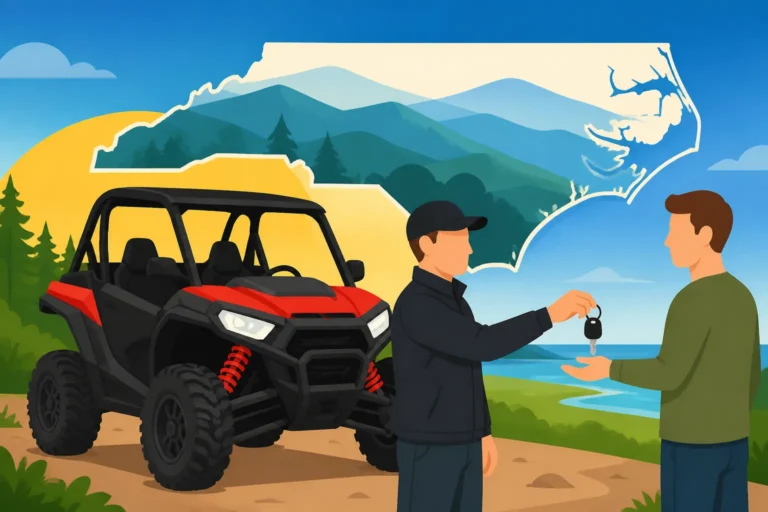
It’s easy to think that an ATV or UTV you keep tucked away at your mountain cabin in North Carolina, only seeing the light of day a few times a year for some trail riding on private land, doesn't really need all the official paperwork. You might wonder if it's worth the hassle when it's mostly for fun on your own property or nearby sanctioned trails. But the truth is, understanding North Carolina's titling requirements, even for these occasional-use machines, can save you a world of headaches down the road. This guide will walk you through why titling your cabin quad is a smart move, and how to get it done without unnecessary stress.
Why Your Mountain Cabin Quad Needs a North Carolina Title
Many folks assume that if a machine isn't "street legal" or doesn't get ridden on public roads, it's exempt from formal titling. This is a common misconception, especially in a state like North Carolina where ATV registration isn't required in the same way cars are. However, North Carolina's DMV has clear rules for establishing ownership of these machines, and a title is the official record of that ownership.
Clearing Up Common Misconceptions
One of the biggest misunderstandings comes from the lack of a traditional ATV "registration" in North Carolina. Because you don't get a license plate or an annual sticker to ride your quad, it's easy to assume the state doesn't care much about it at all. But that couldn't be further from the truth. While the state doesn't register ATVs for highway use (beyond the specific "Modified Utility Vehicle" category), it absolutely provides a mechanism for titling them. This is where many riders get confused, thinking "no registration needed" means "no paperwork needed."
Consider this: you bought your quad used from a fellow rider near Blowing Rock, and you've got a handshake agreement and a basic bill of sale. You drive it straight to your cabin in the Nantahala National Forest area, where it stays. You might think, "What's the point of a title? I know it's mine, and the seller knows it was theirs." But this informal approach leaves you vulnerable, as we'll explore.
Establishing Ironclad Proof of Ownership
The primary reason to title your mountain cabin quad is to establish clear, undeniable proof of ownership. Think of it like this: your cabin itself has a deed that proves you own the land and structure. Without it, how would you legally prove the cabin is yours if a dispute arose? The same principle applies to your ATV or UTV.
If your quad is stolen from your cabin, or from a trailer on the way to a trail system like Wayehutta, having a title is your strongest piece of evidence when filing a police report and trying to recover it. Law enforcement agencies rely heavily on titles to track ownership and return stolen property. Without a title, proving that machine with the bent fender and custom graphics is yours becomes a much more difficult, if not impossible, task. The DMV might have a record of a bill of sale or an affidavit you filed, but the title itself is the definitive document. [Why a Title Matters After Your Quad Is Stolen]
The Hidden Risks of an Untitled Cabin Quad
It's tempting to leave the paperwork undone, especially for a machine that feels like a pure recreational escape. "It's just for fun," you might think. But overlooking the titling process, even for a quad that rarely leaves your mountain retreat, can lead to some significant headaches and financial risks down the road.
Dealing with Theft and Recovery
Let's imagine the worst: you arrive at your cabin in Ashe County for a weekend of riding, only to find your storage shed broken into and your beloved quad missing. Your heart sinks. You call the local sheriff's department. When the officer asks for proof of ownership, what do you provide? A bill of sale from five years ago? A handwritten note? These documents are helpful, but a valid North Carolina title is paramount.
Without a title, the police have less to go on when listing the machine as stolen and entering its Vehicle Identification Number (VIN) into national databases. If your quad is recovered in another county or even another state, the title is the fastest, most reliable way for authorities to identify you as the rightful owner and get your machine back into your hands. An untrailed machine can disappear into the black market much more easily, making recovery a long shot. [Why a Title Matters After Your Quad Is Stolen]
The Hurdles of Selling Your Machine
Eventually, you might decide to upgrade your machine or simply no longer need the quad at the cabin. Selling an untitled ATV in North Carolina can be a real challenge. Many informed buyers, especially those looking for peace of mind, will be wary of purchasing a machine without a title. They understand that a title protects them from buying a stolen vehicle and establishes their own clear ownership.
Imagine trying to sell your quad on a local classifieds site. You get a call from a serious buyer in Charlotte who's willing to drive all the way to your mountain cabin. They love the quad, but when they ask to see the title, you have nothing to show. Suddenly, their enthusiasm wanes. They might suspect the machine is stolen, has outstanding liens, or that you're not the true owner. Even if you have a bill of sale, it's not the same as a state-issued title. A good buyer knows that [A North Carolina Bill of Sale for an ATV] alone isn't enough to secure their investment. They’ll likely walk away, leaving you with a harder-to-sell machine and potentially a lower asking price.
Financing and Insurance Challenges
While you might not typically finance an older cabin quad, if you ever decide to purchase a newer, more expensive UTV for your mountain property, lenders will almost always require a title. A title gives them a legal claim to the machine as collateral for the loan. Without it, securing financing would be nearly impossible. [Why a Lender Insists on a Titled Machine]
Similarly, while not all ATV insurance policies strictly require a title to insure against damage or theft, having one certainly simplifies the claims process. If you ever need to file a claim after an incident at your cabin or on a trail, the insurance company will want solid proof of ownership. A North Carolina title provides that proof without question, streamlining what can already be a stressful experience.
Benefits Beyond Legality for Your Cabin Quad
While avoiding legal headaches is a huge motivator, titling your quad offers several practical advantages that contribute to your overall peace of mind and the value of your machine.
Peace of Mind and Value Retention
Knowing you have a clear, state-backed document proving ownership of your quad brings a significant level of peace of mind. You don't have to worry about the "what ifs" of theft, loss, or future sale. This isn't just an abstract feeling; it directly impacts the perceived and actual value of your machine.
An ATV with a clear North Carolina title is generally worth more on the used market than an identical machine without one. It signals to potential buyers that the machine has a clean history, isn't stolen, and has verifiable ownership. Think about it: when you're buying a used car, you'd never consider one without a title, right? The same logic applies to ATVs, even if they're not road legal. This makes your investment in the quad more secure. You can easily prepare a [North Carolina Bill of Sale Requirements] document when you have a clear title to transfer.
Simplifying Future Transactions and Estate Planning
Life has a way of throwing curveballs. What if you decide to gift your quad to a family member, or if it needs to be passed down as part of an estate? Having a title makes these transitions straightforward. Transferring a title to a new owner is a standardized process at the North Carolina DMV, providing legal protection for both parties. Without a title, these transactions become murky, potentially requiring extra steps or legal advice to ensure proper transfer of ownership. [Titling an Inherited Machine in North Carolina]
Moreover, if you ever need to use your machine as collateral for a private loan or any other financial arrangement, a title serves as undeniable proof of asset ownership. While less common for recreational ATVs, it's another layer of flexibility that a title provides. For creating robust legal documents for such transfers, resources like LawDepot can provide templates for bills of sale or promissory notes, ensuring all details are legally sound.
How to Title Your ATV or UTV in North Carolina
Even if your quad mostly lives a quiet life at your mountain cabin, getting it titled is a relatively straightforward process once you know the steps. Don't let the thought of DMV paperwork intimidate you; we'll break it down.
Gathering Your Essential Documents
Before you even think about heading to a North Carolina NCDMV office, gather all the necessary paperwork. This upfront preparation will save you immense frustration and multiple trips.
Here’s a checklist of what you'll typically need:
- North Carolina Title Application (Form MVR-1): This is your main application form. You’ll fill in details about yourself and your ATV. It’s available online or at any DMV office. [North Carolina Title Application on Form MVR-1]
- Proof of Ownership: This is critical.
- New Machine: The Manufacturer's Statement of Origin (MSO) or Manufacturer's Certificate of Origin (MCO). This comes from the dealer if you bought it new.
- Used Machine: The previous owner's properly assigned North Carolina title. If it’s from out of state, the out-of-state title. If you bought it privately with just a bill of sale and no title, you’ll likely need a notarized [North Carolina Form MVR-60 Explained] (All-Terrain Vehicle Affidavit), confirming your ownership and how you acquired the machine. This is a common scenario for many used ATV purchases.
- North Carolina Damage Disclosure Statement (Form MVR-1A): If the ATV is less than seven years old, you'll need this. It discloses any major damage the machine has sustained. [North Carolina Damage Disclosure on Form MVR-1A]
- Proof of Identity: A valid North Carolina driver's license or state-issued ID.
- Payment for Fees and Taxes: You'll need to pay the titling fee and the Highway Use Tax. [North Carolina ATV Title Cost] and [North Carolina ATV Highway Use Tax] are separate charges.
When purchasing a used machine, especially from a private seller, having a strong bill of sale is crucial, even if you still need the MVR-60 affidavit. Services like LawDepot offer customizable bill of sale templates that ensure all necessary information, such as VIN, purchase price, and seller/buyer details, are included for your records. This can be invaluable if questions arise later.
Understanding the Highway Use Tax
One of the most common surprises for first-time ATV titlers in North Carolina is the Highway Use Tax. Despite its name, this tax applies to the titling of ATVs and UTVs, even if they won't be used on public roads. It's essentially North Carolina's version of a sales tax on vehicles, paid at the time of titling.
The tax is calculated at 3% of the purchase price or the fair market value of the machine, whichever is greater. So, if you bought your cabin quad for $5,000, expect to pay 3% of that amount in Highway Use Tax. Even if you received the machine as a gift, you'll still owe the tax based on its fair market value. Don't forget that if you are claiming a lower value, the DMV may require additional documentation or even an appraisal. [3 Percent of Retail Value in North Carolina]
The Titling Process: Step-by-Step
Once you have all your documents in order, the actual titling process is straightforward:
- Visit Your Local NCDMV Office: You'll need to go to a North Carolina Division of Motor Vehicles (NCDMV) license plate agency. You can find your nearest location online.
- Present Your Paperwork: Hand over your completed MVR-1, MSO/title/MVR-60, MVR-1A (if applicable), and your ID to the clerk.
- Pay Fees and Taxes: The clerk will calculate your total fees, including the titling fee and the Highway Use Tax. Be prepared to pay by cash, check, or debit/credit card (check accepted payment methods for your specific office).
- Receive Your Temporary Documentation: You'll typically receive a temporary receipt or printout confirming your application.
- Wait for Your Title: The official North Carolina title will be mailed to you within a few weeks. [How Long the DMV Takes to Mail a Title]
It's a good idea to make copies of all your submitted documents before you hand them over, especially your MVR-60 affidavit if you used one. Having your own records is always a smart move. If you're selling the machine, having a clear title makes the process for the buyer much simpler. A well-prepared bill of sale, perhaps drafted using a template from LawDepot, can go hand-in-hand with the title transfer, ensuring both parties have a strong record of the transaction. [Titling a Machine Bought Privately in North Carolina]
Considering the "What Ifs" for Your Mountain Getaway
Thinking about the future can make the present paperwork seem less daunting. Titling your quad isn't just about meeting state requirements; it's about protecting your investment and simplifying potential situations down the line.
Protecting Your Investment When You're Not There
Your mountain cabin is your escape, and your quad is part of that experience. But when you're back home, miles away, your cabin and its contents are vulnerable. A titled quad is a protected asset. If a natural disaster, like a serious storm, impacts your cabin and damages your ATV, having a title can be crucial for insurance claims and proving ownership for potential disaster relief. It's not just about theft; it's about any scenario where you might need to prove the quad is yours.
Consider a scenario where you've stored your machine for the winter, covered up in a shed on your property near Lake Lure. You return in spring to find the shed damaged and the machine exposed. If any part of it is salvageable, or if you need to scrap it and claim insurance, that title is going to be your best friend for quickly proving the loss to your insurance provider. [North Carolina ATV Title for a Salvage Machine]
When Your Cabin Quad Becomes More Than Just a Cabin Quad
Sometimes, plans change. Perhaps you decide to move closer to your cabin, or you find a fantastic network of trails opening up where you'd like to ride more often. Maybe you realize that your quiet cabin quad is perfectly suited for joining some organized rides or venturing onto North Carolina's fantastic public trail systems, like the Uwharrie National Forest.
While North Carolina does not register ATVs for general trail use, some public lands may require specific permits or safety certifications. Having your machine properly titled ensures that if you ever need to meet any other state or federal requirements (e.g., for certain financing, specific insurance plans, or crossing state lines for riding), you've already established foundational ownership. You might eventually find yourself needing a [North Carolina Forest OHV Permits] or a [North Carolina ATV Safety Certificate Requirements] for particular trails, but the title remains the bedrock of legal ownership.
Titling your ATV or UTV might seem like an extra step for a machine that mostly enjoys the quiet solitude of your mountain cabin. But in the long run, it's a simple process that provides significant legal protection, eases future transactions, and gives you invaluable peace of mind.
Disclaimer
This article is for general informational purposes only and does not constitute professional advice. Laws, prices and regulations vary by location and change over time. Consult a qualified professional for guidance on your specific situation.