Bringing a Machine From Georgia
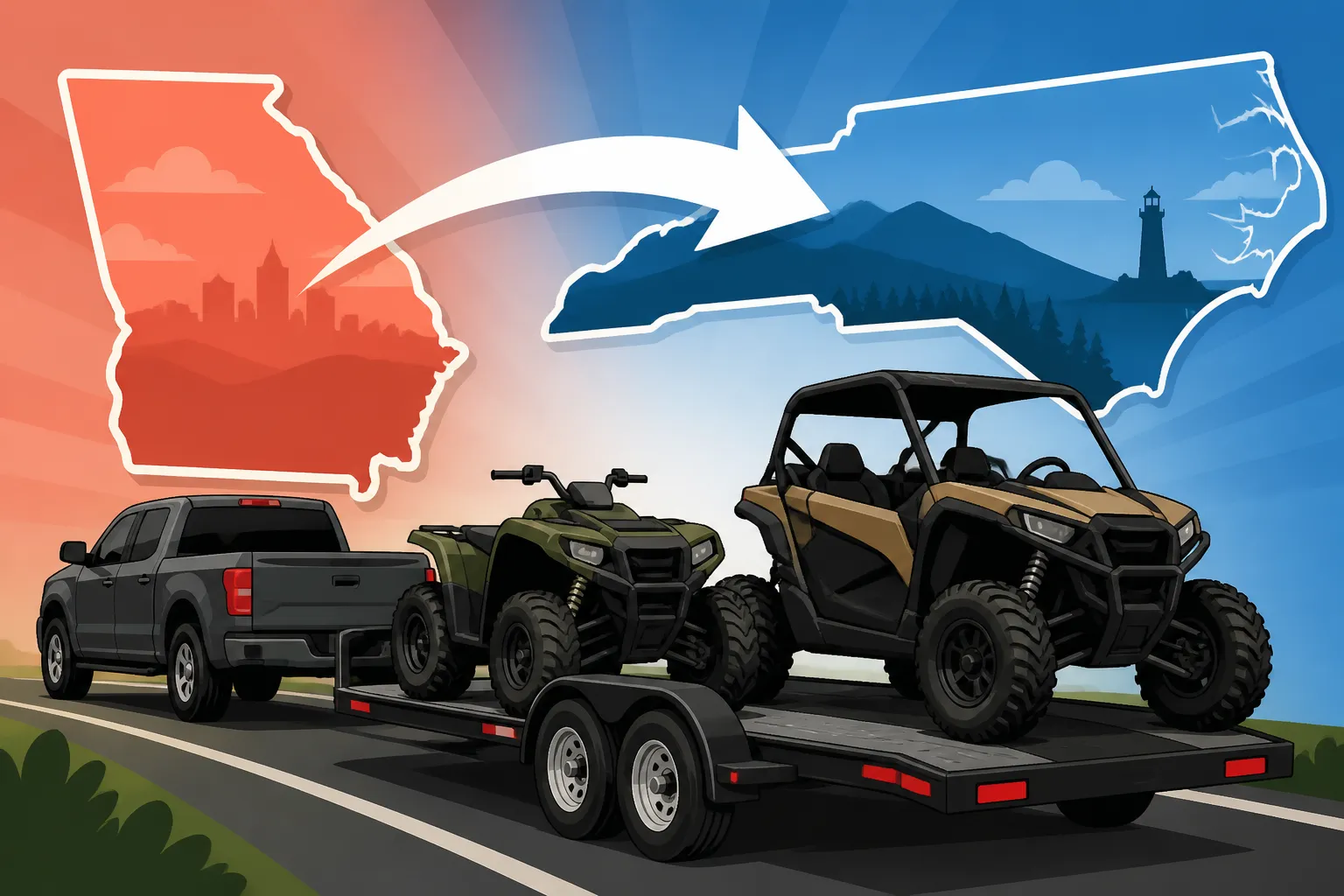
Moving your life to North Carolina, or just snagging a fantastic deal on an ATV or UTV from a private seller or dealer in Georgia, can bring a whole wave of excitement. But that excitement can quickly turn to confusion when you realize North Carolina has a rather unique way of handling off-road machines compared to many other states. This guide is designed to cut through that fog, helping you understand exactly what you need to do to legally bring your machine from the Peach State into the Old North State, ensuring you're ready for the trails and compliant with local rules.
Understanding North Carolina's Unique Approach to ATVs
If you're coming from Georgia, where they have a pretty straightforward titling process for ATVs and UTVs, North Carolina's system might feel like stepping into an entirely different world. The biggest shocker for many new arrivals is that North Carolina does not register ATVs or UTVs for off-road use in the way many other states do. You won't be slapping a yearly sticker on your fender here just to hit the trails. This can feel both liberating and utterly perplexing at the same time.
Why North Carolina Is Different
Unlike states that might require annual registration for all off-highway vehicles, North Carolina primarily focuses on whether a vehicle is used on public roads. For the vast majority of ATVs and UTVs that are strictly ridden off-road, the state takes a hands-off approach to registration. This means no annual fees, no mandatory inspections, and no plate for off-road use. It's not that the state doesn't care about off-road riding; it just regulates it differently, focusing on rider safety laws and land-use permits. You'll find a lot more about this in [Why North Carolina Has No ATV Registration].
However, this doesn't mean it's a complete free-for-all when it comes to ownership. While registration isn't required for typical off-road use, titling an ATV in North Carolina is optional. But here's the kicker: even though it's optional, getting a North Carolina title for your machine is almost always a really good idea, especially when you're bringing it from another state. It acts as official proof of ownership, which is crucial for a number of reasons we'll dive into.
The Role of an ATV Title in North Carolina
Think of a title as your machine's birth certificate and deed rolled into one. Even if you're never going to put a wheel on a public road, a North Carolina title serves several vital functions. Firstly, it undeniably proves you're the rightful owner. If your machine is ever stolen, having that title makes it exponentially easier for law enforcement to recover it and for you to prove it's yours. Without it, you might find yourself in a really tough spot trying to reclaim your property.
Secondly, if you ever plan to sell your machine in North Carolina, having a clean, properly transferred title makes the sale much smoother and more attractive to potential buyers. Most savvy buyers will insist on seeing a title to ensure they're not buying a stolen machine or one with a hidden lien. It simply provides peace of mind for both parties. You can read more about why it's a good idea in [Why a North Carolina Title Is Worth Having].
Finally, if you ever need to finance an ATV or UTV, a lender will almost certainly require the machine to be titled in your name, often with them listed as the lienholder. This protects their investment. So, while it's "optional," the real-world benefits of titling far outweigh the minor hassle.
What to Do Before You Leave Georgia
Bringing an ATV or UTV into North Carolina from Georgia requires a bit of foresight. The smoother you make this transition, the less headache you'll have once you're dealing with the North Carolina Division of Motor Vehicles (NCDMV). Your primary goal should be to gather every piece of documentation you can get your hands on from the Georgia seller.
Obtaining the Georgia Title and Bill of Sale
The absolute most critical document you need to secure from the seller in Georgia is the original Georgia title. Make sure it's properly signed over to you. In Georgia, the seller typically signs the "Assignment of Title" section, and you, as the buyer, will fill in your information. Double-check that all fields are complete and legible, and that the seller's signature matches the name printed on the title. A sloppy or incomplete title transfer can cause major delays when you try to title it in North Carolina.
If you're buying from a private party, even if they're a friend or family member, always insist on a bill of sale. This is a separate document that formally records the transaction, including:
- The full names and addresses of both the buyer and seller.
- A complete description of the ATV or UTV (make, model, year, VIN).
- The purchase price (this is critical for calculating North Carolina's Highway Use Tax).
- The date of sale.
- Signatures of both parties.
While Georgia might not always require a separate bill of sale if the title is properly transferred, North Carolina will ask for proof of purchase price when you title the machine to calculate the [North Carolina's 3 Percent Highway Use Tax]. A robust bill of sale will serve as this proof. If the seller doesn't have a template, you can easily create one using resources like LawDepot, which offers customizable legal documents. This can save you from potential arguments about the machine's value down the road.
Verifying the Vehicle Identification Number (VIN)
Before any money changes hands, and definitely before you haul that machine across the state line, take a moment to meticulously check the Vehicle Identification Number (VIN). Compare the VIN on the Georgia title to the VIN physically stamped on the frame of the ATV or UTV. They must match perfectly. If there's any discrepancy, even a single digit, walk away from the sale or get it resolved immediately. An incorrect VIN can be a nightmare to fix and could indicate a stolen vehicle or a "title wash" scheme.
Checking the VIN also allows you to perform a quick history check on the machine. While not mandatory, it's a smart move to run the VIN through an online service to see if it has been reported stolen or has any previous damage history. This simple step can save you a lot of grief and money in the long run. Learn more about this crucial step in [Checking a VIN Before a North Carolina Purchase].
Understanding North Carolina's Highway Use Tax
One of the most common sources of confusion for anyone bringing a vehicle into North Carolina, especially from a private sale, is the Highway Use Tax (HUT). This isn't a traditional sales tax, but it functions very similarly and is collected when you apply for a North Carolina title. The good news is that if you paid sales tax on your ATV or UTV in Georgia, you might get a credit against North Carolina's HUT, preventing you from being double-taxed. However, you'll need proof of that Georgia sales tax payment.
The HUT in North Carolina is 3 percent of the purchase price or fair market value of the ATV or UTV, with certain caps in place. This is where your bill of sale, clearly stating the purchase price, becomes invaluable. If you don't have a bill of sale or the NCDMV deems the stated price too low, they might use their own valuation methods, which could lead to you paying more than you anticipated. So, ensure your bill of sale is clear and accurate, detailing [3 Percent of Retail Value in North Carolina].
Navigating the North Carolina Titling Process
Once you've safely brought your ATV or UTV from Georgia to North Carolina and gathered all your documentation, it's time to visit the NCDMV. The process for titling an out-of-state machine is straightforward, but it requires careful attention to detail and the correct forms.
Required Forms and Documents
When you visit a North Carolina license plate agency, you'll need to have the following items ready:
- Original Georgia Title: This is the cornerstone of your application. It must be properly assigned to you.
- Bill of Sale: As discussed, this proves the purchase price for the Highway Use Tax calculation. If you need a comprehensive and legally sound bill of sale, remember that resources like LawDepot can help you create one quickly.
- North Carolina Title Application (Form MVR-1): This form is where you'll provide all your personal information and details about the ATV or UTV. You can usually pick this up at the license plate agency or download it from the NCDMV website. Ensure every section is filled out accurately and completely. Read more about it in [North Carolina Title Application on Form MVR-1].
- North Carolina All-Terrain Vehicle Affidavit (Form MVR-60): This is a unique North Carolina requirement. It's an affidavit that basically states you understand the machine is not street-legal (unless it's a Modified Utility Vehicle, which we'll get to) and that you'll use it responsibly off-road. You will sign this form, often in front of an NCDMV agent, confirming your understanding of ATV laws. This is essential for proving you own the machine and are aware of its legal limitations. More details can be found in [North Carolina Form MVR-60 Explained].
- Proof of Identity: A valid driver's license or state ID.
- Payment for Fees: Be prepared to pay the titling fee, any applicable lien recording fees, and, most significantly, the North Carolina Highway Use Tax.
Step-by-Step Titling Process
Here’s a breakdown of what to expect when you go to title your machine:
- Gather All Documents: Before you even leave your house, double-check that you have all the original documents mentioned above. A missing form or signature will send you home, prolonging the process.
- Visit a License Plate Agency: Find your nearest NCDMV license plate agency. It’s usually best to go during off-peak hours if possible to avoid long waits.
- Submit Your Application: Present your completed MVR-1, MVR-60, the Georgia title, and your bill of sale to the agent. They will review everything for completeness and accuracy.
- VIN Verification: In some cases, especially with out-of-state titles, the NCDMV may require a physical VIN verification to ensure the VIN on your machine matches the paperwork. Be prepared to show the machine's VIN location if asked.
- Pay Fees and Taxes: The agent will calculate your total fees, including the titling fee and the Highway Use Tax based on your bill of sale. You'll pay this directly to the NCDMV.
- Receive Temporary Documentation: Once everything is processed and paid, you'll usually receive a temporary registration or receipt. Your official North Carolina title will then be mailed to you, typically within a few weeks. The actual processing time can vary, so don't expect to walk out with the physical title in hand immediately. For more on this, check out [North Carolina ATV Title Processing Time].
Potential Pitfalls and How to Avoid Them
Even with the best preparation, bringing an out-of-state ATV or UTV to North Carolina can present a few hurdles. Knowing what these are in advance can help you navigate them smoothly.
Dealing with Missing Paperwork
What if the Georgia seller didn't have a title, or the bill of sale is flimsy? This is where things get tricky, but not impossible. If the original Georgia title is lost or was never issued (which is rare for legitimate sales but can happen with older machines or certain types of vehicles), you might have to go through a bonded title process in North Carolina. This is a more complex procedure involving obtaining a surety bond, and it's best to avoid it if possible by ensuring you get the original title from the seller. If you're dealing with a seller who "lost the title," it should raise a red flag.
If you don't have a formal bill of sale, the NCDMV will likely rely on their own valuation guide to determine the fair market value for the Highway Use Tax. This can sometimes be higher than what you actually paid, so it's always in your best interest to have a clear, signed bill of sale. Using a service like LawDepot to create a proper bill of sale before the transaction is a proactive step that can save you money and headaches.
The Modified Utility Vehicle (MUV) Exception
While most ATVs and UTVs aren't street legal in North Carolina, there's a specific category called a Modified Utility Vehicle (MUV) that can be registered for limited street use. This is a crucial distinction for UTV owners, especially those coming from states like Georgia where some UTVs might already be titled or registered for road use.
However, the requirements for an MUV in North Carolina are very strict and most factory-standard UTVs will not meet them. They typically need to have an engine larger than 2,400cc, be over 142 inches long, and weigh less than 2,000 pounds, among other specific safety equipment. If your UTV from Georgia meets these very particular criteria and you wish to ride it on certain public roads (not highways or interstates), you'll need to go through the MUV registration process, which is separate from the standard ATV titling. This involves inspection, insurance, and additional forms like [North Carolina Form MVR-59 Explained]. For the vast majority of machines, this exception won't apply, so don't assume your Georgia-registered UTV will automatically qualify in North Carolina. You can learn more about this in [What Makes a Machine an MUV in North Carolina].
Planning for Trail Riding
Once your ATV or UTV is titled in North Carolina, you're all set to hit the trails, right? Well, almost. Remember, titling is about ownership, not trail access. North Carolina's public lands, particularly the National Forests like Uwharrie and Pisgah, often require a Forest OHV Permit to ride their designated trail systems. These permits are typically purchased annually or for a day, and the fees go towards trail maintenance.
So, while you won't need a general state registration, you will need to acquire the appropriate permits for the specific riding areas you plan to visit. Also, don't forget about rider safety certificates for those born on or after January 1, 1990. Georgia might have different age restrictions or permit requirements, so always check North Carolina's specific rules before you head out, especially for younger riders. Getting your machine properly titled is the first step, but being prepared for the trail means understanding the local rules of the trail itself.
| Document / Step | Purpose | From Georgia Seller (Essential) | To NCDMV (Required) | Notes |
|---|---|---|---|---|
| Original Georgia Title | Proof of prior ownership & transfer | Yes | Yes | Ensure signed over correctly. |
| Bill of Sale | Proof of purchase price for HUT calculation | Highly Recommended | Yes | Critical for fair tax assessment. Consider LawDepot for a template. |
| VIN Verification | Confirm machine identity matches paperwork | Yes (self-check) | Possibly required by NCDMV | Check before purchase. |
| NC Title Application (MVR-1) | Apply for new NC title | No | Yes | Fill out accurately. |
| NC ATV Affidavit (MVR-60) | Acknowledge non-street-legal status (ATVs) | No | Yes | Mandatory for ATV titling. |
| Payment for Fees/HUT | Cover title fee, lien fee, Highway Use Tax | No | Yes | Based on purchase price or market value. |
| Proof of Georgia Sales Tax | Claim credit against NC HUT | Yes (if applicable) | Yes (if claiming credit) | Prevents double taxation. |
Bringing an ATV or UTV from Georgia to North Carolina doesn't have to be a bewildering experience. By understanding North Carolina's unique titling process, securing all the right documents from your seller, and being prepared for the NCDMV's requirements, you'll be able to get your machine legally recognized and ready for all the adventures the Old North State has to offer. Enjoy the trails!
Disclaimer
This article is for general informational purposes only and does not constitute professional advice. Laws, prices and regulations vary by location and change over time. Consult a qualified professional for guidance on your specific situation.