Customs on a Machine Landed in Wilmington
You’ve finally found that perfect, unique ATV or UTV from abroad, perhaps a specialized model not readily available domestically, and arranged for it to land right here in Wilmington, North Carolina. The excitement of bringing this machine home is immense, but the prospect of navigating complex customs procedures can quickly turn that excitement into a knot of anxiety. This guide will walk you through the often-confusing process of clearing customs for your off-road machine, helping you understand the requirements, avoid common pitfalls, and get your new ride ready for North Carolina's trails.
Understanding the Basics of Importing Your Off-Road Machine to North Carolina
Bringing an ATV or UTV into the United States, even if it's just across the water to Wilmington, isn't quite as simple as having a package delivered. There’s a whole set of rules, regulations, and taxes that come into play, all designed to ensure safety, collect duties, and confirm legal ownership. It can feel overwhelming, like you're trying to read a legal textbook in a foreign language, but understanding the core elements will make the journey much smoother.
Why Customs Matters for Your ATV/UTV
First off, why does customs even care about your quad or side-by-side? It boils down to a few critical reasons. The U.S. Customs and Border Protection (CBP) is primarily tasked with securing the nation's borders, but they also enforce a myriad of laws for other government agencies. For your ATV/UTV, this means checking for compliance with environmental protection standards (like EPA emissions), safety regulations (DOT requirements, even if it's an off-road machine), and collecting any applicable import duties or taxes. If you skip a step, or the paperwork isn't right, your machine could be held indefinitely, incur hefty storage fees, or even be rejected for entry. Imagine the heartache of your dream machine sitting in a warehouse in Wilmington, untouchable, because of a missing signature or an incorrectly filled form. It’s a real fear, and understanding these rules upfront is your best defense.
Beyond federal regulations, North Carolina has its own interests. While the state doesn't require ATV registration in the traditional sense, any machine that enters the state, whether purchased locally or imported, eventually needs to establish its ownership for titling purposes, especially if you ever plan to sell it or need to prove ownership for insurance or theft recovery. [Titling an ATV in North Carolina Is Optional] but highly recommended. The customs clearance is the very first step in formally recognizing that this machine is now legally yours and intended for use in the U.S. and, specifically, North Carolina.
Key Documents You'll Absolutely Need
Navigating customs is essentially a paperwork marathon. You’ll need a stack of documents that tell the complete story of your machine: what it is, where it came from, who bought it, and how much it cost. Without these, you're essentially showing up to a DMV without your driver's license – nothing is going to happen.
The foundational piece is a solid Bill of Sale. This isn't just a casual receipt; it needs to clearly identify the buyer and seller, the full vehicle identification number (VIN) of the ATV/UTV, the agreed-upon purchase price, and the date of sale. When you’re dealing with an international seller, especially a private one, you might find yourself needing to create this document from scratch. Using a reputable online service like LawDepot can help you draft a comprehensive bill of sale that covers all the necessary legal bases, ensuring there's no ambiguity about ownership or value. This document is crucial not just for customs, but later for [North Carolina ATV Bill of Sale Requirements] when you go to title it.
Next, you'll need the Commercial Invoice. This document is usually provided by the seller or exporter and acts as a detailed accounting of the transaction. It should list the machine’s description, quantity, value, country of origin, and the terms of sale. Think of it as the ultimate receipt for customs. Then there’s the Bill of Lading (if shipped by sea, which is likely for Wilmington) or Air Waybill (if flown). This is the contract between you (or the seller) and the shipping carrier, acting as a receipt for the goods and evidence of the contract of carriage. It's how the shipping company tracks your machine and how you prove it was indeed sent. Finally, you might need a Proof of Origin, which certifies the country where your ATV/UTV was manufactured, important for determining applicable duties. Sometimes, your customs broker will also ask you to sign a Power of Attorney, allowing them to act on your behalf during the clearance process, which is a common and often necessary step.
Costs Beyond the Purchase Price
It's easy to get caught up in the excitement of the machine's price tag, but importing comes with its own set of additional expenses that can quickly add up. These aren't hidden fees; they're just part of the international trade process that many first-time importers overlook. Failing to budget for these can lead to stressful surprises and delays at the port.
First, there are customs duties. The amount you pay depends on the type of machine, its value, and its country of origin. While ATVs and UTVs often fall into specific tariff categories, these rates can vary. You won't know the exact figure until your machine is classified, but it's essential to factor in a percentage of your machine's declared value. Then, there are Customs and Border Protection (CBP) fees, which cover the cost of processing your import declaration. These can include a Merchandise Processing Fee (MPF) and a Harbor Maintenance Fee (HMF) for goods arriving by sea. While the MPF is usually a percentage of the value, the HMF is a smaller percentage applied to cargo loaded or unloaded at certain U.S. ports, including Wilmington.
Beyond federal charges, you'll likely incur shipping and handling charges from the port itself. This includes fees for unloading, warehousing (if your machine sits for a few days), and transferring it from the ship to the customs inspection area. If you use a customs broker, which is highly recommended for imports, their brokerage fees will be another significant cost. These professionals handle all the complex paperwork, communicate with CBP, and ensure compliance, saving you immense headaches but adding to your bill. Lastly, once cleared, you’ll need to arrange for transportation from the Port of Wilmington to your home or storage. This could be a specialized carrier, or you might trailer it yourself if you have the right setup. Always get clear quotes for all these services before your machine arrives to avoid financial shock.
Navigating the Customs Process at the Port of Wilmington
Once your machine lands in Wilmington, the real work begins. The customs process might seem like a maze of regulations and waiting, but having a clear understanding of the steps involved, especially who to work with, will save you a lot of grief. It’s not a process you want to tackle unprepared.
Working with a Customs Broker
For most individuals importing an ATV or UTV, hiring a licensed customs broker is not just a good idea, it's almost essential. Think of them as your Sherpa through the treacherous mountains of international trade regulations. They know the terrain, the shortcuts, and how to avoid falling into bureaucratic crevasses. Trying to self-clear a complex item like a vehicle can lead to costly errors, delays, and frustration that far outweigh the cost of a broker's services.
A customs broker acts as your agent, handling all the intricate details of the import process. They prepare and submit all the necessary documentation to CBP, calculate and pay duties and taxes on your behalf, and ensure that your machine complies with all U.S. import laws, including those from the Environmental Protection Agency (EPA) and Department of Transportation (DOT). They are intimately familiar with tariff codes, valuation methods, and the specific requirements for vehicles, even off-road ones. Imagine trying to figure out the correct Harmonized Tariff Schedule (HTS) code for your specific ATV model – a broker does this daily. They can also communicate directly with the port authorities and CBP officers at the Port of Wilmington, speeding up the process and resolving any issues that arise. Their expertise can save you from potential fines, storage charges, and the nightmare of having your machine held up indefinitely.
The Inspection and Release Process
Once your ATV or UTV arrives at the port, it enters a critical phase: inspection and potential examination. This isn't a guaranteed quick scan; it can involve a detailed look at your machine and its documentation to ensure everything matches up.
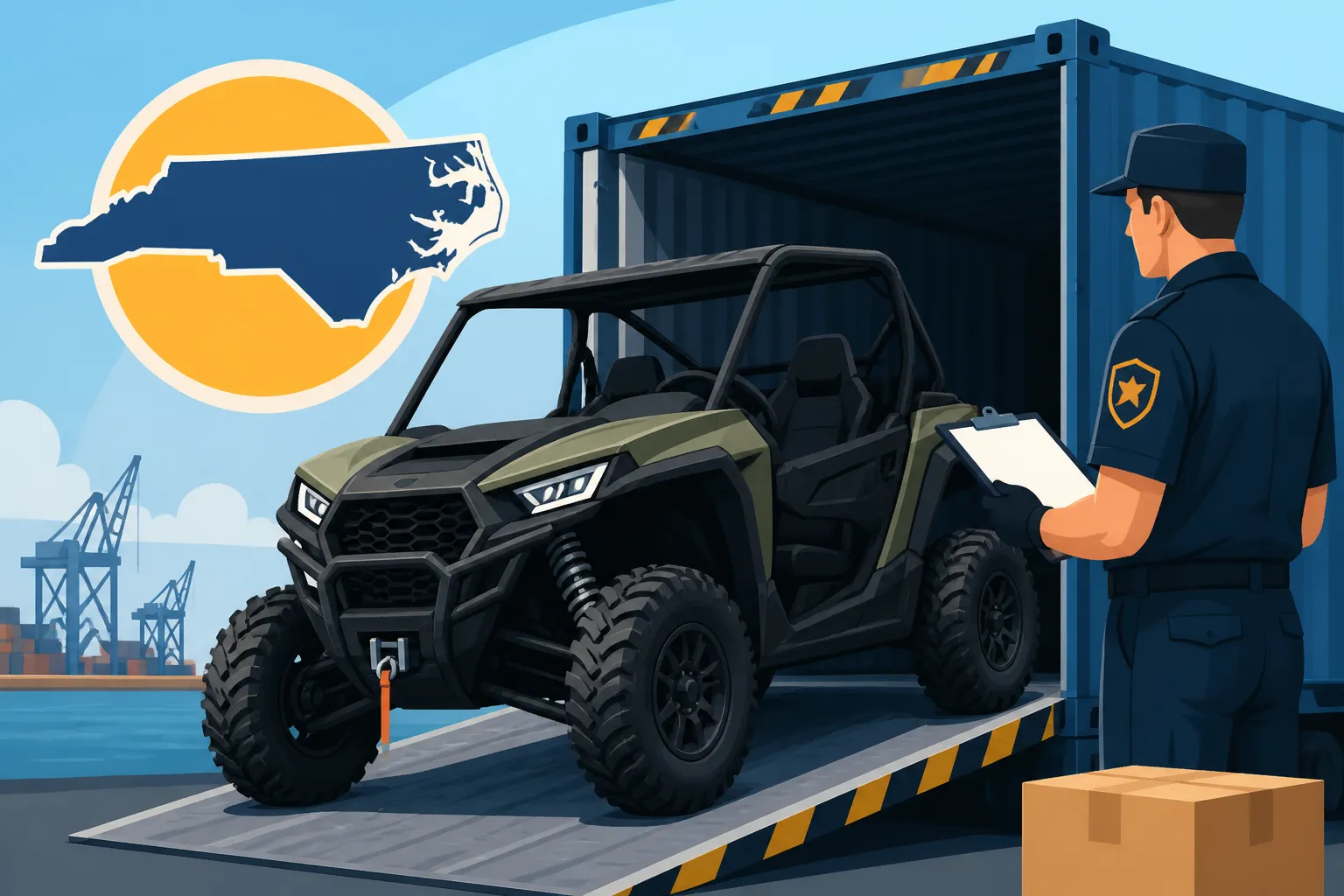
Upon arrival, the shipping carrier will notify you (or your customs broker) that your cargo has landed. Your broker will then file the necessary entry documents with CBP. At this point, CBP may decide to physically inspect your machine. This could be a simple visual check to ensure the VIN matches the paperwork and that there are no obvious discrepancies, or it could be a more thorough examination. For vehicles, they might look for proper safety labels, ensure environmental compliance (though off-road vehicles often have different standards than street-legal ones, specific emission controls can still apply), and check for any prohibited items or invasive species. If they find anything amiss, or if the documentation is incomplete or incorrect, your machine could be held for further examination, requiring additional paperwork or even modifications. This is where having a meticulous customs broker becomes invaluable, as they can often anticipate and preempt many of these potential issues.
Once CBP is satisfied that all requirements have been met and all duties and fees paid, they will issue a "release" for your ATV/UTV. This is the moment you've been waiting for! The release means your machine has officially cleared customs and is now free to be picked up from the port facility. However, even after release, there's still the logistical step of physically collecting your machine. You'll need to coordinate with the terminal operator and your transport provider to arrange pickup. Ensure you have all the necessary release documents from your broker and the carrier to present at the gate. Remember, storage fees can accumulate quickly if your machine sits at the port for too long after release, so timely pickup is key.
Paying Duties and Fees
This is often the part that makes people cringe, but it's an unavoidable aspect of importing. Understanding when and how these payments are made is crucial for budgeting and smooth clearance. The financial side of customs is often where the most anxiety lies, with worries about unexpected costs or delays.
The primary financial obligation is the customs duty. This is calculated based on the declared value of your ATV or UTV and its classification under the Harmonized Tariff Schedule of the United States. Your customs broker will determine the correct tariff rate and calculate the exact amount. This duty, along with the Merchandise Processing Fee (MPF) and any applicable Harbor Maintenance Fee (HMF), must be paid before CBP will release your machine. In most cases, your customs broker will handle these payments on your behalf, often requiring you to pre-fund an account with them or pay them directly before they submit the payment to CBP. This ensures a seamless process, as delays in payment can hold up your machine.
It’s important to remember that these federal duties and fees are separate from any state-level taxes you might encounter when you eventually go to title your machine in North Carolina. For example, North Carolina levies a [North Carolina's 3 Percent Highway Use Tax] on vehicle transactions, which is effectively a sales tax paid at the time of titling, not at customs. This means you’re essentially paying two layers of taxation: federal import duties at the port and then state highway use tax when you register for a title. Budgeting for both is essential. Keep excellent records of all payments made to customs, your broker, and the shipping company, as these might be useful for your personal financial records or if any discrepancies arise later.
Common Hurdles and How to Smooth Your Import Journey
Even with the best planning, importing can throw a few curveballs. Knowing what these common issues are and how to prepare for them can turn a potential nightmare into a minor inconvenience. It’s all about foresight and having a backup plan.
Avoiding Delays and Penalties
Delays and penalties are two of the biggest fears when importing anything. Each day your ATV or UTV sits at the port due to an issue costs you money in storage fees, and an oversight can result in hefty fines. It's a double whammy that can really sour the experience of getting your new machine.
The most common cause of delays is incomplete or inaccurate paperwork. A missing signature, an incorrect VIN, or a mismatched declared value can all trigger a hold. To avoid this, be meticulously thorough with all documents. Double-check every form, cross-reference the VIN on your bill of sale with the actual machine, and ensure all values are consistent across the commercial invoice and bill of sale. This is where a service like LawDepot, in conjunction with your broker, can help ensure your initial purchase agreement is legally sound and detail-oriented. Another common issue is non-compliance with import regulations, particularly environmental or safety standards. Even for off-road machines, there are rules. For example, if your machine doesn't have an approved spark arrester, it could cause issues if it's intended for public land use. Make sure your seller provides as much documentation as possible regarding compliance.
Penalties, on the other hand, usually stem from misdeclarations of value or country of origin, or attempting to import prohibited items. Always be honest and accurate about the value of your machine. While it might be tempting to declare a lower value to reduce duties, CBP is very adept at detecting undervaluation and the penalties can be severe, far exceeding any savings. Furthermore, be aware of any specific import restrictions that might apply to certain types of engines or components. Staying in constant communication with your customs broker is your strongest defense against both delays and penalties. They will keep you informed of any issues and guide you on the quickest path to resolution.
Ensuring Your Machine Meets US Standards
This is a big one, and it's where many people stumble, especially with older or specialized machines from certain countries. Even though an ATV or UTV is an off-road vehicle, it still has to meet certain federal standards to be imported. It's not a free-for-all just because it won't be on the highway.
The main concerns typically revolve around EPA (Environmental Protection Agency) emissions standards and DOT (Department of Transportation) safety standards. For most new, mass-produced ATVs and UTVs from established manufacturers, compliance is usually straightforward as they are often built to meet global standards or specific U.S. market requirements. However, if you're importing an older machine, a custom-built one, or a model from a country with significantly different regulations, you could run into problems. The EPA ensures that engines meet certain pollution control standards, and the DOT focuses on safety aspects, even for off-highway vehicles, like brakes or certain structural requirements.
Before you even consider purchasing, research the specific model you're interested in and its compliance with U.S. standards. The seller might have certifications, or you might need to consult an expert. If a machine isn't compliant, it might require modifications before it can be cleared. These modifications can be costly and complex, so it's vital to know this upfront. For instance, if a machine lacks an appropriate spark arrester, a common requirement for preventing wildfires on public lands, you’ll need to add one. Some modifications might even be impossible or prohibitively expensive, meaning the machine simply cannot be imported. Always ask for documentation related to emissions and safety from the seller and share it with your customs broker to get their expert opinion before committing to the purchase. This due diligence is critical for a smooth import experience.
The Role of a Bill of Sale in Customs
We touched on the bill of sale earlier, but its importance for customs, and for the entire ownership process in North Carolina, cannot be overstated. It’s the linchpin that connects your purchase to the legal import and eventual titling of your machine. Without a properly executed bill of sale, everything else can fall apart.
For customs, the bill of sale serves as primary evidence of the transaction, establishing the legitimate ownership transfer and, crucially, the declared value of the machine. This declared value is what CBP uses to calculate your import duties and fees. If the bill of sale is vague, incomplete, or appears to undervalue the machine, it can raise red flags with CBP, leading to delays and requests for additional proof of value. They might ask for bank statements, payment records, or even conduct their own valuation, which could result in higher duties and potential penalties. Therefore, ensuring your bill of sale is comprehensive, clearly states the full purchase price, and explicitly identifies the ATV/UTV by its VIN is paramount.
Beyond customs, a robust bill of sale will be essential for when you need to formally establish ownership in North Carolina. When you go to title your machine, the DMV will require proof of ownership, and the bill of sale, especially for a machine coming from overseas, will be a critical document. It validates who bought the machine and from whom, establishing a clear chain of ownership. Should you ever need to sell the machine in North Carolina, or if it's involved in an incident requiring insurance claims or law enforcement involvement, that original bill of sale ties everything back to your initial acquisition. For complex international transactions, especially if you’re buying from an individual rather than a dealer, drafting a detailed, legally sound bill of sale through a platform like LawDepot can provide an extra layer of protection and clarity, making the customs process and subsequent [North Carolina ATV Title Paperwork] much easier.
Life After Customs: Getting Your Imported Machine Ready for North Carolina
Congratulations, your ATV or UTV has officially cleared customs in Wilmington! That’s a huge hurdle overcome. But don't pop the champagne just yet. While it’s legally in the country, it’s not yet ready for our beautiful North Carolina trails. There are still a few steps to take to ensure it’s properly documented and ready for adventure.
Titling Your Newly Arrived ATV/UTV
After you’ve wrestled with customs and won, the next big step is to make your machine officially yours in North Carolina’s eyes. This means getting a title from the North Carolina Department of Motor Vehicles (NCDMV). Even though [Why North Carolina Has No ATV Registration] for off-road use, titling is a completely separate process and is highly recommended for all owners.
To title your imported ATV or UTV, you’ll need to head to your local NCDMV office with a stack of critical documents. First and foremost, you'll need the original Bill of Sale from your purchase, which was so crucial for customs. You'll also need proof that you paid all the necessary federal import duties and that the machine cleared customs successfully. Your customs broker can provide you with the formal release documents or a customs declaration form (like a CBP Form 7501) that verifies this. Then, you'll complete a [North Carolina Title Application on Form MVR-1]. This form asks for all the details about your machine, including the VIN, make, model, and year, as well as your personal information. Be prepared to fill this out carefully, as any errors can cause delays.
The DMV will review all your submitted documents to ensure a clear chain of ownership and that the machine was legally imported. They will verify the VIN and may ask for additional documentation if anything is unclear, especially since the machine is coming from an international source. Once approved, you will pay the applicable titling fees and the state's Highway Use Tax. In due time, you'll receive your official North Carolina title in the mail, solidifying your ownership. This title is invaluable for resale, insurance purposes, and proving legal ownership if your machine is ever stolen. [Why a North Carolina Title Is Worth Having] truly becomes clear when you consider these scenarios.
Understanding North Carolina's Highway Use Tax
This is one of those state-level financial considerations that often catches people off guard, especially when they've just paid federal duties. North Carolina doesn't charge a traditional sales tax on vehicles; instead, it levies a "Highway Use Tax" (HUT) when you title a vehicle, and this applies to ATVs and UTVs too, even though they primarily operate off-road.
The [North Carolina ATV Highway Use Tax] is typically a percentage of the machine's retail value, with certain caps in place. It's crucial to understand that this is in addition to any customs duties you paid at the port of Wilmington. The state sees it as a tax on the privilege of using the highways, even if your ATV rarely touches pavement. The NCDMV determines the value of your machine to calculate this tax. For a new machine, it’s usually based on the purchase price listed on your bill of sale. For a used machine, they might use standard valuation guides if your purchase price seems unusually low or if there's no clear bill of sale (though for an imported machine, your customs-cleared bill of sale will be critical).
You will pay this tax directly to the NCDMV when you submit your title application. It's non-negotiable and must be paid before a title will be issued. Make sure you budget for this expense on top of your customs duties, shipping costs, and the actual purchase price. It’s a significant piece of the financial puzzle that completes the cost of bringing your international machine home to North Carolina. Being prepared for this tax will prevent any last-minute surprises at the DMV counter.
Getting Your Machine Legally Trail-Ready
Now that your ATV or UTV is titled in North Carolina, it's officially "yours" in the eyes of the state. But before you can hit those fantastic trails in the Uwharrie National Forest or Brown Mountain, you need to ensure it meets North Carolina's operational requirements, especially if you plan to ride on public lands.
Even though North Carolina doesn't register ATVs, there are still rules about how and where you can ride them. For instance, if you're planning on using public OHV trail systems like Badin Lake or Wayehutta, you’ll likely need an OHV permit from the U.S. Forest Service. Each forest system has its own permit requirements, and you'll often need a day permit or a season permit. Additionally, riders born on or after January 1, 1990, are required to possess a safety certificate from an approved ATV safety course to operate on certain public lands. This applies even if you're an experienced rider from another country; North Carolina doesn't typically reciprocate out-of-state safety certificates, so be prepared to take a local course if this applies to you. [North Carolina ATV Safety Certificate Requirements] are very specific.
Beyond permits and safety courses, your machine itself might have equipment requirements. For example, a working spark arrester is often mandatory for riding on U.S. Forest Service lands to prevent wildfires. Check local trail rules for specifics on noise limits, width restrictions for certain trails, and any other unique requirements. You’ll also need to be aware of [North Carolina Helmet Law for ATV Riders] and eye protection rules, especially for riders under 18. An imported machine, especially if it's an older or very specialized model, might need some adjustments or additions to comply with these rules. Take the time to review the specific regulations for the riding areas you plan to visit. Doing your homework now means you won't face disappointment or fines once you're finally out on the trails.
| Document Type | Purpose | Who Provides It | When You Need It |
|---|---|---|---|
| Bill of Sale | Proof of purchase, machine details, agreed price | Seller (or created via service like LawDepot) | Before import, at customs, for titling |
| Commercial Invoice | Detailed breakdown of goods, value, seller, buyer | Seller | At customs clearance |
| Bill of Lading | Contract between owner and carrier, receipt of goods | Shipping carrier | At customs clearance, port pickup |
| Proof of Origin | Certifies country where goods were manufactured | Seller or Manufacturer | At customs clearance |
| Power of Attorney | Authorizes customs broker to act on your behalf | You (importer) | Before customs processing |
| CBP Form 7501 | Customs entry summary, proof of duties paid | Customs Broker / CBP | At customs clearance, for titling |
| NCDMV Form MVR-1 | North Carolina Title Application | NCDMV | For state titling |
Disclaimer
This article is for general informational purposes only and does not constitute professional advice. Laws, prices and regulations vary by location and change over time. Consult a qualified professional for guidance on your specific situation.