North Carolina Rules for Riders Under 16
Navigating the world of ATV and UTV riding with young family members in North Carolina can feel like trying to hit a moving target while blindfolded. So many well-meaning parents are genuinely confused by outdated information, word-of-mouth myths, and a legal landscape that seems to shift constantly. This guide is here to cut through the noise, validate those frustrations, and provide a clear, comprehensive breakdown of North Carolina's rules for riders under 16, ensuring your kids can enjoy the trails safely and legally.
The Shifting Sands of North Carolina's Youth Rider Laws
For years, there was a lot of chatter and even specific regulations in North Carolina that focused heavily on engine size, particularly the "70cc rule" for younger riders. This created a lot of confusion, especially as machine technology advanced and many youth models far exceeded that limit while still being perfectly appropriate for young riders. Parents would scratch their heads, wondering if their child's new machine, perhaps a popular 90cc youth quad, was suddenly illegal, even if it was designed with safety features for their age group.
This lingering confusion meant that often, well-intentioned parents were trying to follow rules that no longer existed, or were misinterpreting what was still on the books. They might have been given an old county handout at a dealership or read an article online from a decade ago. It's frustrating when you're trying to do the right thing and the information is just so fragmented and out of date. This state of flux left many families feeling unsure, leading some to either be overly cautious or, worse, unknowingly break rules simply because they couldn't get a straight answer.
Why the Confusion Lingers
The biggest culprit behind the lingering confusion about North Carolina's youth ATV laws is undoubtedly the ghost of the "70cc rule." For a long time, this was a key benchmark, suggesting that machines with engines larger than 70 cubic centimeters were off-limits for young riders. However, the reality is that [Why the 70cc Rule Was Repealed in North Carolina], taking away that specific engine size restriction. This repeal was a significant change, yet the old information often persisted in local lore, on forgotten websites, or in older printed materials.
Think about the well-meaning friend at the trailhead who confidently tells you about a rule they learned years ago, not realizing it's since been removed from the books. Or perhaps you pick up an informational flyer at a local tag office that hasn't been updated since before 2005. It's a common scenario where [Why North Carolina's Repealed Rule Still Circulates]. This makes it incredibly difficult for a diligent parent to discern current regulations from historical ones. The consequence is that many people still operate under guidelines that are no longer legally binding, creating unnecessary worry or, conversely, a false sense of security regarding what's permissible.
North Carolina's Current Legal Framework
Despite the old rules fading into the background, North Carolina definitely has a clear legal framework in place for ATV and UTV riders, especially when it comes to those under 16. The state shifted its focus from arbitrary engine sizes to more practical and safety-oriented requirements, such as mandatory safety training and supervision. The current laws aim to protect young riders by ensuring they have the knowledge and oversight necessary, rather than penalizing them for the size of their machine.
The key is understanding that while the 70cc rule is gone, other crucial stipulations have taken its place to define [What North Carolina Law Says About a Rider's Age] and capabilities. This means that if your child is under 16, there are specific hoops you, as a parent or guardian, need to jump through to ensure their ride is fully compliant. These aren't just suggestions; they are enforceable laws designed to minimize risk for our youngest riders. It's about creating a safer environment for everyone who enjoys the thrill of off-road exploration in our beautiful state. Our focus here is to clearly lay out [North Carolina Rules for Riders Under 16].
Mandatory Safety Certification for Young Riders
If you have a child who loves riding ATVs or UTVs in North Carolina, one of the most important pieces of the puzzle you absolutely cannot overlook is the mandatory safety certification. This isn't just a recommendation; it's a legal requirement designed to equip young riders with the foundational knowledge and skills to operate these machines responsibly and safely. It’s totally understandable to feel like it’s just another hurdle or another certificate to track, but truly, this training makes a real difference in preventing accidents and instilling good habits from a young age. Without it, you could face penalties, and more importantly, your child could be put at unnecessary risk.
The North Carolina General Assembly recognized the unique challenges and risks associated with off-road riding, especially for younger, less experienced operators. So, they established this certificate requirement as a cornerstone of youth rider safety. It’s less about restricting fun and more about ensuring that when fun happens, it does so with a strong emphasis on awareness and control. Think of it as a driver's education course, but for the trails!
Who Needs the North Carolina Safety Certificate
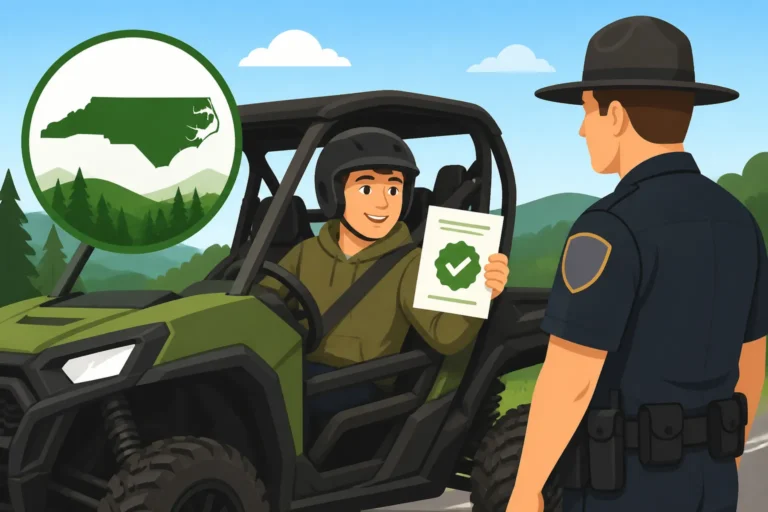
This is where many parents often get tripped up, wondering if their child actually falls under the requirement. North Carolina has a very specific criterion for who needs to hold an ATV safety certificate: it applies to any rider who was [Born in January 1990 and Needing One] or any year thereafter. So, if your child's birthday places them on or after January 1, 1990, they are legally required to complete an approved ATV safety course and carry proof of that certification when riding off-highway vehicles.
This birth-year cutoff means that if you were, for example, [Born in December 1989 and Not] subject to the rule yourself, it's easy to forget that your children might be. It creates a clear line in the sand, establishing [North Carolina's Birth-Year Safety Certificate] as a key differentiator for youth riders. Understanding this specific date is absolutely critical, as it dictates whether your young rider falls under [North Carolina Rules for Riders Born On or After 1990]. There's no getting around it; this certificate is a non-negotiable part of legal riding for this demographic.
What the Safety Course Covers and Where to Take It
The approved ATV safety courses aren't just about ticking a box; they're comprehensive programs designed to impart crucial skills and knowledge. Typically, [What an ATV Safety Institute Course Covers] includes topics like proper riding posture, throttle and braking control, turning techniques, ascending and descending hills, emergency stopping, and understanding various terrain challenges. Beyond practical skills, these courses delve into important safety principles such as pre-ride inspections, appropriate gear, environmental awareness, and the responsibilities of an off-road rider.
For North Carolina, the Commissioner of Insurance approves the courses, ensuring they meet state standards. The most widely recognized and accepted courses are usually those offered through the ATV Safety Institute (ASI). You can find information on [Where to Take a North Carolina ATV Safety Course] by checking the ASI website or contacting local powersports dealerships, many of whom host or can direct you to nearby classes. Once completed, your child will receive a certification card, which they are legally required to be [Carrying the Certificate on a North Carolina Ride]. This card serves as proof that they have met the state's safety training mandate and are prepared to handle their machine responsibly.
Out-of-State Certificates and Reciprocity
This is a common question, especially for families who travel or move to North Carolina from another state. Unfortunately, North Carolina has a rather firm stance on safety certifications from other states: it generally doesn't reciprocate them. This means that if your child completed an ATV safety course in, say, Georgia or South Carolina, that certificate might not be recognized as valid under North Carolina law.
It can be a real hassle, especially if you've already invested time and money in a course elsewhere. You might be asking, "[Does North Carolina Accept an Out-of-State Certificate?]" and the answer, more often than not, is no. The state's position is that its own approved courses ensure specific standards are met that may not perfectly align with those in other jurisdictions. This means that even [A Visitor From a Registering State in North Carolina] whose home state requires a certificate will still need to comply with North Carolina's specific requirements if their child was born after the 1990 cutoff. Essentially, [Why North Carolina Reciprocates Nothing] boils down to ensuring all riders on its public and private lands meet its precise safety benchmarks.
Age-Specific Riding Restrictions and Supervision
Beyond the safety certificate, North Carolina also sets clear age limits and supervision requirements for young riders. This isn't about making it harder for kids to enjoy the outdoors; it's about acknowledging that off-road vehicles require a certain level of physical ability, judgment, and maturity that develops over time. As a parent, you know your child best, but state law provides a baseline to ensure everyone is operating within reasonable safety parameters. It can be tough, especially if you have a child who seems exceptionally skilled for their age, but these rules are there for a reason, rooted in statistics and a desire to prevent serious injury.
It's tempting to think, "My kid can handle it," but the law doesn't make exceptions for individual skill levels when it comes to minimum age. This creates a predictable environment for enforcement and a clearer expectation for parents. Understanding these restrictions is key to a worry-free ride, whether you're just out in the backyard or heading to a dedicated trail system. The aim is always to promote safe riding practices, and age limits, combined with proper supervision, are vital components of that strategy.
The Under-Eight Ban and Continuous Supervision
Let's get straight to a critical rule: North Carolina has an absolute ban on children under eight years old operating an ATV or UTV. This isn't a suggestion; it's a hard and fast rule. Regardless of how small the machine, how experienced the child, or how safe the environment, [North Carolina's Under-Eight Ban] means that if your child hasn't celebrated their eighth birthday yet, they cannot be in control of an off-highway vehicle. This particular rule is designed to protect the very youngest children who may lack the physical size, strength, and cognitive development required to safely operate these powerful machines.
For children who are eight years old or older but still under 16, the law shifts to a continuous visual supervision requirement. This means that a parent or guardian, or another adult authorized by the parent or guardian, must be [Keeping a Young Rider in Continuous Sight] at all times. This isn't about just being on the same property; it means actively watching their riding. Imagine trying to explain to an officer why you weren't watching your child when an incident occurred—it just won't fly. These [North Carolina Supervision Rules for Minors] are in place to ensure an adult can immediately intervene if a child gets into trouble, has a mechanical issue, or encounters an unexpected hazard. It's a hands-on, active approach to youth rider safety.
General Rules for Riders Under 16 (but over 8)
Once a child reaches the age of eight, they are legally permitted to operate an ATV or UTV in North Carolina, provided they adhere to all other state requirements, especially the safety certificate if they were born on or after January 1, 1990. However, even with that permission, the rules around [North Carolina Rules for a Rider Under 16] are still quite stringent and are built on layers of safety protocols. It's not a free-for-all once they hit eight; it's the start of a more structured riding experience.
Beyond the continuous supervision and the safety certificate, general responsible riding principles come into play. This includes matching the machine to the rider's size and capability, avoiding excessive speeds, and always riding within their skill level. While there isn't a specific [North Carolina Minimum Age to Ride an ATV] beyond the "no under eight" rule, it's implied that parents must use sound judgment to ensure their child is truly ready, even if they meet the minimum age. These general guidelines, when followed diligently, help foster a safe and enjoyable riding experience for these young enthusiasts, allowing them to develop their skills responsibly while minimizing risk.
Passenger Rules: When Can a Young Rider Double Up?
This is another area ripe with confusion and, frankly, a lot of unsafe practices. The allure of sharing the fun with a friend or having a parent ride along is strong, but North Carolina has very clear, often restrictive, rules about carrying passengers on ATVs and UTVs, especially when young riders are involved. It’s easy to assume that if there’s a little extra space, or if a machine looks like it could carry two, then it’s okay. But that assumption can lead to serious legal trouble and, more importantly, a dangerous situation for everyone involved.
The stability and handling characteristics of off-road vehicles are significantly altered with an extra passenger, especially if that passenger is a squirming, unpredictable child. Manufacturers design most ATVs for single riders, and adding a second person can throw off the balance, making it harder to steer, brake, and navigate rough terrain. UTVs, with their side-by-side seating, are a different story, but even they have specific rules that must be followed. Understanding these distinctions is paramount to avoiding accidents and complying with state law.
Carrying a Passenger on a Single-Seater
Let's be unequivocally clear: in North Carolina, it is generally illegal to carry a passenger on an ATV that is designed and manufactured for a single operator. This means if you have a traditional quad with a single seat, even if it feels like there's enough room for a small child to squeeze in behind you, the law says no. [Riding Double on a One-Seat Quad] drastically changes the machine's center of gravity, makes it harder for the operator to shift their weight for proper control, and greatly increases the risk of a rollover or loss of control.
Many parents ask, "[When North Carolina Lets You Carry a Passenger]," hoping for a loophole for their single-seater ATV, but for these machines, the answer is almost universally that it's prohibited. This rule is designed to ensure the machine is operated as intended by the manufacturer, prioritizing the safety of both the operator and any potential passenger. The design of single-seat ATVs simply isn't engineered for the dynamics of two riders, and trying to force it can lead to devastating consequences. It's a tough rule for some to swallow, but it’s rooted deeply in accident prevention.
The Factory Two-Seater Exception
While traditional ATVs are generally single-rider machines, the rise of the UTV (Utility Terrain Vehicle) and certain factory-designed two-up ATVs has introduced an important exception to the passenger rule. If an ATV or UTV is specifically designed and manufactured by the original equipment manufacturer (OEM) to carry more than one person, then carrying a passenger is permissible. This means that if your machine came from the factory with two distinct seats, or a bench seat clearly designed for multiple occupants, then it falls under [A Factory Two-Seater Under North Carolina Law].
This is a critical distinction that often gets overlooked. It's not about aftermarket modifications or simply adding a pad to the back of a single-seater. The machine must have been built from the ground up to safely accommodate an additional rider, complete with appropriate footrests, handholds, and stability engineering. When it comes to [North Carolina Rules for a Passenger Under 18], if they are riding in a designated passenger spot on a factory two-seater or UTV, they are subject to the same helmet and safety gear rules as the operator, reinforcing the state's commitment to protecting all young riders. Always check your machine's owner's manual for its specific passenger capacity.
Equipment and Protection: Keeping Young Riders Safe
Riding an ATV or UTV, while incredibly fun, carries inherent risks. This is especially true for young riders whose bodies are still developing and who may have less experience with rapid decisions or unexpected terrain changes. North Carolina's laws are very clear about the mandatory safety equipment required for these young enthusiasts, and for good reason. It's not just about avoiding a ticket; it's about minimizing the chance of serious injury in the event of an accident. As a parent, you invest in a quality machine, and you should invest just as seriously in quality protective gear.
It can feel like a lot of gear to put on, especially on a hot day, and kids might complain about helmets or goggles. But the alternative is simply too grim to consider. Every piece of mandated equipment plays a crucial role in protecting vital parts of the body. From head to toe, the right gear can literally be the difference between a minor bump and a life-altering injury.
Mandatory Helmets and Eye Protection
This is non-negotiable for young riders in North Carolina. Any person under the age of 18 operating or riding as a passenger on an ATV or UTV on public land, or even private land (unless they own the land or have explicit permission from the landowner to ride without a helmet), must wear a safety helmet. Not just any helmet, mind you. The law specifies that it must be a securely fastened safety helmet that complies with federal standards. This usually means a Department of Transportation (DOT) approved helmet, similar to those used by motorcyclists. The question [Does a 17-Year-Old Need a Helmet Off-Road?] is answered with a resounding yes under North Carolina law.
Equally important is eye protection. Along with the helmet, riders under 18 must also wear eye protection. This could be goggles or a face shield on their helmet. The purpose is to protect against flying debris, dust, insects, and even low-hanging branches that could cause severe eye injury. So, for those asking [Do Seventeen-Year-Olds Need Goggles in North Carolina?], the answer is, again, yes. These requirements are firmly in place because a helmet can mitigate head injuries in a crash, and eye protection ensures clear vision, which is fundamental to safe riding. When looking for gear for your child, consider brands like SuperATV, which offer a range of protective equipment designed for the rigors of off-road riding.
Spark Arresters and Other Machine-Specific Gear
While helmets and eye protection are about rider safety, a spark arrester is a critical piece of equipment related to environmental protection and fire prevention. North Carolina law requires that any ATV or UTV operated on public lands, such as our national forest trail systems, must be equipped with a U.S. Forest Service approved spark arrester. This device is designed to prevent hot carbon particles (sparks) from exiting the exhaust system and potentially igniting dry vegetation, which is a significant fire hazard, especially in wooded areas.
It's not uncommon for forest rangers to perform spot checks for these devices, and if your machine isn't equipped with one, you could face a fine or be turned away from the trail. Knowing that [Spark Arresters Accepted on Uwharrie Forest Trails] are a must-have for all riders is crucial for planning your family's outing. Beyond the spark arrester, while not always legally mandated by the state, other machine-specific gear like adequate brakes, working headlights and taillights (especially if riding near dusk or dawn), and functional kill switches are paramount for safe operation. Ensuring your child's machine is properly maintained and equipped with [North Carolina Spark Arrester Requirement] and other essential components is a responsibility that falls squarely on the parent or guardian.
Where Young Riders Can (and Cannot) Go
One of the most common sources of conflict and confusion for ATV and UTV riders in North Carolina, regardless of age, revolves around where they can actually ride. This issue is magnified for young riders, as their age can add further restrictions to already complex regulations. It's easy to assume that any open field or dirt track is fair game, but that's a dangerous misconception. Understanding the legal boundaries is not just about avoiding fines; it's about respecting private property rights, protecting natural resources, and, most importantly, keeping your young rider safe from unexpected hazards and legal trouble.
The distinction between private land, public trails, roads, and beaches is stark, and the rules governing each are distinctly different. What might be perfectly legal in one setting could be a serious violation in another. This section will help clarify these boundaries, providing a roadmap for where your young rider can legally and responsibly enjoy their machine in North Carolina.
Private Property and Landowner Permission
For young riders in North Carolina, the safest and most legally straightforward place to operate an ATV or UTV is on private property, provided you either own the land or have explicit, written permission from the landowner. This distinction is absolutely critical. Just because a piece of land looks abandoned or unmaintained doesn't give anyone, especially a minor, the right to ride on it. Trespassing laws are serious, and landowners have the right to press charges. When it comes to [Riding Private Ground in North Carolina], the keyword is permission.
This means if your child is riding on a friend's farm in the Piedmont or at a family cabin in the mountains, you must ensure that clear permission has been granted by the property owner. Ideally, this permission should be in writing to avoid any misunderstandings. The state's [North Carolina Landowner Permission Rules] are designed to protect both the property owner and the rider from legal entanglements. It’s also important to remember that even on private land, all other state safety regulations regarding helmets, eye protection, and supervision for minors still apply. Private land offers flexibility, but not a complete waiver of responsibility.
Public Land and Trails (with age caveats)
North Carolina offers some fantastic public lands with designated OHV (Off-Highway Vehicle) trail systems, primarily within its national forests like the Uwharrie, Pisgah, and Nantahala. These areas provide incredible opportunities for families to ride together. However, accessing these trails with young riders comes with its own set of rules and age caveats. While there's no specific state-wide minimum age just for public land riding beyond the general under-8 ban, the safety certificate requirements and supervision rules are strictly enforced here. Also, riders must pay any applicable permit fees to use these trails.
It's crucial to understand that not all public lands are open to ATVs and UTVs. For instance, state parks are generally off-limits for these machines, as indicated by [North Carolina Rules for Riding a State Park Road]. Some game lands may allow ATV use for specific purposes like game retrieval during hunting season, but often with a hunting license and strict rules, as discussed in [North Carolina Rules for Riding Game Lands]. The key takeaway for [North Carolina Minimum Age to Ride Public Land] is that while the general riding age of 8 applies, additional layers of permits, safety certificates, and sometimes even specific licensure (like a hunting license) can dictate access, making it more complex than just showing up. Always check the specific rules for the public land you intend to visit before you load up the machines.
Roads and Beaches: Strict Limitations
When it comes to riding ATVs and UTVs, especially with young operators, the vast majority of North Carolina's roads and beaches are off-limits. This is perhaps one of the most frustrating aspects for riders, as it often means trailering machines to designated areas, even for short distances. Many people mistakenly believe that if a road is unpaved or lightly traveled, it's fair game. This is simply not the case, and attempting to ride an ATV on a public road, even just to cross it, can lead to serious fines and legal issues, particularly for unsupervised minors.
The short answer to [Are ATVs Street Legal in North Carolina?] is generally no, with very narrow and specific exceptions, primarily for farm use or properly registered Modified Utility Vehicles (MUVs), which are rarely operated by minors. For young riders, the risk and legal exposure are simply too high on any public roadway. Similarly, ocean beaches have strict rules. While some areas might allow ATV access, there's typically a [North Carolina Beach Riding Age Requirement] of 16 and over, making them unsuitable for younger riders. [North Carolina Rules for Crossing a Road] are also very specific and limited to only certain, direct crossings under strict conditions, never for joyriding down the shoulder or cruising a back road. The best advice for young riders: stay off public roads and check local ordinances meticulously for any beach riding possibilities, which will almost certainly exclude them due to age.
Consequences of Non-Compliance: What Happens When Rules Are Broken?
No one wants to think about getting a ticket or facing legal trouble, especially when you're out trying to have fun with your family. However, the reality is that North Carolina's ATV and UTV laws, particularly those pertaining to young riders, are enforced. Ignoring these regulations isn't just a matter of "getting caught"; it can lead to significant financial penalties, legal headaches, and in severe cases, even civil liability if an accident occurs. Understanding these potential consequences is a crucial part of responsible ownership and parenting.
The state doesn't take these rules lightly, viewing them as essential for public safety and resource protection. A violation might seem minor at the time, but the ripple effects can be substantial, impacting your wallet, your time, and potentially your child's future opportunities for safe riding. It’s far better to be informed and compliant than to learn the hard way through a roadside interaction with law enforcement.
Fines and Citations
The most immediate and common consequence of violating North Carolina's ATV and UTV laws for riders under 16 is receiving a fine or citation. These aren't just slaps on the wrist; they can be substantial and add up quickly. For instance, operating an ATV without a required safety certificate, or allowing a child under eight to ride, can result in a significant monetary penalty for the parent or guardian. Imagine going for a scenic ride in the Blue Ridge Mountains and instead [Getting Ticketed on a Blue Ridge Mountain Road] because your child wasn't wearing a helmet or didn't have their safety certificate.
Many infractions are categorized as misdemeanors, which can carry fines of several hundred dollars or more. For instance, [What a $200 ATV Infraction Actually Costs] might be closer to $250 or $300 once court fees and surcharges are added. These aren't insignificant sums and can quickly put a damper on your family's recreational budget. Furthermore, repeated offenses or more serious violations could lead to even higher fines or other legal actions. [North Carolina Fines for an ATV Violation] are in place to deter unsafe and illegal riding, emphasizing the state's commitment to protecting its citizens and natural resources.
Legal Ramifications and Liability
Beyond immediate fines, there are broader legal ramifications and potential liability issues that parents and guardians must consider when their young riders are operating ATVs or UTVs. If a minor, particularly one who is unsupervised or lacks the required safety certification, is involved in an accident, the legal fallout can be severe. The parent or guardian could be held civilly liable for any injuries or damages caused by their child's actions. This means you could be sued for medical expenses, property damage, and pain and suffering, which could amount to tens or even hundreds of thousands of dollars.
Consider a scenario where an unsupervised minor causes an accident on private property, injuring themselves or others. If it's found that the parent knowingly allowed the child to ride without proper training or supervision, that parent could face substantial legal challenges. Moreover, if an ATV is operated on a public road where it's not allowed, and an accident with a car occurs, the liability on the ATV operator (and by extension, their guardian) would be immense. These legal exposures highlight why adhering to [North Carolina Supervision Rules for Minors], safety certificate requirements, and restrictions on where to ride are not just about avoiding a ticket, but about protecting your family's financial well-being and preventing tragic outcomes.
Navigating Manufacturer Age Labels and Common Misconceptions
One of the most perplexing aspects of ATV and UTV riding for parents is the apparent conflict between manufacturer age recommendations and state laws. You walk into a dealership, see a shiny new youth ATV with a prominent sticker saying "Ages 10+," and then you hear about North Carolina's "under 8 ban" and the 1990 birth year for safety courses. It's enough to make your head spin! This disconnect often leads to frustration and makes it incredibly difficult for parents to determine what's truly safe and legal for their child.
It’s crucial to understand that these two sets of guidelines — manufacturer labels and state laws — serve different but equally important purposes. Manufacturers design their labels based on product safety testing and general developmental milestones, while state laws address broader public safety concerns, liability, and regulatory frameworks. The key is to know how they interact and which one takes precedence in different situations.
The Manufacturer's Warning Label vs. State Law
When you buy an ATV or UTV, especially a youth model, you'll inevitably see a sticker on the machine, often prominently displayed, indicating an age recommendation. This is [The Manufacturer's Age Warning Label in North Carolina], and it's based on factors like machine size, speed, weight, and general child development. While these labels are incredibly important safety guides, they are fundamentally different from state law. North Carolina law often incorporates these manufacturer recommendations but also overlays its own specific rules, creating a dual layer of requirements.
Historically, [How a Manufacturer's Age Label Became Legally Binding] often occurred through product liability cases and regulatory agreements, leading states to acknowledge and often enforce these guidelines indirectly. So, while [Reading an Age Warning Sticker] is essential for understanding the machine's intended use, it's critical to remember that North Carolina's state laws, such as the minimum age to ride or the safety certificate requirement, are the legal benchmarks you must follow. In essence, the state law sets the floor for what's permissible, and the manufacturer's label offers an additional safety recommendation that, while not always directly enforceable by statute, should be heeded for optimal safety.
Dispelling Lingering Myths
The confusion surrounding North Carolina's youth ATV laws has unfortunately given rise to several persistent myths that can lead well-meaning parents astray. One common misconception relates to a "grandfather clause" that some believe exempts riders or machines bought before a certain date from current rules. While some states did have such provisions, specifically in North Carolina, the general rule is that current laws apply to everyone. The idea that [A Parent Who Owned the Machine Before 2005] is exempt from current youth rider requirements for their child is generally false for the safety certificate and age bans.
Another source of bad information is outdated local government publications or informal advice. You might stumble upon an old county handout at a rural courthouse or a long-forgotten webpage from a local park that still refers to rules that have long since been repealed. This highlights [Why a County Handout May Be Out of Date] and underscores the need to consult the most current state statutes or reliable state-level resources. Relying on these old pieces of information can inadvertently lead to non-compliance, so always cross-reference any information with current North Carolina General Statutes or official DMV/Forest Service sites.
| Rule Category | Applies to Riders Under 16 | Specific Requirement |
|---|---|---|
| Minimum Age to Operate | Yes | Must be 8 years old or older. |
| Safety Certificate | Yes | Required if born on or after January 1, 1990. Must carry proof. |
| Adult Supervision | Yes | Riders 8-15 must be under continuous visual supervision by an adult (18+). |
| Helmet | Yes | Required for all riders/passengers under 18. Must be DOT-compliant and fastened. |
| Eye Protection | Yes | Required for all riders/passengers under 18. Goggles or face shield. |
| Spark Arrester | Yes (machine) | Machine must have a USFS-approved spark arrester for public lands. |
| Carrying a Passenger | Generally No | Prohibited on single-seat ATVs. Permitted on factory two-seaters/UTVs in designated seats. |
| Riding on Public Roads | Generally No | Prohibited, with very limited exceptions (e.g., farm use, MUVs not applicable to minors). |
| Riding on Ocean Beaches | Generally No | Typically restricted to riders 16 and older in designated areas. |
| Private Land Permission | Yes | Must own land or have explicit permission from landowner. |
Disclaimer
This article is for general informational purposes only and does not constitute professional advice. Laws, prices and regulations vary by location and change over time. Consult a qualified professional for guidance on your specific situation.