What North Carolina Law Says About a Rider’s Age
Navigating the rules and regulations for riding ATVs and UTVs in North Carolina can feel like trying to find your way through a dense thicket of regulations. One of the most common points of confusion and concern for families and individual riders alike revolves around who can actually get behind the handlebars – specifically, what North Carolina law says about a rider's age. This guide will cut through the uncertainty, offering clear, comprehensive information so you can enjoy the trails and roads responsibly and legally.
The Foundation of Age Rules: Why North Carolina Cares
It's easy to get frustrated by what feels like a mountain of rules when all you want to do is hit the dirt. But when it comes to age restrictions for ATV and UTV operation, North Carolina isn't just trying to be difficult. These laws are primarily designed with the safety of riders – especially our youngest enthusiasts – and the general public in mind. The power and speed of these machines demand a certain level of physical capability, judgment, and understanding of risks that simply isn't present in very young children.
Think about it this way: operating a powerful off-road machine isn't like riding a bicycle. The weight, acceleration, and handling characteristics require a maturity that develops over time. While the thrill of the ride is undeniable, the potential for serious injury or even worse is a stark reality that North Carolina's lawmakers had to confront. The rules are a direct response to preventing accidents and protecting those who might not fully grasp the consequences of their actions on a fast-moving, heavy piece of equipment.
Protecting Young Riders and Others
The primary motivation behind age-related ATV laws is the undeniable vulnerability of young riders. Children and adolescents often lack the physical strength, coordination, and cognitive development to safely control an ATV, especially when faced with unexpected terrain changes or emergency situations. Their perception of risk is still forming, and they might be more prone to impulsive decisions that can lead to accidents. It's not about stifling fun, but about ensuring that fun doesn't turn tragic.
Beyond the rider themselves, these laws also consider the safety of passengers, other trail users, and even private property owners. An uncontrolled ATV can cause significant damage or harm to others, and the state has a vested interest in minimizing such incidents. These regulations also provide a framework for accountability, helping to ensure that parents and guardians take their responsibilities seriously when it comes to supervising minors on these machines. Ensuring proper training and adherence to age-appropriate machines, perhaps even with safety modifications from a reputable vendor like SuperATV, is part of this protective effort.
The Manufacturer's Age Warning Labels
Before any state law even enters the picture, every ATV sold in the United States comes with prominent age warning labels directly from the manufacturer. These aren't just suggestions; they are crucial safety guidelines developed through extensive research and accident data analysis by the ATV industry. These labels typically specify a minimum age for operation, often broken down by engine size and type (e.g., 6+, 10+, 12+, 16+). North Carolina law actually incorporates these manufacturer recommendations directly into its own statutes, giving them significant legal weight.
This means that even if a child might look big enough for a machine, if the manufacturer's label states a higher minimum age, that label takes precedence. Law enforcement officers are aware of these labels, and they can factor into decisions regarding infractions or liability in the event of an accident. It's a fundamental part of the overall safety framework, reminding everyone that these machines are not toys and should be operated only by individuals who meet the manufacturer's guidelines for safe use. Always check [The Manufacturer's Age Warning Label in North Carolina] on your specific machine before letting anyone ride.
North Carolina's Core Age Restrictions
Let's get down to the brass tacks of North Carolina's age laws for riding ATVs. While some states have very complex systems, North Carolina has streamlined its approach to make it clearer for riders and parents. The rules generally revolve around specific age cutoffs that dictate who can ride, where they can ride, and under what conditions. Understanding these core restrictions is essential for anyone operating an ATV or UTV in the Tar Heel State. These aren't just suggestions; they're the law, and violating them can lead to citations and serious consequences.
It's critical to note that these rules apply to off-road operation, whether on public trails, private land, or designated riding areas. While there are very limited exceptions for street-legal modified utility vehicles (MUVs) or agricultural uses, the age restrictions generally hold true across the board for typical ATV and UTV use. For a deeper dive into specific requirements, you might want to review [North Carolina Minimum Age to Ride an ATV].
The Under-Eight Ban and its Origins
One of the clearest and most absolute rules in North Carolina law is the ban on children under the age of eight operating an ATV. This isn't a guideline; it's a hard and fast prohibition. If a child under eight years old is found operating an ATV, their parent or guardian can face penalties. This rule is a direct response to the overwhelming evidence that children in this age group simply lack the physical size, strength, coordination, and cognitive development necessary to safely control an ATV.
The origins of this ban stem from accident data and expert recommendations emphasizing the extreme danger ATVs pose to very young children. Their reaction times are slower, their judgment is still developing, and they are much more susceptible to serious injury from rollovers or impacts. The state determined that no amount of supervision could sufficiently mitigate the risks for this age group. So, if your little one is under eight, their place is not on an ATV, regardless of how small the machine might be or how slow they promise to go. This specific prohibition is clearly outlined in [North Carolina's Under-Eight Ban].
Riders Under 16: Supervision and Safety Certificates
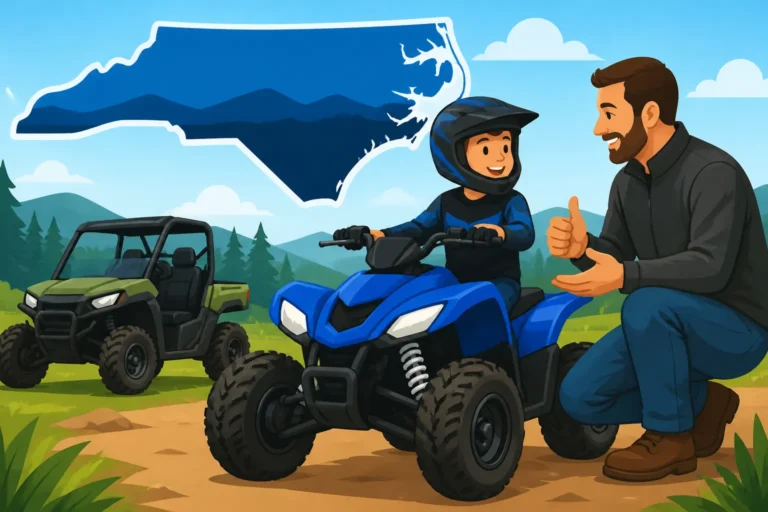
Once a rider passes their eighth birthday, the rules become a bit more nuanced, but strict requirements still apply for anyone under the age of 16. This is where parental supervision and formal safety education really come into play. North Carolina law mandates that any person under 16 years of age who operates an ATV must be under the continuous visual supervision of a parent, guardian, or an adult authorized by a parent or guardian. "Continuous visual supervision" means the adult must be able to see the young rider at all times, ready to intervene if necessary. This isn't about letting them ride off into the distance while you relax at the campsite; it's about active, vigilant oversight.
Furthermore, anyone born on or after January 1, 1990, who is under 16 years of age and operates an ATV on public lands, public access areas, or private property with the landowner's permission, must possess a safety certificate. This certificate is obtained by completing an approved ATV safety course, which teaches critical skills, safe riding practices, and a thorough understanding of ATV laws. This requirement ensures that young riders receive formal training beyond just what a parent might teach them. Carrying this certificate is a must, as law enforcement or forest rangers may ask to see it. More details on these requirements can be found in [North Carolina Rules for Riders Under 16] and [North Carolina ATV Safety Certificate Requirements].
The 16-and-Over Freedom (within limits)
For riders who are 16 years of age or older, North Carolina law grants considerably more freedom, as the strict supervision and safety certificate requirements no longer apply directly because of their age. At 16, a rider is generally presumed to have the maturity and capacity to operate an ATV safely, provided they adhere to all other applicable laws and regulations. This means no mandatory adult supervision or a specific ATV safety certificate is required solely based on their age (though a safety course is always a good idea, regardless of age!).
However, this "freedom" comes with significant responsibility. Being 16 or older means you are fully accountable for your actions on an ATV. All other rules still apply, such as wearing appropriate safety gear (like a DOT-approved helmet, especially on public lands), operating the machine in a safe manner, respecting private property rights, and adhering to environmental regulations. While the state trusts older riders with more autonomy, the expectation is that they will exercise good judgment and ride responsibly. This age group might also be interested in enhancing their machine's capabilities and safety, often looking to companies like SuperATV for upgrades like better suspension or protective cages.
Special Scenarios and Age Rules
While the general age rules provide a solid framework, North Carolina, like many states, has specific carve-outs or additional considerations for certain riding environments or situations. It’s not always a one-size-fits-all approach, and knowing these nuances can prevent misunderstandings or, more importantly, infractions. These special scenarios often relate to public access areas where more people might be present, or situations that inherently carry additional risks, such as carrying a passenger.
Understanding these details is part of being a well-informed and responsible rider. It’s not enough to know the general age limits; you also need to know how those limits might shift depending on where you are or what you’re doing on your machine.
Age on North Carolina's Beaches
Riding ATVs and UTVs on North Carolina's picturesque beaches is an activity that captivates many, but it comes with its own set of very specific rules, including age restrictions. Unlike private land or designated off-road parks, ocean beaches are often bustling public areas, and the presence of machines needs to be carefully regulated for the safety of pedestrians and wildlife. In North Carolina, the general rule is that you must be at least 16 years of age to operate an ATV or UTV on any beach or coastal area where such operation is permitted.
This 16-year-old minimum age applies even if the rider is typically allowed to operate an ATV off-road under supervision at a younger age. The unique environment of a beach – with its soft sand, unpredictable tides, and high pedestrian traffic – demands a higher level of maturity and driving skill. It's not uncommon to see local ordinances that are even stricter, so always check with the specific county or town beach regulations before planning a ride. This particular age requirement for coastal areas is a crucial detail, especially emphasized in [North Carolina Beach Riding Age Requirement].
Age and Passengers on an ATV
This is a common point of confusion, and one where safety is paramount. North Carolina law, consistent with most manufacturer recommendations, generally prohibits carrying passengers on an ATV unless the ATV is specifically designed by the manufacturer to carry more than one person. This usually means a machine with a dedicated, factory-installed passenger seat and footrests. Most traditional single-rider ATVs are simply not built to safely accommodate a passenger, regardless of the passenger's age or the operator's experience.
When it comes to UTVs (side-by-sides), which are almost always designed for multiple occupants, the age of the operator still follows the general rules outlined above (minimum 8 years old with supervision/certificate for under 16, and 16+ without). For the passenger, while there isn't a direct statewide minimum age for being a passenger in a multi-seat UTV, common sense and manufacturer age recommendations for passengers (which often parallel rider ages) should always be followed. An infant or very young child should never be a passenger due to the risks of sudden movements, bumps, and the lack of proper restraints. Always refer to [North Carolina Passenger Rules on an ATV] for the specifics.
The Repealed 70cc Rule and Persistent Misinformation
Here's a piece of North Carolina ATV law that often causes confusion because it's no longer in effect, yet it still circulates in some conversations and outdated materials: the old 70cc engine rule. For a period, North Carolina had a law that prohibited riders under 12 years of age from operating an ATV with an engine displacement greater than 70 cubic centimeters. This rule was intended to match machine power to rider capability, but it created complexities and was eventually repealed.
The important takeaway here is that you should not rely on information about a 70cc engine limit for young riders in North Carolina. That specific restriction has been removed from the statutes. Today, the age restrictions are primarily based on the broad categories of under 8, under 16, and 16+, coupled with manufacturer age recommendations for specific machines. Relying on outdated information can lead to inadvertently breaking the current law or, worse, making an unsafe decision. Always ensure your information is current, and be aware of [The 70cc Engine Rule That No Longer Exists].
Enforcement, Education, and Moving Forward with Age Rules
Understanding the rules is one thing, but knowing how they are enforced and what proactive steps you can take for compliance and safety is another. North Carolina takes its ATV laws seriously, particularly those concerning rider age, due to the high-risk nature of these machines. It's not just about avoiding a ticket; it's about fostering a culture of safety that protects everyone on and around the trails.
Being informed and prepared means you can confidently enjoy your ATV or UTV experience without unnecessary stress or avoidable hazards. This section will walk you through what to expect if you encounter law enforcement, the critical role of safety education, and the enduring responsibility of parents and guardians.
What a North Carolina Trooper Checks Roadside
If you're riding an ATV or UTV on public lands, or if you're crossing a road (where permitted, like for farming operations or very specific crossings outlined in [North Carolina Rules for Crossing a Road]), a North Carolina law enforcement officer – whether a State Trooper, Sheriff's Deputy, or Forest Service Ranger – might stop you. When it comes to age-related rules, they're typically looking for a few key things:
- Rider Age Verification: They will primarily assess if the rider appears to be within the legal age limits for operating the machine, especially if the rider looks young. If the rider is under 16, they'll want to confirm the presence of a supervising adult and may ask for proof of age.
- Safety Certificate: For riders born on or after January 1, 1990, who are under 16, the officer will check for a valid ATV safety certificate. This physical card or proof of completion should always be carried with the rider or supervising adult.
- Manufacturer's Labels: The officer may check the ATV itself for the manufacturer's age warning labels to ensure that the machine is age-appropriate for the operator, regardless of their compliance with the state's general age rules.
- Supervision: If the rider is under 16, the officer will confirm that a parent, guardian, or authorized adult is indeed providing continuous visual supervision.
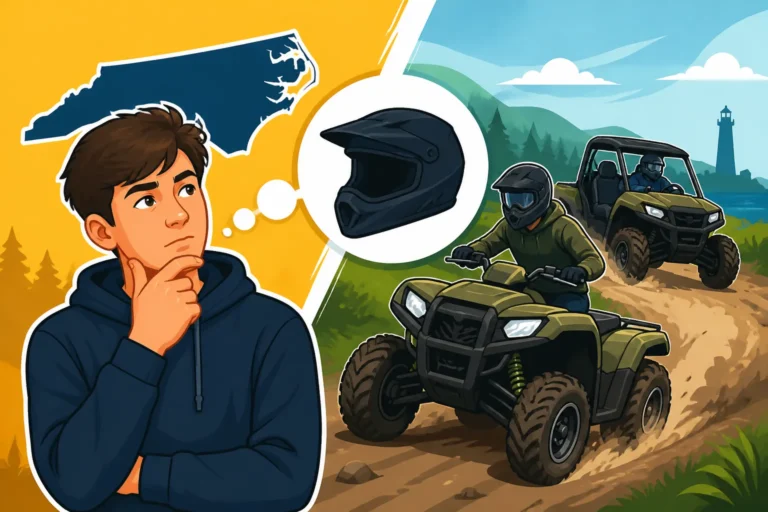
- General Safety Compliance: Beyond age, they will also be checking for other infractions, such as helmet use (mandated for under-18 riders on public land, and always recommended) and proper machine equipment. While not directly age-related, [Helmet and Eye Protection Rules in North Carolina] are crucial for all riders.
Failing to meet these requirements can lead to citations for the rider (if of legal age to be cited) or the supervising adult/parent, potential fines, and the possibility of having the riding session cut short.
The Importance of Safety Education
While a safety certificate is only legally required for a specific age group born after a certain date, the truth is that safety education is invaluable for all ATV and UTV riders, regardless of age. Formal training courses, such as those offered by the ATV Safety Institute (ASI) or other approved programs, provide structured instruction on safe operating procedures, risk assessment, proper riding techniques for various terrains, and emergency preparedness.
These courses go beyond just memorizing rules; they teach practical skills and instill a safety mindset. Even experienced adult riders can benefit from a refresher course, learning new techniques or reinforcing good habits. For younger riders, it's not just about meeting a legal requirement; it's about giving them the knowledge and skills to make smart decisions and react appropriately in challenging situations. Brands like SuperATV often promote safe riding practices and offer products that complement safe operation, such as robust roll cages and improved lighting, which are excellent additions to any machine, but no substitute for proper training.
Parents' Responsibility and Best Practices
For parents and guardians, the legal obligations regarding their children's ATV use are significant, but the moral responsibility extends even further. Simply meeting the minimum legal age requirements isn't always enough to ensure a child's safety. Parents have a crucial role in fostering responsible riding habits and making informed decisions about their children's participation in ATV activities.
Here are some best practices for parents:
- Lead by Example: Always wear appropriate safety gear yourself, follow the rules, and ride responsibly. Children learn best by observing.
- Match the Machine to the Rider: Ensure the ATV or UTV is the right size and power for the child's age, size, and skill level. Always adhere to manufacturer age recommendations, even if they are stricter than state law.
- Provide Proper Gear: Insist on DOT-approved helmets, eye protection, gloves, long pants, and over-the-ankle boots for every ride, every time.
- Enroll in Training: Even if not legally required for your child's age, enroll them in an approved ATV safety course. The practical experience and structured learning are invaluable.
- Supervise Actively: For riders under 16, continuous visual supervision means continuous. Stay close, pay attention, and be ready to assist. Review [North Carolina Supervision Rules for Minors] for specific legal expectations.
- Teach and Reinforce Rules: Regularly discuss safe riding rules, trail etiquette, and the importance of respecting others and the environment.
- Inspect Machines Regularly: Before each ride, perform a quick check of the machine's brakes, tires, lights, and controls to ensure it's in safe operating condition.
By taking these steps, parents not only fulfill their legal obligations but also provide their children with the best possible foundation for a lifetime of safe and enjoyable off-road adventures.
Here's a quick reference table summarizing North Carolina's core age rules:
| Rider Age Group | Legal Requirements & Notes | Common Scenarios |
|---|---|---|
| Under 8 | Strictly Prohibited from operating an ATV. No exceptions. | Not allowed to ride any ATV, anywhere. |
| 8 to Under 16 | – Continuous visual supervision by a parent, guardian, or authorized adult required. – Safety Certificate required if born on/after Jan 1, 1990, for public/permitted private land. – Must meet manufacturer's age recommendations for the specific machine. |
Riding on designated trails with a supervising adult. |
| 16 and Over | – No state-mandated supervision or safety certificate solely due to age. – Must comply with all other ATV laws (e.g., helmets, safe operation). – Must meet manufacturer's age recommendations for the specific machine. |
Riding independently on trails or permitted roads. |
| Passengers | – Only allowed on ATVs specifically designed by the manufacturer for multiple riders (i.e., factory two-seaters or UTVs). – Operator must meet age requirements. – No specific minimum age for UTV passengers, but manufacturer recommendations and common sense safety apply. |
Riding a two-up ATV or UTV. |
| Beach Riding | Minimum age 16 to operate an ATV/UTV on permitted ocean beaches. Local ordinances may add further restrictions. | Operating on specific stretches of coastal sand. |
This article is for general informational purposes only and does not constitute professional advice. Laws, prices and regulations vary by location and change over time. Consult a qualified professional for guidance on your specific situation.