North Carolina Rules for Riding a Utility Corridor
Alright, let's talk about utility corridors in North Carolina. I know it's a common thought for ATV and UTV riders: "There's this wide-open path, nobody's really using it, it must be okay to ride there, right?" Or maybe you've seen other folks doing it and assumed it was fair game. This assumption, while understandable, can actually lead to some real headaches, from fines to legal trouble. This guide is going to walk you through exactly what North Carolina law says about riding your ATV or UTV on these utility corridors, debunk some common myths, and point you towards legitimate riding options so you can stay out of hot water.
What Exactly is a Utility Corridor in North Carolina?
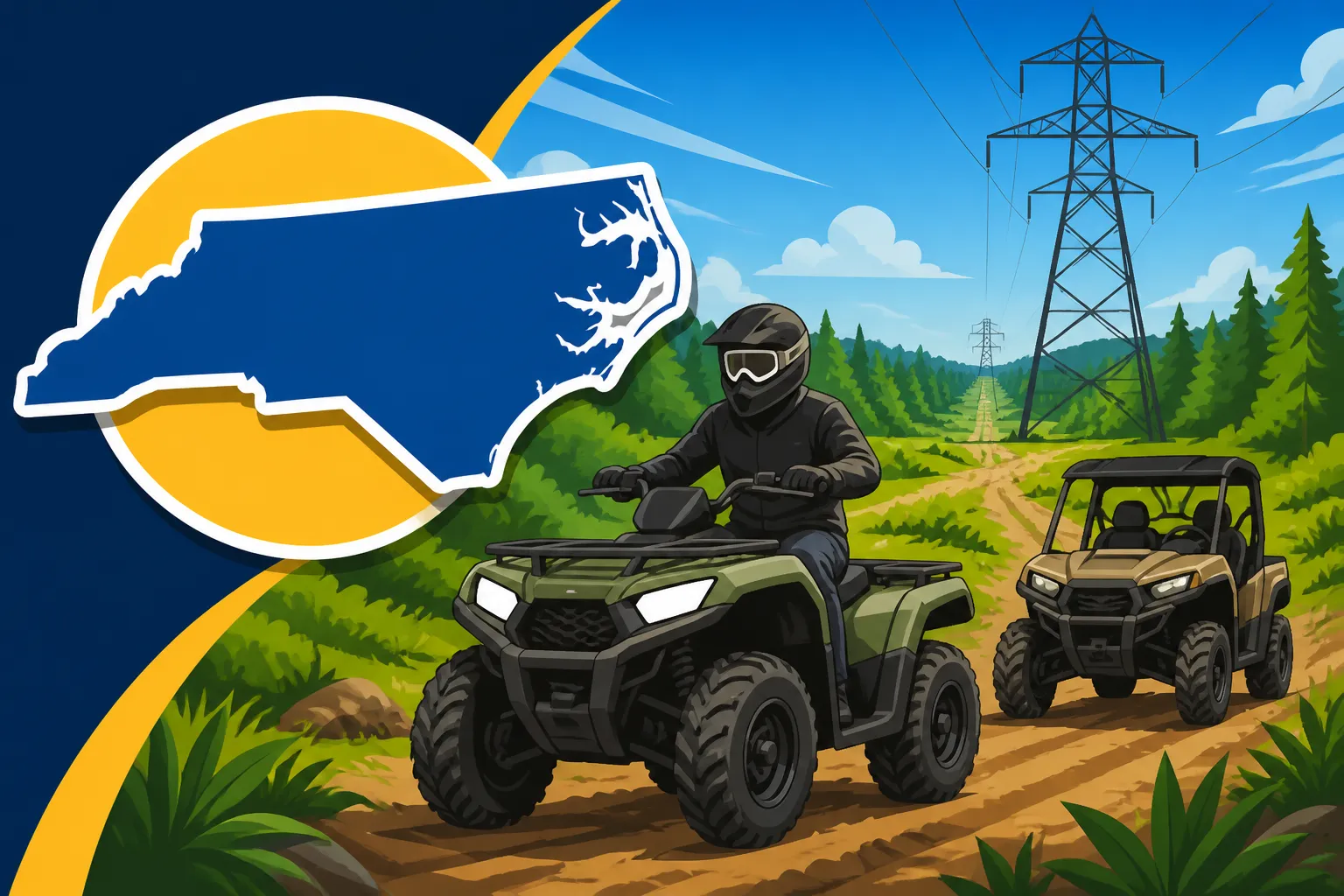
When we talk about utility corridors, we're referring to those distinct strips of land that seem to cut across the landscape, often stretching for miles, where you'll find power lines marching across the horizon, or perhaps markers indicating underground pipelines or fiber optic cables. They might seem like open spaces, ripe for a recreational ride, but their purpose is strictly utilitarian.
Defining the Landscape: Power Lines, Pipelines, and More
A utility corridor is essentially a dedicated right-of-way or easement granted to a utility company by a landowner. These easements allow companies like Duke Energy, Piedmont Natural Gas, or various telecommunications providers to install, maintain, and access their infrastructure. Think about it: massive electrical towers and their sprawling lines need a clear path, free from trees and buildings, to function safely and efficiently. Similarly, underground pipelines carrying natural gas or fiber optic networks need consistent access for maintenance and repair.
These corridors are designed for specific industrial purposes. They're not maintained for recreation, and their surfaces can be unpredictable, ranging from graded access roads used by work vehicles to rough, uneven terrain with hidden obstacles. You might encounter anything from exposed pipe markers to recent excavation work, even equipment left behind by maintenance crews. It’s definitely not your typical trail system, and it comes with its own unique set of hazards that aren't immediately obvious to a recreational rider.
Ownership and Access: Who Calls the Shots?
Here's where the critical distinction lies: while a utility company has an easement to use that strip of land for its specific purpose, they often do not own the land outright. The land itself usually belongs to a private individual, a farm, a timber company, or another corporate entity. The easement simply grants the utility company the right to access and maintain their equipment on that portion of the property.
So, who calls the shots on who can ride there? Both the underlying private landowner and the utility company have a say. The utility company has a vested interest in limiting access to protect their infrastructure, prevent accidents, and avoid liability. They often have agreements with the landowners that restrict any other uses that could interfere with their operations or compromise safety. This means that even if a utility corridor crosses thousands of acres of what appears to be undeveloped land, it's still considered private property with very specific access limitations. Assuming that just because a path exists, it's open for public recreation, is a common misconception that can lead to legal trouble.
The Core Legal Stance: Trespass Laws and Private Property
Let’s get right to the heart of the matter. In North Carolina, the fundamental rule regarding land access is simple: if it's not explicitly designated as public land for recreation, and you don't have express permission from the owner, you shouldn't be there with your ATV or UTV. This principle applies just as strongly, if not more so, to utility corridors.
North Carolina's Foundation: Permission is Paramount
In North Carolina, private property is private property. It doesn't matter if it's a neatly mowed lawn in a suburban neighborhood or a dense forest parcel stretching for miles. If you enter or use someone else's land without their direct permission, you are trespassing. There's no gray area here, especially when you're operating a motorized vehicle.
Many riders, with good intentions, might see a utility corridor and think, "Well, it's not fenced, and there are no 'No Trespassing' signs, so it must be fine." Unfortunately, that line of thinking doesn't hold up in court. North Carolina law doesn't require landowners to post "No Trespassing" signs for their property to be considered private. While signs certainly help clarify intent and can deter casual trespassers, their absence does not grant permission. This applies universally across all private lands, and utility corridors, by their very nature, fall under this umbrella. For more general guidance on this, you can check out [North Carolina Landowner Permission Rules]. It really boils down to this: if you haven't been given explicit, clear permission, then you shouldn't be riding there.
Why Utility Corridors Aren't "Public Land" for Riding
This is a critical point that often gets misunderstood. Utility corridors are not public land in the sense that a state park or national forest trail system is. They are private land, or land over which a private utility company holds a specific easement. The public doesn't have an inherent right to access or ride on them.
Think of it this way: the utility company has the right to build and maintain its lines or pipes, but that right doesn't magically transform the ground beneath into a public recreational trail. The primary purpose of these corridors is operational, not recreational. Allowing public access for ATVs and UTVs would introduce significant liability risks for both the private landowner and the utility company. What if a rider gets injured? What if a machine damages crucial infrastructure, causing a power outage or a gas leak? These are huge concerns that utility companies are very keen to avoid.
So, while you might see a "well-worn" path from utility vehicles or even unofficial use by other riders, this doesn't constitute implied public access. It merely means that some people are either authorized (like utility workers) or are riding illegally. Don't let the sight of tire tracks lead you to believe you have a legal right to be there. In North Carolina, unless a corridor is specifically designated and managed by a governmental entity for OHV use – which is exceedingly rare for utility corridors – it remains private and off-limits without permission.
The Reality of Gaining Access to North Carolina Utility Corridors
Now, let's tackle the practical side of things. If you're hoping to legally ride your ATV or UTV on a utility corridor in North Carolina, what does that actually look like? The honest answer is: it's incredibly challenging, and for most recreational riders, it's simply not a viable option.
The Uphill Battle: Seeking Permission from Utility Companies
Let’s be realistic: utility companies are generally not in the business of granting recreational access to their rights-of-way. Their primary concerns are the safety of their infrastructure, the uninterrupted service to their customers, and mitigating liability. When you introduce recreational vehicles like ATVs and UTVs, you introduce a host of potential problems:
- Safety Hazards: Riders could get too close to high-voltage lines, damage buried pipelines, or collide with maintenance vehicles.
- Infrastructure Damage: Even seemingly minor impacts can damage markers, access gates, or underground lines, leading to costly repairs and service interruptions.
- Environmental Concerns: Off-road vehicles can cause erosion, disturb wildlife, and spread invasive species, which utilities often have to mitigate as part of their environmental compliance.
- Liability: If someone gets hurt on their easement, even if they explicitly warned against it, the utility company could face significant legal challenges.
Because of these very real concerns, most utility companies have blanket policies against granting recreational access. You can try contacting their land management or right-of-way departments, but be prepared for a polite but firm "no." Their operational priorities simply don't align with opening up their corridors for public ATV/UTV use. It's a logistical and legal minefield they'd rather avoid.
Navigating Adjacent Landowners: A Complex Patchwork
Even if, by some miracle, a utility company were to entertain the idea of granting you permission, that’s only half the battle. Remember, the land underneath the corridor is typically owned by private individuals or entities. This means you would need to secure permission from every single landowner whose property the utility corridor traverses along your intended route.
Imagine a power line stretching for ten miles. It could easily cross dozens, if not hundreds, of individual properties. Getting written permission from each of those landowners would be an organizational nightmare, assuming you could even identify and contact them all. Each landowner has their own concerns, their own preferences, and their own reasons for saying "yes" or "no." This patchwork of ownership makes securing comprehensive, legal access to any significant stretch of a utility corridor practically impossible for a recreational rider. It's a level of bureaucracy and negotiation that far exceeds what most people are looking for in a weekend ride.
The Risks of Unauthorized Riding: Fines, Impoundment, and More
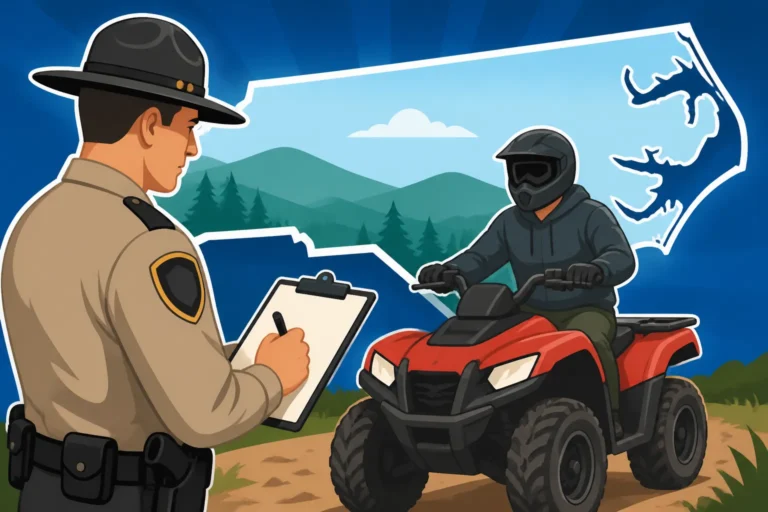
Let's not sugarcoat it: riding on a utility corridor without permission is trespassing, and the consequences in North Carolina can be severe. This isn't just about a slap on the wrist.
- Fines: You could face significant fines for trespassing, which can vary depending on the county and the specific circumstances. These aren't usually cheap.
- Vehicle Impoundment: Law enforcement has the authority to impound your ATV or UTV. Getting your machine back often involves hefty towing and storage fees, on top of any fines. This can quickly turn a fun ride into an extremely expensive headache.
- Civil Action: The landowner or utility company could pursue civil charges against you for damages to their property or for nuisance. If you caused any damage to the environment or infrastructure, you could be on the hook for substantial repair costs.
- Loss of Future Access: If you're caught trespassing, you're certainly not going to get permission to ride on that land in the future, and it could impact your ability to get permission elsewhere.
It's a stark reality, but one that every rider needs to understand. The allure of an "open" path is simply not worth the legal and financial risks involved. It's far better to invest your time and energy into finding legitimate and legal places to ride, where you can enjoy your machine without constant worry.
Practical Alternatives for North Carolina ATV/UTV Enthusiasts
So, if utility corridors are largely off-limits, where can you ride legally and safely in North Carolina? Thankfully, our state has some fantastic options, and understanding them is key to truly enjoying your ATV or UTV without legal worries.
Embracing North Carolina's Designated OHV Trails
The absolute best and most straightforward way to enjoy your ATV or UTV in North Carolina is by visiting designated Off-Highway Vehicle (OHV) trail systems. These areas are specifically managed for motorized recreation, meaning the trails are designed with riders in mind, maintained for safety, and clearly marked.
North Carolina is home to several excellent OHV areas, primarily within our National Forests. Places like the [Brown Mountain OHV Trail System] in the Pisgah National Forest and the [Badin Lake OHV Trail Complex] in the Uwharrie National Forest offer miles of diverse terrain, from gentle forest roads to challenging climbs. These trails require a permit, but the cost is usually minimal, and it goes directly back into maintaining these valuable riding resources. You'll find proper staging areas, clear rules, and often a community of fellow riders who respect the land and the regulations. It's a completely different, and far more enjoyable, experience than constantly looking over your shoulder on an unauthorized path.
Building Your Own Backyard Oasis or Joining a Club
For those with a bit of land, creating your own riding area is, of course, the ultimate private solution. If you own property, or have secured explicit written permission from a landowner you know well, you can build and enjoy your own private trails. Just be mindful of local noise ordinances and any homeowner association rules if you're in a developed area.
Another fantastic option is to join a local ATV/UTV club. Many clubs have access to private land through leases or special agreements, providing their members with exclusive and legal riding opportunities. These clubs also foster a sense of community, allowing you to ride with experienced individuals, learn new skills, and participate in organized events. It’s a great way to meet like-minded people and access safe, well-managed riding spots that are typically off-limits to the general public.
Road-Legal Conversions: The MUV Path
For some UTV owners, the dream isn't just off-road riding, but also the ability to legally drive their machine on certain public roads. North Carolina offers a specific pathway for this through its "Modified Utility Vehicle" (MUV) designation. This isn't for ATVs, and it's certainly not a free pass for every side-by-side, but it's an option worth exploring if you meet the very strict requirements.
Converting a UTV to an MUV means making significant modifications to meet specific state safety standards, essentially making it street legal for roads with a posted speed limit of 55 mph or less. These requirements include things like an engine size over 2,400cc, specific dimensions (length, width, height), and crucial safety equipment such as headlights, taillights, turn signals, brake lights, a parking brake, a speedometer, horn, mirrors, and seat belts.
This process involves more than just bolting on a few accessories; it's a comprehensive modification. Companies like SuperATV offer a wide range of aftermarket parts and accessories that could be part of an MUV conversion project, from lighting kits and turn signal assemblies to mirrors and winches that make your machine more capable and potentially compliant. However, simply buying parts doesn't make your UTV an MUV. You have to ensure every single requirement is met, often involving inspections by the DMV or law enforcement, and then registering and titling your machine as an MUV. It's a significant undertaking, but for some, it's the key to expanding their riding horizons beyond purely off-road trails. You can learn more about this specific path by looking into [North Carolina's Modified Utility Vehicle Route] and the associated [North Carolina MUV Registration Requirements].
Here's a quick comparison of riding areas in North Carolina:
| Riding Area Type | Legal Status | Typical Access Requirements | Advantages | Disadvantages |
|---|---|---|---|---|
| Utility Corridors | Private land, generally off-limits | Explicit written permission from ALL landowners & utility | Appear open, direct routes | Trespassing risk, legal penalties, impoundment |
| Designated OHV Trails | Legal, managed public land | Permits (day/season), safety certificate for some | Safe, maintained trails, legal, community | Permit fees, specific open seasons, might require travel |
| Private Land (Owned) | Legal | You own it! | Unlimited access, customization | Cost of land, maintenance, potential noise issues |
| Private Land (With Permission) | Legal, with proper consent | Explicit written permission from landowner | Free (usually), varied terrain | Can be revoked, limited options |
| MUV on Public Roads | Legal on certain public roads (55 mph or less) | UTV conversion to MUV, registration, insurance, title | Connects trails, legal on qualifying roads | Strict conversion requirements, not for ATVs, significant cost |
Ultimately, whether you choose a designated trail system, join a club, explore private land, or embark on an MUV conversion, prioritizing legal and safe riding is paramount. North Carolina offers plenty of ways to enjoy your ATV or UTV responsibly, without having to navigate the complicated and risky world of utility corridor access.
Disclaimer
This article is for general informational purposes only and does not constitute professional advice. Laws, prices and regulations vary by location and change over time. Consult a qualified professional for guidance on your specific situation.