Buckling Up in an MUV
It's a common frustration for riders across North Carolina: you love the freedom of your off-road machine, but when you want to take it on public roads as a Modified Utility Vehicle (MUV), the rules suddenly change. One of the most critical, and sometimes surprising, requirements for MUVs is buckling up. This guide is here to walk you through exactly why MUVs need seat belts in North Carolina, what the law expects, and how to make sure your machine and your riding habits comply, so you can enjoy those public road excursions safely and legally.
The Reality of Buckling Up in Your North Carolina MUV
Let's face it, for many of us, the appeal of an ATV or UTV is the raw, open-air experience, often without the confines of a traditional vehicle. But when you venture into the realm of a Modified Utility Vehicle (MUV) in North Carolina, that freedom comes with some very specific responsibilities, and buckling up is right at the top of the list. It’s not just a suggestion; it’s a legal mandate that can feel a bit jarring if you're used to unencumbered trail riding.
Why Seat Belts Are Non-Negotiable for MUVs
The moment your off-road machine crosses the line from a purely recreational trail vehicle to a street-legal MUV, it steps into a different category of public road vehicle in the eyes of North Carolina law. This reclassification means it's now subject to many of the same safety expectations as cars and trucks, albeit with its own unique set of requirements. The core reason for mandatory seat belts on MUVs is about road safety. When you're sharing paved roads, even low-speed ones, with larger vehicles, potential hazards increase significantly. A sudden stop, an unexpected swerve, or an unavoidable collision demands that occupants are secured. Off-road, you might be prepared for bumps and jostles, often standing or shifting your weight; on the road, that's simply not safe.
Think about it this way: your MUV is now sharing space with daily commuters, delivery trucks, and family sedans. These vehicles operate under strict safety regulations, and your MUV, by entering their domain, must meet a comparable standard for occupant protection. The state isn't trying to make your MUV experience less fun; it's trying to minimize injuries and fatalities that could occur on public thoroughfares. This is part of the larger framework that enables [North Carolina's Modified Utility Vehicle Route] to exist at all, balancing off-road utility with public road safety.
What North Carolina Law Says About Seat Belts
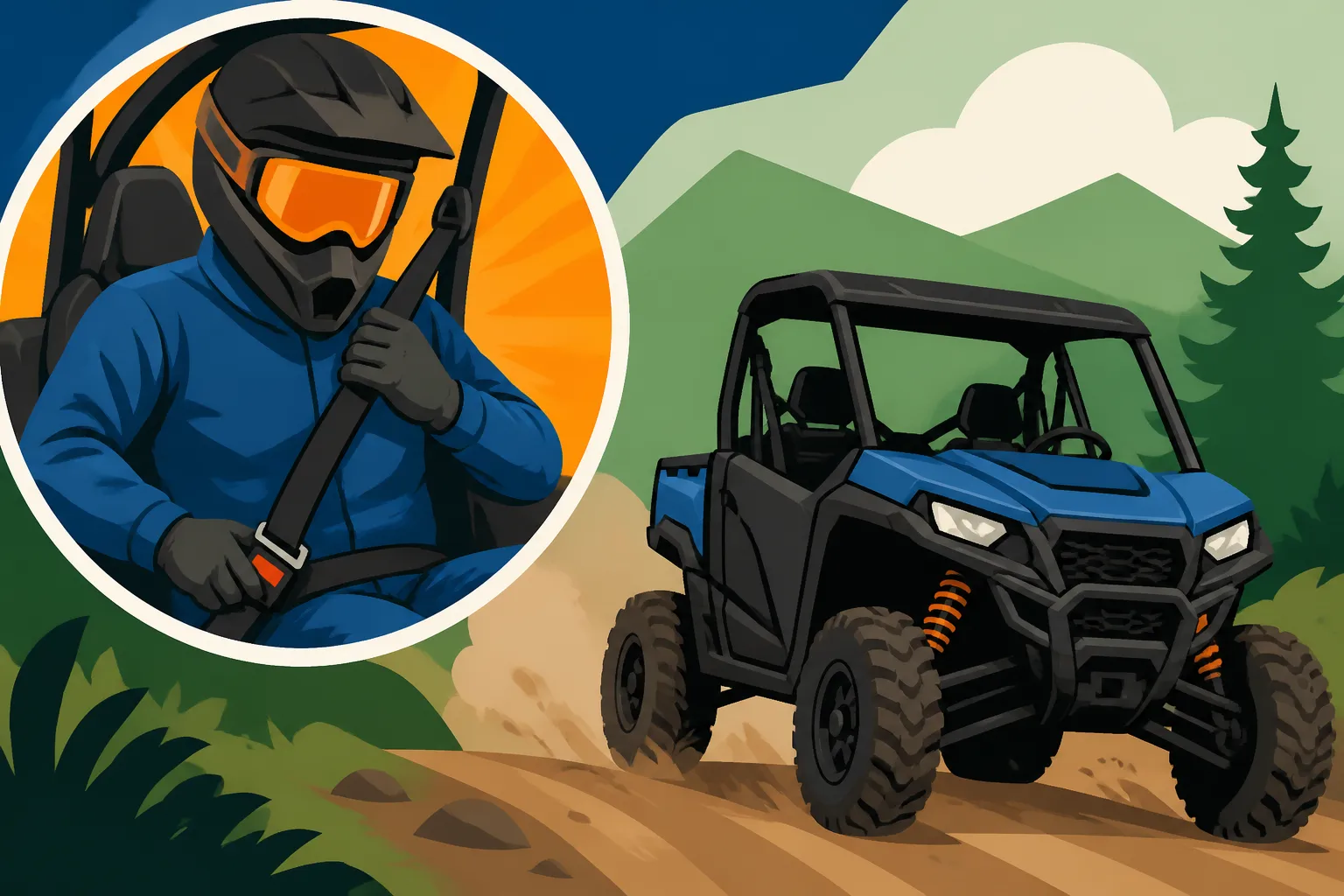
North Carolina law is quite clear when it comes to Modified Utility Vehicles on public roads. An MUV must be equipped with seat belts, and every occupant must use them when the vehicle is in motion on a public road or highway. This isn't a rule with a lot of wiggle room. It’s a primary enforcement law, meaning a law enforcement officer can pull you over and issue a citation solely for a seat belt violation, without any other traffic offense occurring. This is distinct from many off-road situations where such requirements simply don't exist.
The specific statute aims to ensure that if you're taking your MUV to the local store, across town, or on designated public roads, you and your passengers are as protected as possible. This means if your MUV is designed with seating for two, it needs two functional seat belts, and both must be worn. If it's a four-seater, all four positions require belts and active use. The law doesn't differentiate based on the type of public road, only that it is a public road. So, whether you're on a quiet rural lane or a busier secondary road, the buckle-up rule applies.
Understanding North Carolina's Modified Utility Vehicle (MUV) Classification
Before diving deeper into seat belt specifics, it helps to understand why your machine is even classified as an MUV in North Carolina. It’s not just any UTV or side-by-side that qualifies; there's a very particular set of criteria that elevates it to MUV status and, by extension, imposes these road-specific safety rules like seat belt use.
The Specifics That Make Your Machine an MUV
To be street-legal in North Carolina, a machine isn't merely called a "UTV" or "side-by-side" on paper; it must specifically qualify as a "Modified Utility Vehicle" (MUV). This designation comes with a precise list of engineering and equipment requirements that go far beyond what's needed for pure off-road use. These are the things that distinguish an MUV from an ordinary off-road vehicle. For instance, the machine must have an engine displacement of more than 2,400 cubic centimeters. That's a pretty hefty engine, immediately ruling out many smaller UTVs.
Beyond engine size, there are strict dimension limits: it must not exceed 142 inches in length, 58 inches in width, and 70 inches in height. Plus, it needs to be capable of at least 40 miles per hour. These aren't arbitrary numbers; they're designed to categorize machines that resemble small, sturdy utility vehicles rather than traditional ATVs or even smaller side-by-sides. If your machine doesn't meet these specific criteria, it simply cannot be titled and registered as an MUV, regardless of how many safety features you add. You can read more about [What Makes a Machine an MUV in North Carolina] to grasp the full scope of these requirements.
How MUV Status Dictates Road Safety Gear
The entire point of the MUV classification is to create a pathway for certain types of utility-focused off-road machines to be legally operated on public roads. Because these vehicles are allowed to mix with regular traffic, even on limited roadways, they are held to a higher standard of safety equipment than an off-road-only machine. This is where the seat belt requirement really comes into play. It's not just about having an engine over 2,400cc or being under 58 inches wide; it's about making sure that once it meets those physical benchmarks, it's also outfitted with the necessary safety features for public road travel.
This also extends to other road safety gear. For example, MUVs must have functional headlamps, taillamps, brake lights, turn signals, and mirrors. These are all standard on any road-going vehicle but often optional or not strictly required for off-road use. The mandate for seat belts is part of this comprehensive safety package that says, "If you're going to share the road, you're going to do it safely, as defined by road vehicle standards." This is why understanding [North Carolina MUV Registration Requirements] is so crucial, as it outlines all these interconnected safety and equipment rules.
Ensuring Your MUV Meets North Carolina's Seat Belt Standards
Once you understand that seat belts are a must for your MUV on North Carolina roads, the next step is ensuring your machine is properly equipped and that you're using them correctly. It’s not just about having a belt; it’s about having the right kind of belt and making sure it's in good working order.
Factory Installed vs. Aftermarket Seat Belt Solutions
Ideally, if you purchased a UTV with the intent of converting it into an MUV, it would already come equipped with robust, factory-installed seat belts that meet safety standards. Many modern UTVs, especially those designed with utility and potential road-use in mind, will feature 3-point lap and shoulder belts similar to those found in cars. These are generally the gold standard for road safety and are exactly what North Carolina law anticipates for MUVs.
However, if your specific machine, perhaps an older model or one more geared towards extreme off-road use, only came with basic lap belts or harnesses that aren't quite up to snuff for street legality, you might need to look at aftermarket solutions. This is where reputable manufacturers like SuperATV come in handy. They offer a wide range of aftermarket seat belts, from simple lap belts to more comprehensive 4-point and even 5-point harnesses. While 4-point or 5-point harnesses provide excellent containment for aggressive off-road driving, for MUV road use, a strong, secure 3-point lap and shoulder belt system is usually the most appropriate and legally compliant choice. Always ensure any aftermarket seat belts you install are properly secured to the frame of your MUV and are designed for occupant restraint in a vehicle. You wouldn't want to rely on something flimsy for safety on the highway.
Proper Use and Maintenance for MUV Seat Belts
Having the seat belts installed is only half the battle; using them correctly is the other. Every occupant in an MUV on a public road must be buckled up. This isn't just for the driver; it applies to all passengers, too. Make it a habit: before you even put the MUV in gear and pull onto a public road, everyone needs to click in. This is a rule that [What a North Carolina Trooper Checks Roadside] will certainly include.
Beyond simply buckling up, regular inspection and maintenance of your MUV's seat belts are crucial. Over time, seat belts can fray, retractors can stick, and buckles can become stiff or damaged. Here’s what to look for:
- Fraying or Tears: Inspect the webbing for any signs of wear, cuts, or fraying. Damaged webbing significantly compromises the belt's strength.
- Buckle Functionality: Ensure the buckle latches securely and releases easily when pressed. A sticky buckle can be a hazard.
- Retractor Operation: If your MUV has retractable belts, check that they extend and retract smoothly without snagging or locking up unexpectedly. They should hold firm during a sudden tug.
- Anchorage Points: Examine where the seat belts attach to the MUV's frame or roll cage. Ensure these points are secure, free from rust, and haven't loosened over time.
If you find any issues, address them immediately. Replace damaged belts or repair faulty retractors. Companies like SuperATV often provide replacement parts or robust upgrades that can help keep your MUV compliant and safe. Never compromise on seat belt integrity; it's your primary line of defense in an incident on the road.
Beyond the Belt: MUV Safety and Compliance on North Carolina Roads
While seat belts are a cornerstone of MUV safety, they are part of a larger ecosystem of requirements designed to make these unique vehicles as safe as possible for public road use in North Carolina. It's a holistic approach, ensuring that your MUV isn't just legally registered but also roadworthy in every sense of the word.
The Broader Picture of MUV Road Safety Gear
Operating an MUV on North Carolina roads demands more than just buckling up. The state has outlined a comprehensive list of equipment requirements that mirror many aspects of standard vehicle safety. Beyond seat belts, your MUV must be equipped with working headlamps, taillamps, brake lights, turn signals, and a horn. Furthermore, a speedometer is required, and your MUV needs functional mirrors (typically a left-side mirror and an interior rearview mirror, or two exterior mirrors) to provide adequate visibility of surrounding traffic. You'll also need a parking brake that can hold the vehicle stationary. These elements ensure that your MUV can communicate its presence and intentions to other drivers and that you have the necessary tools to operate it safely within traffic flows. Learning about [North Carolina MUV Inspection Requirements] gives you a full picture of what to check.
It's a lot to consider, especially if your UTV started life as a pure off-road machine. Many riders find themselves upgrading various components to meet these standards. For example, adding robust turn signals or a better horn is a common project. Companies like SuperATV are well-known for offering these kinds of road-legal conversion kits and accessories, making it easier for MUV owners to ensure their machines are fully compliant without having to source parts from dozens of different places. It simplifies the process of getting your MUV ready to hit the pavement legally.
Consequences of Non-Compliance and Staying Safe
The state of North Carolina takes MUV road safety seriously, and for good reason. Violating any of the MUV equipment or usage rules, including the seat belt mandate, can lead to various penalties. At a minimum, you're looking at fines for infractions. A law enforcement officer observing you or your passenger unbuckled will likely issue a citation. Repeated offenses or more severe violations could lead to higher fines, points on your driving record, and potentially even revocation of your MUV's street-legal status. It’s important to remember that when you're on a public road, you're operating under the same rules as any other driver, and ignorance of the law is rarely an excuse.
Beyond the legal ramifications, the most significant consequence of non-compliance is the increased risk of injury. Seat belts are proven life-savers. In the event of a collision, a sudden stop, or even hitting a large pothole on a public road, being properly restrained can prevent you from being ejected from the vehicle or colliding with interior components. The goal isn't just to avoid a ticket; it's to protect yourself and your passengers. So, while the idea of buckling up in your UTV might feel like a departure from its off-road roots, it's a small price to pay for the privilege of legally navigating North Carolina's roads and ensuring everyone gets home safely.
To help visualize the differences between off-road and MUV seat belt practices, here’s a quick comparison:
| Feature/Requirement | Typical Off-Road ATV/UTV Riding (Trails/Private Land) | North Carolina MUV Riding (Public Roads) |
|---|---|---|
| Seat Belt Mandate | Generally not legally required for adults (varies by park/rules) | Absolutely required for all occupants on public roads |
| Belt Type | Often basic lap belts, 4/5-point harnesses for aggressive riding | 3-point (lap & shoulder) belts are standard expectation |
| Enforcement | Park rangers or landowners might enforce specific rules | Law enforcement officers enforce state traffic laws |
| Penalty for Non-Use | Possible ejection from a private park/trail | Fines, potential points on driving record, citation |
| Focus | Occupant retention during dynamic off-road maneuvers | Crash protection and occupant safety in public traffic |
| Inspection | Often left to rider's discretion | Periodically checked for proper function by rider and law enforcement |
Understanding and adhering to these rules not only keeps you on the right side of the law but also vastly improves the safety of your MUV adventures on public thoroughfares.
Disclaimer
This article is for general informational purposes only and does not constitute professional advice. Laws, prices and regulations vary by location and change over time. Consult a qualified professional for guidance on your specific situation.