North Carolina Trails for Beginners
A first ATV or UTV trail ride can feel intimidating when a map shows a web of routes and the difficulty labels are unfamiliar. North Carolina has several public off-highway riding areas, but a beginner-friendly outing depends on more than picking a trail marked easy. This guide explains where to start, how to choose a route, and what to check before loading up.
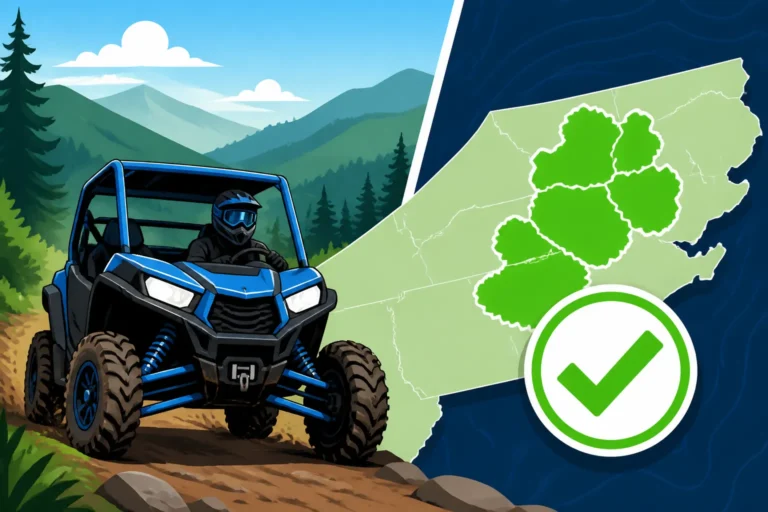
Beginner ATV and UTV riding areas in North Carolina
North Carolina’s public riding areas offer very different experiences. Some trails are rocky or steep, and rain can make even a familiar route more challenging. For a first trip, focus on a clearly marked, lower-difficulty route and treat the trail system as a place to build confidence—not a challenge to conquer in one day.
Badin Lake OHV Trail Complex
Badin Lake, in the Uwharrie National Forest near Troy, is a popular place to plan an off-highway ride. The trail complex has named routes with different difficulty ratings, so riders can make a more deliberate choice than simply following whichever trail looks appealing from the staging area. Start with the easiest marked option suitable for your vehicle, then stop and reassess before adding another route.
A beginner-friendly plan should leave room for delays and wrong turns. A route that looks short on a map can feel long when you are learning to manage throttle, braking, and uneven ground. Before setting out, read the posted signs and map, note trail junctions, and agree on a turnaround point. If the group includes new riders, avoid choosing a route just because an experienced rider says it is manageable.
Badin Lake’s conditions and access can change with weather, maintenance, and seasonal schedules. Check the current forest notices before making the drive, and do not assume that a trail shown on an older map is open. For planning details, see [Badin Lake OHV Trail Complex] and [North Carolina Trail Conditions Before You Ride].
Brown Mountain and Wayehutta
Brown Mountain OHV Trail System is in the Grandfather Ranger District of Pisgah National Forest. Its mountain setting can mean rocky surfaces, elevation changes, and weather that differs from conditions at home. New riders should be especially cautious about choosing routes after rain or when visibility is poor. A trail that feels comfortable on a dry afternoon may be a much harder ride when rocks are slick or runoff has washed across the track.
Wayehutta OHV, in Jackson County, offers another mountain riding option. As with any unfamiliar area, use the posted ratings and local information rather than assuming every route suits a stock machine or a first-time rider. Give yourself time to learn how your vehicle handles before taking on steeper climbs, narrow sections, or technical obstacles. If your group has a mix of experience levels, choose a route everyone can safely complete, not the most demanding option the strongest rider wants to try.
These areas are not interchangeable, and their current trail access can vary. Check the relevant district’s notices and maps before travelling. Guides such as [Brown Mountain OHV Trail System] and [Wayehutta OHV in Western North Carolina] can help you compare locations and plan a suitable first outing.
| Riding area | What a beginner should consider | Before leaving home |
|---|---|---|
| Badin Lake near Troy | Look for the lowest-rated marked route and keep the first ride modest | Check trail notices, maps, access, and permit requirements |
| Brown Mountain in Pisgah National Forest | Mountain terrain and wet or rocky conditions may raise the difficulty | Check district updates and weather, then choose conservatively |
| Wayehutta in Jackson County | Learn the route ratings and confirm the selected trail suits your vehicle | Confirm the area is open and review the current map |
How to choose a beginner-friendly trail
“Beginner-friendly” is not a guarantee that a route will be smooth, easy to navigate, or appropriate for every machine. A trail’s rating is a starting point. Your comfort, vehicle width, ground clearance, passenger load, recent weather, and riding group all affect how difficult the outing feels.
Match the trail to your experience and machine
Start by being honest about what you have ridden before. A person who has only driven a car on gravel roads may need a gentler introduction than someone who has spent years operating farm equipment. Even if you are comfortable behind the wheel, off-road riding adds loose surfaces, ruts, rocks, changing traction, and the need to make decisions at low speed.
Then consider your specific ATV or UTV. A wide side-by-side may not fit comfortably on every route, and a low-clearance machine can struggle over rocks or deep ruts. Passengers and cargo affect handling, too. If you are unsure whether a route is suitable, ask the land manager or check official trail information rather than trying to judge from a photo. [North Carolina Trails for a Wide Machine] can be useful when vehicle width is a concern.
For your first outing, make the goal simple: learn the controls, practise steady low-speed movement, and finish with enough energy to load the machine safely. You do not need to ride the longest loop or cover every open trail. A short, enjoyable trip is a better starting point than an exhausting ride that leaves everyone anxious about getting back.
Read ratings, maps, and conditions together
Trail ratings can help you avoid terrain that is beyond your comfort level, but they cannot describe every detail you may encounter. A route may include a steep section, an exposed rock, a muddy dip, or a tight turn that feels difficult for your particular machine. Read signs at the trailhead, note any warnings, and stop if the route ahead looks more challenging than expected. Turning around is a sound decision, not a failure.
Use a current official map and make sure everyone in the group understands the route before riding. A navigation app such as onX Offroad can help you review routes and keep track of your position, especially where phone service is limited. Download the information you need before leaving an area with reliable coverage, and treat app data as a planning aid—not a replacement for current signs, closures, or official forest guidance. [North Carolina Forest Trail Maps] offers another useful starting point for map planning.
Before committing to a loop, check the forecast and recent conditions. Heavy rain can change traction and water crossings; fog can make it harder to see route markers; and a storm can bring closures or fallen debris. A route that suits a beginner on a dry day may be a poor choice in wet conditions. For a broader checklist, read [North Carolina Trail Closures to Check First].
Prepare for a first ride without making it complicated
A little preparation prevents the most frustrating first-day problems: arriving to find a closure, discovering a required permit was overlooked, or realizing at the trailhead that nobody knows how to get back to the staging area. Keep the plan straightforward and check the essentials before you leave.
Check permits, safety rules, and access
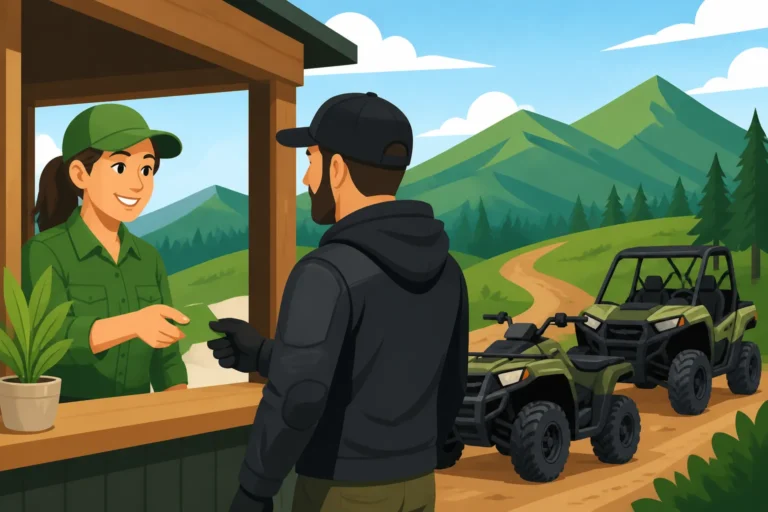
Public riding areas may have their own permit requirements, operating seasons, and rules. Confirm what applies to your chosen location and vehicle before travelling. North Carolina forest riding information can differ by site, so do not assume that a pass or permit for one area automatically covers another. Review [North Carolina Forest OHV Permits] and the specific area’s official notices.
Check rider requirements as well as vehicle requirements. North Carolina has a birth-year rule related to an ATV safety certificate for certain riders on public land. Make sure you understand whether it applies to each person in your group and know what documentation riders may need to carry. The details are explained in [North Carolina ATV Safety Certificate Requirements].
Also confirm that the route is open to your type of machine. A map symbol or trail name alone may not tell the whole story. If you are renting, ask the provider where the machine may be ridden, whether the forest permit is included, and what rules apply to passengers. If you are bringing your own vehicle, verify that it meets the site’s requirements before loading it.
Pack for the trail and plan an easy exit
Wear a properly fitted helmet and eye protection, along with clothing that covers your arms and legs. Bring water, basic first-aid supplies, a charged phone, and any recovery or repair items appropriate for your machine and experience. Do not carry equipment you do not know how to use; instead, learn the basics before the ride and travel with someone prepared to help.
Tell someone who is not riding where you plan to go and when you expect to return. On the trail, keep a comfortable distance between machines, ride at a pace that allows you to react, and stop somewhere safe if you need to regroup. If one rider is nervous or a machine is struggling, pause and adjust the plan rather than pressuring the group to continue.
A beginner’s route should also include an exit plan. Know how to return to the staging area, and set a turnaround time that leaves a margin before dark. Keep your map available offline if you are using onX Offroad or another navigation tool, but check trail signs as you go. Phone coverage is not dependable everywhere in forest terrain, so the group should not rely on a live connection to find its way back.
Common first-ride mistakes and how to avoid them
The biggest beginner mistakes usually come from trying to do too much: choosing a route by reputation, rushing to keep up, or treating a map as a promise that conditions will be easy. A calmer plan gives you more time to learn and makes it easier to change course if the trail is not what you expected.
Choosing a route that is too ambitious
It is tempting to make the first day count by riding a long loop or tackling the trail a friend talks about most. But unfamiliar terrain demands attention, and fatigue can make small mistakes more likely. Start with a modest route and leave room to stop, check your position, and take breaks. You can always plan a longer ride after you know how the vehicle and group handle the terrain.
Avoid following another group onto a route just because they appear confident. They may have more experience, a different machine, or local knowledge you do not have. If you reach an obstacle that feels beyond your ability, do not let embarrassment make the decision for you. Stop in a safe place, discuss options, and turn around if that is the sensible choice.
Weather and trail conditions can also make a route more difficult than its rating suggests. If the area has received heavy rain, if visibility is poor, or if a trail is deteriorating, choose an easier option or reschedule. Checking [North Carolina Riding After Heavy Rain] can help you think through why conditions matter.
Skipping the last checks at the trailhead
Before riding away from the staging area, confirm that everyone has the right gear, understands the route, and knows what to do if the group becomes separated. Check that essential items are secured, fuel is sufficient for the planned ride, and the machine is operating normally. A quick walk-around can catch a loose strap or obvious issue before it becomes a problem farther from the trailhead.
Read the gate board and trail signs even if you checked online. Closures and warnings may be posted locally, and conditions can change after you leave home. Do not ride around a closure or continue onto a route that is marked as unsuitable for your machine. The most beginner-friendly decision is sometimes to stop, ask for current information, or save the ride for another day.
Finally, keep the first trip flexible. You may discover that a route is more technical than expected, that a rider needs a break, or that the weather is turning. A good outing does not require finishing a planned loop. It means making decisions that help everyone return safely and feel ready to ride again.
Disclaimer
This article is for general informational purposes only and does not constitute professional advice. Laws, prices and regulations vary by location and change over time. Consult a qualified professional for guidance on your specific situation.