Staging Early at Badin Lake
Getting to Badin Lake late can turn a relaxed ride into a scramble for parking, permits, and a safe place to unload. Staging early gives you more room to prepare, check trail information, and start without rushing. This guide covers how to plan your arrival, organize your vehicle and gear, and adjust if the trailhead is already busy.
Why an early start helps at Badin Lake
Give yourself time to park and unload safely
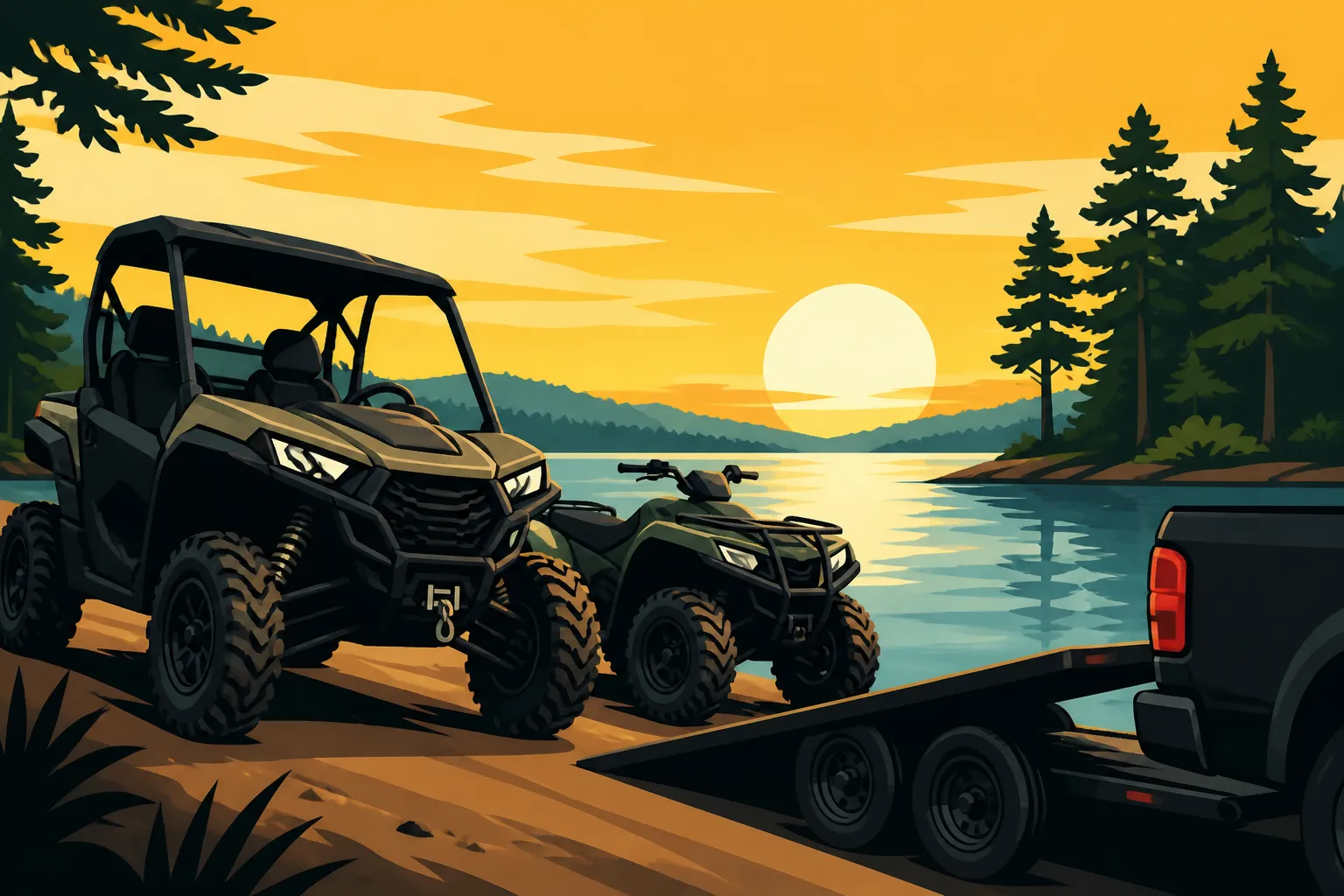
Badin Lake OHV Trail Complex is in the Uwharrie National Forest, where a riding day often involves trailering machines, unloading on uneven ground, and getting several people organized before anyone starts riding. An early arrival gives you space to handle those tasks calmly rather than trying to fit them into a crowded parking area.
Think through the whole setup before you leave home. A truck and trailer need more room to maneuver than a single tow vehicle, and you may need to unload machines, secure the trailer, check tire pressure, and get helmets and eye protection on. If children or new riders are with you, allow extra time for fitting gear and explaining the plan. Rushing through those steps can lead to forgotten equipment or a machine left in an awkward position.
Early does not mean parking wherever there is open ground. Use the designated staging and parking areas, follow posted signs, and leave room for other vehicles to turn around or unload. Do not block gates, access routes, or areas that appear to be reserved for emergency or forest operations. If you arrive and the lot is filling, keep your group together while you decide where to park rather than letting several vehicles spread out in search of separate spaces.
For more on planning for the lot itself, see Parking a Trailer at a Badin Lake Trailhead. If you are weighing where to stay nearby, Camping at Arrowhead Near Badin Lake may help you think through an overnight plan that reduces the pressure to make a long drive before your ride.
Build in a buffer for permits and trail checks
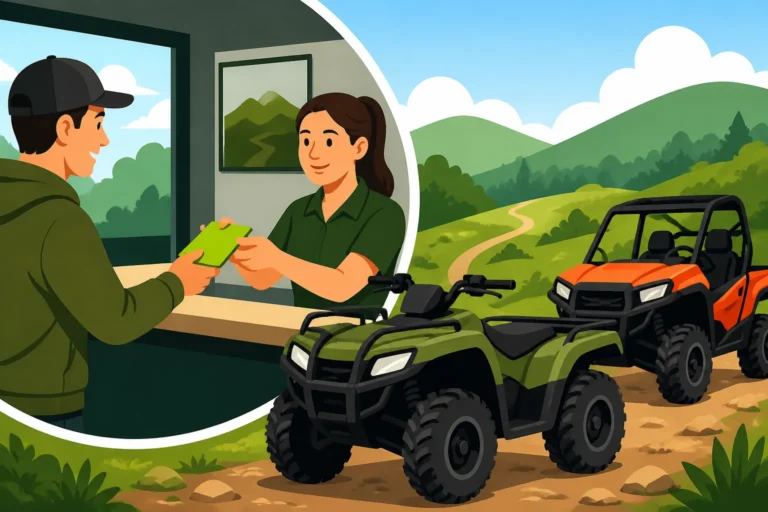
A common frustration is reaching the trailhead ready to ride, then realizing that a permit, a required item, or an important trail update still needs attention. Handle as much as possible before driving to the forest. Review the current information for your planned riding area and confirm how permits are obtained and displayed. Rules and arrangements can differ by place, so do not assume that a permit from another riding area covers Badin Lake.
The Uwharrie forest permit system is separate from North Carolina ATV registration or a title. A title is evidence of ownership; it is not a trail permit. For the distinction between riding access and vehicle paperwork, see North Carolina’s Forest Day Permit and Badin Lake’s Season Permit. Before your trip, confirm which permit applies to your planned visit, whether it is required for each machine, and where it should be displayed.
Check for closures or changed conditions before you load the trailer, then check again before riding. A trail that was open on a previous visit may not be available during your next one. Weather, maintenance, and other forest operations can affect access. North Carolina Trail Conditions Before You Ride and North Carolina Trail Closures to Check are useful starting points for building this check into your routine.
Make a practical arrival plan
Work backward from the time you want to ride
Rather than choosing an arrival time by guesswork, estimate how long each part of the morning will take. Include the drive, any stop for fuel, parking, unloading, permit steps, a safety check, and a short group briefing. Then add a buffer for the unexpected: a slow trailer connection, a missing glove, or a machine that needs attention.
| Planning step | What to account for | Why it helps |
|---|---|---|
| Before leaving home | Permits, forest notices, maps, fuel, and required riding gear | Reduces last-minute searching at the trailhead |
| On arrival | Parking, trailer positioning, unloading, and securing equipment | Helps prevent rushed or obstructive setup |
| Before riding | Machine checks, rider gear, route choice, and group plan | Gives everyone a clear, safer start |
| If the area is busy | Legal parking, alternate plans, and a decision point | Keeps frustration from turning into unsafe improvisation |
For a family or group, agree on a realistic “ready to ride” time instead of only a time to arrive. If you tell everyone to meet at the staging area at dawn but have not decided who brings tools, snacks, or the map, the group can still lose time. One person can be responsible for checking the route, another for confirming permits, and another for making sure everyone has protective equipment.
Also decide in advance what you will do if parking is full or the area is unexpectedly closed. That might mean waiting only where permitted, choosing another legal riding plan, or turning the trip into a non-riding day. A backup plan is especially useful when several vehicles are traveling together; it prevents the group from splitting up while people make separate decisions.
Check your route and map before unloading
Do not wait until you are standing beside the trailer to work out where the group wants to go. Review the trail map before the trip, identify a manageable first section, and make sure everyone understands where the group will regroup if riders get separated. The complex has multiple named trails and differing levels of difficulty, so a route that suits one experienced rider may not be a comfortable first choice for a beginner.
A navigation app such as onX Offroad can be useful for reviewing mapped routes and helping your group understand the area before arrival. It should support—not replace—official forest information, posted signs, and any rules that apply to the trails. Download or prepare the information you expect to need before entering an area where phone service may be unreliable. Do not assume that a phone will load a map or provide dependable navigation once you are riding.
Use North Carolina Forest Trail Maps alongside trailhead information to orient yourself, and review Badin Lake’s Eight Named Trails if you want to compare route options before the trip. In the staging area, take a moment to match your plan to current signs. If something does not line up, pause and clarify rather than continuing based only on a screen.
Prepare people and machines before heading out
Make unloading a deliberate routine
A good staging routine keeps the busy work from spilling into the riding area. Park only in an allowed space, set the tow vehicle and trailer securely, and keep loose equipment contained. Avoid unloading where other drivers need to pass or where a machine could roll into a traffic lane. If several people are helping, assign clear tasks so no one assumes someone else has checked the tie-downs or moved a ramp.
Before starting a machine, do a brief walk-around. Look for obvious tire damage, loose parts, leaks, or anything that changed during the drive. Check that the controls work as expected and that the machine is carrying only what the riders can secure safely. A small issue is easier to address in a staging area than partway along a trail.
Make sure each rider has a helmet and appropriate eye protection, and check that gear fits before the group departs. New riders may need help with basic controls and trail etiquette. A short conversation about speed, following distance, hand signals, and where to stop can prevent confusion later. On narrow trails, riders should be prepared to share space patiently rather than assume they can pass wherever they choose. North Carolina Trail Etiquette on Narrow Trails offers a useful reminder to discuss considerate riding before setting off.
Choose a route that fits the least experienced rider
The best plan is not necessarily the longest loop or the most challenging trail. If the group includes a first-time rider, a young rider, or someone returning after a long break, choose a route that allows them to build confidence without feeling pressured to keep up. Talk openly about turning around. It is much easier to change the plan before a rider is tired or anxious than after the group has committed to a difficult section.
Keep the group size and machine spacing manageable. Agree on a lead rider and a sweep rider, and decide where you will stop to count heads. If someone has to pull over, the rest of the group should know whether to wait at the next safe spot or turn back. A map app such as onX Offroad may help with orientation, but group communication and attention to trail signs remain essential.
If you are visiting for the first time, set a conservative goal for the day. You might ride a shorter route, return to the staging area for a break, and then decide whether everyone is ready to continue. That flexibility is part of good planning, not a failure to make the most of the trip.
Handle crowds and changing conditions calmly
Have a backup plan when parking is crowded
Arriving early improves your odds of a smooth setup, but it cannot guarantee an open space. If the staging area is already busy, do not create a new parking spot on unmarked ground or unload where you will obstruct traffic. Follow signs and staff directions, and be patient while vehicles move through a tight area.
If there is no legal, practical place to park and unload, consider changing your plan. You may wait only if there is a safe and permitted place to do so, or choose another activity and return another day. This can feel disappointing after a long drive, especially with children or friends who have been looking forward to riding. Still, forcing a setup into an unsafe space can create a bigger problem than postponing the ride.
This is another reason to make the trip’s decision points clear. Before you leave home, agree on how long the group is willing to wait, who will check for updated information, and what the alternative is. Use onX Offroad or another map resource to help you review your broader plan, but verify that any alternate destination is open and suitable before driving there.
Leave the staging area ready for the next group
When you return, take the same care you used during arrival. Keep machines and gear within your parking space while loading, watch for people moving between vehicles, and avoid leaving trash or loose equipment behind. If mud or debris has accumulated, use only designated areas and follow local instructions. A tidy, considerate departure makes the busy staging area easier for the next group to use.
Do one final check before leaving: count riders, secure the trailer load, confirm that ramps and tie-downs are stowed, and look around for gloves, tools, water bottles, or paperwork. It is frustrating to discover a missing item once you are already on the road, and unsecured equipment can create a hazard during the drive home.
An early start works best when it is paired with preparation and flexibility. Check the trail and permit information before the trip, give unloading enough time, choose routes that fit the whole group, and be willing to change plans if parking or conditions are not right. Those habits make a day at Badin Lake more orderly from the first trailer maneuver to the final tie-down.
Disclaimer
This article is for general informational purposes only and does not constitute professional advice. Laws, prices and regulations vary by location and change over time. Consult a qualified professional for guidance on your specific situation.