Where to Camp Near Brown Mountain
Finding a campsite near Brown Mountain can take more planning than the ride itself: a nearby campground may not allow ATV use, and trail access does not automatically include overnight parking. This guide compares camping options around the Brown Mountain OHV area, explains how to pair a campsite with a trail day, and helps you check access, permits, and practical details before you go.
Where to camp near Brown Mountain
Brown Mountain OHV Trail Complex sits in the Grandfather Ranger District of Pisgah National Forest, within reach of communities such as Morganton and Lenoir. Camping choices range from forest campgrounds to private stays and state park campsites. The right one depends on your vehicle, your group, and how much you want to drive between camp and trail.
| Camping option | Best for | What to check before booking |
|---|---|---|
| Mortimer Campground | A forest setting near the Wilson Creek area | Whether it is open, what facilities are available, and whether your vehicle and trailer fit |
| Brown Mountain Beach Resort | Campers looking for a private stay near Collettsville and Wilson Creek | Site type, vehicle limits, reservations, and rules for machines and trailers |
| Lake James State Park | Families or groups combining camping with lake activities | Which campground suits your setup, reservation availability, and rules for motorized vehicles |
| Other private campgrounds and lodging near Morganton or Lenoir | Travelers who want services or more lodging choices | Distance to the trailhead, trailer parking, and whether overnight machine storage is allowed |
Campground facilities, operating schedules, and access conditions can change. Confirm details with the campground or land manager directly before you set out, especially if you are traveling with a large trailer or plan to camp outside the main season.
Mortimer Campground and the Wilson Creek area
Mortimer Campground is a forest-camping option to investigate when you want a more wooded setting in the broader Wilson Creek area. It may appeal to riders who prefer a quieter base than a town campground, but do not assume that its location means you can ride straight from camp to Brown Mountain’s OHV trails. The roads between a campground and a trail system are not automatically open to ATVs or UTVs.
Before choosing Mortimer, check its current status and available facilities with the Forest Service. Ask specifically about the type and length of vehicle or trailer that can fit at a site, whether potable water or restrooms are available, and what rules apply to generators and quiet hours. A campsite that works for a tent and a pickup may not work for a long toy hauler or a group bringing several machines.
Also plan for the possibility that forest roads are rough, narrow, or affected by weather. If your group is arriving after dark, confirm the route and campground entrance in advance rather than relying on a phone map at the last turn. For a broader look at camp options near trail access, see Camping Near a North Carolina Trailhead.
Private campgrounds near Collettsville, Morganton, and Lenoir
Private campgrounds and lodging can be useful if you want a wider choice of accommodations or need amenities that a forest site may not offer. Brown Mountain Beach Resort, in the Collettsville area near Wilson Creek, is one nearby private option to research. Its location makes it worth considering for a trip built around the region, but you should confirm the specific lodging or campsite arrangement that suits your group.
Ask before booking whether the property accepts ATVs or UTVs, whether trailers can be parked at the site, and whether machines can be stored overnight. A campground may welcome tent campers but have limited room for a trailer, or it may allow trailer parking without allowing riding on the property. These details matter when your machine is too wide or heavy to maneuver comfortably in a tight campsite.
Campgrounds and lodging around Morganton or Lenoir can offer another practical base, especially if you want restaurants, fuel, or supplies nearby. The tradeoff is that you may have a longer drive to the trailhead. Search by the exact route you expect to use, then call to confirm trailer parking and machine policies rather than judging a stay by map distance alone.
Lake James State Park and other non-trail camp bases
Lake James State Park can suit families or groups who want to add lake time to a mountain-area visit. It is not an OHV campground, so treat it as a separate recreation base rather than a place to ride from camp. Check the park’s camping options, access rules, and vehicle restrictions directly before making plans.
This distinction is important: a campground can be near a riding area without being part of that riding area. You may need to trailer your machine from camp to the designated trailhead, leave it on the trailer while driving, and use only authorized routes once you arrive. Confirm that your campsite has room for the tow vehicle and trailer together, not just the vehicle.
If your priority is riding rather than lake activities, compare the full trip rather than just the campsite. A slightly farther campground with dependable trailer space may be easier than a closer site with tight turns, limited parking, or rules that do not suit your group.
Plan the campsite and riding day together
A good Brown Mountain weekend depends on more than choosing a place to sleep. You will need to coordinate trail access, permits, machine transport, and the campground’s own rules. Review Brown Mountain OHV Trail System and Riding Brown Mountain for a Day while building your itinerary, then confirm details with the relevant land manager and campground.
Check trail access and seasonal details
Brown Mountain’s trails are part of a managed OHV system, and access can be affected by season, maintenance, weather, or temporary closures. Do not assume that a campground booking means the trails will be open when you arrive. Check official forest notices close to your trip and again before leaving home. Brown Mountain’s April to January Season provides useful context for planning around the trail season, but a season window is not a guarantee that every route will be open on a particular day.
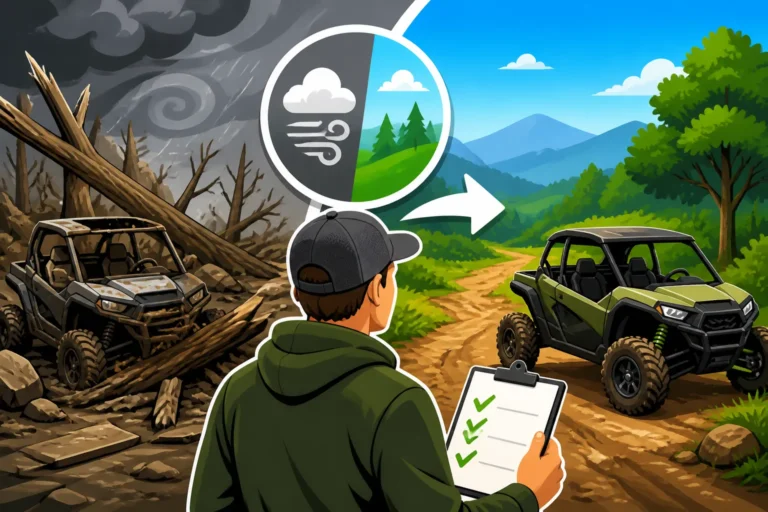
Weather can change the experience quickly. Heavy rain may make roads and trail surfaces difficult, while storm damage can affect access even after a campground is operating normally. Look at North Carolina Trail Conditions Before You Ride and Checking a Forest Alert Before You Drive as part of your departure routine. If you arrive to find a closure, follow posted directions rather than trying an unmarked alternate route.
Keep a flexible plan. If Brown Mountain is closed or the conditions are not suitable, use the time for a shorter local outing, a meal in town, or a non-motorized activity. A backup plan is especially useful when you have already driven a long distance or are traveling with children.
Understand permits and access rules
Forest OHV permits are separate from campground reservations. A campsite booking does not automatically authorize riding, and a trail permit does not grant permission to use a campground or park. Check North Carolina Forest OHV Permits for the permit information relevant to your route and riding area, then confirm where permits are sold and where they must be displayed or carried.
Be precise about which machine each permit covers. A group arriving with multiple ATVs or UTVs should not assume that one permit covers every vehicle. Read the applicable rules carefully and make sure every rider understands where riding is allowed, what equipment is required, and which trails are closed to their machine.
Navigation apps can help you understand the surrounding roads and trail network, but they should not replace official maps or posted signs. onX Offroad can be useful for reviewing routes and organizing a ride plan before you leave. Use it as a planning aid, then compare what it shows with current Forest Service information and conditions at the trailhead. Do not treat a digital route as permission to ride on a road or trail that is closed or not designated for OHV use.
Plan trailer parking and machine transport
For most visitors, trailering from the campsite to the designated staging area is the simplest way to keep the trip compliant and predictable. Do not ride an ATV or UTV along public roads between camp and trail simply because the trailhead appears close. Road access rules vary, and a nearby road may not be open to your machine.
Before booking, ask the campground whether a truck and trailer can remain together at the site or in a separate parking area. If the campground has limited space, ask whether there is a suitable overflow lot and whether it is secure. Then check the trailhead’s parking arrangements, including whether a trailer can fit and whether overnight parking is allowed. A daytime staging lot should not be assumed to permit overnight stays.
If the trailhead parking area is busy, arrive with enough time to unload without blocking other visitors. Keep ramps, tie-downs, and gear organized, and avoid leaving equipment in a way that narrows the lane. A map app such as onX Offroad may help you prepare your route to the staging area, but follow local signs and ranger instructions when you arrive.
Choose a campsite that fits your group
The closest campsite is not always the most comfortable choice. Think through who is traveling, what you are bringing, and what level of convenience you need after a day on the trail. A little planning can prevent the familiar end-of-day frustration of discovering that the trailer cannot fit, the site is too small, or the group has no easy way to clean up.
Match the site to your vehicle and trailer
Measure your complete setup before booking: tow vehicle, trailer, machine, and any space needed to maneuver. Ask the campground for site dimensions or a description of the access road if those details are not clear online. If your trailer is long or difficult to back, mention that when you call. A campground may have a suitable site but a tight entrance or sharp turn that makes arrival stressful.
For tent campers, check whether the site is level enough for your tent and whether the parking spot is close by. For RV travelers, ask about hookups, surface conditions, and any restrictions on length or vehicle type. Do not assume that a site listed as “RV-friendly” will comfortably accommodate every rig.
Think about storage as well. Machines left outside overnight may be exposed to rain, mud, or public access. Ask whether the campground has rules about covers, tie-downs, fuel containers, or leaving a machine attached to a trailer. Pack locks and basic weather protection, but follow the property’s safety rules for storing fuel and equipment.
Consider children, pets, and quieter nights
Families may prefer a campground with clearly defined sites, restrooms, and nearby non-riding activities. If children are coming along, decide how they will spend time when adults are riding. Not every campground is close enough to a playground, lake access, or town services to make an unplanned afternoon easy.
Pets bring their own considerations. Confirm leash rules, whether pets are allowed at the campsite, and whether they can be left unattended. A busy trail weekend can mean engine noise, unfamiliar dogs, and vehicles moving through the campground, so a pet that is unsettled by noise may need a quieter site or a different arrangement.
After a full day outdoors, a peaceful evening can matter as much as trail proximity. Ask about quiet hours and generator policies, and be considerate of nearby campers when loading or unloading machines. Starting engines early or idling for long periods can turn an otherwise enjoyable campground into a frustrating place for everyone.
Build in time for supplies and cleanup
Bring enough drinking water, food, and basic supplies for the time you expect to spend away from town. Do not rely on finding fuel, groceries, or repair supplies at the trailhead. Before you leave, identify places in or around Morganton and Lenoir where you can purchase essentials, and note their locations in case cell service is limited.
Mud and dust are part of riding, but campsite rules still apply. Ask whether the property has a wash area or permits rinsing machines. If it does not, bring brushes, towels, and a plan for containing dirt before it gets into your tent or vehicle. Avoid washing mud into a stream or drainage area, and never assume that a campground’s water supply is intended for cleaning machines.
It is also sensible to plan for minor repairs. Carry basic tools, a tire repair kit suited to your machine, and any parts you are likely to need. For a group ride, agree on a turnaround time and a meeting point before leaving the staging area. A little preparation keeps a mechanical delay from becoming a late, stressful trip back to camp.
A practical checklist before you leave
A simple checklist helps connect the campground reservation with the actual ride. Keep confirmations, permits, and maps available offline, especially if you expect weak mobile coverage. onX Offroad can help organize a route and give your group a shared reference, but use official notices for closures and trail rules.
Confirm these details with the campground
Call or message the campground before you depart and verify the parts of the stay that affect your setup. Ask about:
- The exact site type and whether it accommodates your tent, RV, or trailer
- Vehicle and trailer parking, including overflow arrangements
- Rules for storing or operating ATVs and UTVs on the property
- Water, restrooms, electricity, and waste disposal
- Quiet hours, generator use, pets, and check-in procedures
- Road conditions and directions for your vehicle
If you are arriving late, make sure you know how to check in and where to park without disturbing other guests. Save the campground’s address and contact details somewhere you can access without cellular service.
Confirm these details for the ride
Before loading, verify that the trail system is open and that your planned route is allowed for your machine. Check the applicable permit requirements, any seasonal restrictions, and the trailhead’s parking rules. Make sure each rider has the required safety gear and understands the group’s plan.
On the day of the ride, read posted signs at the staging area and follow any staff or ranger instructions. If conditions look different from what you expected, reassess rather than pressing on. A closed trail, washed-out approach, or crowded staging area is a good reason to adjust the day’s plan.
For the campsite, trailhead, and route between them, keep a realistic schedule. Leave time to unload, use the trails responsibly, refuel if needed, and return before dark. Brown Mountain can be a rewarding place to ride, but the best camping plan is one that makes the logistics feel manageable rather than rushed.
Disclaimer
This article is for general informational purposes only and does not constitute professional advice. Laws, prices and regulations vary by location and change over time. Consult a qualified professional for guidance on your specific situation.