North Carolina Rules for Riding a Wildlife Opening
North Carolina rules for riding a wildlife opening: stay on routes officially open to motor vehicles; an OHV permit does not allow cross-country access.
Your sticker stops at the state line.
Non-resident permits, what they cost and how long they last, and which states honor each other’s — or, increasingly, none at all.
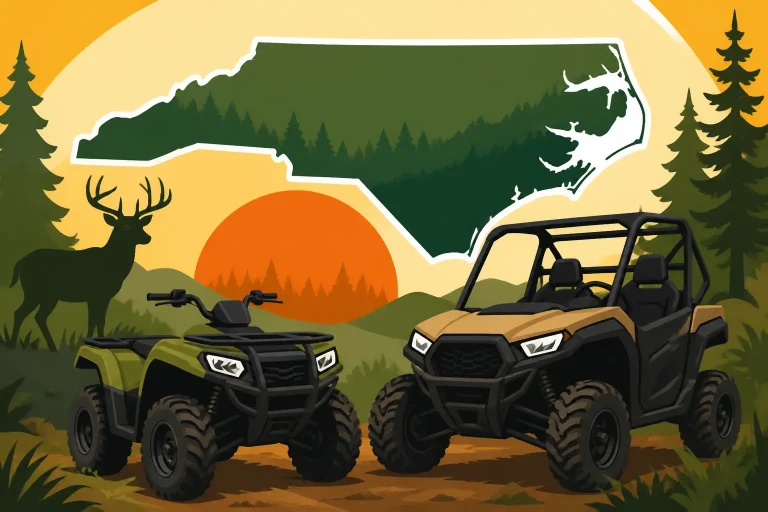
North Carolina rules for riding a wildlife opening: stay on routes officially open to motor vehicles; an OHV permit does not allow cross-country access.
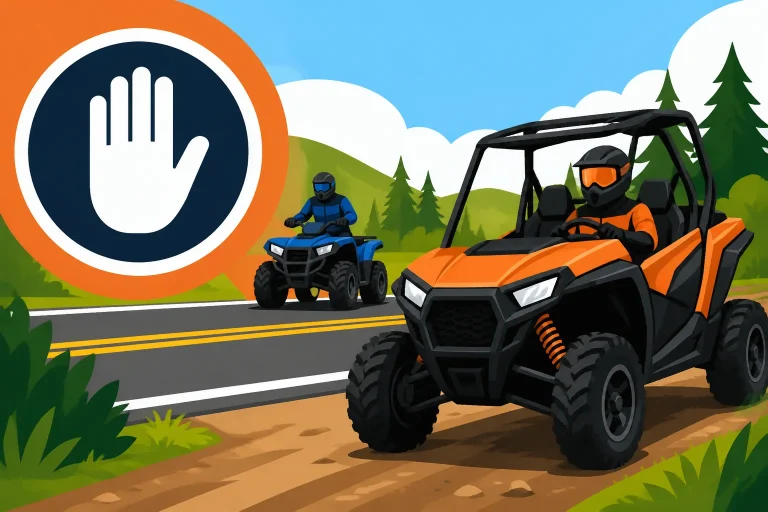
North Carolina Parkway crossings are not automatically open to ATVs or UTVs; verify the exact route and follow posted restrictions before riding.
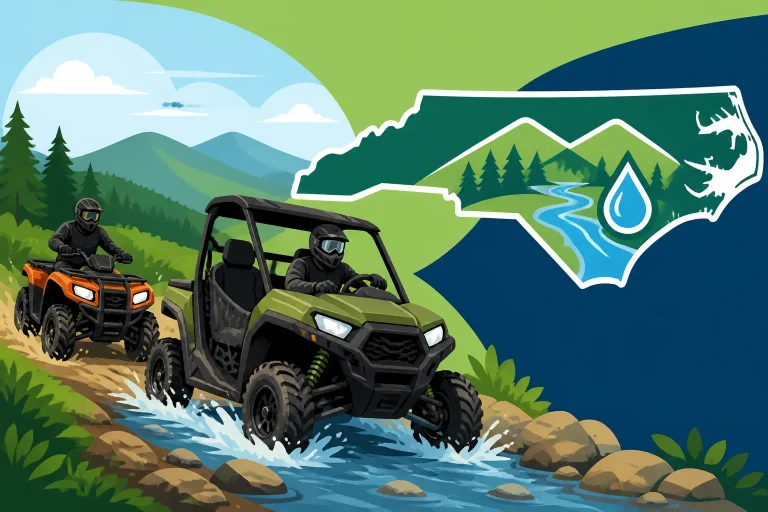
North Carolina watershed riding depends on land access and designated routes; check maps, closures, and forest permits before unloading an ATV or UTV.
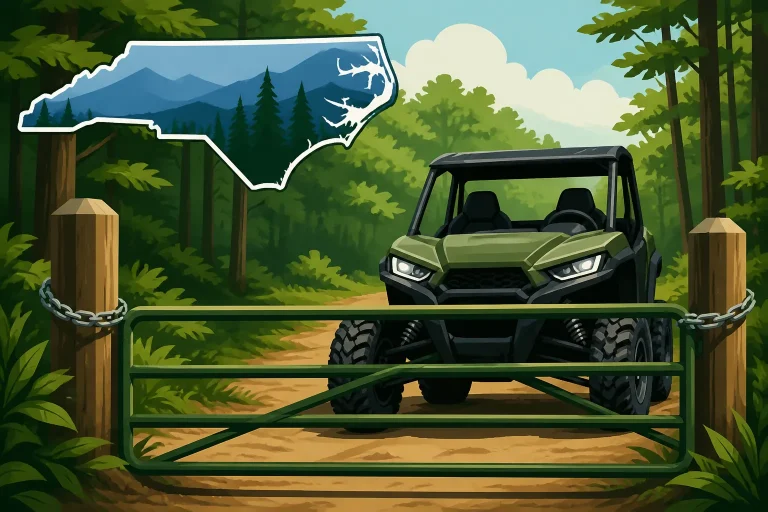
Gated roads in North Carolina forests are not automatically open to ATVs or UTVs; check route maps, signs, closures, and permit rules before riding.
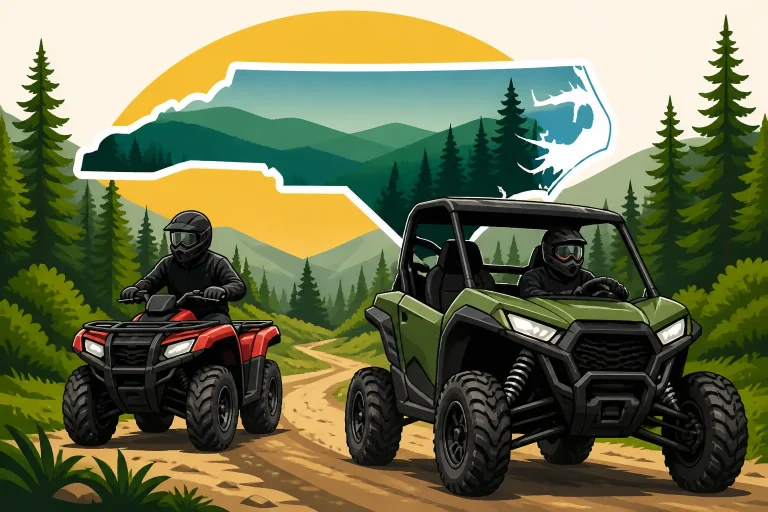
North Carolina forest roads are not automatically open to ATVs or UTVs; check the current motor-vehicle map, route designation and permit before riding.
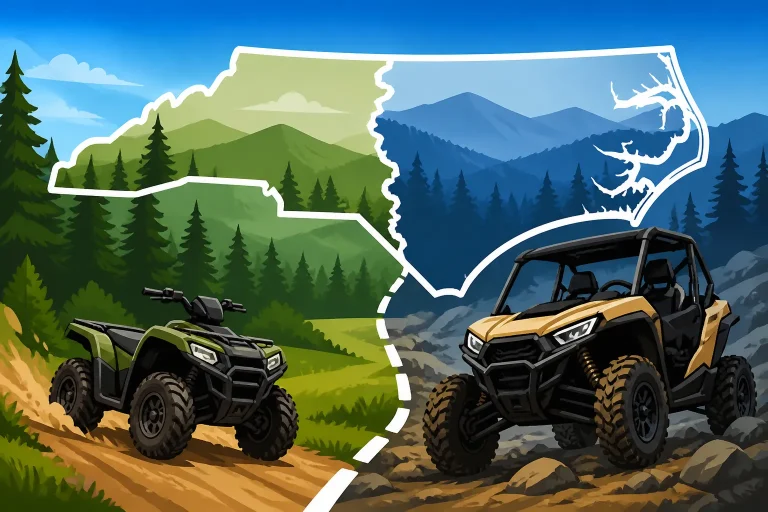
North Carolina wilderness boundaries are no-go lines for ATVs and UTVs; ride only on routes confirmed open outside them, with current maps and permits.
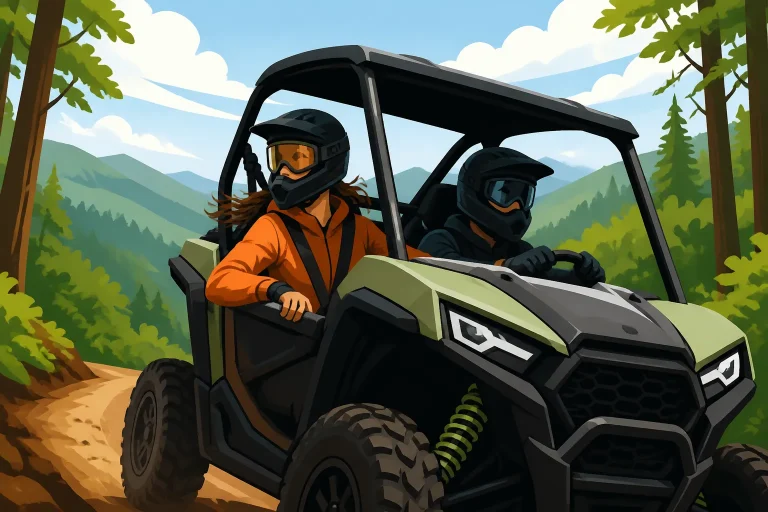
A passenger on a North Carolina forest trail must ride in a machine built for two, with suitable gear and the correct forest permit.
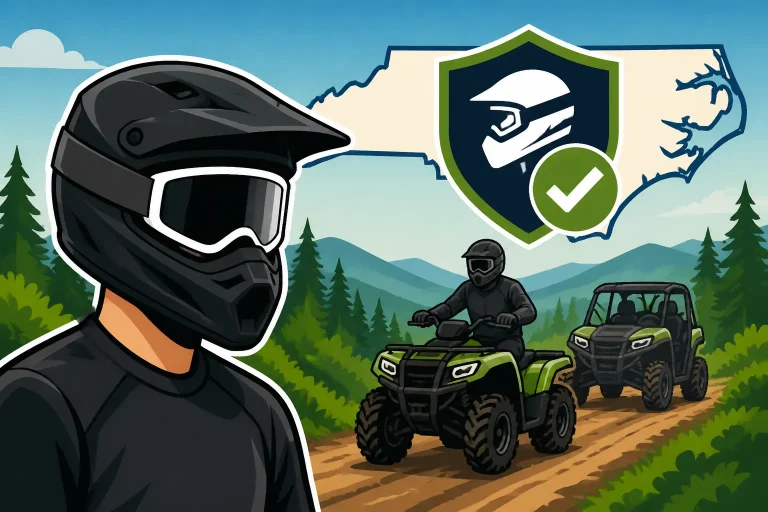
North Carolina forest-trail helmet rules depend on rider age and trail requirements; check both before riding, especially when bringing visitors or minors.
Renting an ATV or UTV to a teen in North Carolina depends on state supervision rules, rental policies, permits, and proper safety gear.
Night riding on a North Carolina forest trail depends on posted hours, permits, working lights, and careful planning—not simply having headlights.