Splitting a Weekend Between Two Ranger Districts
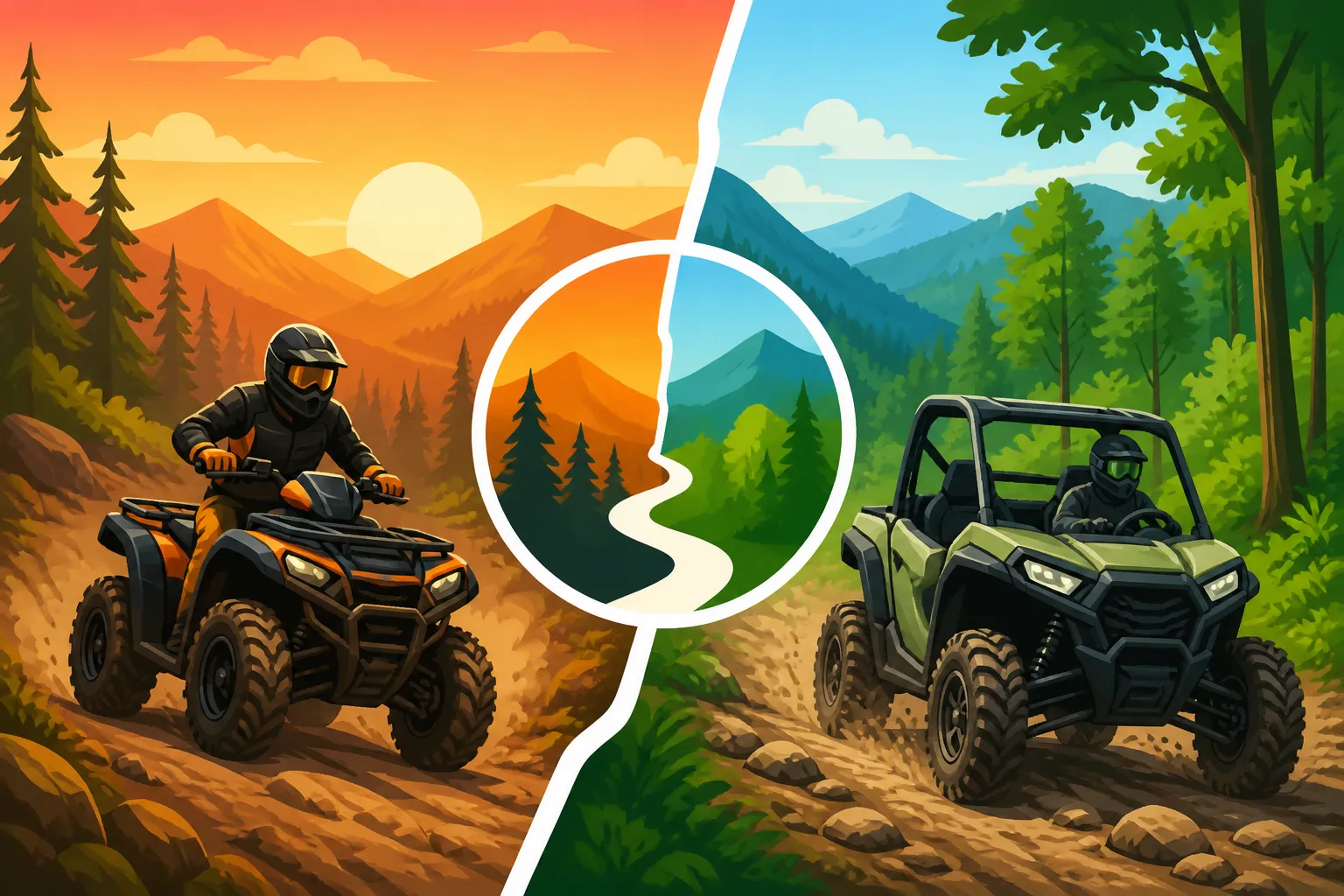
A weekend split between Brown Mountain and Badin Lake can sound like an easy way to sample two North Carolina riding areas, until you factor in drive time, different forest rules, trail conditions, and where you’ll sleep. This guide helps you plan the handoff between the Grandfather and Uwharrie areas, avoid a rushed itinerary, and arrive prepared for each ride.
Choose two areas that make sense together
Brown Mountain and Badin Lake offer a clear two-district contrast
Brown Mountain OHV Trail System is in the Grandfather Ranger District of the Pisgah National Forest, while Badin Lake OHV Trail Complex is in the Uwharrie National Forest. They’re a natural pairing if your goal is to experience two distinct North Carolina riding settings in one trip: Brown Mountain’s mountain terrain and Badin Lake’s Uwharrie trails.
The tradeoff is travel. These aren’t neighboring trailheads, so a two-area weekend involves more than a short hop between staging lots. You’ll need to account for the drive across the state, time to load and unload, and the possibility that a slow trail day or road delay eats into your second ride. Check the route between your chosen lodging and staging areas before you commit to the schedule.
It helps to think of the trip as two separate riding days connected by a planned transfer, not as one continuous trail weekend. For a closer look at the first stop, start with Brown Mountain OHV Trail System. For the second, review Badin Lake OHV Trail Complex. Each area has its own trail layout and access details, so don’t assume a plan that works at one will automatically work at the other.
Decide whether a two-area weekend fits your riding style
A two-district plan is a good fit if your group enjoys variety and is comfortable spending part of the weekend on the road. It can also work well when different riders want different kinds of terrain. One person may be looking forward to mountain climbs, while another prefers exploring the Uwharrie trail network.
It’s a less comfortable fit if your group wants long, unhurried riding days, has young or inexperienced riders, or is towing a large trailer and would rather avoid moving camp. In those situations, it may be more enjoyable to spend the whole weekend in one area and save the other for a separate trip. You’ll lose the novelty of riding two forests, but gain time for breaks, route adjustments, and a second loop if everyone is having a good day.
Before choosing, discuss what “a full riding day” means to your group. A family with children may want a shorter loop and a long lunch break. A group of experienced riders may be happy with an early start and a more ambitious plan. Be honest about the slowest rider’s pace, not just the fastest person’s expectations.
Build a weekend schedule around the transfer
Put the longer ride and the move on separate days
A practical arrangement is to ride one area on Saturday, travel and stay near the second area that evening, then ride the other on Sunday. This avoids trying to finish a full day on one trail system and still make a long transfer before dark. It also gives you a clear point to reassess the plan if weather, fatigue, or a mechanical issue changes your timing.
Choose the order based on where you’re starting from and where you can stay overnight, rather than assuming one area always belongs on Saturday. If you’re coming from the Charlotte region, the route and lodging options may make one order more convenient; if you’re coming from the mountains or the Triangle, the answer may be different. Use a map to compare the full trip, including the drive home after Sunday’s ride.
A sample plan might look like this:
| Trip period | Main plan | Leave room for |
|---|---|---|
| Friday evening | Travel to lodging near the first riding area | Check-in, trailer parking, and a final weather and access review |
| Saturday | Ride Brown Mountain or Badin Lake | Staging, permit requirements, breaks, fuel, and loading time |
| Saturday evening | Drive to lodging near the second area | Traffic, food, unloading, and a vehicle check |
| Sunday | Ride the second area, then head home | A shorter ride if the group needs an earlier departure |
Treat this as a framework, not a promise that every trail or facility will be open. Before leaving home, check the official forest information for both destinations and confirm that your intended riding area is accessible. For system-specific season details, see Brown Mountain’s April to January Season and Badin Lake’s April to December Season. The dates and access conditions matter to your itinerary, so confirm the current notices rather than relying on an old trip plan.
Keep the transfer day from becoming a second workday
Moving between riding areas takes longer than the drive alone. You may need to load machines, secure loose gear, clean mud from lights or plates, refuel the tow vehicle, and find a place to park the trailer at your next stop. If you’re riding until late afternoon, these chores can make an ambitious evening transfer feel exhausting.
Pack so you can move without unpacking everything at each stop. Keep riding clothes, helmets, goggles, and a small first-aid kit easy to reach. Store tools and recovery gear where they won’t be buried under overnight bags. If you have multiple machines, agree ahead of time who is checking tie-downs, lights, and trailer connections before the group pulls out.
Don’t plan a final loop that leaves no margin before closing time or dark. Forest gates, trail access, and daylight are separate considerations; a trail ride that runs late can create a stressful return even when the route itself is familiar. Set a group turnaround time before the ride begins, and make sure every rider knows where the vehicles are staged.
Plan permits, maps, and machine needs separately
Treat each forest’s access requirements as its own checklist
A common planning mistake is assuming that a pass, permit, or riding credential from one area covers the next. Brown Mountain and Badin Lake are separate riding destinations, so check the requirements for each system individually. Confirm what applies to your machine, where the permit should be obtained or displayed, and whether any rider needs a safety certificate.
The checklist can include the trail permit, age-related riding requirements, machine-specific rules, and any restrictions on passengers or equipment. For a broader explanation of access permits, review North Carolina Forest OHV Permits. If you’re riding with someone who may need a certificate, North Carolina ATV Safety Certificate Requirements explains why birth year can matter. Don’t leave these checks until you reach a trailhead, where a missing document or permit can waste the group’s riding time.
Keep proof of each requirement easy to show. Save confirmation details on your phone, but consider carrying paper copies when practical, especially if you’ll be in an area with weak cell service. A photo or app screen may be useful for your own records, but don’t assume it replaces a document or display method that the forest specifically requires.
Use digital maps as a supplement, not the final authority
Digital mapping can help you visualize the drive, mark a fuel stop, and keep the group oriented. onX Offroad may be useful for reviewing off-road routes and saving map information before you leave an area with reliable service. Download what you need in advance if your chosen tool supports offline access, then check that it opens with your phone in airplane mode.
Still, a recreational mapping app should not be your only source for deciding whether a road or trail is open to your machine. Boundaries, closures, and permitted uses can change, and a line displayed on a map doesn’t necessarily mean the route is legally open. Compare app information with official forest maps and closure notices. The same caution applies to screenshots shared in a group chat: they may be helpful context, but they can be out of date.
Keep the phone charged and bring a backup power source, but don’t make every rider dependent on one person’s device. Agree on a meeting point if the group gets separated, and carry a paper map or another navigation option if that suits your trip. For more on reading official trail information, see North Carolina Forest Trail Maps.
Make the ride comfortable and leave room for changes
Match the trail plan to the least experienced rider
A weekend itinerary can unravel when the group plans around its most confident rider instead of its least experienced one. A technical section that feels like a quick challenge to an expert may be tiring or intimidating for a novice. Before choosing a route, talk about the machines, skill levels, and comfort with steep, rocky, or uneven terrain.
Set a conservative first-day goal, particularly if the group is unfamiliar with the area. You can always add distance if everyone is feeling good and conditions allow. It’s harder to recover a pleasant day after riders are tired, hungry, or worried about getting back before dark. Check the posted trail difficulty and local guidance, and don’t treat an online ride report as a guarantee that the same conditions will be waiting for you.
If children are riding, plan for more frequent breaks and keep them within the level of supervision and riding conditions required by law. Pack water, snacks, weather-appropriate layers, eye protection, and any medication your group may need. North Carolina Trails for Beginners can help you think through choosing a suitable starting point, while Riding With Children at a North Carolina Park offers a useful angle on making a family ride more manageable.
Have a backup plan for closures, weather, and fatigue
A two-area weekend has more moving parts than a single-destination trip. Heavy rain, storm damage, a closure notice, or a mechanical problem can change the plan at either end. Check notices before departure and again before you tow to each staging area. If one forest is unavailable, decide in advance whether you’ll stay near the open area, switch to a non-riding activity, or head home.
Avoid making your backup plan depend on riding an unfamiliar trail without checking its access rules. A route that appears close on a map may cross land where your machine is not allowed, or may not be suitable for your vehicle. Keep your choices simple: a shorter ride in the open area, an extra night near the first stop, or a trip focused on one destination rather than forcing the original itinerary.
Finally, build fatigue into your decision-making. Towing, riding, loading, and navigating unfamiliar roads all take attention. If the group is worn out, shorten the Sunday ride or skip it. A less ambitious weekend is better than rushing a final loop, driving tired, or pushing a machine through terrain that no longer feels safe.
Disclaimer
This article is for general informational purposes only and does not constitute professional advice. Laws, prices and regulations vary by location and change over time. Consult a qualified professional for guidance on your specific situation.