North Carolina Rules for a Machine Over the Width Limit
A side-by-side can have a valid North Carolina forest permit and still be too wide for the trail you want to ride. The key is that a permit does not guarantee access to every route: width limits can depend on the trail system, the route, and the rules posted for that area. Here’s how to check your machine before you haul it out.
There Is No Single Width Limit for Every North Carolina Trail
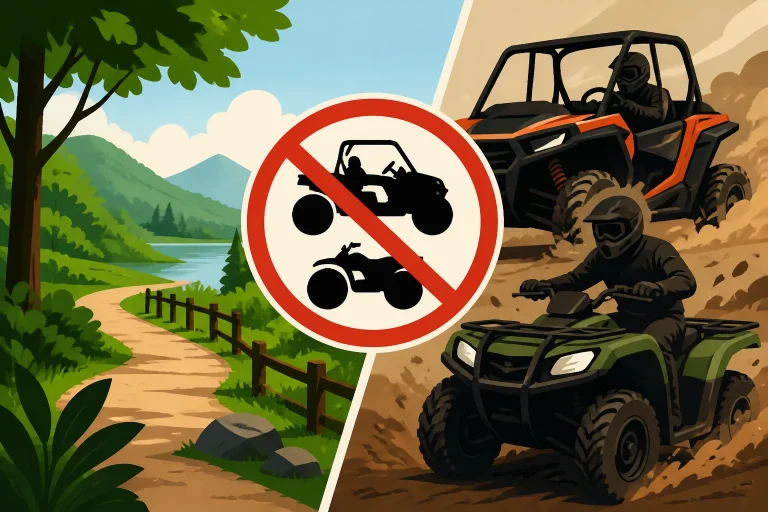
A machine’s width can determine whether it may use a particular off-highway vehicle trail. But there is not one width limit that automatically applies to every trail in North Carolina. A limit may be set for a specific trail system or route, and a trailhead sign or current land-manager notice may impose restrictions that differ from those elsewhere.
A limit of 50 inches is common on narrow ATV trails. Treat that as a reason to check, not as a statewide rule that answers every question. The permitted width, the kind of machine allowed, and the routes open to it can vary. A trail open to ATVs does not necessarily admit every UTV or side-by-side.
North Carolina’s national forest OHV areas include Brown Mountain, Badin Lake, and Wayehutta. Each has its own trail layout and operating information. Before planning a ride, check the current details for the specific area and route. The Brown Mountain OHV Trail System and Badin Lake OHV Trail Complex pages can help you narrow down what to verify.
A machine that is over the posted limit should be treated as ineligible for that route, even if:
- It is registered or titled in another state.
- You have purchased a North Carolina forest permit for it.
- It fits through the trail entrance.
- Another rider has taken a similar-looking machine onto the trail.
- The machine is described by a dealer as “trail ready.”
A permit addresses the applicable permit requirement; it does not turn a restricted trail into an approved route for a wider vehicle. If the trail rules limit access by width, the machine needs to meet that limit or stay off that trail.
| What to check | Why it matters |
|---|---|
| The width limit for the specific trail or route | A limit at one system may not apply at another |
| Which machine types the route allows | “Open to ATVs” may not mean open to all side-by-sides |
| How the land manager defines width | A published machine specification may not settle the question |
| Current notices and gate signs | Access rules and closures can change |
| Permit requirements | A permit does not override vehicle or route restrictions |
For permit basics, see North Carolina Forest OHV Permits and Which North Carolina Forests Take a Day Permit. Those requirements are separate from whether your machine fits a trail’s width rules.
How to Check Your Machine’s Width
Start with the exact route you plan to ride, not a general description of the forest. Look for width limits in the area’s official trail information, maps, signs, or notices. If the wording is unclear, contact the relevant forest office before making the trip. Ask about the specific trail and the exact machine, not just whether “UTVs” are allowed.
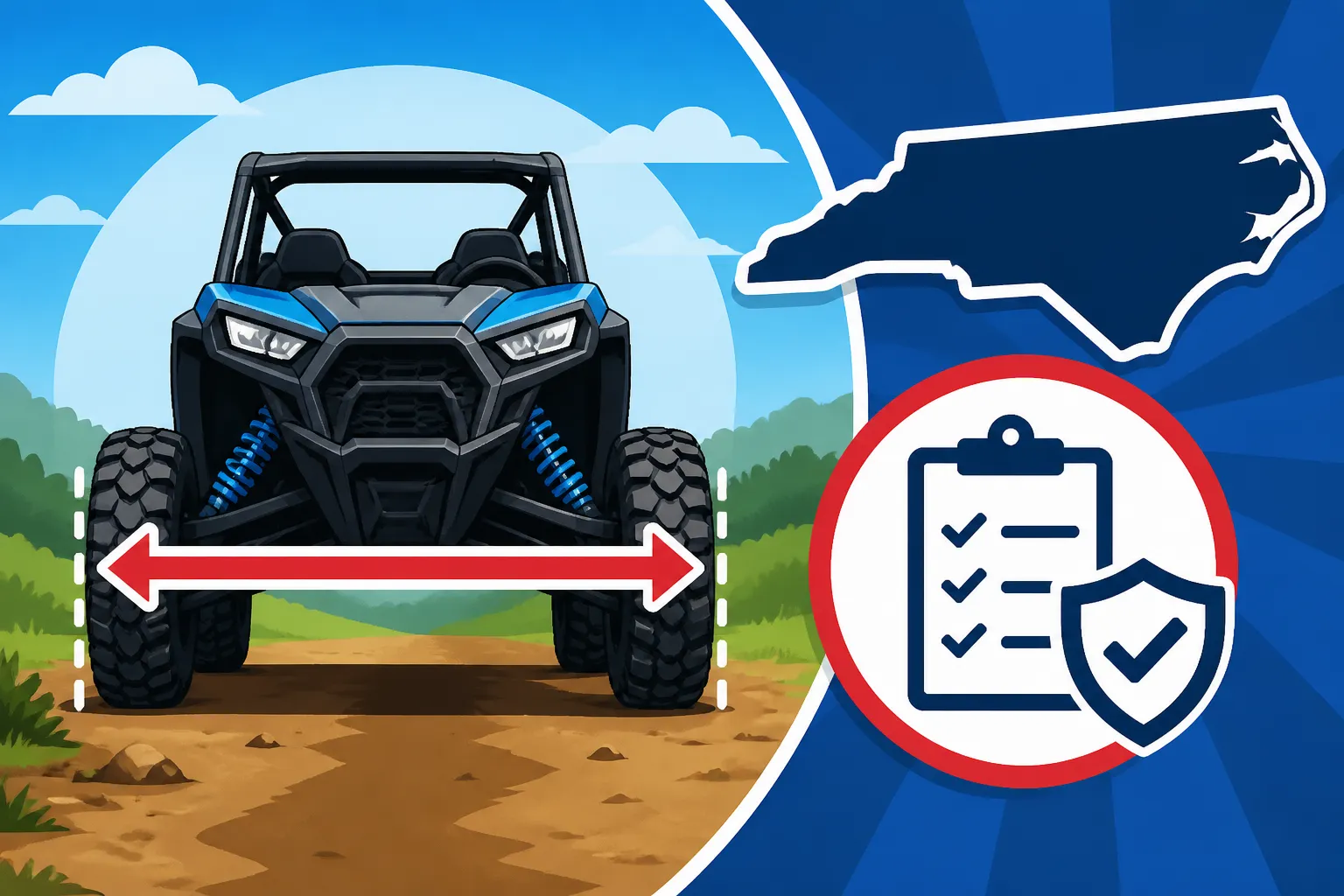
Then check your machine. A manufacturer’s published width is a useful starting point, but it may not answer how the land manager applies a trail limit. Tires, wheels, aftermarket parts, and other additions can affect the machine’s overall width. Don’t assume the number in a brochure is the final word.
A practical check before you travel:
- Find the route’s stated width limit and any machine-type restrictions.
- Look up your machine’s specifications, including its model and configuration.
- Measure the machine at its widest point in its current setup.
- Check whether accessories or modifications extend beyond the original body or wheels.
- Ask the land manager how width is determined if your measurement is close to the limit.
- Recheck notices before leaving, especially after storms or other closures.
Measuring at home is useful for planning, but it is not a substitute for the land manager’s definition. Some rules may specify what parts count or how a measurement is taken. If your machine is near the limit, get a clear answer before driving to the trailhead. A small difference between a listed measurement and the machine’s actual setup can matter.
Don’t try to solve uncertainty by relying on a gate opening. A machine may be physically able to enter and still violate the route’s rules. Nor is a pass from a previous visit proof that the route remains open to your machine. Check current conditions and requirements through North Carolina Trail Conditions Before You Ride.
A Forest Permit and Out-of-State Registration Do Not Cancel a Width Rule
North Carolina forest permits and trail restrictions are related to access, but they are different requirements. A permit may be needed to operate a machine in a designated forest OHV area. The trail’s vehicle-width rule determines whether that machine may use the route. Satisfying one requirement does not satisfy the other.
The same goes for out-of-state registration. A registration document from another state does not, by itself, give a wider machine permission to use a restricted trail. Check the applicable North Carolina permit and access rules, along with the local width restriction. Does North Carolina Honor Out-of-State Registration? explains why visitors should not assume that paperwork from home replaces North Carolina’s requirements.
Permit details may also differ by forest area and by the type of permit. Check the current information for your destination before you buy one. It is sensible to confirm both questions separately:
- Do you need a permit for this machine in this area?
- Is this machine allowed on the particular trail you plan to ride?
If the answer to the second question is no, having the correct permit does not make the route available to you. Do not ride beyond a posted restriction to reach another trail, and do not assume that a wide machine can use a route simply because it is marked as an OHV route.
A wider machine may still have legal places to ride, but those places must be verified. The North Carolina Trails for a Wide Machine overview can help you look for alternatives. Some routes may allow wider vehicles while nearby trails do not; access can depend on the specific route, not just the forest name.
Don’t Confuse a Trail Limit With the MUV Width Requirement
North Carolina also uses a width requirement in its rules for a modified utility vehicle, or MUV. That is a separate issue from whether a machine can ride a particular forest trail.
A machine over 58 inches wide may not meet the MUV width criterion. But being under 58 inches does not automatically make a machine an MUV or make it legal to drive on public roads. Other requirements apply to that classification, and a forest permit does not authorize road use. For the separate roadway question, see North Carolina’s Modified Utility Vehicle Route and North Carolina MUV Registration Requirements.
The distinction is straightforward:
- Trail width: Set by the rules for the particular OHV area or route. A common limit on narrow ATV trails is 50 inches, but check the route’s current requirements.
- MUV width: Part of a separate set of requirements for qualifying and registering an MUV for road use.
- Permit or registration: Addresses its own requirement; it does not waive the other two.
That means a machine can be too wide for one forest trail but still be usable on another route that allows its dimensions. Conversely, meeting a trail’s width limit does not establish that it qualifies as an MUV or can be driven on a public street.
If you cannot confirm that your machine meets the route’s width rule, choose a different route or riding area rather than testing the limit on the trail. Check the current trail information, follow posted signs, and contact the land manager when the measurement or vehicle category is uncertain. That small check can prevent a wasted trip and help keep restricted trails open for the machines they were designed to accommodate.
Disclaimer
This article is for general informational purposes only and does not constitute professional advice. Laws, prices and regulations vary by location and change over time. Consult a qualified professional for guidance on your specific situation.