Applying for a Special Use Permit From a District
Applying for a special use permit from a North Carolina forest district can sound like the next step for any group planning an ATV ride. Usually, it isn’t. These authorizations are generally for activities beyond ordinary recreation, such as organized events or commercial operations. Knowing when to contact a district—and what to prepare—can prevent confusion between a special use permit and a regular trail permit.
First decide whether your activity needs a special use permit
A special use permit is an authorization for a particular use of National Forest System land that is not simply ordinary, individual recreation. The district considers the proposed activity, its location and its likely effects before deciding whether it can be authorized and under what conditions.
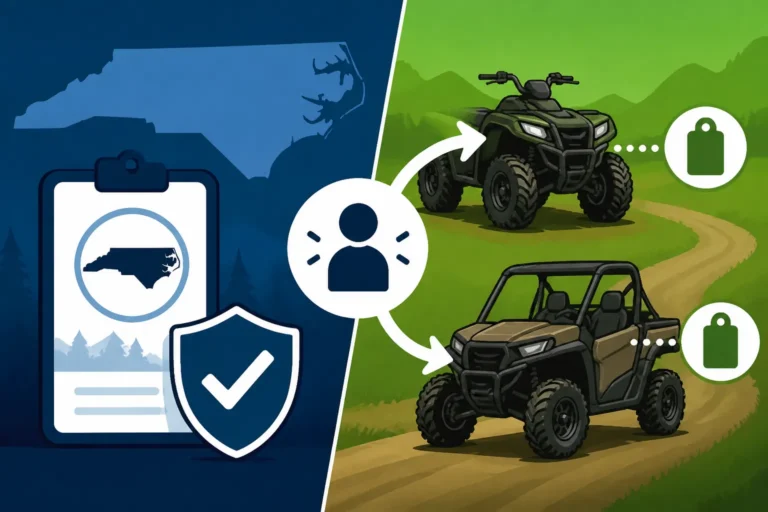
That makes it different from the permit a rider may need to use a designated OHV trail. A routine recreational trip with friends does not automatically become a special use simply because the group is large or the riders travel together. But an organized event, paid guided operation, commercial activity or filming project may need district review. The exact requirements depend on what you plan to do and where.
| Planned activity | What to check first |
|---|---|
| A personal ride on an open, designated trail | Trail access rules and any required per-vehicle permit |
| A club ride with a planned route, staging or other organized elements | Ask the district whether the event requires special use authorization |
| A race or other competitive event | Confirm whether the activity is allowed and what authorization it requires |
| A paid guiding or outfitting operation | Ask about commercial-use authorization before advertising or operating |
| Filming for commercial or organized production purposes | Discuss the project with the district before filming |
| A ride on a closed trail or in an area not open to motor vehicles | A special use permit should not be assumed to make the activity permissible |
Ordinary OHV access and special uses are separate questions. A forest day or season permit, where required, is generally tied to recreation on designated routes; it does not authorize an event, commercial operation or use of a closed area. Read North Carolina Forest OHV Permits and Where North Carolina Forest Permits Are Sold for the ordinary trail-access side of the process.
If your plan involves a group event, begin with North Carolina Rules for an Organized Ride. A race may need a different review, as explained in North Carolina Permits for a Race. For paid guiding, see North Carolina Rules for a Commercial Guide. These distinctions matter: the district needs to assess the actual activity, not just the label you give it.
Contact the district that manages the place you want to use
Start by identifying the National Forest and the specific area where you want to hold the activity. North Carolina’s National Forest lands include areas within the Uwharrie, Pisgah and Nantahala forests. Management is divided among districts, so the right contact depends on the location, not necessarily on where you live or where your organization is based.
If you are unsure which district manages the proposed site, ask the Forest Service to direct you. Give a clear description of the location, trail or staging area, and intended dates. A forest map can help, but avoid assuming that a nearby road or trailhead is managed by the office you first contact.
Before completing a formal application, ask the district whether your proposed use is eligible and whether it requires a special use authorization. A short early conversation can reveal practical issues: the area may not be suitable for the activity, another event may already be scheduled, or the proposal may need to change to avoid sensitive resources or conflicts with other visitors.
Ask the district questions such as:
- Does this activity require a special use permit, another authorization, or only the standard recreation permit?
- Is the proposed location open and suitable for this type of use?
- Is the activity allowed on the dates requested?
- What application materials and review steps apply?
- Are there fees, cost-recovery charges, insurance requirements or other financial conditions?
- How much review time should the proposal allow?
- Are there restrictions on vehicles, group size, signs, vendors, staging or public access?
Do not rely on a verbal indication that the idea sounds acceptable as final approval. An initial discussion is useful for planning, but the district must review the proposal and provide any required authorization before the activity takes place. If the location, route, dates, participants or commercial arrangements change, tell the district rather than assuming the original approval covers the new plan.
Prepare a clear proposal and allow time for review
There is no single set of details that fits every request. A small club gathering and a commercial event can raise very different questions. The district will need enough information to understand the activity, evaluate its effects and decide whether conditions or additional review are needed.
Prepare a concise description that covers the basics:
- Applicant and responsible contact. Identify the individual or organization requesting authorization, along with someone the district can reach during planning and, if approved, during the event.
- Purpose and activity. Explain what will happen, whether participation is recreational or commercial, and whether the plan includes a race, guided ride, filming, vendors or other organized elements.
- Location and route. Identify the proposed staging area, trails or other sites as specifically as you can. Note any alternate route only if it is genuinely part of the plan.
- Dates and schedule. Give the requested dates, operating hours, setup and cleanup periods, and any planned time when participants will gather or disperse.
- Expected participation. Estimate the number of riders, vehicles, staff, spectators and other people involved. Mention how you developed the estimate if it is uncertain.
- Access and logistics. Describe parking, unloading, traffic flow, signs, communications, sanitation, emergency response and how the site will be left afterward.
- Potential impacts and safeguards. Explain how the plan will address erosion, vegetation, wildlife, noise, litter, trail conflicts and other foreseeable effects.
- Insurance and other supporting documents. Ask which documents apply. Requirements can depend on the activity and are not safe to guess.
A well-prepared proposal does not guarantee approval. The district may request more information, require changes, set conditions or decide the activity is not suitable for the requested place or time. It may also need to consider environmental effects, public access, safety and other uses of the land. Build in enough time for questions and revisions instead of planning around an assumption that authorization will arrive immediately.
For an event, think through who will handle each operational task. A plan that says “the club will manage safety” is less useful than one that identifies who will monitor the staging area, communicate route information, respond to an incident and remove event materials. A commercial proposal should make clear how participants are recruited or charged and what service the operator provides.
The district may also need to recover the cost of reviewing or administering a proposal, and some uses can involve insurance or other financial requirements. Those conditions vary with the proposed use. Ask for current details directly from the district and do not rely on old examples from another forest or event. For broader planning considerations, Insurance a North Carolina Ride Organizer Carries may help you identify questions to raise, but it does not replace requirements set for your specific authorization.
If your proposal is for filming, describe what will be filmed, the crew and equipment involved, the locations, and whether the project is commercial. Review Filming on a North Carolina Trail as well as asking the district about the project itself. A camera used casually during a personal ride is not necessarily the same kind of activity as a planned production; explain the facts instead of deciding the permit category on your own.
Keep special use authorization separate from trail access
A district’s special use permit and a rider’s ordinary access requirements do different jobs. If your event is authorized, participants may still need to meet the rules that apply to the trails and vehicles they use. Conversely, paying for a normal trail permit does not give an organizer permission to reserve a staging area, run a commercial operation or hold an event.
Before the event, confirm the current trail status, access rules and any required permits for each machine. Check North Carolina Trail Closures to Check close to the planned date; a previous approval or a map showing a route does not mean that route will remain open. Weather, maintenance, resource concerns or other operational needs can affect access. Ask the district how it will notify you if conditions change, and have a realistic plan for postponing or canceling if the approved location cannot be used.
Participants should also understand that a special use authorization is not a blanket exemption from North Carolina law, forest rules or safety requirements. It does not make an otherwise prohibited road or trail open to riding, and it does not replace required safety credentials or equipment. If visitors are coming from elsewhere, do not assume that another state’s registration or documents substitute for North Carolina requirements; see North Carolina Rules for a Visiting Rider.
Keep the written authorization and its conditions available to the event lead. Share the relevant limits with staff and participants before they arrive. Pay attention to conditions about locations, dates, vehicle types, group size, signs, cleanup, insurance or public access. If a condition is unclear, ask the issuing district before acting on an interpretation.
A useful final check is to compare the approved plan with the event you are actually about to run. If you have added a route, expanded the group, brought in vendors or changed a recreational gathering into a paid operation, contact the district before proceeding. A permit is tied to its approved use; material changes can require review or revised authorization.
The practical sequence is straightforward: identify the activity, contact the district responsible for the proposed site, ask what authorization applies, submit the information requested, and wait for written approval before treating the plan as authorized. Keep ordinary trail permits and all other rider requirements on a separate checklist. That distinction helps organizers avoid both unnecessary applications and the more serious mistake of assuming that a standard riding permit covers an organized or commercial use.
Disclaimer
This article is for general informational purposes only and does not constitute professional advice. Laws, prices and regulations vary by location and change over time. Consult a qualified professional for guidance on your specific situation.