Why a Permit Is Per Vehicle in North Carolina
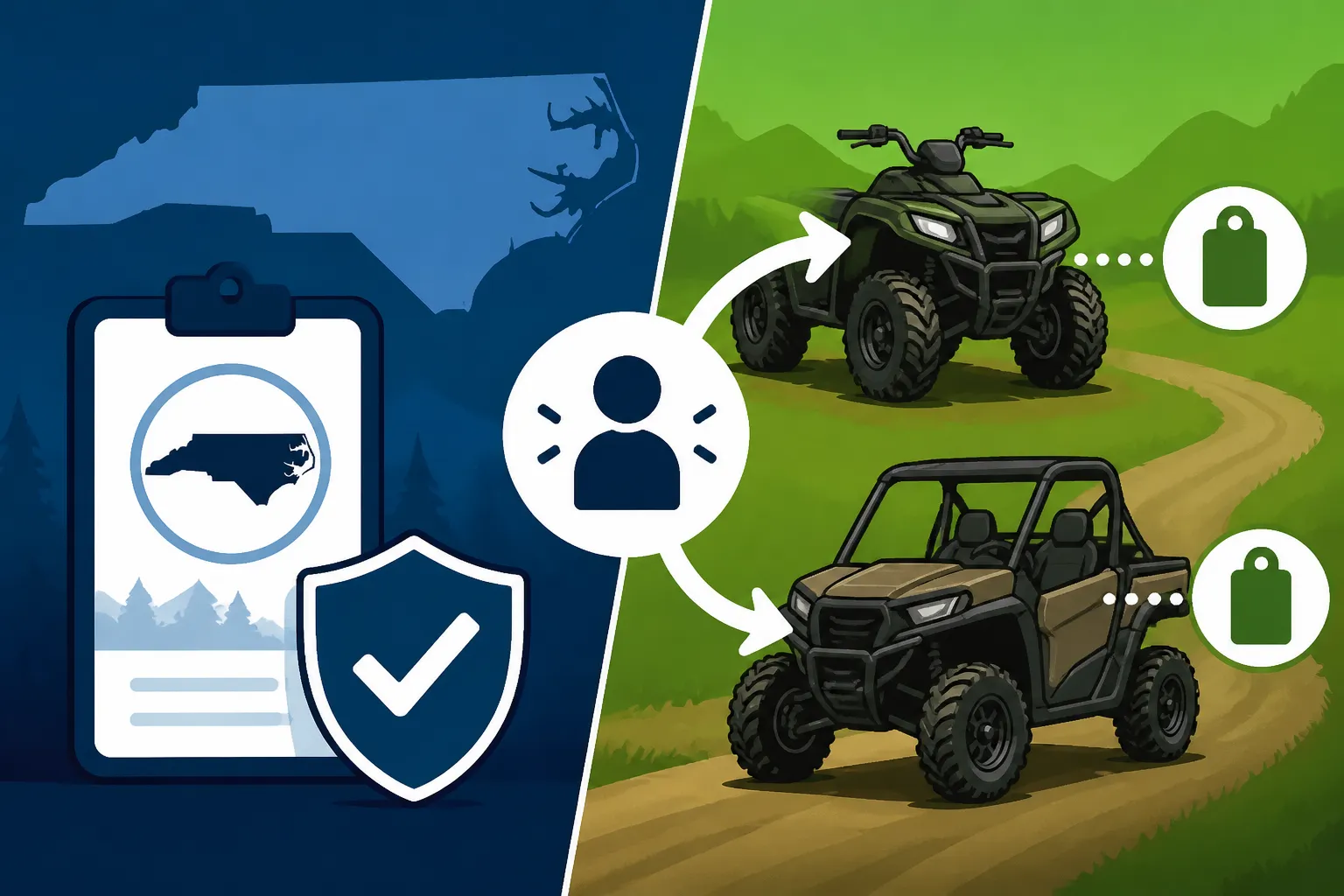
A North Carolina forest OHV permit is generally tied to the machine using the trail, not to the rider, household, or trailer carrying it. That can feel like paying twice when friends ride together, but the rule reflects how access is managed. Here’s what “per vehicle” means, when each machine needs its own permit, and what to check before you head out.
What “per vehicle” means on North Carolina forest trails
At designated OHV trail systems, the permit requirement generally applies to each machine that enters and uses the permitted trail area. If two ATVs ride together, plan on having a permit for each ATV. The same principle applies when a group brings a mix of quads and side-by-sides: a permit for one machine does not ordinarily cover the others.
That is different from a fee charged once per person or once per vehicle load. A passenger does not usually need a separate vehicle permit just for riding in a machine that has the required permit. But a second ATV or UTV is a second vehicle, even when the same person owns both machines or everyone in the group arrived in one truck.
The exact permit process and display rules can depend on the riding area and permit type. Before your trip, check the current instructions for the specific forest and trail system. North Carolina Forest OHV Permits explains the broader permit picture, while Do You Need a Permit for North Carolina Forest Trails? can help you sort out whether the place you plan to ride requires one at all.
| Situation | How to think about the permit |
|---|---|
| One rider brings one ATV | Check the riding area’s permit rules for that ATV. |
| Two riders bring two ATVs | Expect each ATV to need its own permit. |
| Several people share one UTV | The permit is generally associated with that UTV, not each occupant. |
| One trailer carries several machines | The trailer does not combine the machines into one permitted vehicle. |
| One person owns several machines but rides only one | The permit requirement concerns the machine being used, not simply how many the person owns. |
| A machine is transported but not ridden on the permitted trail | Confirm the site’s rules, but transporting a machine is not the same as using it on the trail. |
“Per vehicle” does not mean that every machine needs a North Carolina vehicle registration, a title, or a street license plate. A forest OHV permit is a separate access requirement for a designated riding area. Likewise, having a title or paperwork from another state does not replace a permit required by a forest. For the state’s separate safety-certificate requirement, see North Carolina’s Birth-Year Safety Certificate.
It also does not mean that every dirt road or patch of national forest requires the same permit. Requirements vary by location. Some areas have designated OHV trails and their own permit rules; other places may not be open to ATVs or UTVs at all. Start with the exact trail system, not the broad assumption that all public land works alike. Which North Carolina Forests Take a Day Permit? is a useful next step for comparing locations.
Why permits are tied to machines rather than riders
The simplest reason is practical: the machine is what uses the trail. It occupies space, puts tires on the surface, and may contribute to wear, drainage problems, or trail maintenance needs. A vehicle-based permit gives managers a way to connect access and permit revenue to the machines using the system.
That matters when a group arrives with several machines. Charging one permit per group could mean that a large group and a solo rider pay the same amount even though the group puts more vehicles on the trail. A per-vehicle approach makes the access rule easier to apply at the trailhead: each machine using the permitted area needs to meet that area’s permit requirements.
The rule also makes on-trail checks more straightforward. A permit or other required proof can be associated with the vehicle that an officer or trail manager encounters, rather than depending on which person in a group bought a pass or whether that person is still riding with the group. The precise way a permit must be carried or displayed is set by the applicable instructions, so don’t assume that a photo, receipt, or permit carried by someone else in the group is enough.
A per-vehicle permit is not a charge for each tire, passenger, or trip to the trailhead. It is the access requirement for a machine. This is why bringing two ATVs on the same trailer does not usually turn them into one permitted unit. Once both machines are being used on the permitted trails, each is a separate vehicle there.
There is a management benefit, too. When permits are counted by machine, managers can better relate access activity to vehicle use. The permit system may help support trail operations and management, although the way funds are handled depends on the program. For context, see Where North Carolina Permit Money Goes.
This arrangement can feel inconvenient for families, clubs, and riding groups because many other costs are shared. One truck hauls the machines, one campsite hosts the group, and one person may organize the trip. But those shared arrangements do not change how many vehicles are riding. The most useful way to budget is to count machines first, then confirm the permit options and terms for your destination.
How day and season permits apply to more than one machine
A riding area may offer different permit options, such as a day permit or a season permit. The names can sound as though the choice is simply between one day and a longer stretch of access. The important detail is that the options may still be vehicle-based. A season permit should not be assumed to cover every machine owned by the person who purchased it.
A day permit is generally the option to investigate for a short visit or an occasional ride. A season permit may suit someone who expects to return, but the rules about which vehicle it covers, how it is identified, and whether it can be transferred need to be checked with the specific program. North Carolina’s Forest Day Permit and The Forest Season Permit in North Carolina cover those permit types in more detail.
Consider a household with two ATVs. If both are taken out and ridden during the same visit, don’t assume buying one season permit in the household’s name automatically covers both. Ask whether the permit is issued for a particular machine and what details the program uses to identify it. If only one ATV is used, the second ATV sitting at home is not the same as a second machine using the trail that day.
Likewise, don’t assume a season permit transfers automatically when a machine is sold or swapped. Transfer rules can depend on the permit and site. Check before buying a permit for a machine that may be replaced, sold, or used by another person. Does a North Carolina Season Permit Transfer With the Machine? is relevant if you’re planning to change machines or share access.
A practical way to choose is to make a simple list before you buy:
- Name the trail system you plan to visit.
- Count the machines that will actually ride there.
- Check whether the area requires a permit and which permit types it accepts.
- Confirm whether each permit is linked to a specific machine and how it must be displayed or carried.
- Check current purchase instructions, operating dates, and any closure notices.
This approach helps avoid buying the wrong permit or arriving with a group that has fewer permits than machines. It also keeps you from assuming that a pass bought for one forest works at another. Treat each riding area’s permit information as its own set of rules.
If a trail system allows permits to be purchased at or near the trailhead, that can be convenient, but it is still worth checking in advance how payment and display work. A permit process that is easy for one rider may be awkward for a group arriving with several machines. Where North Carolina Permits Are Sold can help you plan where to obtain one.
What the rule means for groups, families, rentals, and visitors
For a family outing, count the machines, not the riders. Two adults taking two ATVs should plan around two vehicles. A parent and child sharing one permitted UTV are using one machine, though age, supervision, passenger, and equipment rules may apply separately. A permit does not make a machine suitable for a young passenger or remove other safety requirements.
For a club ride or informal group, the organizer should tell participants to check permits for their own machines before meeting at the trailhead. It is risky to assume that the lead rider’s permit covers the whole group, or that the person who reserved a campsite has handled everyone’s trail access. The group can still coordinate purchases and share information, but each machine should meet the location’s requirements.
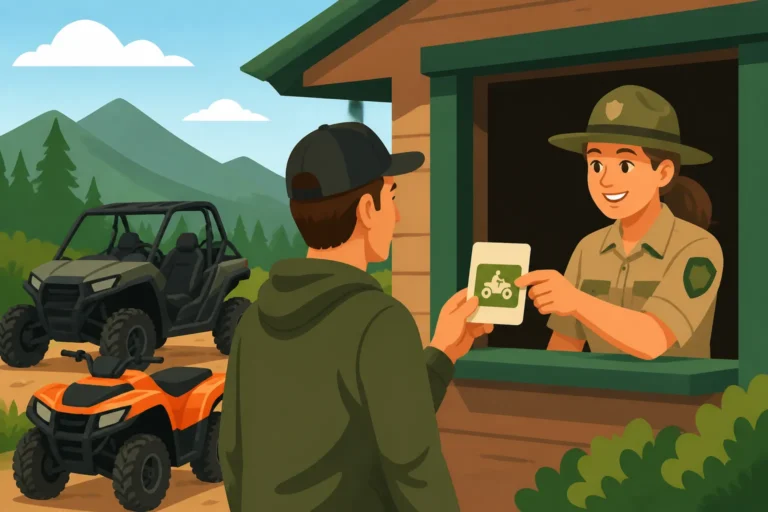
Rental machines need attention as well. Ask the rental provider whether the permit for the specific riding area is included, who supplies it, and how it is displayed. A rental agreement or waiver is not automatically a forest OHV permit. Nor does a permit for one machine necessarily cover a second machine added to the booking. If you’re renting, the question “Does this rental include the permit for this trail system?” is worth asking before you sign and pay.
Visitors from another state should not rely on a home-state registration, sticker, or riding pass as a substitute for the local permit. Permit access and vehicle registration are separate issues, and rules from one state do not automatically carry over to a North Carolina forest. Why North Carolina Has Nothing to Reciprocate explains why out-of-state credentials shouldn’t be treated as a replacement for North Carolina’s local requirements.
A permit also does not grant unlimited access. It does not authorize riding on a closed trail, outside the designated route, or in an area where motorized use is prohibited. Weather, maintenance, seasonal operations, and other management decisions can affect which routes are open. Before loading, check North Carolina Trail Closures to Check First as well as the permit instructions for your destination.
Make the permit part of the group’s trip checklist
Before the group leaves, agree on who is responsible for checking each machine’s permit. It helps to keep the answer specific: “This ATV has its own required permit, and we know how it must be displayed,” rather than “We bought a pass for the group.”
If you order riding supplies through Amazon, a small weather-resistant document pouch can help keep receipts, maps, or emergency contact information dry in your truck or gear bag. It is not a substitute for an official permit or for any required vehicle display. Check the riding area’s instructions before putting a permit in a pouch or attaching anything to the machine; a well-protected permit is useful only if it is displayed or carried the way the rules require.
For a multi-machine trip, a short checklist can prevent a frustrating trailhead conversation:
- Count each ATV or UTV that will ride.
- Confirm that the permit arrangement covers each machine.
- Check the site-specific display or carry instructions.
- Keep purchase confirmation available in case it is useful, without assuming a receipt replaces the permit.
- Confirm that the trail system is open and that each machine is allowed on the intended route.
- Check separate rider rules, including age, supervision, helmet, and safety-certificate requirements where applicable.
Amazon may also be useful for general trip supplies such as a waterproof notebook or storage pouch for paperwork, but those items do not establish access rights. Buy or obtain the actual permit through the process accepted by the riding area. If you use a phone to store a confirmation or map, keep in mind that cell service can be unreliable in forest areas; don’t make your only plan depend on being able to load a page at the gate.
Common misunderstandings that can cause trouble at the trailhead
The first common mistake is treating a permit like a person’s admission ticket. A rider may be the purchaser, but that doesn’t necessarily mean the permit follows that person from one machine to another. Check whether the permit is associated with a particular vehicle and how the program identifies it.
The second is assuming that one vehicle permit covers everything on the trailer. A trailer is how machines are transported. It does not erase the fact that multiple ATVs or UTVs may use the trails separately. If more than one machine will ride, confirm the permit requirement for each.
The third is confusing forest permits with registration or title paperwork. A title can help establish ownership; registration may relate to road use or a separate state process; a forest permit controls access under the rules for a particular riding area. One document does not automatically stand in for the others. A machine can have ownership papers and still need a trail permit, while buying a forest permit does not make an ATV street legal.
The fourth is assuming a permit is valid everywhere in North Carolina. A permit issued for one system should not be treated as statewide access unless the program explicitly says it is. Check the destination before setting out, especially if your weekend includes more than one forest or riding area.
The fifth is thinking that an out-of-state sticker makes the local permit unnecessary. A credential from another jurisdiction may not satisfy the local forest’s vehicle-based permit rule. Check the local requirements rather than relying on what you use at home.
Finally, don’t rely on an old receipt, another rider’s recollection, or a screenshot that doesn’t show the actual current instructions. Permit terms, operating seasons, purchase methods, and closures can change. Check the official information for your riding destination before each trip, and contact the responsible office if the instructions are unclear.
The practical takeaway is straightforward: count the machines that will ride, then check the permit requirements for the specific trail system. If your group brings three machines, plan as though each one needs its own permit unless the local program clearly states otherwise. That simple check helps avoid confusion at the trailhead and keeps a permit from being mistaken for a general pass, registration, or guarantee that every route is open.
Disclaimer
This article is for general informational purposes only and does not constitute professional advice. Laws, prices and regulations vary by location and change over time. Consult a qualified professional for guidance on your specific situation.