Buying a North Carolina Permit at a Ranger Station
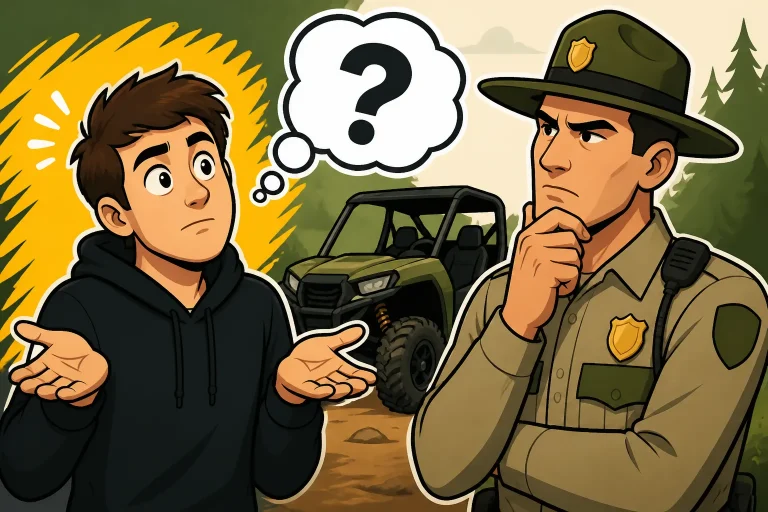
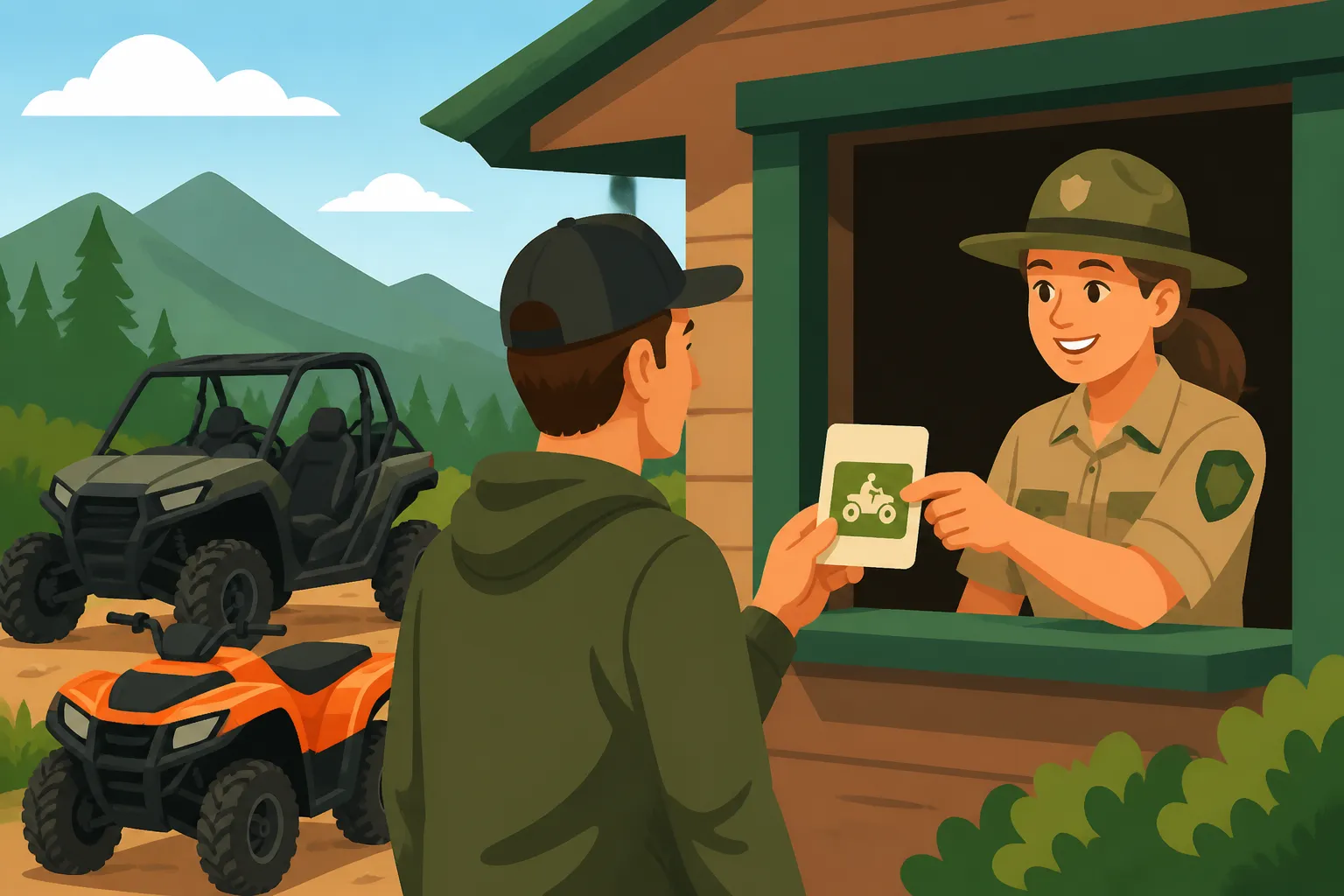
Buying a permit at a ranger station sounds simple: stop on the way to the trail, pay, and ride. The catch is that not every office sells permits, and the right permit depends on where and when you plan to ride. Here’s how to confirm the details, make the counter visit useful, and avoid arriving at a trailhead without the required permit.
First, confirm the office sells permits for your riding area
In North Carolina, the permits discussed here are for designated off-highway vehicle trails on national forest land. They are not ATV registrations, state trail stickers, or proof of ownership. A permit for one riding area may not cover another, so start with the place you intend to ride rather than assuming any ranger station can issue a permit that works everywhere.
People often use “ranger station” to mean a ranger district office, a visitor center, or any Forest Service building. Those locations may have different services and hours. An office might be responsible for the forest where you plan to ride but still not sell permits at its public counter. A nearby business or a self-service option may be the intended sales point instead.
Before making the drive, contact the ranger district responsible for your destination and ask specifically about buying an OHV permit in person. Confirm:
- Whether that office sells permits to the public
- Which permit types it has available
- Whether the permit is valid for your intended trail system
- Whether you can buy it during the hours you plan to visit
- Whether payment methods or other purchase conditions apply
- Where the permit must be displayed on the machine
- What to do if you arrive outside staffed hours
Use the name of the riding area when you call. “I’m riding in North Carolina” is too broad; “I’m heading to Brown Mountain” or “I’m planning to ride at Badin Lake” gives staff a more useful starting point. If your plan includes more than one area, name each one and ask whether you need separate permits.
| Where you might buy | What to confirm before going | Best reason to use it |
|---|---|---|
| Ranger district office | Whether it sells permits, its hours, available permit types, and payment methods | You want to ask questions or confirm the right permit in person |
| Designated local vendor | Whether it sells the permit for your specific riding area and when it is open | The vendor may be closer to your route or open when the office is not |
| Self-service location | Whether permits are currently available there and how to complete the purchase | You arrive outside staffed hours and the location is operating |
| Another sales option listed by the district | Whether it is authorized for the riding area and has the permit you need | The district directs riders to an alternative channel |
Sales arrangements can vary and may change. Treat a ranger station visit as a plan to verify, not a guarantee that a permit will be waiting at the counter. For a broader overview of sales options, see Where to Buy a North Carolina OHV Permit. If you are unsure which office covers a particular riding area, Which District Office Sells Each North Carolina Permit can help you narrow down the question before you call.
Choose the permit for the right area, machine, and dates
A successful counter visit depends on knowing what you are buying. The basic questions are where you will ride, how long you will ride, and how many machines will be on the trail.
Match the permit to the riding area
North Carolina’s main national forest OHV destinations have their own trail systems and permit arrangements. Brown Mountain, Badin Lake, and Wayehutta are not interchangeable names for one statewide riding network. A permit obtained for one system should not be assumed to cover another.
Give the office the name of the trail system rather than asking only for “an ATV pass.” That helps staff check the correct permit. If you have an itinerary that includes multiple areas, ask whether the permit you plan to buy is accepted at each one. Don’t rely on a friend’s old permit, a social media post, or a previous trip as proof that the current sales rules are the same.
Trail access itself is separate from buying the permit. A permitted machine still has to use trails that are open to it. Before setting out, check the latest forest or district notices for closures, access restrictions, and seasonal information. North Carolina Trail Closures to Check First is a useful reminder to check access separately instead of treating the permit as a promise that every trail will be open.
Decide between a day permit and a season permit
Many riders choose between a permit for a single day of riding and a season option. The best choice depends on how often you expect to use the same riding area and on the permit’s current validity dates. A season permit does not necessarily follow the same calendar dates or conditions at every trail system.
Ask the office to confirm the dates printed on the permit and the trails where it applies. If your trip falls near a seasonal opening, closing, or holiday, check the trail system’s current schedule as well. A season permit is not useful for a date when the trails are closed.
For a one-time outing, a day permit may be the simpler choice. If you expect to return, compare the current terms for the day and season options before paying. The staff member can help explain what is available, but you should still make sure the permit corresponds to the particular area you plan to ride. Read North Carolina’s Forest Day Permit and The Forest Season Permit in North Carolina for more detail on the two general permit types.
Account for each machine
Plan on needing a permit for each machine that will be ridden, rather than one permit for a whole group or a pickup truck carrying several ATVs. This matters for families, riding groups, and anyone towing more than one vehicle to the trailhead.
Make a quick list before you go:
- The riding area for each trip
- The number of ATVs or UTVs you will take
- The dates you expect to ride
- Whether you need a single-day option or expect repeated visits
- Any questions about how the permit must be displayed
If a group is splitting up after arrival, make sure each machine has its own required permit and that each rider knows which trails are open to that machine. The details are covered further in Why a Permit Is Per Vehicle in North Carolina.
Make the ranger station visit count
A short phone call can save a long detour. Once you have confirmed that an office sells permits, prepare for the visit as if you were going to a small service counter: bring the information you need, ask direct questions, and leave with clear instructions.
Call with a specific checklist
When you reach the district office, explain that you want to buy an OHV permit in person. Then name your destination, the intended riding dates, and the number of machines. Ask whether the office issues the permit directly or sends visitors to another sales location.
It is also sensible to ask whether the office will be open when you expect to arrive. Public-facing hours can differ from general office hours, and a building may be closed on a day you assumed it would be open. If the staff directs you to a vendor, ask for the vendor’s name and location, then verify its hours separately. A referral does not guarantee that the vendor will be open when you reach it.
If you are traveling a long distance, ask what backup option the district recommends if the office or vendor is closed. Don’t assume a trailhead payment box is present, stocked, or usable at every location. If a self-service option is suggested, ask how it works and whether you need to bring anything to complete the purchase.
Ask the questions that affect your ride
At the counter, confirm the permit’s coverage and display instructions before leaving. Ask whether it applies to your exact riding area and dates, whether it is tied to the machine, and whether there are conditions that riders commonly overlook. If you have a wide machine or a vehicle with unusual equipment, mention that and ask whether any separate trail restrictions apply.
A permit does not replace other requirements. It does not make an otherwise closed trail open, grant permission to ride off a marked route, or settle every question about rider age, safety equipment, or machine suitability. If your group includes young riders, ask what safety requirements apply to them and check the relevant district guidance before the trip. The permit counter is a convenient place to clarify the forest’s requirements, but it is worth checking details in advance rather than relying on a rushed conversation at the end of the day.
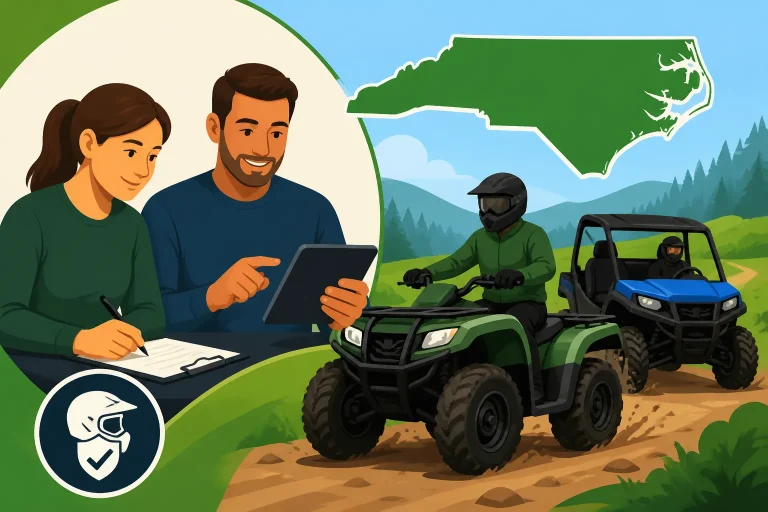
Some North Carolina riders also need an approved safety certificate based on their birth year. The permit itself is not that certificate, and buying a permit does not satisfy a separate certificate requirement. Check North Carolina ATV Safety Certificate Requirements and Does a North Carolina Safety Certificate Ever Expire? if you are unsure whether a rider in your group needs to carry one.
Check the permit before leaving
Before you walk away, look at the permit and any receipt or instructions you received. Confirm that the information matches your destination and intended dates. If anything seems unclear, ask while you are still at the counter.
Follow the instructions for displaying the permit. If it is meant to be attached to the machine, place it where required and keep it legible. Don’t leave it loose in a truck and assume that showing a receipt later will be treated the same as displaying the permit. If you are unsure whether the receipt should be kept, ask whether it serves as proof of purchase or whether the permit itself is the required item.
Keep a photo of the permit and receipt as a backup record, but don’t treat a photo as a substitute for the required physical display. Store any paper instructions where they will survive mud and rain. A waterproof document pouch from Amazon or an outdoor shop can be useful for papers kept in the truck; the permit itself still needs to be displayed as instructed.
If the office is closed or does not sell permits
If the ranger station cannot sell you a permit, you still have useful next steps. Ask the district for the nearest authorized seller or the official self-service process for your destination. Confirm the location, operating hours, and purchase instructions rather than driving toward a vague landmark and hoping to find a place open.
If the district points you to a local vendor, check that the vendor handles permits for your specific riding area. A business may sell recreation products or permits for a different location without carrying the one you need. The same care applies to a self-service box: verify where it is, whether it is available, and what information or payment you need.
When no purchase option is confirmed, consider changing your plan rather than riding without the required permit. A permit is not optional just because the office is closed or the trailhead is busy. If you cannot verify a valid way to buy one, postpone the ride or choose a destination whose permit process you have confirmed.
A practical backup plan can be simple:
- Call the district office before leaving home.
- Write down the name and location of any recommended vendor or self-service point.
- Check its hours independently.
- Keep the district’s phone number and the trail system’s current notices accessible.
- If the plan fails, do not assume that another area accepts the same permit.
If you are traveling beyond cell coverage, save the address, directions, and relevant trail information before you go. An offline map or a paper map can help when your phone loses service. A map case found through Amazon or an outdoor retailer may keep a paper map readable in wet weather, but the important step is having the map downloaded or packed before leaving service.
Keep permit rules separate from other paperwork
Riders sometimes use “registration,” “sticker,” and “permit” as if they mean the same thing. They do not. A national forest OHV permit is a trail-access requirement for a particular riding area. It is not a state ATV registration, a North Carolina title, or a license plate.
North Carolina’s title and affidavit process is a separate subject from buying a national forest trail permit. If you are sorting out ownership paperwork, start with Registering an ATV in North Carolina and Why North Carolina Has No ATV Registration. A title can be relevant to proving ownership or transferring a machine, but it does not serve as the forest trail permit.
Likewise, a permit does not automatically authorize a machine on a public road. Trail access rules and road-use rules are different, and a trail permit should not be read as permission to ride to the trailhead on a public street. For road questions, see Are ATVs Street Legal in North Carolina?.
Before your trip, keep the documents and gear organized without mixing up what each item proves. A small folder in your truck can hold purchase receipts, maps, and notes from the district office. Amazon is one place riders look for a basic document organizer, though any durable folder you already own can do the job. Keep the permit attached to the machine when required, and carry any separate rider documents according to the rules that apply to your trip.
The permit fee supports the management of the riding area, but buying a permit does not guarantee every trail is open or that conditions will suit your machine. Weather, maintenance, and temporary closures can affect access. Check current notices shortly before you travel, and be ready to adjust your route if a trail is closed. Where North Carolina Permit Money Goes explains the role of permit revenue, while North Carolina Forest Trail Maps can help you prepare to navigate the system.
A ranger station can be a good place to get the right permit and resolve last-minute questions, provided you confirm the office’s services before driving there. Name the exact riding area, ask about current permit options, and leave with clear instructions on coverage and display. Those few checks make it much less likely that a closed counter or mismatched permit will derail your ride.
Disclaimer
This article is for general informational purposes only and does not constitute professional advice. Laws, prices and regulations vary by location and change over time. Consult a qualified professional for guidance on your specific situation.