Registering an ATV in North Carolina
One of the most common questions and biggest headaches for ATV and UTV enthusiasts in North Carolina revolves around registration. Many folks move here from states with mandatory ATV registration, or they hear snippets of information that leave them utterly confused. It’s frustrating trying to do the right thing only to find conflicting answers! This comprehensive guide is here to clear up all that muddiness, explaining exactly what North Carolina requires (and doesn't require) for your off-road machine, focusing on the often misunderstood concepts of registration, titling, and the unique path for Modified Utility Vehicles.
The Core Truth: North Carolina Does Not Register ATVs (Generally Speaking)
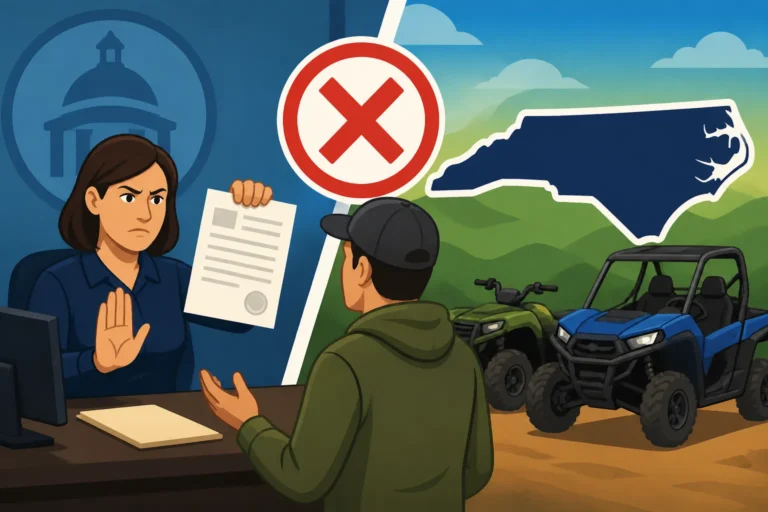
Let's cut right to the chase because this is where most of the confusion stems from: for the vast majority of all-terrain vehicles and utility task vehicles, North Carolina does not have a statewide registration program. You won't find a dedicated system at the DMV to register your quad, side-by-side, or dirt bike specifically for off-road use, unlike what you might experience with a car or truck for highway travel.
Why This Is a Common Point of Confusion for Riders
It’s completely understandable why riders get hung up on this. Many neighboring states, and indeed, many states across the country, do require some form of registration for off-road vehicles. This usually involves a fee and often results in a sticker or decal that you affix to your machine, signaling that you've paid your dues and are legally permitted to ride on designated trails or areas. When you come to North Carolina and ask about registering your ATV, you might be met with blank stares or confusing answers because the traditional concept simply doesn't exist here. This can lead to a lot of second-guessing and anxiety, especially if you're keen to follow all the rules and avoid any issues with law enforcement or forest rangers. We're used to a system where if you own a vehicle, it gets registered, so the absence of this step for ATVs feels counterintuitive to many. For a deeper dive, check out [Why North Carolina Has No ATV Registration].
What "Registration" Usually Means Elsewhere vs. North Carolina's Approach
In states with ATV registration, the process often serves several purposes: it helps fund trail maintenance and development, creates a database of owners for safety recalls or theft recovery, and ensures that machines meet certain environmental or safety standards. You typically pay an annual or biennial fee, and in return, you get a unique identifier – that sticker or tag.
North Carolina, however, takes a different tack. The state generally views ATVs as off-road recreational vehicles, not primarily as vehicles intended for public roads. Therefore, the traditional "registration" that applies to cars and trucks for highway use doesn't extend to them. Instead, the focus for North Carolina's DMV (the NCDMV) is primarily on establishing ownership through titling, rather than granting permission for off-road operation via a registration system. This distinction is crucial to grasp because it shapes all other requirements for your machine here in the Tar Heel State. What you might consider "registration" for an off-road machine in other states often translates to merely acquiring a title in North Carolina, if anything at all.
The State's Approach to Off-Road Vehicles and Their Use
Since there's no general ATV registration, North Carolina governs the use of off-road vehicles through other means. These include age restrictions for riders, helmet and safety gear requirements, and rules for where you can and cannot ride, particularly concerning public lands and roads. Instead of a single statewide registration fee funding trails, access to specific public OHV (Off-Highway Vehicle) trails, like those in the Uwharrie National Forest or Pisgah National Forest, often requires its own separate permit system, usually managed by the federal or local agencies overseeing those lands. This means your "paperwork" for riding might look quite different depending on where you plan to hit the trails, rather than being a single, all-encompassing state registration.
Titling Your ATV in North Carolina: The Optional Path You Should Seriously Consider
While the state doesn't mandate registration for most ATVs, it does offer the option to title your machine. This isn't just bureaucratic red tape; it's a critical step that offers real benefits, even if it feels like an extra hoop to jump through. Think of it as formally declaring ownership, much like you would for a car, even if that car was never going to touch a public road.
Why Titling Is Different From Registration and Why It Matters
Let's clarify the difference. "Registration," as commonly understood for vehicles, is about getting permission to operate on public thoroughfares or, in the case of some states, on designated off-road trails. It often involves periodic renewal and fees. "Titling," on the other hand, is about establishing legal ownership. It provides a formal record that you are the rightful owner of that specific machine.
In North Carolina, since there's no general ATV registration, titling serves as the primary official record of your ownership with the state. This distinction is vital because while you might not have to register your ATV to ride it on private land, opting for a title provides a layer of legal protection and simplifies future transactions. It's a one-time process, not an annual renewal, and it definitively ties you to your machine. For more on this, see [Titling an ATV in North Carolina Is Optional].
The Undeniable Benefits of an Optional Title
Even though it’s not required for every ATV, having a North Carolina title for your machine is highly recommended. Here’s why:
- Proof of Ownership: This is the big one. If your ATV is ever stolen, a title provides indisputable proof that the machine belongs to you, significantly aiding law enforcement in its recovery and preventing someone else from falsely claiming it. Without a title, proving ownership can be a lengthy and frustrating process, often requiring a detailed bill of sale and other supporting documents. A title streamlines everything. [Why a Title Matters After Your Quad Is Stolen] delves into this further.
- Easier Resale: When it comes time to sell your ATV, a clean North Carolina title makes the process much smoother and more attractive to potential buyers. It instills confidence in the buyer that they are purchasing a legitimate machine with a clear ownership history. Many buyers, especially those who plan to get a title themselves, will insist on a titled machine.
- Insurance Requirements: While not universally required for off-road use, many insurance companies will ask for a title when you're looking to insure your ATV against theft, damage, or liability. A title simplifies the underwriting process and can even affect your rates.
- Lender Requirements: If you financed your ATV purchase, the lender will almost certainly require a title. They will typically hold the title until the loan is paid off, protecting their financial interest. For detailed information on costs, you might want to read [North Carolina ATV Title Cost].
Situations Where a Title Becomes Crucial
While optional, there are several scenarios where obtaining a title for your ATV moves from "good idea" to "absolutely essential":
- Buying or Selling: If you're purchasing an ATV, especially from a private seller, always ensure you receive a signed-over title. If the seller doesn't have one, it should be a red flag. Conversely, when selling, having a title makes the transaction much easier and more secure for both parties. [Buying a Used ATV in North Carolina] and [Selling an ATV in North Carolina] cover these situations.
- Financing: As mentioned, any lender will require a title to secure their loan. This is standard practice across the board.
- Moving from Another State: If you're bringing an ATV into North Carolina from a state where it was titled or registered, it's a good idea to apply for a North Carolina title to officially document your ownership within the state's system. This prevents potential headaches down the road.
- Theft Recovery: Should the unthinkable happen and your ATV is stolen, having a title on file with the NCDMV makes it much easier for law enforcement to identify you as the rightful owner if the machine is recovered.
Ultimately, while the decision is yours, the peace of mind and practical benefits of a North Carolina ATV title far outweigh the minimal effort and cost involved in obtaining one. [Why a North Carolina Title Is Worth Having] truly drives this point home.
Understanding the North Carolina Highway Use Tax
Here's another point that often causes a double-take for ATV owners: while you're not paying a "registration" fee, North Carolina does levy a "Highway Use Tax" when you title your ATV. It sounds contradictory for an off-road vehicle, doesn't it? But there's a specific reason for it.
What This Tax Is and Why It Applies to ATVs
The North Carolina Highway Use Tax (HUT) is essentially what most other states call a sales tax on vehicle purchases. The key difference is that in North Carolina, this tax is collected at the time of titling, not at the point of sale. The name "Highway Use Tax" can be misleading for ATV owners, making it sound like it's a tax for using highways. In reality, it's just how North Carolina categorizes its sales tax on all motor vehicles, regardless of whether they ever touch a public road. This includes your ATV, even if it's destined only for your farm or private trails. It's a one-time tax paid when you first title the machine in North Carolina or when you transfer a title to a new owner.
How It's Calculated and When You Pay This Tax
The Highway Use Tax is calculated as a percentage of the purchase price or the fair market value of the ATV, whichever is greater. For most machines, this percentage remains consistent. It's crucial to understand that even if you bought your ATV out of state, or if it was a gift, you're still liable for this tax when you apply for a North Carolina title, unless a specific exemption applies.
You will pay this tax directly to the North Carolina Division of Motor Vehicles (NCDMV) or one of its authorized tag agents when you submit your application for an ATV title. It's a non-negotiable part of the titling process and must be paid before a title can be issued. This is why having accurate documentation of the purchase price, or an honest assessment of fair market value, is so important. [North Carolina's 3 Percent Highway Use Tax] provides more context on the rate.
What the NCDMV Considers for the Taxable Value
When it comes to calculating the Highway Use Tax, the NCDMV isn't just going to take your word for it if the stated purchase price seems unusually low, especially for a private sale. They have resources to determine the fair market value of various vehicles, including ATVs. This is particularly relevant if you're buying a used machine or if the ATV was given to you. If the declared purchase price is significantly less than the NCDMV's assessed fair market value, they may apply the tax based on their valuation. It's always best to be prepared with a legitimate bill of sale that accurately reflects the transaction. Remember, being upfront and transparent about the value helps ensure a smooth process.
The All-Terrain Vehicle Affidavit (Form MVR-60): Your Key Document
This is perhaps the most specific piece of paperwork unique to titling ATVs in North Carolina: the MVR-60. It's not a registration form, but an affidavit that helps the NCDMV understand the nature of your machine.
What Form MVR-60 Is and Its Purpose
North Carolina Form MVR-60 is officially titled "All-Terrain Vehicle (ATV) Affidavit." Its primary purpose is to declare to the NCDMV that your vehicle meets the state's definition of an ATV and is not a "motor vehicle" intended for highway use in the traditional sense, or a "Modified Utility Vehicle" (MUV) that can be registered for highway use. By signing this affidavit, you're essentially confirming that your machine is primarily designed for off-highway recreational or utility purposes. This form helps the NCDMV categorize your vehicle correctly within their system, ensuring it's titled as an ATV rather than being mistakenly classified as a street-legal vehicle or an MUV. It's a crucial step in distinguishing your off-road machine from other types of vehicles the DMV handles. [North Carolina Form MVR-60 Explained] offers a detailed breakdown.
How to Complete the Affidavit Accurately
Filling out Form MVR-60 correctly is straightforward, but attention to detail is key. You'll need to provide information about your ATV, including:
- Vehicle Identification Number (VIN): This is paramount for identifying your specific machine. Ensure it's legible and accurate.
- Make, Model, and Year: Basic identifying information for the ATV.
- Engine Size: Usually expressed in cubic centimeters (cc).
- Your Personal Information: Name, address, and contact details as the applicant.
- Statement of Use: You'll typically affirm that the vehicle is primarily for off-highway use and not intended for operation on public roads.
The form also requires you to attest that the ATV meets North Carolina's definition of an ATV, which often includes limitations on width, weight, and features that make it unsuitable for highway travel. Make sure all fields are completed, and you sign it in the presence of a notary public, as notarization is often a requirement for affidavits submitted to the NCDMV. Accuracy here prevents delays in your titling process.
Common Pitfalls and How to Avoid Them
Even with a seemingly simple form, mistakes can happen. Here are some common pitfalls and how to avoid them:
- Incomplete Information: Failing to fill out every required field can lead to the NCDMV rejecting your application and sending you back to the drawing board. Double-check everything.
- Incorrect VIN: A transposed number or letter in the VIN can cause significant delays, as the NCDMV relies on this unique identifier to process your title. Cross-reference the VIN on the form with the VIN physically located on your ATV and any prior paperwork (like a bill of sale).
- No Notarization: Forgetting to have the form notarized is a common oversight. Plan ahead and ensure you can get it signed by a notary public before heading to the NCDMV. Many banks, credit unions, and UPS stores offer notarization services, often for a small fee.
- Misunderstanding "ATV": If your machine actually meets the criteria for a Modified Utility Vehicle (MUV) and you incorrectly file an MVR-60, you might face issues if you later try to register it for road use. Be sure you understand [What North Carolina Counts as an ATV] before you complete the form.
Taking the time to review the MVR-60 carefully and ensuring all information is precise will make your titling experience much smoother and faster.
Titling Process: Step-by-Step for North Carolina Riders
So, you've decided to title your ATV – great choice! The process itself isn't overly complicated, but like any interaction with the DMV, being prepared is your best friend. Knowing what to expect can alleviate a lot of stress.
Gathering Your Documentation: The Pre-DMV Checklist
Before you even think about heading to the NCDMV or a tag office, make sure you have all your ducks in a row. Missing even one piece of paperwork can send you home empty-handed and frustrated. Here’s a typical checklist:
- Original Title (if applicable): If you purchased a used ATV that was previously titled in North Carolina or another state, you'll need the original title, properly signed over to you by the previous owner. Ensure there are no liens recorded that haven't been released.
- Bill of Sale: A detailed bill of sale is crucial, especially for private sales. This document should include the date of sale, purchase price, seller's name and address, buyer's name and address, and a complete description of the ATV (make, model, year, VIN). Both buyer and seller should sign it. You can find templates for free online, or use services like LawDepot to create a legally sound bill of sale. This helps establish the fair market value for the Highway Use Tax. [A North Carolina Bill of Sale for an ATV] is an essential read here.
- All-Terrain Vehicle Affidavit (Form MVR-60): As discussed, this notarized form declares your machine an ATV.
- Application for Certificate of Title (Form MVR-1): This is the main title application form. You’ll fill in all your personal details, vehicle information, and declare the purchase price. [North Carolina Title Application on Form MVR-1] explains this form in depth.
- Proof of Identity: A valid driver's license or state-issued ID is necessary to verify your identity.
- Proof of North Carolina Residency: While your driver's license usually covers this, sometimes additional proof like a utility bill might be requested if there are discrepancies.
- Payment for Fees and Taxes: Be ready to pay the title fee and the Highway Use Tax. It's always a good idea to call ahead or check the NCDMV website for current acceptable payment methods. Remember, the Highway Use Tax is based on the purchase price or fair market value, whichever is higher.
Having these documents neatly organized will make your visit much smoother.
Where to Go to Title Your Machine: NCDMV vs. Tag Agent
In North Carolina, you have a couple of options for titling your ATV:
- NCDMV License Plate Agency (Tag Office): These are privately owned businesses authorized by the NCDMV to handle vehicle registration and titling services. They are often more numerous and can be more convenient. Many people find the wait times shorter and the service more personalized at these locations. This is generally the most popular choice for vehicle owners.
- NCDMV Office (State-Run): While you can go to a full-service NCDMV office, these locations primarily handle driver's license services and often have longer wait times for vehicle-related transactions. It’s generally recommended to use a License Plate Agency for titling an ATV.
No matter which location you choose, the requirements and forms will be the same. The best practice is to visit the NCDMV website to find the nearest License Plate Agency and check their operating hours before you go. [Where to Title an ATV in North Carolina] offers location insights.
What to Expect at the DMV or Tag Office: The Experience
When you arrive, you’ll typically take a number and wait your turn. Once called to the counter, the clerk will review all your submitted documents. They'll verify your identification, check the VIN on your paperwork against any existing records (if applicable), and calculate the Highway Use Tax based on your bill of sale or the declared value.
They will process your application, collect the necessary fees and taxes, and provide you with a receipt. You generally won't walk out with the physical title in hand; it will be mailed to you later. The processing time for mailing titles can vary, so be patient. They'll also verify that your MVR-60 affidavit is correctly filled out and notarized. Be prepared for questions about the purchase and the nature of your machine. A friendly and prepared attitude will go a long way in ensuring a pleasant experience.
Special Cases: Buying, Selling, and Inheriting ATVs
Life happens, and sometimes you need to navigate situations beyond a straightforward new purchase. Buying a used machine, selling one you already own, or inheriting an ATV all come with their own unique paperwork considerations.
Buying a New or Used ATV in North Carolina
Whether you're buying a brand-new ATV from a dealer in, say, Montgomery County, or a used quad from a private seller in the Piedmont, the titling principles remain the same.
- From a Dealer: If you purchase a new or used ATV from a licensed dealer in North Carolina, they will usually handle all the titling paperwork for you. This is one of the conveniences of buying from a dealership. They'll collect the necessary fees and taxes (including the Highway Use Tax), submit the MVR-1 and MVR-60 on your behalf, and the title will be mailed directly to you. Make sure you get copies of all the paperwork they submit for your records.
- From a Private Seller: This is where you need to be extra diligent.
- Verify Ownership: Always insist on seeing the seller's current title, properly assigned to them. Ensure the VIN on the title matches the VIN on the machine. This is crucial for avoiding purchasing a stolen ATV or one with an undisclosed lien. You can even consider a VIN check for peace of mind. [Checking a VIN Before a North Carolina Purchase] is highly recommended.
- Bill of Sale: Create a comprehensive bill of sale, even if the seller tries to skip it. Include all the details mentioned earlier. Using a template from a reputable source like LawDepot can ensure all legal bases are covered. This protects both you and the seller.
- Title Transfer: The seller must sign the existing title over to you in the designated area. Make sure all fields are filled out correctly and completely, especially the odometer reading (if applicable, though less common for ATVs) and the date of sale.
- Your Responsibilities: You will then take the signed-over title, your bill of sale, the completed MVR-1, and the notarized MVR-60 to the NCDMV or a tag office to apply for a new title in your name and pay the Highway Use Tax.
Remember, if a private seller tells you they don't have a title for the ATV, proceed with extreme caution. While sometimes legitimate (e.g., an older machine that was never titled in NC), it can be a red flag for potential issues like theft or undisclosed liens.
Selling Your ATV and Ensuring a Smooth Transfer
When you're the seller, you have responsibilities too, especially if you want to avoid future headaches.
- Possess a Clean Title: If your ATV is titled, make sure you have the physical title in hand and that there are no liens against it. If there was a lien, ensure it's been properly released by the lender.
- Properly Assign the Title: On the back of your North Carolina title, there will be sections for assigning ownership to the new buyer. Fill this out completely, including the buyer's name, address, sale date, and purchase price. Both you and the buyer should sign it.
- Provide a Bill of Sale: Even though you're signing over the title, a separate bill of sale is highly recommended. It serves as an extra layer of protection, documenting the transaction details and protecting you from any future claims or disputes regarding the sale. It also helps the buyer with their titling process. Again, LawDepot offers useful templates for this.
- Keep Records: Make copies of the signed title and the bill of sale for your own records. This is crucial documentation should any dispute arise or if you need to prove you no longer own the machine.
A smooth transfer benefits both parties and prevents complications. [Selling an ATV in North Carolina] expands on these steps.
Handling Inherited Machines and Required Paperwork
Inheriting an ATV can be a wonderful gift, but it also comes with specific paperwork requirements to transfer ownership. The exact process can depend on whether the deceased owner had a will and how the estate is being handled.
- With a Will/Estate: If the ATV is part of a larger estate being probated, you'll generally need documents like a certified copy of the death certificate, the will (or letters of administration if there's no will), and a court order or other legal document from the estate executor or administrator authorizing the transfer of the ATV to you. This proves your legal right to the machine.
- Small Estate Affidavit: In some cases, for smaller estates, North Carolina allows for a simplified process using a "Small Estate Affidavit." This can be a quicker way to transfer ownership of assets like an ATV without full probate. Consult with a legal professional or the clerk of court in the relevant county to see if this applies to your situation.
- Titling in Your Name: Once you have the necessary legal documentation proving your right to the ATV, you'll follow the standard titling process: complete Form MVR-1, and the notarized MVR-60, and submit them along with the death certificate and other estate documents to the NCDMV. You will still be responsible for the Highway Use Tax, calculated on the fair market value of the ATV, unless specifically exempted. [Titling an Inherited Machine in North Carolina] provides more specific guidance.
It's always a good idea to consult with the NCDMV or an estate attorney if you're navigating an inherited ATV, as the specifics can vary.
Modified Utility Vehicles (MUVs): The Exception to the ATV Rule
Here's where things get interesting, and a crucial distinction needs to be made. While most ATVs are strictly off-road, North Carolina has a special category for "Modified Utility Vehicles" (MUVs) that can be registered for limited highway use. This is a path some side-by-side owners explore, but it comes with strict requirements.
What Defines an MUV in North Carolina
An MUV isn't just any side-by-side or UTV. To qualify as an MUV in North Carolina, a machine must meet a very specific and exhaustive list of criteria laid out by state law. These are designed to ensure that the vehicle has certain safety and operational features that bring it closer to a conventional car, even if it's not truly street-legal everywhere.
Key MUV requirements typically include:
- Engine Size: It must have an engine displacement of more than 2,400 cubic centimeters. This alone excludes many common side-by-sides.
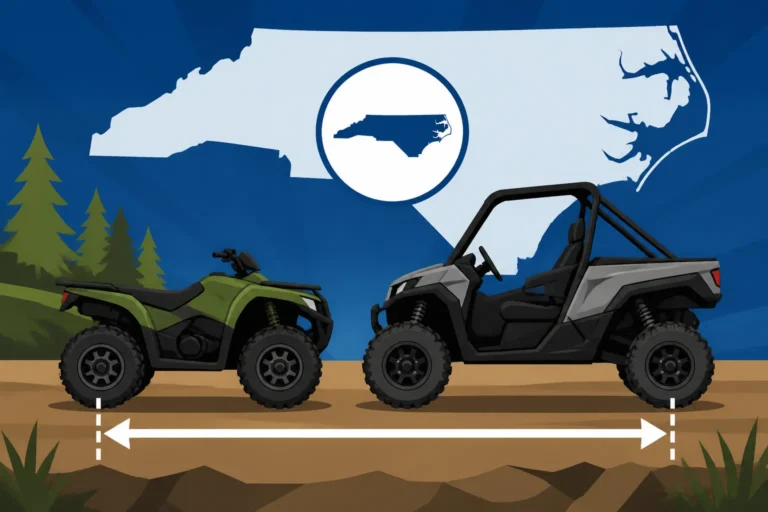
- Dimensions: Specific length (e.g., at least 142 inches), width (e.g., not more than 58 inches), and height (e.g., at least 70 inches) requirements. These are very precise measurements.
- Speed: Capable of exceeding 40 mph.
- Safety Equipment: Must be equipped with headlights, taillights, brake lights, turn signals, seat belts for all seating positions, a parking brake, and a speedometer.
- VIN: It must have a VIN assigned by the NCDMV if it doesn't already have a manufacturer's VIN that meets highway vehicle standards.
These aren't suggestions; they are hard rules. Many standard side-by-sides, even fully loaded ones, will not meet these specifications, particularly the engine size and dimensions. [What Makes a Machine an MUV in North Carolina] details these exacting standards.
Why MUVs Can Be Registered for Limited Road Use
Unlike standard ATVs, an MUV that successfully meets all the stringent criteria can be titled and registered with the NCDMV for limited operation on public roads. The key here is "limited." MUVs are generally restricted to roads with speed limits of 35 mph or less, or those specifically designated for MUV use. They are not intended for interstates or high-speed arterial roads.
This registration path provides a legal way for owners of these specialized utility vehicles to use them on certain public roads for purposes like commuting short distances on local streets, accessing trails, or performing specific tasks where road use is unavoidable. The registration process for an MUV is much more akin to registering a car, requiring an inspection and proof of insurance, in addition to titling. [North Carolina MUV Registration Requirements] provides more information on this distinct process.
Key Differences Between ATVs and MUVs Regarding Registration
The distinction between a general ATV and a registered MUV is stark:
| Feature | Standard ATV (Most Common) | Modified Utility Vehicle (MUV) |
|---|---|---|
| Registration | NO statewide registration for off-road use | YES, can be registered for limited on-road use |
| Titling | Optional, but highly recommended for ownership proof | Required for on-road registration |
| Road Use | Generally prohibited on public roads (with few specific exceptions like farm use, crossing roads, or designated beach areas) | Permitted on public roads with speed limits ≤ 35 mph, or designated roads |
| Requirements | Primarily safety gear for rider, spark arrester | Extensive list: large engine, specific dimensions, full safety equipment (lights, turn signals, seatbelts, speedometer, parking brake, etc.), inspection |
| Insurance | Not generally required by state for off-road use (though recommended) | Required for on-road registration |
| Highway Use Tax | Paid upon titling (optional) | Paid upon titling (required for registration) |
Understanding these differences is paramount. Trying to treat a standard ATV as an MUV on public roads will lead to tickets and potential legal trouble. The MUV path is a very specific, narrow avenue for a particular type of highly modified utility vehicle, not a loophole for street-legalizing a typical side-by-side.
Debunking Myths: What North Carolina DOESN'T Require for ATVs
Because of the unique situation with ATVs in North Carolina, a lot of misinformation and old wives' tales circulate. Let's clear up some common myths that can trip up even experienced riders.
No Trail Stickers or Decals from the State
Many states that register ATVs issue a physical sticker or decal that you affix to your machine as proof of registration. This is a common sight in places like Tennessee or Virginia. However, in North Carolina, since there's no statewide registration, you won't receive or be required to display any such state-issued trail sticker or decal for your ATV.
This can be confusing, especially if you plan to ride on public lands like the Uwharrie National Forest. While you won't need a state registration sticker, you will need to purchase and display a specific OHV permit for those particular federal lands. These permits are issued by the U.S. Forest Service or its authorized vendors, not the NCDMV. So, while you'll have a sticker, it's a federal permit for specific trail systems, not a state registration. [Why There Is No North Carolina Trail Sticker] further clarifies this point.
No General State-Mandated Insurance for Off-Road Use
For cars and trucks operating on public roads, North Carolina requires mandatory liability insurance. This is a given. However, for ATVs used exclusively off-road, North Carolina does not have a statewide mandate for insurance. You won't be asked for proof of insurance when titling your ATV (unless it's an MUV being registered for road use).
Does this mean you shouldn't have insurance? Absolutely not! While not legally required by the state for off-road use, carrying ATV insurance is a very smart decision. It can protect you financially in case of an accident, theft, or damage to your machine. Many homeowners' policies offer limited coverage, but a dedicated ATV policy provides much more comprehensive protection, including liability coverage for injuries or damage you might cause to others while riding. Think of it as protecting your investment and your peace of mind.
Why Some Old Information Might Still Circulate
You might occasionally encounter outdated information or local handouts that suggest otherwise about ATV registration or requirements. There are several reasons for this:
- Outdated Laws: Laws change, and sometimes older regulations, or even proposed but never enacted legislation, continues to be referenced.
- Confusion with Other States: As discussed, many other states have registration requirements. Information from those states might be mistakenly applied to North Carolina.
- Local Ordinances: While North Carolina doesn't have statewide registration, individual counties or municipalities can enact their own local ordinances regarding ATV use, especially concerning private land or specific public areas like beaches. These are local rules, not statewide registration.
- MUV Confusion: The existence of the MUV category, which does require registration and insurance, can lead people to believe all ATVs have similar requirements. This misunderstanding often causes the most friction.
Always rely on current information from the official NCDMV website or reputable sources like this blog when researching ATV requirements in North Carolina. If you hear something that sounds off, it's worth double-checking. Staying informed is the best way to ensure you're riding legally and responsibly in the beautiful Tar Heel State.
Disclaimer
This article is for general informational purposes only and does not constitute professional advice. Laws, prices and regulations vary by location and change over time. Consult a qualified professional for guidance on your specific situation.