Where North Carolina Permit Money Goes
North Carolina’s forest riding permits are easy to mistake for registration fees, but they serve a different purpose. The money is tied to recreation on specific public lands, not to titling your machine or funding a general state program. Here’s what permit revenue can support, what it does not automatically pay for, and how to check what applies to the trails you plan to ride.
Start with what the permit pays for
When riders ask where North Carolina permit money goes, they are usually asking about the permits required to ride certain off-highway vehicle areas on national forest land. These are recreation permits, not ATV registration. They are connected to riding at particular places, such as Brown Mountain, Badin Lake, and Wayehutta.
The distinction matters. North Carolina generally does not register ATVs in the way it registers road vehicles. An ATV title can establish ownership, but it is not permission to ride a forest trail. A forest permit, meanwhile, is about access to a recreation area and its trails. It does not make the machine street legal, replace a title, or authorize riding anywhere else.
For background, Do You Need a Permit for North Carolina Forest Trails? explains when a forest permit may be required. Permit types and procedures can differ by riding area, so check the current instructions for the specific forest and trail system before you go. North Carolina Forest OHV Permits provides a broader overview of the permit framework.
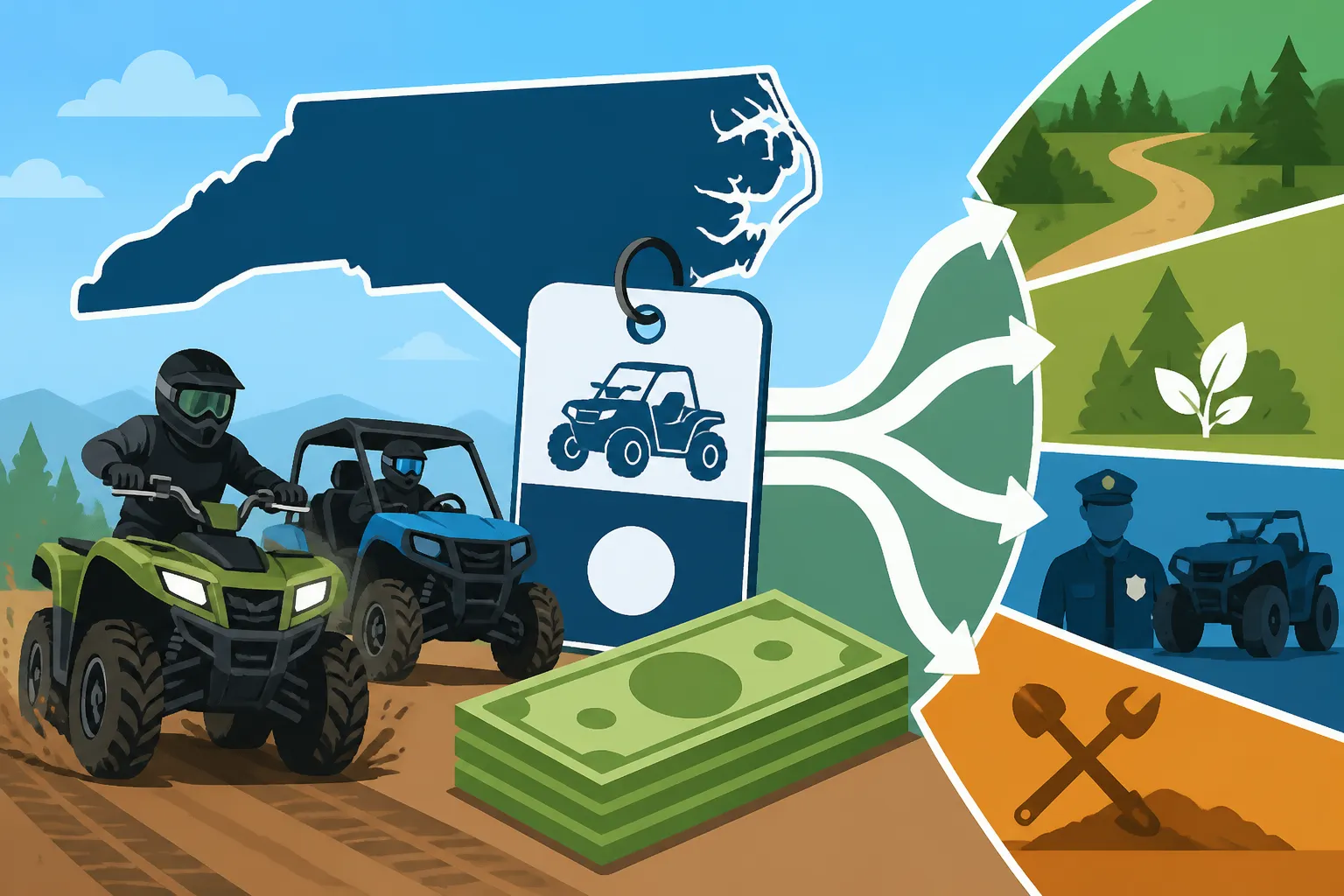
In general, fees collected under federal recreation-fee programs are meant to support eligible recreation-site needs. That can include operating and maintaining facilities, providing visitor information, protecting resources, and improving the visitor experience. At an OHV area, practical examples may include:
- Maintaining trail surfaces and drainage
- Repairing trail structures and crossings
- Keeping staging and parking areas usable
- Maintaining signs, maps, and information boards
- Providing or maintaining restrooms and other visitor facilities
- Supporting trail inspections, resource protection, and recreation management
- Paying eligible costs connected with collecting and administering fees
That is the useful short answer: permit revenue helps support recreation management and facilities on public lands. It is not necessarily a separate pot labeled with a particular trail name, and one permit purchase does not mean the money will be spent immediately on the exact trail you rode that day.
| What you are paying for | What the payment generally supports | What it does not mean |
|---|---|---|
| A forest OHV day permit | Eligible recreation-site operations, maintenance, services, or improvements | That you have registered the ATV |
| A forest OHV season permit | Access under the permit’s terms and support for eligible recreation costs | That the permit works at every forest or trail system |
| An ATV title fee | Processing the ownership document | That you have permission to ride a forest trail |
| A private park admission or pass | That park’s own access and operating arrangements | That you can use the pass on federal forest land |
| A safety certificate | Showing that a rider meets an applicable training requirement | That a trail fee has been paid |
The exact projects and accounting can vary. A trail may need work before visitors notice a dramatic improvement, and some expenses are less visible than a new bridge or a freshly graded staging area. Fee-supported work can include planning, inspection, drainage, signs, facility upkeep, and other needs that keep a recreation site functioning.
How forest permit fees are different from state fees
A common source of confusion is that riders encounter several kinds of paperwork and payments around the same trip. One may relate to ownership, another to trail access, and another to safety or insurance. They are not interchangeable.
A North Carolina ATV title is a state ownership document. If you are trying to understand the paperwork for a title, see How to Title an ATV in North Carolina. The title process may involve state forms and charges, but those are separate from a federal forest recreation permit. A title does not buy access to a trail system.
Forest OHV permits are tied to designated federal recreation areas and their operating rules. A permit for one area should not be assumed to work at another. The Brown Mountain OHV Trail System, Badin Lake OHV Trail Complex, and Wayehutta OHV in Western North Carolina each have their own location and access details. Confirm the permit requirements for the place you intend to ride rather than relying on what worked at a different trailhead.
A few other distinctions help:
- A permit is not a state registration sticker. It does not make a quad road legal.
- A permit is not an ATV title. It does not establish who owns the machine.
- A permit is not a general statewide trail pass. Its use depends on the land manager’s rules and the specific area.
- A safety certificate is not a fee receipt. Some riders may have a separate training-card requirement based on the applicable rules.
- A private park fee is not a federal forest permit. Each landowner or park operator sets its own access conditions.
For example, a rider may have a valid title and still need the required forest permit for a particular public riding area. Another rider may have a forest permit but lack the paperwork needed to establish ownership when buying or selling a machine. Each document answers a different question.
This separation also explains why permit money should not be confused with North Carolina’s highway-use tax or other vehicle-related charges. Those relate to state processes, not to the day-to-day upkeep of a federal recreation area. If your question is about the cost of ownership paperwork, North Carolina ATV Title Cost is the more relevant topic. If your question is about where to buy a forest permit, see Where North Carolina Forest Permits Are Sold.
What permit revenue can support on the ground
The spending that visitors notice most is often trail or facility work. A section of trail may need drainage improvements to keep runoff from washing away its surface. A crossing may need repair. A parking area may need maintenance so that vehicles and trailers can use it safely. Signs and maps may need replacement when they become damaged or hard to read.
But the work is broader than visible construction. Managing an OHV area involves decisions about where riding is permitted, how trails are marked, what condition they are in, and when they should be closed. Staff may need to inspect routes, respond to damage, inform visitors, and address impacts on soil, water, plants, and wildlife. These tasks help keep riding areas usable and reduce avoidable harm to the surrounding landscape.
Maintenance is more than grading
It can be tempting to judge a trail by whether it looks freshly groomed. That is not always a good measure of how well fees are being used. In many places, heavy grading or widening can increase erosion or damage the character of a route. Good trail maintenance can instead mean managing water, stabilizing a problem spot, repairing a structure, or closing a short section while it recovers.
Drainage is particularly important in steep or wet terrain. Water flowing down a trail can carry soil away, deepen ruts, and send sediment into nearby streams. A drainage improvement may be small and easy to miss from a machine, but it can prevent a much larger failure later. Seasonal closures and temporary restrictions can also protect a trail while work is underway.
Visitor facilities and information count too
A trail system is not just the dirt between the start and end points. It also needs places to park and unload, signs that help riders stay on authorized routes, and information that communicates closures and rules. Where facilities are provided, upkeep may include basic sanitation or repairs to staging-area features.
Information can be a safety issue as much as a convenience. A clear map can help a rider avoid a closed trail or understand how routes connect. A closure notice can keep traffic away from storm damage or a hazardous crossing. If you are planning a visit, check North Carolina Forest Trail Maps and North Carolina Trail Closures to Check before loading the trailer. A map or sign is useful only if it reflects current access conditions.
Resource protection is part of recreation management
Keeping a trail open does not mean leaving it unmanaged. Managers may need to address erosion, protect sensitive areas, prevent unauthorized riding, and adjust access when conditions require it. These activities can be less visible than a new facility, but they help determine whether a riding area can remain available over time.
That is one reason a permit fee should not be treated as a simple payment for a fixed quantity of trail. It helps support the wider work needed to provide and manage a recreation opportunity. The work may vary from season to season, depending on conditions, damage, staffing, and other priorities.
Why you may not see a direct return on your purchase
A day permit is not a promise that the trail will be repaired before your next ride. Nor does buying a season permit guarantee that every route will be open every day. Public-land managers have to balance visitor access with safety, resource conditions, maintenance capacity, and other uses of the land.
Some work is preventive. It may stop a drainage problem from becoming a washout, or identify a damaged structure before it fails. Some work supports the whole riding area rather than a single named trail. And some needs may take time to plan, authorize, schedule, and complete.
The relationship between a fee and a particular project also may not be one-to-one. Revenue can support eligible costs at a recreation site, but it is not necessarily set aside in an individual account for the specific trail named on your permit. Fees collected at a recreation area are handled under the applicable federal recreation-fee rules; the exact allocation and accounting process can depend on the agency and the site. Avoid assuming that every dollar from a particular transaction goes straight to a specific repair.
There are practical limits as well. Permit revenue is only one piece of how a public recreation area is managed. Staff, contractors, equipment, environmental review, weather, and available operating funds all affect what can be done and when. A project may also require coordination or approvals before work begins. That can make a worthwhile improvement take longer than riders expect.
Closures are another example. A closed trail can feel like a loss of value, especially if you bought a permit and drove a long distance. But closing a route after storm damage or during unsafe conditions can prevent further damage or reduce risk to visitors. Paying a permit does not override a closure. Before you travel, review the latest notices for the area and be prepared to change plans. Who Keeps North Carolina’s OHV Trails Open offers more context on the work and responsibility behind trail access.
How to find out what a particular area is doing
If you want a more specific answer than “fees support recreation,” ask about the riding area and the work you care about. “Where does the money go?” is a fair question, but a focused question is more likely to produce a useful answer. You might ask which office manages the area, what current maintenance priorities are, or whether a particular closure is related to repair, weather, or resource protection.
A practical approach is:
- Identify the exact riding area. Start with the name of the forest and the OHV area, not just “North Carolina trails.”
- Check the current permit instructions. Confirm the permit type, where it is valid, how it must be displayed or carried, and any local conditions.
- Look for current alerts. Trail status can change after heavy rain, storms, maintenance, or other events.
- Contact the relevant land-management office. Ask about the area’s current needs, recent work, or how permit revenue is used there.
- Ask for available public information. If you want more detail, ask whether the office has a fee proposal, project update, annual summary, or other public explanation for that recreation site.
- Keep the question specific. Asking about trail drainage, a staging area, signs, or a known closure is more useful than asking for a general accounting of every fee.
Federal recreation-fee programs provide a framework for collecting and using fees for eligible purposes. The local land manager is the best place to ask how that framework applies to a particular site and what information is available about its projects. Do not assume that a counter clerk, permit retailer, or private shop handling a sale has access to the site’s complete budget records. A seller may be able to explain how to buy a permit without being responsible for decisions about how the recreation area is managed.
If you want to keep track of your own costs, save receipts and note which area each permit covered. A small waterproof document pouch from Amazon can keep paper receipts, a trail map, and other trip documents together in a vehicle. The important point is not where you buy it; it is having a reliable way to keep records if you later want to compare trip expenses or ask about a specific permit.
What riders can do to help the money go further
Permit fees are only one part of keeping an OHV area usable. Riders also affect how much repair and enforcement work is needed. Staying on marked routes, respecting closures, and following the area’s equipment and operating rules can reduce preventable damage and help preserve access.
A few habits make a practical difference:
- Stay on designated routes. Riding around a barrier or creating a shortcut can damage land and make future closures more likely.
- Check conditions before leaving home. A trail that was open on your last visit may be closed after a storm or for maintenance.
- Avoid riding when conditions are especially vulnerable. Wet ground can rut or erode easily, depending on the trail and local conditions.
- Carry out what you bring in. Litter and abandoned gear create cleanup work and detract from the site.
- Follow posted instructions at the trailhead. Rules about permits, parking, routes, and equipment can be specific to the area.
- Report hazards through the appropriate channel. A damaged sign, blocked route, or unsafe crossing is more useful to managers when reported with a clear location and description.
- Do not treat a paid permit as permission to ignore a closure. Fees support recreation management; they do not cancel the land manager’s authority to restrict access.
Good preparation helps too. Save the current map and closure information before entering a dead zone, and carry the gear you need for the conditions. If you keep a paper copy of a map or permit instructions in a protective sleeve, Amazon is one place people sometimes look for basic waterproof storage; make sure the document remains readable and follow the forest’s actual display or carrying instructions. A lightweight notebook or trip log can also help you record which routes were open and what conditions you encountered. If you buy one through Amazon, treat it as a personal record-keeping tool, not as an official trail-status source.
The most useful form of accountability is specific and constructive. If a bridge is damaged or a sign is missing, report where it is and what you observed. If you want to know how fees support an area, ask the managing office about eligible projects and available updates. And if an area changes its access rules or permit process, verify those details through the current official information rather than relying on an old post or a conversation from a previous season.
For families or groups, keep everyone’s documents and trip details organized before arriving at the trailhead. A shared folder or a separate waterproof pouch for receipts and printed information can reduce confusion when several machines are involved. Amazon may be convenient for basic organizers, but do not assume a purchased sleeve, sticker holder, or accessory meets a forest’s requirements for displaying a permit. Follow the area’s directions.
The practical takeaway
North Carolina forest OHV permit money is intended to help support recreation on the public lands where riding is offered. Eligible uses can include trail and facility maintenance, visitor information, operations, and resource protection. The details vary by area, and the benefit may be preventive or shared across the site rather than visible as an immediate repair to one trail.
A permit is not a state registration, title, or universal pass. It covers only the access defined by the relevant land manager. Before riding, confirm the current permit requirements, trail status, and any local rules for your destination. If you want a specific account of how a particular riding area uses fees, contact the office responsible for that area and ask what public information is available.
Disclaimer
This article is for general informational purposes only and does not constitute professional advice. Laws, prices and regulations vary by location and change over time. Consult a qualified professional for guidance on your specific situation.