Carrying the Certificate on a North Carolina Ride
Carrying proof of an ATV safety course can be easy to overlook when you’re packing for a North Carolina ride. The rule is tied to your birth year and where you ride, and the certificate is separate from a trail permit. Here’s when to bring it, what to carry, and how to avoid relying on a document you can’t produce when asked.
When You Need to Carry the Certificate
North Carolina’s safety-certificate requirement applies to ATV operators born on or after January 1, 1990, when they ride on covered public lands. Those riders must complete an approved ATV safety course and carry proof of completion while riding. The practical answer is simple: if you fall into that birth-year group and plan to ride a public trail, take your certificate with you.
The birth-year cutoff is easy to misread. A rider born in 1989 is on one side of the line; a rider born in January 1990 is on the other. The requirement is based on the rider’s birth year, not the machine’s age, the rider’s experience, or whether a parent owns the ATV. For more detail on the cutoff, see North Carolina Safety Certificate Birth Year Rule and January 1990 and the North Carolina Line.
The location matters too. The certificate requirement is associated with covered public-land riding, rather than being a universal document requirement for every ride on private property. A private off-road park, rental operator, event organizer, or landowner may set its own participation conditions, however. Check those rules separately; a place can ask for training proof even if the state requirement does not apply to that particular ride.
| Ride setting | What to check about the certificate |
|---|---|
| Covered public ATV land or forest trail | Riders born on or after January 1, 1990 should complete an approved course and carry proof while riding. |
| Private property | The public-land rule may not apply, but the owner or operator can set separate conditions. |
| Private off-road park or organized ride | Ask the operator whether it requires a certificate, regardless of the state birth-year cutoff. |
| UTV or side-by-side ride | Confirm how the machine is classified and what the specific land manager requires; do not assume ATV and UTV rules are identical. |
| Ride in another state | Check that state’s requirements. A North Carolina certificate or permit does not automatically settle another state’s rules. |
A public trail system can have more than one requirement to sort out. A forest permit, a safety certificate, and any vehicle or rider restrictions serve different purposes. Having one does not replace the others. Before a trip, review Do You Need a Permit for North Carolina Forest Trails? and North Carolina ATV Safety Certificate Requirements.
Who should bring proof
Bring proof if you meet the birth-year cutoff and will operate an ATV where the requirement applies. It is sensible to carry it even if you expect a short ride or think nobody will ask to see it. A trailhead check, a roadside conversation, or an unexpected change in your plans can turn a document left at home into a problem.
If several eligible riders are coming, each rider should have their own proof available. One person’s card does not document another rider’s course completion. The certificate is tied to the person who completed the training, not to the ATV, the group, or the trip organizer.
For young riders, remember that a safety certificate does not override age or supervision restrictions. A course credential is one requirement; it does not by itself make a ride lawful for a child who is otherwise prohibited from operating the machine or requires adult supervision. Review [North Carolina Supervision Rules for Young Riders] and [North Carolina Minimum Age to Ride Public Land] when planning a family ride.
What if you ride a UTV
This article focuses on carrying proof for ATV riding. A side-by-side may be governed by definitions and land-manager rules that differ from the rules for a conventional ATV. Don’t treat the word “off-road” as enough to determine which certificate rule applies. Check the vehicle’s classification and the specific trail system’s instructions before you travel.
That distinction matters for mixed groups. If one person is driving an ATV and another is operating a side-by-side, ask the land manager whether the certificate requirement applies to both machines and whether any other requirements differ. The permit may also be charged or issued per vehicle, so confirm that separately rather than assuming one permit covers everyone.
What Counts as Proof and How to Carry It
The safest approach is to carry the course-completion certificate or card issued after you finish a course that qualifies under North Carolina’s rules. Keep it accessible while riding, not packed at the bottom of a trailer compartment or left in the truck at a distant staging area.
Approved courses and course providers are not interchangeable simply because they teach similar skills. Before enrolling, check that the course is accepted for North Carolina’s requirement. Courses the Commissioner of Insurance Has Approved explains the approval issue, and What an ATV Safety Institute Course Covers can help you understand the training content. If you already have a card from another program, confirm that the particular course is accepted rather than relying on its title or an out-of-state endorsement.
Carry a usable document
Use a method that keeps the proof legible and protected from water, mud, and wear. A small waterproof sleeve in a pocket or gear pouch is a practical option. Avoid storing the only copy where it can be damaged by fuel, rain, sweat, or a spill.
Some riders prefer a physical card; others keep a digital image as a backup. A phone photo can help if the original is misplaced, but do not assume a screenshot is accepted as a substitute for the required certificate. The rules or an officer’s procedures may specify what proof is adequate. If you have a digital copy, carry the issued document when possible and check with the relevant land manager about acceptable formats.
Make sure the information can be read. A folded, scratched, or faded card that obscures the holder’s name or course details may be less useful when someone needs to verify it. If the card has become damaged, contact the course provider for a replacement or confirmation of completion before the ride.
Keep the certificate with the rider
The certificate should be available to the person who completed the course. Keeping it in a parent’s wallet or a friend’s truck is not a reliable plan if that person separates from the group. Give each rider their own copy or card, and make sure everyone knows where it is stored.
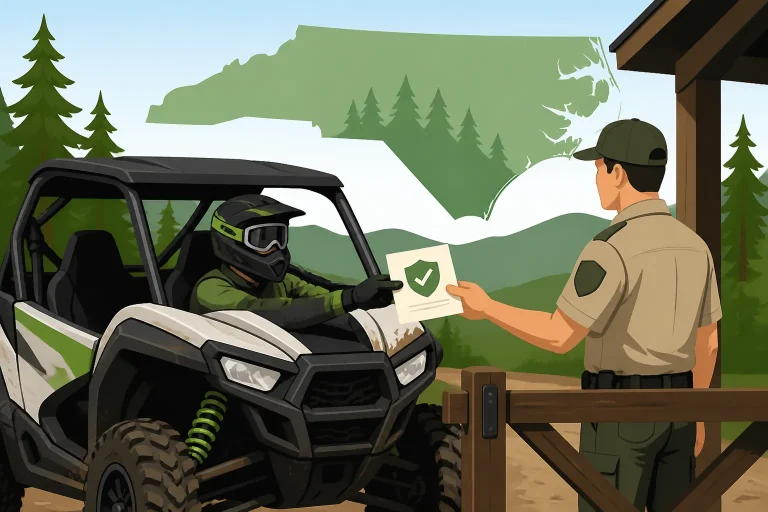
This is especially helpful for groups that split up, ride at different speeds, or use separate vehicles. A lead rider should not assume they can show a document on behalf of everyone else. If an officer or land manager asks an individual rider for proof, that rider needs a way to produce it.
For a family ride, put the adult and youth documents in separate, clearly identified sleeves. Check them during the same packing routine as helmets, eye protection, keys, and permits. A quick gear check at home is easier than trying to retrieve a card after reaching a remote trailhead.
Keep a backup without treating it as the original
A scan or clear photo stored on a phone can be useful if a physical card is lost or damaged. It can also help you contact the course provider or explain the situation. But a backup is not a guarantee that the copy alone meets a requirement to carry the certificate. Ask the land manager or relevant authority if you need to know what form it will accept.
If you carry digital proof, consider practical issues: a phone can lose power, get wet, or have no signal. Download the image so it is available offline, protect the device, and do not rely on a cloud account that requires a connection at the trail. The physical certificate remains the simplest option when you can bring it.
How the Certificate Fits With Permits and Other Ride Rules
A safety certificate proves that a rider completed a qualifying course. It is not a trail pass, vehicle registration, title, or permission to ride on a particular property. Treat it as one item in a short list of separate checks.
North Carolina does not issue a single document that automatically authorizes every kind of off-road riding. Public forest trails may require a permit, and the rules can vary by riding area. A safety card does not open a closed trail, replace a vehicle-specific permit, or give permission to cross private land. For a closer look at the separate paperwork, read Where North Carolina Forest Permits Are Sold and Why a Permit Is Per Vehicle in North Carolina.
| Document or permission | What it generally addresses | What it does not replace |
|---|---|---|
| Safety certificate | The qualifying rider’s completion of an approved course, where the birth-year rule applies | Trail permit, landowner permission, or compliance with age and equipment rules |
| Forest or trail permit | Access to a particular riding area under its permit system | Safety-course proof or permission to ride outside the permitted area |
| Landowner permission | Authorization to ride on private land | Public-land permits or other safety requirements |
| Title or ownership paperwork | Ownership and vehicle records where relevant | Permission to ride a trail or proof of course completion |
A trail system can also impose rules beyond the statewide certificate requirement. Those may cover machine type, trail access, age, equipment, or operating conditions. Check the current notices for the exact place you intend to ride, especially before a long drive. North Carolina Trail Closures to Check First is useful when your route depends on a particular forest or trail system.
Out-of-state cards and visiting riders
If you completed a course in another state, do not assume that the card automatically satisfies North Carolina’s requirement. The course’s approval matters, and the card’s appearance alone may not establish that. Check whether the specific course is accepted before relying on it for a North Carolina ride. Does North Carolina Accept an Out-of-State Certificate? addresses this question.
Visitors should also separate certificate rules from permit reciprocity. A registration or permit from another state does not automatically replace North Carolina’s trail permit requirements. Likewise, a training card from elsewhere should not be assumed to substitute for an approved course without confirmation. Why North Carolina Has Nothing to Reciprocate offers more context on the state’s approach to visitors and credentials.
When in doubt, contact the land manager for the riding area and ask a specific question: “Will this course certificate meet the North Carolina requirement for an ATV rider born on or after January 1, 1990?” Give the provider or course name if you have it. A clear answer before the trip is more useful than a general assurance that the course is recognized somewhere.
Don’t confuse training with permission to ride
The certificate shows course completion; it does not certify that the rider can operate any machine on any trail. A rider still needs to follow applicable rules about supervision, passengers, protective equipment, and where the vehicle may travel. A course card is not a waiver from those obligations.
Likewise, a parent’s completion certificate does not cover a child. If the child is required to complete an approved course, the child needs their own proof. And if the child is too young to ride under the applicable rules, a certificate does not change that. Check the rules for the rider’s age and the location before you set off.
A Pre-Ride Check for Carrying Your Certificate
A brief document check can prevent avoidable delays at the trailhead. Use this sequence when preparing for an ATV ride in North Carolina.
- Identify the machine and destination. Confirm whether you are riding an ATV, a UTV, or another type of vehicle, and identify the specific trail or property. Rules can depend on both.
- Check the rider’s birth year. If the ATV rider was born on or after January 1, 1990, treat the certificate requirement as applicable for covered public-land riding.
- Verify the course. Confirm that the course was approved for North Carolina’s requirement. If it was completed out of state or through an unfamiliar provider, check before relying on the card.
- Pack the certificate for each eligible rider. Keep each person’s proof protected and within that rider’s reach.
- Bring a backup if useful. A clear offline photo can help, but do not assume it replaces the certificate.
- Check separate permit and access rules. Confirm the trail permit, opening status, vehicle eligibility, and any site-specific conditions.
- Review age and safety rules. A certificate does not replace supervision, equipment, or other requirements that apply to the rider or machine.
Make this check part of loading, not something you remember after arrival. Keep the certificate with the rider’s riding gear so it is less likely to be left in a kitchen drawer or glove compartment. For recurring trips, store it in a dedicated waterproof pocket and return it there after every ride.
If you realize the certificate is missing
If you discover the card is missing before leaving, contact the course provider about a replacement or proof of completion. If you are already at the trail, do not assume that a verbal explanation or phone image will be accepted. Ask the relevant land manager what it will accept and whether you can ride without the required proof. If the answer is unclear, the conservative choice is not to operate the ATV on covered public land until you can comply.
If an officer or land manager asks to see the certificate and you cannot produce it, stay calm and explain accurately what you have. Do not offer a certificate that belongs to someone else or claim that a course was approved if you are unsure. Keep any contact information or course records available for follow-up, but understand that paperwork recovered later may not resolve a requirement to carry proof during the ride.
If your certificate is lost after a ride, request a replacement before your next trip. Keep a backup copy in a separate, secure place, but continue carrying the issued proof as your primary document whenever possible.
If you have not taken a course yet
Choose a course that North Carolina accepts, complete it before the ride, and keep the completion document. Do not assume that watching informal videos, reading a handbook, or taking a course for a different vehicle counts as completion of an approved ATV safety course. Check the course’s status before paying or scheduling.
Training can still be worthwhile for riders who are not required to carry a certificate. A course can cover controls, protective equipment, riding technique, and risk awareness. It does not replace local rules or trail experience, but it can help a rider prepare for the conditions and responsibilities of off-road riding.
Frequently Asked Questions
Do riders born before January 1, 1990 need to carry the certificate?
The birth-year requirement applies to riders born on or after January 1, 1990. A rider born before that date is not covered by that specific requirement, but a private operator or event may set its own training conditions.
Is a safety certificate the same as a forest permit?
No. The certificate is proof of course completion for an eligible rider. A forest permit is a separate access requirement for a particular riding area. You may need both, along with compliance with other site rules.
Can I use a photo of my certificate?
A photo is a useful backup, but do not assume it is accepted instead of the issued certificate. Check with the relevant land manager about acceptable proof and carry the physical document when possible.
Does an out-of-state course automatically count?
Do not assume it does. Verify that the specific course is accepted for North Carolina’s requirement before relying on an out-of-state certificate.
Does the certificate let me ride a UTV?
Not by itself. A certificate does not grant trail access or determine whether a particular rule applies to a UTV. Check the vehicle classification and the riding area’s requirements.
Disclaimer
This article is for general informational purposes only and does not constitute professional advice. Laws, prices and regulations vary by location and change over time. Consult a qualified professional for guidance on your specific situation.