Why a Rider Born in 1989 Needs Nothing
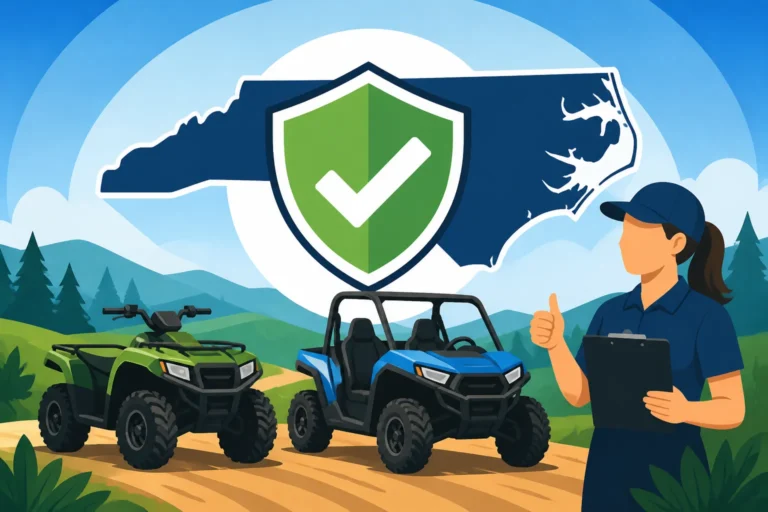
A North Carolina rider born in 1989 may hear that ATV riders need a safety certificate and wonder whether that includes them. The key is the birth-year cutoff: 1989 falls before it. That means no certificate is required solely because of the rider’s birth year, but it does not remove trail permit requirements, age rules, or restrictions on where the machine may be ridden.
What the 1989 birth year means
North Carolina’s birth-year rule applies to riders born on or after January 1, 1990. A rider born in 1989 is on the earlier side of that cutoff and does not need the state’s ATV safety certificate solely on the basis of birth year. The cutoff is a specific date, not a general rule that changes when a rider reaches a certain age.
That distinction matters because the rule is easy to misread. Someone born late in 1989 is still in the same category as someone born early that year. Someone born on January 1, 1990, is in the category that must meet the certificate requirement when it applies. The calendar year is decisive, not the rider’s current age or experience.
| Rider’s birth date | Certificate required under the birth-year rule? | What to keep in mind |
|---|---|---|
| Before January 1, 1990 | No, not because of this cutoff | Other riding rules and land-access requirements still apply |
| January 1, 1990, or later | Yes, when operating where the requirement applies | Complete an accepted course and carry proof as required |
| Birth date not clear from available documents | Confirm the date and applicable requirement before riding | Do not assume a permit or registration replaces a certificate |
The rule concerns a safety certificate, not an ATV registration, title, trail sticker, or forest permit. Those are separate matters. A rider born in 1989 may be exempt from the birth-year certificate requirement and still need a permit for a particular riding area.
For a fuller explanation of the cutoff and why it is based on birth year, see Why the Certificate Binds by Birth Year. Riders born in 1990 or later can also review North Carolina Rules for Riders Born On or After 1990 to understand the other side of the line.
A certificate exemption does not exempt you from riding rules
The word “nothing” in the title refers only to the birth-year safety certificate. It does not mean a 1989-born rider can ride any machine, on any land, without additional steps. North Carolina has separate rules about rider age, protective equipment, passengers, road use, and where off-road machines are permitted.
A safety certificate is also not a license to ride. It shows that the rider completed a qualifying safety course. It does not make an ATV street legal, grant access to private property, or give permission to ride on a closed trail. A forest permit, where required, is another separate requirement and is generally tied to the machine or riding area rather than substituted for by the certificate.
Think of the requirements as separate checks:
- Certificate: The birth-year rule affects riders born on or after January 1, 1990, where the requirement applies.
- Permit: A public riding area may require a day or season permit, regardless of the rider’s birth year.
- Access: A trail or property must be open to the machine, and the rider must have permission to use it.
- Equipment and conduct: Helmet, eye protection, passenger, noise, and other safety rules may apply independently.
- Road use: The rules for roads are different from the rules for designated off-road areas. An ATV is not made road-legal by having a certificate or permit.
Age-specific rules deserve particular attention when the rider is a minor. The birth-year exemption does not override restrictions that apply because of a rider’s age, and a parent or supervising adult should check the rules before planning a ride. For the broader age requirements, see [North Carolina Minimum Age to Ride Public Land] and North Carolina Rules for Riders Born On or After 1990.
The same principle applies to an experienced adult. Years of riding do not create an exemption from a rule that applies to a particular location, and completing a course voluntarily does not remove the need for any area-specific permit. Check each requirement for the ride you are planning rather than treating one document as a universal pass.
What to check before riding public trails
A rider born in 1989 generally does not need to take a safety course just to satisfy the birth-year cutoff. But a ride on public land can still require advance planning. Before loading the machine, identify who manages the riding area, whether the trail is open to your type of machine, and what permit or access conditions apply.
North Carolina’s forest riding areas do not all use identical access arrangements. A permit that works for one area or one kind of visit may not cover another. Check the managing agency’s current trail information before you leave, especially if weather, maintenance, or seasonal closures could affect access.
A useful pre-ride check is:
- Confirm the location and land manager. A trail on public land, a private off-road park, and private property can have different rules. A route shown on a map is not automatically open to ATVs.
- Check whether the trail is open to your machine. Confirm that the machine’s type and dimensions are allowed, and stay on authorized routes.
- Find out whether a permit is required. Review the permit options for the specific riding area. Do not assume that your birth-year exemption covers the machine’s permit.
- Check whether the rider needs a certificate for that location. If the rider was born on or after January 1, 1990, confirm the course and proof requirements that apply. A rider born in 1989 does not have the certificate requirement based solely on the cutoff.
- Review other rider and equipment rules. Check age restrictions, helmets, eye protection, passenger rules, and any machine requirements that apply to the planned ride.
- Recheck conditions before departure. A closure notice, storm damage, or a seasonal change can affect whether a trail is open, even if you have already bought a permit.
The distinction between a forest permit and a safety certificate is especially important. A forest permit relates to access under the riding area’s permit system. A safety certificate relates to course completion for riders covered by the birth-year rule. One does not replace the other. The details of permit types and where they apply are covered in North Carolina Forest OHV Permits and Do You Need a Permit for North Carolina Forest Trails?.
Do not assume that a vehicle registration from another state replaces a North Carolina forest permit, either. Permit rules are about the place where you ride, and the machine’s paperwork is a different issue. Visitors should check both the local riding-area rules and any requirements that apply to their rider or machine. [North Carolina Rules for a Visiting Rider] explains why out-of-state status is not a substitute for checking local requirements.
Courses, proof, and common misunderstandings
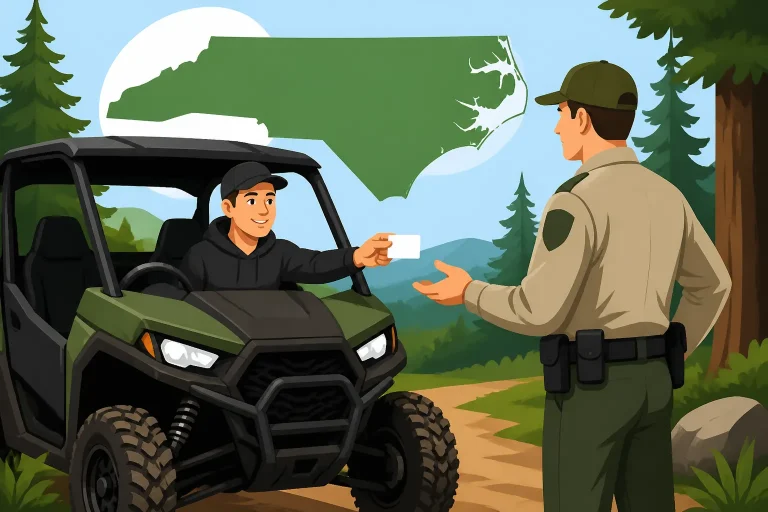
Riders born in 1990 or later should not rely on a course name alone when deciding whether it satisfies North Carolina’s requirement. The relevant question is whether the course is accepted for this purpose. Check the state’s current approved-course information before signing up, and keep the completion document available when riding if proof may be requested.
The certificate question often gets mixed up with several other documents:
- Safety certificate: Evidence of completing a qualifying safety course.
- Forest permit: Permission under a particular riding area’s permit system.
- Title: A document associated with ownership of a machine.
- Registration or plate: A separate vehicle-status matter that does not authorize off-road trail access by itself.
- Permission from a landowner: Required when riding on private land, unless another valid access arrangement applies.
A rider born in 1989 does not need to take an approved course just to satisfy the birth-year requirement. Taking a course voluntarily may still be useful, particularly for a newer rider, a family group, or someone who wants a structured safety refresher. But voluntary training is a choice, not a condition imposed on that rider by the cutoff described here.
For riders who do need a certificate, the course’s approval matters. Do not assume every online class, manufacturer lesson, or certificate from another state automatically qualifies. North Carolina’s current accepted-course information is the right place to verify a course before paying or setting aside time for it. See Which Safety Courses North Carolina Accepts and North Carolina ATV Safety Certificate Requirements.
Another common mistake is assuming the certificate expires on the same schedule as a permit. These documents serve different purposes and may have different rules. Check the applicable information for certificate validity and the specific permit’s dates before each trip. Does a North Carolina Safety Certificate Ever Expire? addresses the certificate question, while the riding-area permit information should be checked separately.
Finally, consider where the machine will actually be used. A 1989-born rider can be outside the certificate requirement and still be unable to ride a particular trail because it is closed, does not allow that machine, or requires a permit the rider has not obtained. The most reliable approach is to check rider eligibility, machine access, and area requirements as separate items.
A practical checklist for riders born in 1989
Use this short checklist when planning a North Carolina ride:
- Check the rider’s birth date. If it is in 1989, the rider is before the January 1, 1990 cutoff.
- Do not confuse the exemption with a permit. A 1989 birth year does not remove a permit requirement for a riding area.
- Confirm that the trail is open and suitable for the machine. Use current information from the land manager.
- Check for rules that apply for other reasons. Age, equipment, passenger, private-property, and road-use rules remain separate.
- Use the correct course information for other riders. If someone in the group was born on or after January 1, 1990, check whether the certificate requirement applies to that rider and location.
- Keep documents organized. Store any permit, certificate, ownership papers, or landowner permission that applies to the trip.
- Recheck before loading. Closures and access details can change; a past visit or an old permit does not guarantee current access.
The practical takeaway is straightforward: a North Carolina ATV rider born in 1989 does not need the birth-year safety certificate just because of that rule. The exemption is narrow. It does not replace trail permits, permission to ride, or compliance with other safety and access rules.
Frequently Asked Questions
Does a rider born in 1989 need a North Carolina ATV safety certificate?
Not solely under the birth-year cutoff. The requirement applies to riders born on or after January 1, 1990, where it is required for the riding location.
Does the 1989 exemption mean the rider can use public trails without a permit?
No. A riding area may require a day or season permit regardless of the rider’s birth year. Check the specific area’s rules before riding.
Is a safety certificate the same as an ATV registration?
No. A safety certificate documents course completion. Registration, title paperwork, and trail permits are separate matters with different purposes.
Should a rider born in 1989 take a safety course anyway?
The birth-year rule does not require it, but voluntary training can help build safer riding habits. For a rider who needs a certificate, verify that the course is accepted before enrolling.
Disclaimer
This article is for general informational purposes only and does not constitute professional advice. Laws, prices and regulations vary by location and change over time. Consult a qualified professional for guidance on your specific situation.