A Visitor From a Registering State in North Carolina
A visitor arriving from a state that registers ATVs may expect a home-state plate or sticker to cover riding in North Carolina. It generally does not work that way: North Carolina does not use ATV registration as a substitute for the permits required at certain forest riding areas. Here’s what to check before unloading, including permits, rider safety certificates, and trail access.
Your home-state registration does not replace North Carolina requirements
North Carolina handles off-road machines differently from states that issue ATV registrations. A plate, decal, or registration card from your home state does not automatically give you permission to ride a North Carolina trail. It also does not stand in for a permit required at a particular riding area.
The important distinction is between registration and access permission. Registration is a document or identifier issued under a state’s rules. A North Carolina forest OHV permit, where required, is permission to ride a specified trail system under that area’s rules. They serve different purposes, and one is not a general substitute for the other.
North Carolina generally does not register ATVs in the way many visiting riders expect. The state has title and affidavit processes, but neither should be confused with a trail pass or a registration sticker for riding public land. For background, see Why North Carolina Has No ATV Registration and Why North Carolina Reciprocates Nothing.
That does not mean an out-of-state registration is useless. Keep your home-state documents with you if they are required where you live, if you may need them during travel, or if they help establish ownership. A title, bill of sale, or other ownership record can also be useful if questions arise about who owns the machine. But do not treat a home-state registration document as a North Carolina trail permit.
A simple way to think about the difference:
| Document or permission | What it generally addresses | What it does not automatically provide |
|---|---|---|
| Home-state ATV registration | Compliance with the issuing state’s registration rules | Permission to ride every North Carolina trail |
| Title or ownership record | Evidence of ownership | Trail access or a forest OHV permit |
| North Carolina forest OHV permit | Access under the rules for a specific permit area | A statewide registration or permission to ride other areas |
| Rider safety certificate, when required | Proof of an accepted safety course for a covered rider | A trail permit or permission to use a closed trail |
A machine’s papers do not override land-use rules. Even with valid documents from home, you still need to confirm that the North Carolina trail is open to your type of machine and that you have any required permit. The state’s general rules and a riding area’s access rules both matter.
This is why asking only, “Is my ATV registered?” can lead to the wrong answer. The practical questions are: Where will you ride? Is that area open to your machine? Does it require a permit? Does the rider need a safety certificate? Those answers can vary by riding location and rider.
Permits depend on where you plan to ride
North Carolina does not issue one universal ATV permit that grants access to every off-road area. Permit requirements are tied to the specific place you intend to ride. Some designated national forest OHV areas use day or season permits; other land may have different access rules, and some public land is not open to ATVs at all.
That means a visitor should not buy a permit based only on a general search for “North Carolina ATV pass.” First identify the trail system, then check that system’s official information for its current permit rules, eligible machines, operating season, and closures. Do You Need a Permit for North Carolina Forest Trails? explains why the riding location matters.
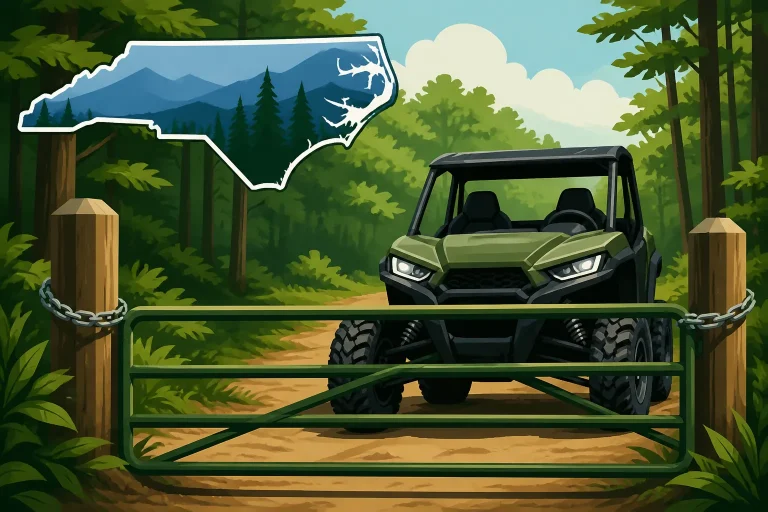
North Carolina’s forest riding areas do not all have identical arrangements. Brown Mountain, Badin Lake, and Wayehutta are distinct riding areas, and a permit for one should not be assumed to cover another. Their current operating seasons, access arrangements, and permit options can differ. Confirm the details with the responsible land manager before making the drive; a closed gate or a storm-related closure can make a planned permit purchase irrelevant for that day.
Match the permit to the riding area
A practical first check is to write down the exact destination rather than a broad region. “Near the mountains” or “in the Uwharries” may not be precise enough to identify the right permit or trail rules. Look for the named OHV area and confirm that it is open to the machine you are bringing.
For designated forest riding areas, a day permit may suit a single outing, while a season permit may make sense for repeated visits to the same area. The exact options and terms are set by the area and can change. Check the official source for current availability, dates, purchase locations, and any instructions for displaying or carrying the permit. For more detail, see North Carolina Forest OHV Permits, Where to Buy a North Carolina OHV Permit, and North Carolina’s Forest Day Permit.
Do not assume that buying a permit covers every machine in a group. Permit rules may apply per vehicle, so find out whether each ATV or UTV needs its own permit. If you are bringing multiple machines, confirm the count before purchase and make sure the required permit is assigned or displayed as directed. A driver’s permit or a group’s paperwork may not cover every vehicle.
Also check where the permit is valid. A pass issued for one forest trail system is not a statewide pass, and a permit for a forest area is not permission to ride on nearby roads, game lands, private property, or an unmarked trail. Stay on routes open to your machine and follow signs at gates and trail junctions. Which North Carolina Forests Take a Day Permit is useful when you are comparing a particular destination with the permit system.
Confirm that the machine is eligible
A permit does not make every off-road vehicle suitable or legal for every trail. Before you pay, check the area’s machine requirements, including any limits or rules for vehicle type, width, equipment, or sound. A wide side-by-side, for example, may not fit the same routes as a narrower ATV. An area can also restrict machines based on conditions or resource protection needs.
The same caution applies to roads. Forest roads and OHV trails are not interchangeable. A road shown on a map may be closed to your machine, while a designated trail may have separate permit and equipment requirements. Do not rely on a road’s appearance, a phone map, or another rider’s old trip notes as proof that it is open.
If the destination is a private park, club trail, or commercial riding area, its rules may differ from federal forest rules. Ask the operator whether the permit is included, whether it is valid only on that property, and what documents or equipment riders must bring. A North Carolina forest permit does not authorize access to a separate private facility.
Check the rider rules as well as the machine rules
Permits are only one part of trip preparation. North Carolina has rider requirements that can apply independently of the vehicle’s registration status. One key issue for visitors is the state’s ATV safety certificate rule, which is tied to the rider’s birth year. Riders born on or after the applicable birth-year cutoff may need an approved safety certificate when operating on covered public land.
Do not assume a home-state course card is accepted just because it is valid at home. North Carolina’s requirements specify which courses or certificates qualify. Check the current state guidance before travel, especially if the rider is close to the birth-year cutoff or has a certificate from a different provider. The relevant background is covered in North Carolina’s Birth-Year Safety Certificate, Does North Carolina Accept an Out-of-State Certificate?, and Which Safety Courses North Carolina Accepts.
The certificate rule is separate from a trail permit. A rider who needs a certificate does not avoid that requirement by purchasing a permit, and a certificate does not allow riding without a required permit. A visitor should check both.
Age and supervision rules also deserve attention when children are riding. North Carolina has rules that apply to young riders, and a parent should not rely only on the machine’s manufacturer age label or the rules from the state where the family lives. Review [North Carolina Rules for a Visiting Rider] and [North Carolina Supervision Rules for Young Riders] if a minor will operate an ATV.
Other state rules can affect equipment and riding behavior, including helmet use, passenger limits, lighting, and requirements for riding after dark. A home-state plate or permit does not exempt a visitor from the rules that apply where the ride takes place. Check the current requirements for the rider’s age and the type of machine, and make sure every passenger is allowed on that particular vehicle.
Land access is another separate issue. A forest permit does not grant permission to cross private land to reach a trailhead, ride on an unauthorized road, or leave a marked route. On private ground, get the landowner’s permission before riding. On public land, follow the posted access rules and remain on routes open to your vehicle. See [North Carolina Rules for a Visiting Rider] and [North Carolina Rules for Riding Off the Trail] for related access issues.
A pre-trip checklist for out-of-state riders
A little preparation can prevent a wasted drive or a citation. Use this sequence before loading the machine:
- Choose the exact riding area. Identify the named trail system or park, not just the town or region. Confirm it is open and accepts your machine type.
- Check the permit rules for that area. Verify whether a day or season permit is required, whether each machine needs one, and how to buy and display or carry it.
- Check for closures and operating dates. Weather, storm damage, maintenance, or seasonal rules can affect access. Recheck shortly before leaving, not only when planning the trip.
- Review rider requirements. Check whether anyone in the group needs an approved safety certificate, and review age, supervision, helmet, and passenger rules.
- Bring useful ownership and travel documents. Keep your home-state paperwork and proof of ownership available, but do not treat them as a substitute for North Carolina permits.
- Confirm route and access boundaries. Use current official maps and signs. Do not assume nearby roads, private property, game lands, or unmarked tracks are open to ATVs.
- Prepare for trail conditions. Bring required safety gear, enough fuel for the planned ride, and a way to contact help where service may be limited. Follow local instructions for sound, spark arresters, and other equipment.
For a first trip, it helps to keep the paperwork for each machine together and label it clearly. Have the permit, proof of purchase or ownership, and any rider certificate ready before reaching the trailhead. If you are traveling with a group, tell every driver which rules apply and where the permitted route begins and ends.
A visitor who already has a home-state registration can still ride in North Carolina, provided the destination allows the machine and the rider follows the applicable rules. The mistake is assuming that one document settles every question. Registration, ownership, forest permits, safety certificates, and land access address different things.
If anything is unclear, contact the land manager or facility before departure. Ask specifically whether the planned vehicle is allowed, which permit applies, and whether an out-of-state safety certificate meets the rider requirement. That direct confirmation is more useful than relying on a registration sticker or a rule from another state.
Frequently Asked Questions
Does my out-of-state ATV registration let me ride North Carolina forest trails?
No. A home-state registration does not replace a permit required for a particular North Carolina forest riding area. Check the rules for the exact destination.
Does North Carolina issue one ATV permit that works statewide?
No single permit should be assumed to cover every riding area. Permit requirements depend on the location, and one area’s permit may not apply elsewhere.
Does my out-of-state safety certificate count in North Carolina?
It depends on whether the course or certificate meets North Carolina’s current requirements. Confirm acceptance with the official state guidance before riding.
Do I need a separate permit for each machine?
Permit rules can apply per vehicle. Check the specific area’s current instructions before buying permits for a group.
Can I ride anywhere that is not posted as closed?
No. A route must be open to your type of machine, and public or private land may have access restrictions even when there is no obvious sign at the entrance.
Disclaimer
This article is for general informational purposes only and does not constitute professional advice. Laws, prices and regulations vary by location and change over time. Consult a qualified professional for guidance on your specific situation.