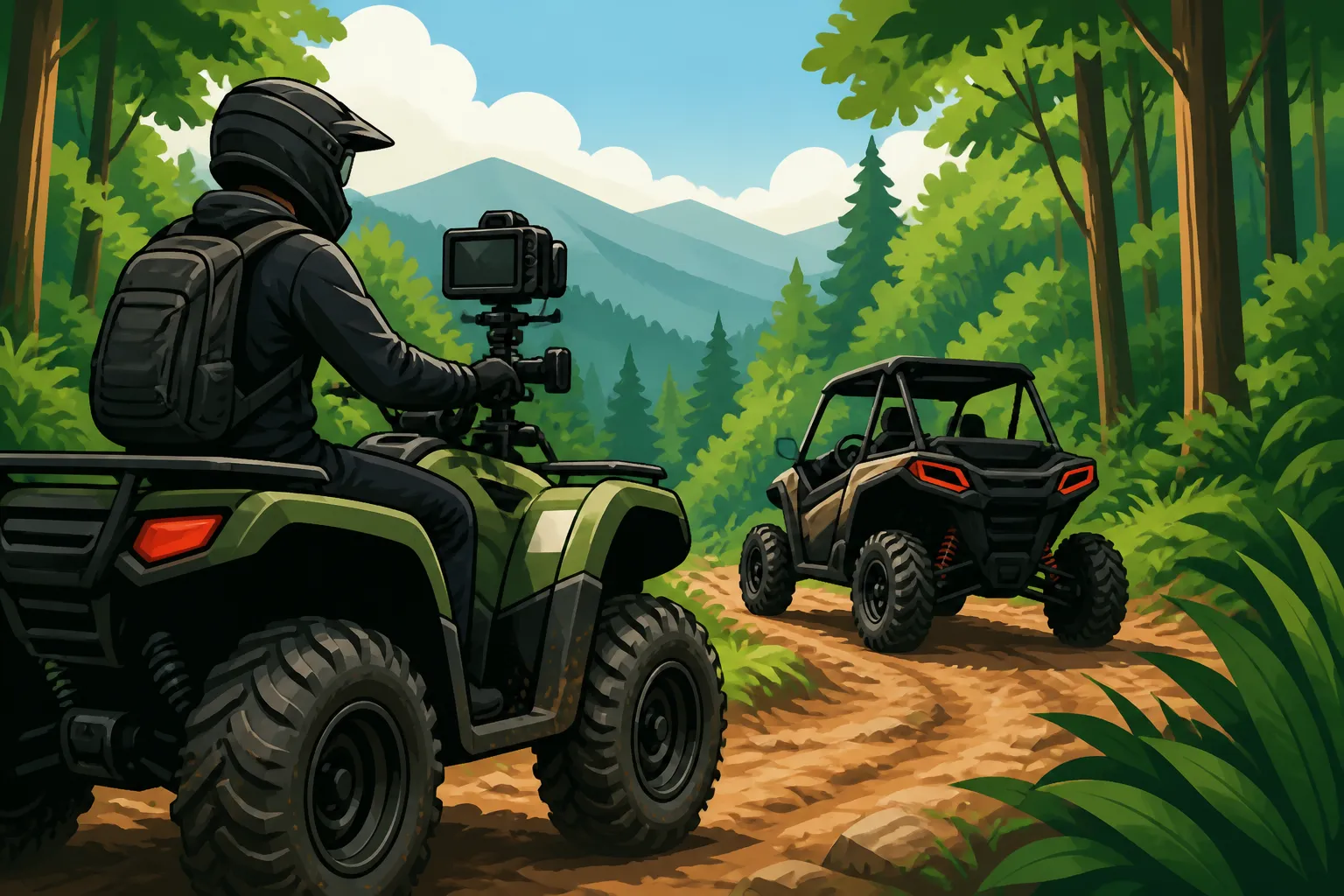
Filming on a North Carolina Forest Trail
Filming on a North Carolina forest trail can be as simple as recording a ride for personal use—or involve a crew, equipment, and commercial plans that need advance approval. The key is to separate permission to ride from permission to film. Here’s how to identify the land manager, ask the right questions, and avoid disrupting trail users or violating access rules.
First identify who manages the trail
“Forest trail” can mean a trail in a national forest, a state or local forest, private land, or an off-road park. The name of the nearby town or forest is not enough to establish who controls the trail. Permission comes from the land manager, and rules can differ between properties and activities.
For trails in the Pisgah, Nantahala, or Uwharrie National Forests, contact the responsible U.S. Forest Service ranger district. If the trail is inside a state park, on county land, or on private property, ask that property’s manager instead. A Forest Service approval does not grant access to neighboring private land, and a landowner’s permission does not override a trail closure or public-land restriction.
Before planning a shoot, confirm:
- The trail’s official name and location
- Which agency or owner manages the trail
- Whether it is open to the kind of machine you plan to use
- Whether filming, commercial activity, or organized use needs written approval
- Whether the proposed date, equipment, and group size are allowed
Use the land manager’s official maps and notices rather than relying only on an old map, a social media post, or a route shared by another rider. Conditions and access can change. North Carolina Forest Trail Maps can help with route planning, while North Carolina Trail Closures to Check is useful before you travel.
If you are unsure which office handles the trail, describe the access point, route, and filming plan when you call or write. Ask the office to identify the correct manager before you make arrangements. A trail can cross jurisdictions, and a project may need approval from more than one owner.
Filming permission and riding permission are separate
A permit or pass that allows an ATV or UTV onto a trail is not automatically approval to make a production there. These permissions answer different questions: the riding permit covers access for the machine under the applicable rules; filming approval concerns the activity, equipment, crew, and possible effects on the land and other visitors.
The same separation applies to a filming authorization. It does not necessarily provide an OHV permit, open a closed trail, authorize riding off the marked route, or waive vehicle and rider requirements. Check both sets of rules before the shoot. The article North Carolina Forest OHV Permits explains the riding-permit side, while Applying for a Special Use Permit From a District covers the process of asking a district about a proposed use.
Whether filming requires advance approval can depend on the land manager’s current rules and the nature of the activity. A person casually recording a personal ride with a phone may be treated differently from a production that uses a crew, commercial equipment, props, staging, or exclusive use of an area. Monetizing a video does not, by itself, answer the permit question. Do not assume that a small camera means approval is unnecessary, or that every recording automatically needs a formal permit.
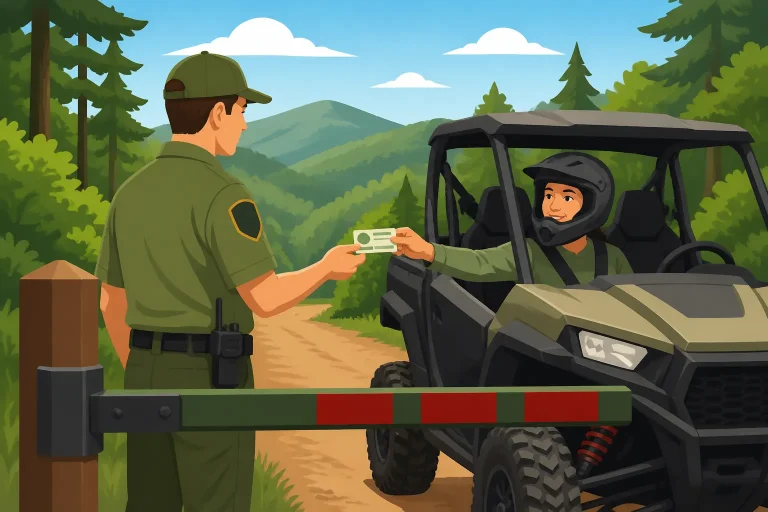
Ask the manager directly, giving a clear description of the project. In particular, ask whether the activity falls under a filming or special-use process and whether written authorization is required. If the answer is that no permit is needed, consider keeping a written reply with your trip details. That record can help clarify what the office approved if questions arise on site.
| Permission or rule | What it generally addresses | What it does not automatically authorize |
|---|---|---|
| OHV permit or pass | Riding an eligible machine where access is allowed | Filming, commercial activity, or access to a closed route |
| Filming or special-use approval | The proposed recording activity and its conditions | Riding without required permits or ignoring trail restrictions |
| Landowner permission | Access to the owner’s property under agreed terms | Entry onto other land or public trails |
| Trail status notice | Whether a route is open under current conditions | A filming permit or a guarantee that conditions will stay unchanged |
How to ask for approval
Contact the responsible office well before the planned filming date, especially if the project involves several people, multiple machines, lighting, stands, or a tight production schedule. The office may need time to review the location and activity, and it may ask for more information before deciding whether a permit is needed.
A useful request includes:
- The location. Give the forest or property name, trail or staging area, and intended access point. Include a map or route description if the location could be ambiguous.
- The purpose. Explain whether the footage is personal, editorial, educational, promotional, or part of a paid production. Be straightforward about sponsorships or client work.
- The date and schedule. Provide the proposed filming date, arrival and departure times, and any backup dates.
- The people and machines. Estimate the number of crew members, riders, and vehicles. Identify any support vehicles that would need access.
- The equipment. List cameras, tripods, drones, lights, sound equipment, temporary signs, or other gear. Ask separately about drones; approval to film from the ground does not settle whether an aircraft may be used.
- The planned activity. Describe whether you will ride while recording, stop to film, stage a scene, repeat passes, or position people beside the trail.
- The expected impact. Explain how you will avoid blocking the trail, damaging vegetation, disturbing wildlife, or interfering with other visitors.
Be ready to adjust the plan. The manager may restrict locations or times, ask you to use a different staging area, or decide that a proposed activity is not compatible with trail use. If an application or fee applies, ask the office how the current process works and what costs may be involved. Requirements and charges can change, so confirm them with the agency handling the land rather than relying on old figures.
Before the shoot, read any written conditions closely. Check whether they limit the number of people or machines, set boundaries, require a particular contact person, or specify where equipment can be placed. Make sure everyone in the group understands the limits. An approval for one location, date, or setup may not cover a different trail or a later shoot.
Keep the shoot within trail and visitor rules
A camera does not create an exception to ordinary riding rules. Stay on routes open to your vehicle, follow posted signs, and do not cut across vegetation to find a better angle. North Carolina Rules for Riding Off the Trail explains why leaving a marked route can be a separate problem from the filming activity itself.
Plan shots around other visitors rather than expecting them to wait. Avoid blocking a narrow trail with a tripod, parked UTV, or group of people. Choose a safe pull-off where stopping is allowed, keep machines clear of the travel path, and let other trail users pass. If the location cannot accommodate filming without obstructing access, move to another spot or change the shot.
A larger gathering may raise issues beyond filming. If you are inviting riders or organizing an event, ask the district whether the activity needs separate approval. Do not treat a filming request as an event permit. North Carolina Rules for an Organized Ride and North Carolina Rules for a Group Over Ten Machines cover related questions, but the responsible land manager should confirm what applies to your specific plan.
Weather, maintenance, fire danger, or other conditions can close a trail after you receive approval. Check for current notices before leaving and again near the filming date. If a gate is closed or an official directs you to stop, do not enter on the assumption that your filming approval overrides the closure. Checking a Forest Alert Before You Drive offers a practical reminder to verify conditions before making the trip.
For a straightforward shoot, the safest sequence is to identify the land manager, describe the activity, get a clear answer about filming approval, and then check riding permits and trail status separately. Keep the relevant written approval or agency response accessible, follow its conditions, and be prepared to change plans if the trail is closed or the activity would interfere with public use.
Disclaimer
This article is for general informational purposes only and does not constitute professional advice. Laws, prices and regulations vary by location and change over time. Consult a qualified professional for guidance on your specific situation.