Guiding Riders for Pay in Pisgah
A paid ride in Pisgah involves more than choosing a route and collecting bookings. Commercial guiding on National Forest land can require Forest Service authorization, while riders may have separate trail permits and safety obligations. The key is to confirm where the group can ride, what approvals apply to the business, and which requirements each customer must meet before the trip.
Separate the guide’s authorization from the rider’s permits
A common planning mistake is to treat a trail pass as permission to run a paid tour. Those are different questions. A pass may allow a machine to use a particular riding area; it does not necessarily authorize a business to lead customers there for compensation.
Confirm whether your route is on National Forest land
“Pisgah” can mean a broad region, Pisgah National Forest, or a particular trail or riding area. Rules depend on the land manager and the route. A road that looks open on a map may be closed to motorized use, and permission to travel on one road does not mean nearby woods or trails are open.
Start by drawing the proposed route and identifying who manages every section. If the trip uses National Forest System land, contact the appropriate Forest Service district office before advertising the tour. Explain what you plan to do: whether customers bring their own machines or rent yours, how many riders you expect, how often trips will run, whether you will charge a fee, and which roads or designated trails you want to use.
Commercial activity on National Forest land may require a special-use authorization. The Forest Service determines what authorization applies and what conditions go with it. Do not assume that a one-time event approval, a customer’s trail permit, or a permit for a different forest area covers your guiding operation. For a starting point, see North Carolina Rules for a Commercial Guide and Applying for a Special Use Permit From a District.
The district may ask for details such as a proposed operating plan, routes, dates, group size, safety procedures, insurance information, or emergency arrangements. These are examples of information an authorization process may involve, not a guaranteed checklist. Requirements depend on the activity and the land involved. Ask the district what it needs, how long review may take, and whether any fees or insurance conditions apply before setting dates or accepting nonrefundable bookings.
Check the riding-area permit separately
A customer’s access requirements can depend on the exact riding area. Brown Mountain is an OHV area in the Grandfather Ranger District, but a Brown Mountain permit should not be treated as a general permit for all of Pisgah National Forest. Check the current rules for the specific site and route, including whether the area is open and whether a day or season permit is available. The Brown Mountain OHV Trail System page can help you understand the area, but verify current operating details with the Forest Service before a trip.
Ask the district specifically how permits work for a guided group. Find out whether each machine needs its own permit, where permits can be purchased, whether a guide’s permit covers only the guide’s machine, and what proof riders need to carry or display. Do not infer the answer from a group’s booking confirmation or from a permit bought for another location.
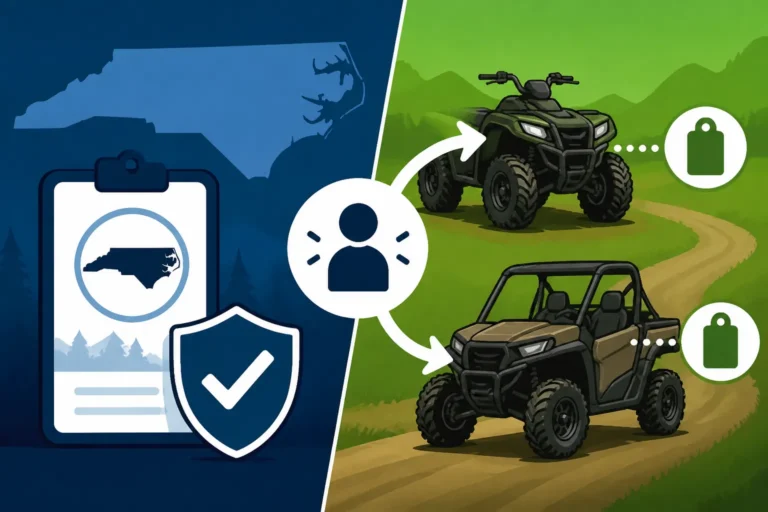
This distinction matters even when a customer has paid you for a complete package. A tour price does not automatically include the required access permit. If your authorization or business arrangement does include a pass, tell customers which machine and riding area it covers. Otherwise, clearly state what they must buy themselves and when they need to do it. North Carolina Forest OHV Permits and Where North Carolina Forest Permits Are Sold are useful topics to review, but confirm current details for the selected area.
| Question | Who it usually concerns | What to verify |
|---|---|---|
| May the business lead paid rides on the route? | Guide or outfitter | Whether Forest Service authorization is required and what conditions apply |
| May a machine use the selected riding area? | Each rider or machine | Current area permit, machine eligibility, and any display or carry rules |
| Is the route open to motorized use? | Everyone on the trip | Designated route status, seasonal closures, and temporary restrictions |
| May the customer operate the machine? | Individual rider | Age, supervision, safety certificate, and equipment rules |
| What happens if conditions change? | Guide and customers | Closure, cancellation, rerouting, and refund procedures |
Keep route access narrow and documented
Do not build a tour around a route someone described as “usually open.” Use current Forest Service maps and notices, and ask the district about uncertain connections, gates, and boundaries. A route can include a mix of roads, trails, and land managed under different rules.
Keep a copy of the approved operating plan and route information available to the guides who lead trips. If the Forest Service authorizes a particular route, schedule, or group size, do not assume the authorization also permits a different route or a larger group. Ask the district before making a material change. Riders also need to stay on routes open to their machine; North Carolina Rules for Riding Off the Trail explains why leaving a marked route can create problems beyond simply getting lost.
Build the customer requirements into the booking process
A good booking process tells riders what they need to bring and do before they arrive. It also gives the guide a chance to identify problems early, rather than at the trailhead.
Screen riders and machines before confirming
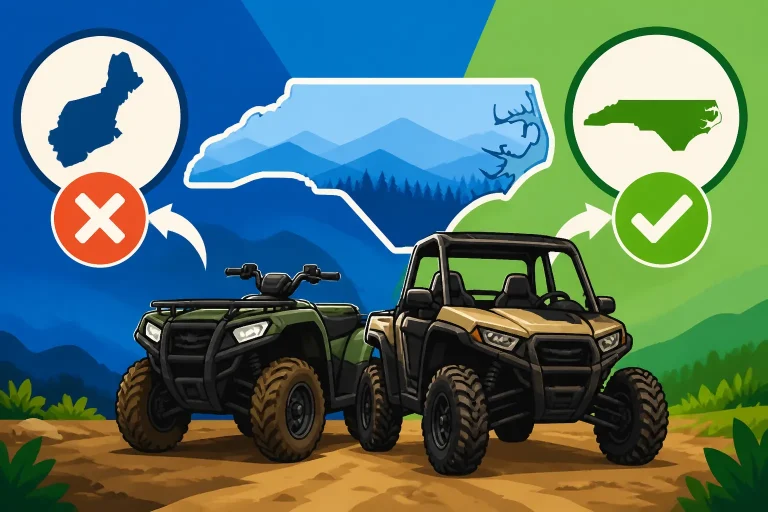
Ask whether customers are bringing their own ATV or UTV, or using a machine supplied through your operation. Record the machine type and number of riders. If the riding area has limits on machine size, width, noise, or equipment, confirm those rules before promising that a customer’s machine is suitable.
For customers operating their own machines, explain that they are responsible for arriving with a machine that is legal for the intended area and in safe working condition. For a fleet you provide, confirm that each machine meets the applicable conditions in the Forest Service authorization and the riding-area rules. Do not assume a machine suitable for a private property tour is suitable for a marked public trail.
Ask about the rider’s age and experience, too. North Carolina has age-related ATV requirements, and additional restrictions can apply to young riders. A parent’s presence does not automatically remove every requirement. Review North Carolina Rules for Riders Under 16 and North Carolina Supervision Rules for Young Riders, then confirm how the rules apply to the route and activity you operate.
The state’s safety-certificate rule is another item to verify for riders using public land. Requirements can depend on the rider’s birth year and the kind of riding involved. Tell customers what documentation they may need and how to confirm their eligibility; do not simply assume that an adult rider has no certificate requirement. See North Carolina ATV Safety Certificate Requirements and check current official guidance before setting your booking policy.
Explain gear and conduct in plain language
Give customers a written list of required and recommended gear. Depending on the applicable law, Forest Service conditions, and the riding area, requirements may include helmets, eye protection, or other equipment. Make clear what your operation supplies and what riders must bring. A safety briefing is useful, but it does not replace required equipment or legal eligibility.
Before departure, cover the basics:
- Stay with the guide and follow the approved route.
- Keep a safe distance and stop where the guide directs.
- Do not pass the lead guide or continue after the group stops.
- Report a mechanical problem, injury, or change in conditions promptly.
- Do not ride onto a closed trail, around a gate, or off the designated route.
- Follow instructions about passengers, speed, and spacing.
Adapt the briefing to the route and group. A steep, rocky trail needs different practical guidance from a broad gravel road. Give beginners time to ask questions, and be prepared to decline a rider or machine that cannot safely take part. A signed waiver does not make an unsafe route or an unsuitable machine a good idea.
Set expectations about permits and trip changes
Put the permit arrangement in the booking terms and reminder email. Specify whether the customer buys a riding-area permit separately, whether you supply one, and what proof to bring. If a rider needs to purchase a permit before arriving, say so early enough for them to make that arrangement.
Explain what happens if the route closes, the weather makes the ride unsafe, or the Forest Service changes access conditions. Forest roads and trails can be affected by maintenance, weather, fire concerns, or other closures. Make clear who decides whether a trip proceeds, whether you may use an alternate route, and how rescheduling or refunds work. Check North Carolina Trail Closures to Check before travel and confirm any site-specific notice with the responsible office.
Avoid promising that a ride will happen on a particular trail regardless of conditions. A closure is not a problem to work around by taking an unapproved route. If no permitted and suitable alternative is available, postpone or cancel according to your stated policy.
Prepare the operation before taking paid bookings
The practical work starts before customers arrive. A clear operating plan protects the group, helps the district assess the proposal, and gives you a repeatable way to manage trips.
Put the trip plan in writing
Describe the service accurately: the riding area, route, schedule, group size, machines, guide-to-customer arrangement, and customer skill expectations. Include how you will handle check-in, the safety talk, ride spacing, a rider who falls behind, a breakdown, and an emergency. The Forest Service may require specific information or a particular format, so ask rather than relying on a generic template.
Do not state that your business is “Forest Service approved” unless you have the authorization and the wording is accurate. If approval is pending, do not advertise a confirmed route or imply that a permit is already in place. Keep authorization documents, maps, and operating conditions together, and make sure every employee or contract guide understands the limits.
If your operation uses a rental fleet, clarify who is responsible for providing permits and explaining the machine’s limits. A rental agreement is not a substitute for any Forest Service authorization required for the business. See [Renting an ATV in North Carolina] for related customer and rental considerations.
Plan for safety and accountability
Create a check-in list that records who is riding, which machine they will use, and whether they have completed the required briefing and paperwork. Keep emergency contacts and a practical communication plan for the route. Cell service may be unreliable in forested and mountainous areas, so do not rely on a phone signal as your only way to summon help.
Set a conservative group size based on the route, rider experience, and the conditions on the day. A group that is manageable on a wide road may be difficult to control on a narrow trail. Establish where the lead and sweep guides ride, how the group stops, and what happens if riders become separated. If your authorization sets limits, those limits control.
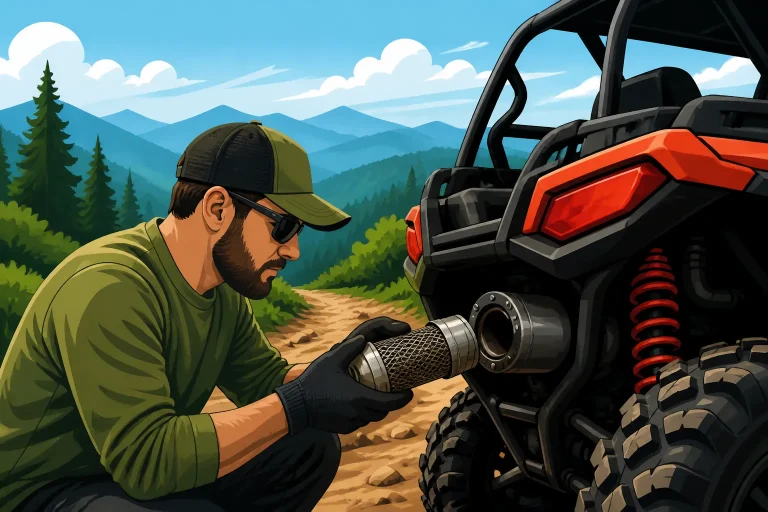
Inspect machines before departure. Check brakes, tires, controls, lights where relevant, and any safety equipment the route or authorization requires. Tell customers to report a fault rather than trying to hide it to avoid missing the ride. If a machine is not safe or does not meet the area’s conditions, leave it out.
Insurance and liability conditions may be part of a commercial authorization, but the exact requirements depend on the activity and approval. Ask the district what proof it requires and speak with an insurance professional about the operation you are actually running. A standard policy for personal recreational use may not be appropriate for a paid guiding business.
Use a pre-opening checklist
Before you sell the first trip, work through these steps:
- Map the route and identify each land manager.
- Confirm that motorized use is allowed on every segment.
- Contact the appropriate Forest Service district about commercial authorization.
- Obtain and review the authorization before operating, if required.
- Verify the riding-area permit process for each customer and machine.
- Confirm age, supervision, safety-certificate, and equipment requirements.
- Set written customer terms for permits, cancellations, closures, and machine suitability.
- Train every guide on the route, operating limits, briefing, and emergency plan.
- Check current notices before each trip and keep a lawful alternate plan.
- Record changes, incidents, and customer communications.
The most important point is to verify both layers of permission: the guide’s authority to run a paid activity and each rider’s authority to use the selected riding area. Neither should be treated as a substitute for the other. When the route, permit rules, or commercial-use conditions are unclear, get an answer from the land manager before taking payment or leading a group.
Disclaimer
This article is for general informational purposes only and does not constitute professional advice. Laws, prices and regulations vary by location and change over time. Consult a qualified professional for guidance on your specific situation.