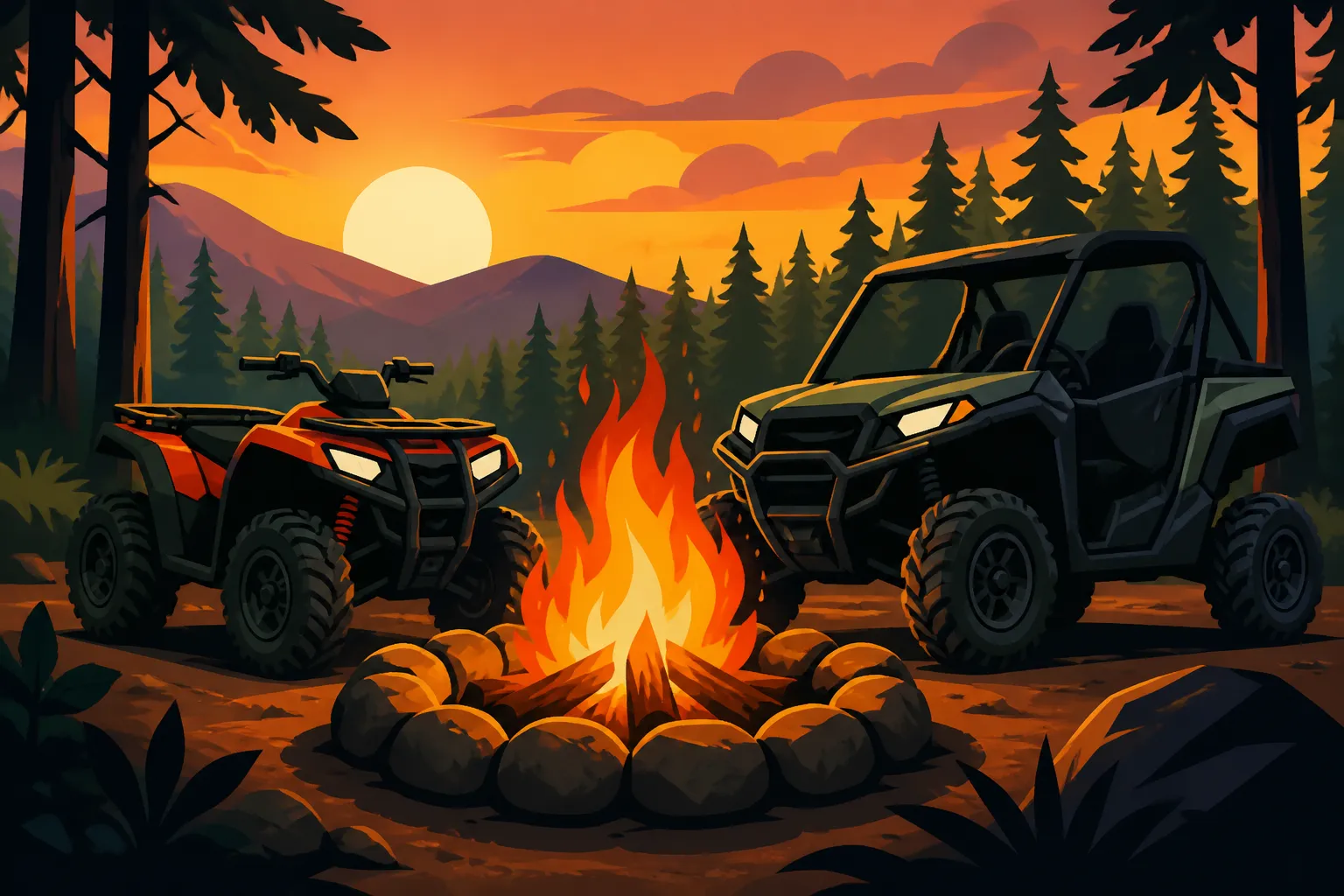
Fire Rings at a Uwharrie Forest Camp
A fire ring at a Uwharrie forest camp can make an overnight ride more comfortable, but finding a metal ring or stone circle does not automatically mean a fire is allowed. Restrictions, weather, and campsite rules can change. Here’s how to check conditions, use a ring responsibly, and plan campfire decisions alongside your OHV trip.
Before You Use a Fire Ring
Start by confirming that fires are allowed where you plan to camp, on the day you arrive. A built-in ring is useful, but it is not permission to light a fire during a restriction or in a location where fires are prohibited. Dry weather, wind, local fire danger, and forest closures can all affect what is allowed.
Check current notices from the U.S. Forest Service and follow posted instructions at the campground or campsite. If a notice is unclear, ask the managing office before starting a fire. Don’t rely on an old trip report, a map photo, or another camper’s assumption that conditions are unchanged. For other forest access notices, North Carolina Trail Closures to Check and [Checking a Forest Notice Before You Load] offer useful reminders to verify conditions before you set out.
| Before lighting | What to confirm |
|---|---|
| Location | You are at a campsite where fires are permitted, not simply near a fire ring |
| Restrictions | No current fire ban or other restriction applies |
| Ring condition | The ring is stable, usable, and clear of excess ash, trash, and debris |
| Weather | Wind and dry conditions won’t make sparks or embers difficult to control |
| Equipment | Water is available nearby, with a shovel or another way to manage the fire |
| Camp rules | The campground’s instructions allow the kind of fire you plan to make |
If restrictions prohibit fires, don’t use a ring anyway because it looks established or because other campers have a fire going. If a ring is damaged, surrounded by dry leaves, or filled with smoldering material from a previous visitor, choose not to use it until you can confirm it is safe. Report a problem to campground staff or the managing office when possible.
A campsite and a trail permit are separate things
A campfire, campsite, and off-highway vehicle access are separate parts of a trip. Having permission to camp does not by itself provide trail access, and an OHV permit does not automatically authorize camping or a fire. Check the specific requirements for your stay and riding plans rather than treating one permission as covering everything.
The details of forest riding permits are covered in North Carolina Forest OHV Permits and Where to Buy a North Carolina OHV Permit. For camping options near riding areas, see Camping Near North Carolina OHV Trails. Confirm current arrangements directly before travel, especially if your plan depends on a particular campground, trail, or service being open.
Using the Ring Without Creating a Hazard
Use the established ring rather than making a new fire site. Keep the fire small and contained, and don’t pile wood above the sides of the ring. A high fire can send sparks farther, spread heat into nearby vegetation, and become harder to control if the wind changes. Avoid lighting a fire when gusts could carry embers beyond the ring, even if fires are otherwise allowed.
Before adding wood, look around the ring. Move loose, dry material away from the immediate area without disturbing the campsite or surrounding ground. Keep tents, vehicles, fuel cans, coolers, and other belongings well clear. Do not place hot cookware or glowing coals on grass, leaves, or a wooden surface.
Keep water close enough to use immediately, not stored far away in a vehicle. A shovel can help move soil and break up coals, but water is essential for thoroughly cooling a fire. If your group is riding, decide who is responsible for the fire before everyone leaves the campsite. Never assume someone else will check it.
Use only suitable firewood, and follow local instructions about collecting or bringing it. Don’t cut live trees or strip branches from living vegetation. If you are unsure whether gathering wood is allowed, ask the managing office or bring permitted firewood from an appropriate source. Local rules and restrictions may address wood collection, transport, or firewood use, so check rather than relying on a general rule from another forest.
Keep these habits in mind:
- Burn only small amounts of appropriate wood, and add it gradually.
- Stay with the fire whenever it is burning.
- Keep children and pets at a safe distance.
- Don’t burn trash, food packaging, cans, plastic, or treated materials.
- Don’t use gasoline or other accelerants to start or revive a fire.
- Keep sparks and embers inside the ring.
- Stop adding wood well before bedtime or departure so there is time to extinguish the fire completely.
Burning trash is a poor substitute for packing it out. Wrappers and food scraps can leave residue, create smoke, attract animals, and make the ring unpleasant or unsafe for the next camper. Put waste in an appropriate receptacle or carry it out, according to the site’s instructions.
A fire ring is also not a place to discard live coals when you are done cooking. Coals can remain hot long after flames disappear. Don’t move them into vegetation, dump them on the ground, or put them into a trash container. Keep them in the ring while you cool them thoroughly.
Adjust your plans when conditions change
Weather can shift during a camping trip. A calm evening may become windy, or a dry spell may make leaves and brush more vulnerable to sparks. If the fire becomes difficult to control, stop feeding it and put it out. If conditions worsen, the safer choice is to skip the fire rather than try to keep it small.
The same principle applies if you discover a restriction after arriving. Don’t light a fire just because you brought wood or planned a cookout around it. Use a permitted alternative for meals and follow any campground instructions. An appliance is not automatically exempt from a restriction; check the wording and ask if you’re uncertain.
Plan for the possibility that no fire will be allowed. Pack food that can be eaten without cooking, or bring a cooking method only if the site rules and current restrictions permit it. That way, a fire ban does not force a last-minute change to your whole trip.
Putting the Fire Out and Leaving Camp
A fire is out only when the remaining material is cold, not merely when flames have disappeared. Begin extinguishing it well before you plan to leave or go to sleep. Pour water over the fire, including the coals and ash, and stir the material to expose anything still hot. Repeat until there is no heat, smoke, or glowing ember.
If water is limited, don’t start a fire that you cannot put out safely. Bring enough water for extinguishing, not just for drinking and cooking. Avoid burying coals as a shortcut: buried embers may stay hot and can reignite when exposed to air or dry material.
Before walking away, check the ring and the area around it. A coal can escape the ring, especially if the fire was large or the wind picked up. Look for smoldering leaves and small embers nearby, and make sure no heat remains. If you cannot confidently put the fire out, stay with it and get help from campground staff or the appropriate forest contact.
Leave the ring ready for the next visitor. Once everything is cold, remove litter and pack out trash. Don’t leave half-burned packaging or food behind. Avoid overfilling the ring with ash or rearranging rocks and site features unless staff direct you to do so. If the ring is damaged or unsafe, report it rather than trying to repair it yourself.
Fire safety belongs in the same trip plan as fuel, trail conditions, and parking. Confirm your campsite and access arrangements, then check riding information separately. Reading a North Carolina Forest Trail Map can help with navigation, while What Happens to Your Permit When Uwharrie Closes is relevant if a closure could affect your riding plans. A campground’s status and a trail’s status may not be identical, so verify both when your itinerary depends on them.
The simplest rule is to treat a fire ring as a place to contain an allowed fire, not as proof that any fire is allowed. Check current instructions, keep the fire modest and attended, and leave only after the coals are completely cold. That approach makes the campsite safer for your group, other visitors, and the forest around it.
Disclaimer
This article is for general informational purposes only and does not constitute professional advice. Laws, prices and regulations vary by location and change over time. Consult a qualified professional for guidance on your specific situation.