What Happens to Your Permit When Uwharrie Closes
A Uwharrie closure can derail a ride even if you already bought a permit. The key distinction is that a permit does not keep a trail open: it allows access only under the applicable rules and while riding is authorized. Here’s what a closure may mean for your permit, what not to assume about refunds or extensions, and how to check your options.
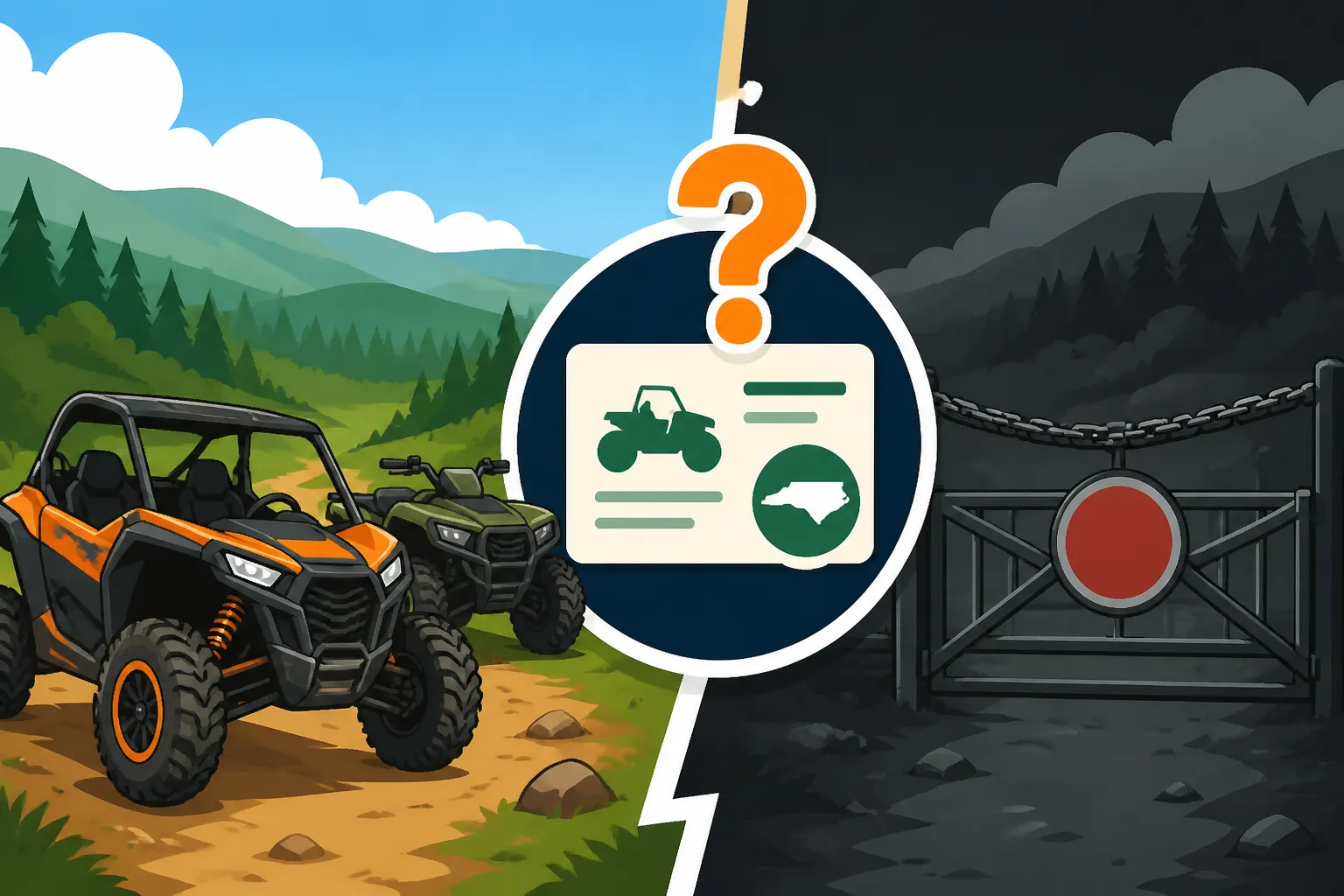
A closure overrides your permit
A permit is not permission to ride whenever you arrive. It is one requirement for using designated OHV trails; the trail system also has to be open. If Uwharrie closes a trail or riding area, do not ride there just because your permit is current, displayed, or already paid for.
Closures can happen for different reasons. A system may close as part of its regular operating schedule, or officials may temporarily restrict access because of conditions such as storm damage, maintenance, or safety concerns. The effect on your ride is the same while the closure applies: you must stay off the closed trails. A permit does not override a gate, closure notice, or official instruction.
Before you leave, check the current status of the area you plan to ride. Start with North Carolina Trail Closures to Check and confirm details through the appropriate Forest Service office or official forest notice. A closure affecting one trail or entrance does not necessarily mean every part of Uwharrie is closed, but it also does not mean an open-looking trail is available for riding. Follow the posted status for the specific route and area.
It helps to separate three questions:
- Is the trail open? Check current notices and signs.
- Is your permit valid for that area and date? Review the permit’s terms and the applicable forest requirements.
- Does the permit provide a refund, extension, or other remedy if access is interrupted? Confirm this with the permit issuer; do not assume it does.
Those questions are related, but a positive answer to one does not settle the others. For example, having a valid permit does not establish that a closed trail has reopened.
| Situation | What to assume about your ride | What to check |
|---|---|---|
| A trail is officially closed | Do not ride it, even with a valid permit | Closure notice, gates, and current trail status |
| One route is closed but another is reported open | Use only the route confirmed open and permitted for your machine | Exact trail and access-point status |
| A temporary closure interrupts a planned visit | Your permit does not automatically authorize a later ride | Permit terms and the issuer’s refund or extension policy |
| A seasonal closure begins | Do not treat a permit as an exception to the schedule | Opening and closing dates for the area |
| You are unsure whether a notice applies to your route | Pause and confirm before unloading or riding | Forest office or official notice |
For a broader explanation of how permit types work, see North Carolina Forest OHV Permits. A day permit and a season permit may differ in their period of validity, but neither should be treated as a guarantee that trails will be open on a particular day. The North Carolina’s Forest Day Permit and The Forest Season Permit in North Carolina pages can help clarify what each type is intended to cover.
What happens to a day or season permit
The practical effect of a closure depends on why the area is closed, the permit you bought, and the terms set by the issuer. A closure usually means you cannot use that permit to ride the affected area while it is closed. It does not, by itself, tell you whether the permit will be refunded, extended, or honored on a later date.
That is why it is risky to assume a closure automatically changes the permit’s end date. The permit may remain subject to its printed or stated validity period even if part of that period overlaps with a closure. It may also have conditions that explain what happens when access is interrupted. Read the terms that came with the permit and contact the issuer if the language is unclear.
If you bought a day permit
A day permit is intended for a particular day or period described by its terms. If the trail system closes before you ride, or closes while you are there, do not assume the permit can be moved to another date. Ask the seller or responsible office whether a change, refund, or credit is available.
Keep any receipt, confirmation, or proof of purchase. If you bought the permit from a vendor, the vendor may be able to explain how to contact the responsible office, but only the issuer can confirm what remedy applies. If you paid at a trailhead, keep a photo or record of the posted closure and any permit information available to you.
The practical advice is straightforward: if you discover a closure before buying, pause and check the policy before paying. If you already paid, contact the issuer promptly rather than waiting until after the permit period has passed.
If you bought a season permit
A season permit can be more flexible for planning multiple visits, but it still does not guarantee access every day during its validity period. A temporary closure may interrupt your plans without changing the permit’s stated dates. Whether an extension or other adjustment is offered is a separate question for the issuer.
Do not assume a season permit becomes valid for a different forest or trail system because Uwharrie is closed. Forest permits can have area-specific requirements, and access rules may differ between locations. Check before traveling to another riding area; Which North Carolina Forests Take a Day Permit can help you understand why coverage should not be assumed.
Also, do not assume that a permit can be passed to another owner or moved to a different machine. Check the terms for the specific permit and machine. The general issue is covered in Does a North Carolina Season Permit Transfer With the Machine?. If you are riding with a group, remember that a permit for one machine should not be treated as coverage for every machine in the group; see Every Machine Needs Its Own Trailhead Box Permit.
The same caution applies to a permit that remains physically attached to a machine during a closure. Displaying it correctly may satisfy a permit-display requirement when riding is allowed, but it does not turn a closed trail into an open one.
Refunds, extensions, and alternate plans
There is no safe blanket answer that every Uwharrie closure automatically triggers a refund or permit extension. Policies can depend on the permit’s terms, how and where it was purchased, and the circumstances of the closure. Confirm the current policy with the permit issuer or responsible Forest Service office.
When you contact them, make the question specific. Explain which permit you bought, when you bought it, where you purchased it, the date you planned to ride, and the closure notice you saw. Ask whether the permit is refundable, transferable to another date, eligible for an extension, or valid at another location. Get the answer from an official source and keep any written confirmation.
If you are considering another riding area instead, treat that as a new trip-planning decision, not as an automatic substitute. Check whether the other area is open, whether your machine is permitted there, what permit it requires, and whether any access restrictions apply. A Uwharrie permit should not be assumed to cover another forest or private park. The North Carolina’s Trail Seasons page offers useful context for planning around seasonal openings, while North Carolina Trail Status After a Storm can help you think through temporary closures after severe weather.
A closure may also affect roads or trailheads differently. A route that appears to provide access to an open section may itself be closed, or the closure may apply to a larger area than the trail name suggests. Follow barriers and official signs rather than trying to reach a route by an alternate entrance. For practical guidance on checking notices before you travel, see Checking a Forest Alert Before You Drive.
If the closure is due to weather or damage, do not rely on an old map, a previous visit, or a social media post as proof that conditions have changed. Check the latest official information close to your departure time. Conditions can change, and reopening one section does not establish that every trail or access point is available.
What to do when Uwharrie closes
Use a simple process to avoid turning a permit purchase into a bigger problem:
- Confirm the closure. Check current official notices and the status of the specific trail or area, not just a general reference to Uwharrie.
- Do not enter a closed area. A paid permit, an open gate elsewhere, or a trail that looks rideable does not cancel a closure.
- Review your permit terms. Look for the validity period, location, machine requirements, and any policy for interrupted access.
- Contact the issuer. Ask directly about a refund, extension, transfer, or alternative use. Get current information rather than relying on what happened with a different permit.
- Keep your records. Save the receipt, permit details, and closure information in case you need to follow up.
- Recheck before your next trip. Confirm both that the area has reopened and that your permit remains valid for the planned date and machine.
If the closure is scheduled rather than unexpected, the main issue may be timing. Uwharrie’s operating schedule and any current notices should be checked before buying a permit for a date near a seasonal change. If the closure is temporary, the uncertainty is more likely to involve when the area will reopen and whether the permit issuer offers any adjustment.
When access resumes, verify the reopening details instead of assuming that a general announcement applies to every route. Trails may reopen in stages, and posted restrictions may remain in place for particular sections. Check Reading the Gate Board at Badin Lake for an example of why on-site notices matter, and apply the same habit at Uwharrie: follow signs at the actual access point, even if earlier information suggested a different status.
The most useful rule is simple: the permit and the trail’s open status are separate requirements. A closure means no riding on the affected area until it is officially open again. Whether you can recover the value of a permit or use it later depends on its terms and the issuer’s policy, so confirm that directly before making plans around a refund or extension.
Disclaimer
This article is for general informational purposes only and does not constitute professional advice. Laws, prices and regulations vary by location and change over time. Consult a qualified professional for guidance on your specific situation.