Carrying a Spare Fuel Can on a Nantahala Loop
A spare fuel can can turn a long Nantahala ride into a manageable plan, but carrying fuel on an ATV or UTV adds real spill, fire and handling risks. The safest approach is to estimate your range, carry only what you need in a purpose-made container, secure it properly and check the current forest rules before you leave.
Decide whether a spare can is worth carrying
Nantahala rides can involve extended stretches away from convenient fuel stops. The distance you can cover on a tank depends on the machine, terrain, load, riding style and conditions. A steep climb, slow technical section, detour or muddy trail can use more fuel than an easy ride on firm ground. The practical question is not simply how far the loop looks on a map, but whether your machine can complete your planned route with a reserve.
Start with a route and fuel estimate rather than automatically filling the largest container that fits. Check the machine’s fuel capacity and use your own riding records, if available, to estimate consumption under similar conditions. If you have never ridden that route or terrain, build in a conservative margin. Avoid treating a published distance or another rider’s fuel report as a guarantee: their machine and conditions may be different.
A spare can is most useful when your planned route and fuel range make it a sensible backup, and when there is a safe, approved way to carry it. If the only mounting option puts fuel beside a hot exhaust, blocks access to controls or leaves the can exposed to a likely impact, changing the route or arranging a fuel stop is safer than improvising a mount.
| Planning factor | Why it matters | Practical response |
|---|---|---|
| Machine and riding style | Fuel use varies with load, terrain and how the machine is driven | Estimate range using comparable rides, not just the advertised tank capacity |
| Route and trail conditions | Detours, slow sections and rough ground can change the plan | Check current maps and closures, and leave room for a return route |
| Distance to fuel | A forest ride may not pass a convenient public fuel stop | Refuel before entering the riding area and identify realistic options outside it |
| Can and mounting point | A loose or poorly placed can can leak, shift or interfere with the machine | Use a fuel-rated container secured to a suitable rack or mounting system |
| Weather and heat | Heat increases fuel-vapor and spill concerns | Keep the can out of direct heat where possible and follow its maker’s instructions |
| Group size | A group may have different machines and fuel needs | Plan for the least efficient machine, not only the lead rider |
For route planning, use current maps and check conditions close to departure. North Carolina Forest Trail Maps can help you understand the area, while North Carolina Trail Conditions Before You Ride and North Carolina Trail Closures to Check are useful reminders to confirm that the route you have in mind is actually open. Do not assume that a familiar trail or road is passable just because it appears on an older map.
Fuel planning should also account for the trip back to the trailhead, not just the outward leg. Keep enough reserve for a wrong turn, a slow group member, a closed segment or a change in weather. If the route only works on paper when the tank is run nearly dry, it is not a robust plan.
Choose and secure the container carefully
Carry gasoline only in a container made and labeled for fuel. A water jug, household bottle or unmarked plastic container is not a safe substitute. The container should be in good condition, close securely and remain compatible with the fuel and machine environment. Follow the manufacturer’s instructions for filling, transport, storage and use.
Size is a trade-off. A larger can offers more reserve but adds weight and takes up space; an oversized load can affect handling and may be harder to secure. Carry only the amount needed for a reasonable contingency. Do not fill a container beyond the level or method specified by its manufacturer, since fuel needs room to expand and a full container may leak when warmed or jostled.
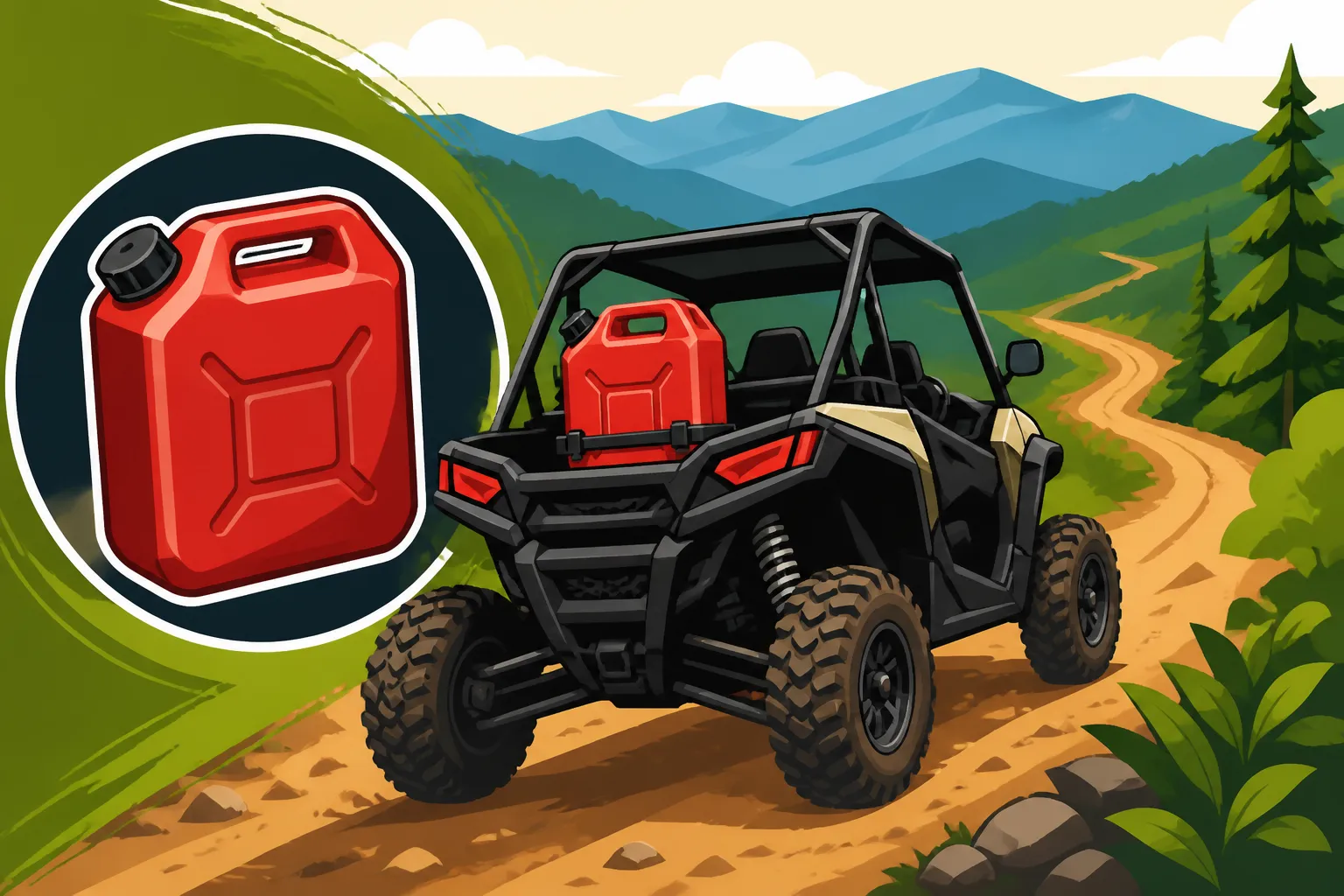
The mounting point matters as much as the can. Use a purpose-built holder or a rack and restraint system suitable for the container and the machine. The can should stay upright, resist bouncing and shifting, and remain away from hot components, moving parts and sharp edges. A loose strap thrown over a can is not a dependable mount if the container can roll, slide or rub through during the ride.
Before loading, check that:
- The container has no cracks, swelling, damaged seams or leaking cap.
- The cap and any vent are closed as the manufacturer directs.
- The mounting system is secure and does not depend on a single weak attachment.
- The can cannot contact the exhaust, drivetrain, tire or suspension through the machine’s full movement.
- The load does not block lights, visibility, access to controls or safe movement by the rider.
- The can is not placed where a passenger must sit against it or where a fall could crush it.
- The machine’s manual does not prohibit the proposed location or mounting method.
Avoid carrying spare fuel loose in a cab or passenger area. A sealed can can still release vapors, and a spill in an enclosed space creates a particular hazard. If an exterior mounting position is not available, do not assume that any open space inside the vehicle is acceptable. Check the machine and container instructions and choose another plan if you cannot carry it safely.
Retail listings can help compare container dimensions and mounting options, but verify that an item is actually designed for gasoline and suitable for your intended use. If shopping through Amazon, read the manufacturer’s specifications rather than relying on a product photo or a broad “utility jug” description. A can that fits the rack is not necessarily the right can for fuel.
Follow safe handling practices on the ride
Handle the can as fuel, not as ordinary cargo. Fill it before the ride in a suitable place, away from flames, sparks and smoking. Wipe off any spilled fuel before loading it, and do not start the machine beside a fresh spill. Keep the container closed and secured during travel. Never transfer fuel near a running or hot engine.
If you need to use the spare, stop in a safe, stable place away from traffic and other riders. Shut the machine off and let hot components cool before opening the container or refueling. Keep the can and its contents away from ignition sources. Refuel slowly and carefully to avoid splashing; close the can and return it to its secure mount before restarting. Follow the instructions for both the machine and the fuel container.
Do not use a trail-side fire, camp stove or other flame as a reason to handle fuel nearby. Keep fuel away from cooking, campfire and smoking areas. If fuel spills, do not ride off and leave it behind. Move people and machines away from danger, prevent ignition sources and follow the appropriate emergency or land-manager instructions. Do not attempt to wash fuel into soil, a creek or a drainage channel.
Rough ground can loosen straps and hardware. Check the can and its restraint during a planned break, especially after a bumpy section or if the machine has taken a hard jolt. Do not wait for the container to start moving before checking it. If a can shifts, leaks or becomes damaged, stop riding and address the problem safely instead of continuing with fuel on a hot machine.
Be considerate of other riders when stopping to refuel. Choose a stable place clear of the trail, keep the group from blocking traffic and avoid spilling fuel on the ground. Do not refuel where a machine could roll, where another rider may collide with you, or where fuel could reach water. The safest stopping point may be off the main riding line, but it still needs to be a place where the machine is stable and the surroundings are appropriate.
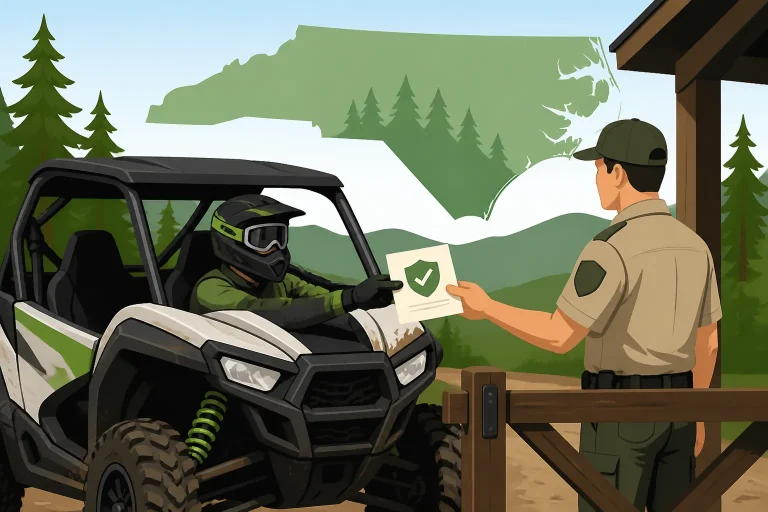
Forest rules can affect what you may carry and where you may ride. Check current land-manager guidance before the trip rather than assuming a general fuel container is accepted everywhere. North Carolina Rules for Carrying Fuel is relevant to this question, and North Carolina Forest OHV Permits explains the separate permit issue for riding forest trails. A trail permit should not be treated as permission to use every road, carry fuel in any configuration or ride a closed route.
Build a backup plan for the Nantahala
A spare can is only one part of a safe fuel plan. Before leaving, identify where you can refuel before entering the riding area and where you can refuel after leaving it. Do not count on a business being open, a fuel pump being available or a route through the forest being passable unless you have checked. Remote terrain can make a small change in plans more consequential than it would be near town.
For a group ride, compare each machine’s range and tank condition. One machine may use more fuel because of its engine, tires, extra cargo or riding pace. Decide in advance whether the group will stop when the first rider needs fuel or whether machines will carry separate reserves. The rider with the least range should help set the pace and turnaround point.
Keep the route realistic for the slowest machine and the least experienced rider. A group that spends longer than expected on difficult terrain may use more fuel while covering fewer miles. Agree on a turnaround point, and do not pressure a rider to continue because the group has already passed a convenient exit. If conditions change, shorten the ride rather than treating the spare as permission to push farther.
Communication matters, too. Parts of the Nantahala can have limited or absent cell coverage, so do not rely on a phone call as your only recovery plan. Share your route and expected return with someone who is not riding, carry essential supplies and know what you will do if a machine runs low on fuel. Cell Dead Zones in the Nantahala is worth considering when deciding how much to depend on mobile service.
Before loading, check the latest forest notices and confirm your intended route is open. Weather, maintenance and other closures can change access. A closed route is not a reason to take an unmarked alternative or continue down an unfamiliar road simply to complete a loop. If the ride is longer or more remote than your fuel reserve can safely cover, choose a shorter route or arrange a suitable refueling plan outside the trail system.
Finally, confirm the permit and access details for the specific riding area you plan to use. Requirements can differ by location, and a permit for one forest riding area may not cover another. Check where permits are sold and what is required for each machine before you leave home; Where North Carolina Forest Permits Are Sold can help frame that check. A few minutes spent verifying the plan is better than arriving with fuel but no valid access, or finding that the intended route is closed.
Disclaimer
This article is for general informational purposes only and does not constitute professional advice. Laws, prices and regulations vary by location and change over time. Consult a qualified professional for guidance on your specific situation.