Which North Carolina Equipment Rules Stop at 18
Navigating the myriad of rules for riding ATVs and UTVs in North Carolina can feel like trying to find your way through a thick mountain fog, especially when it comes to specific equipment requirements for different age groups. It's frustrating to want to do the right thing for safety and compliance, only to find the information isn't always clear-cut. This guide is here to shed light on which equipment rules in North Carolina specifically apply to riders under 18 and where those requirements ease up once you hit adulthood, helping you stay safe and legal on the trails and private lands across our beautiful state.
Understanding North Carolina's Age-Based Regulations for ATV Equipment
North Carolina, like many states, has a keen interest in ensuring the safety of all its residents, especially when it comes to activities as dynamic as ATV and UTV riding. This focus often translates into specific regulations designed to protect those deemed most vulnerable or least experienced, which typically means younger riders. It's not about making things difficult; it's about minimizing risks on what can be inherently dangerous machines if not handled correctly.
The General Approach to Rider Age and Safety
The complexity around age-based rules for ATV operation can be a real head-scratcher. You might hear different things from friends, read outdated pamphlets, or stumble upon information that applies to other states. In North Carolina, the general philosophy is that younger riders, often lacking the full judgment, physical strength, or reaction time of adults, require an extra layer of protection. This isn't just about whether they can ride, but how they must be equipped to do so safely. This focus on minors under a certain age means that some rules don't apply to everyone on the trail.
For instance, while a seasoned adult rider might have the experience to assess risks and choose appropriate safety gear, a child or teenager might not. This disparity in judgment and experience is precisely why the law steps in, creating a baseline of mandatory equipment for younger riders that aims to safeguard them from potential injuries. It’s a way of ensuring that even if a young rider isn’t fully aware of all the risks, the necessary precautions are legally mandated.
Why Equipment Rules Differ for Young Riders
The primary reason equipment rules differ for young riders stems from a combination of physiological, developmental, and statistical factors. Younger bodies are often more susceptible to certain types of injuries, and their developing brains may not fully grasp the long-term consequences of a head injury, for example. The state recognizes this, and through its laws, seeks to mitigate these vulnerabilities.
Consider the potential for serious injury from a rollover or collision. For an adult, wearing a helmet is a smart choice; for a minor, it's a critical, life-saving measure that the state mandates. The logic is that by enforcing specific equipment requirements for those under 18, North Carolina reduces the severity of injuries and promotes a safer riding environment for its youth. This differentiation isn't meant to be discriminatory, but rather a protective measure, acknowledging the unique risks and developmental stages of younger ATV and UTV enthusiasts.
Mandatory Equipment for All Riders, Regardless of Age
While some equipment requirements indeed change once a rider reaches 18, there are fundamental safety components that are non-negotiable for all ATVs and UTVs operating in North Carolina, no matter the age of the operator. These rules are in place because they address universal safety concerns and environmental impacts that affect everyone.
Spark Arresters and Mufflers
One of the most crucial, and often overlooked, universal equipment requirements in North Carolina is the presence of an approved spark arrester and a functional muffler. This isn't about rider age; it's about environmental protection and responsible land use. A spark arrester is designed to prevent hot carbon particles from escaping the exhaust system, which can ignite dry vegetation and cause devastating wildfires. Given North Carolina's beautiful forests and wildlands, this is an absolutely vital component.
Similarly, a functional muffler is required to keep noise levels within reasonable limits. Excessive noise not only disturbs wildlife but can also be a significant nuisance to nearby residents and other trail users. Whether you're a seasoned adult ripping through the [Uwharrie National Forest in North Carolina] or a younger rider enjoying a private field, these components must be in good working order. Local and federal land managers, as well as law enforcement, often check for these items, especially when riding on designated OHV trails or public lands. Ensuring your machine is properly equipped with these can save you a fine and, more importantly, help protect our natural resources.
Functional Brakes and Lighting
Another set of equipment requirements that apply universally, regardless of age, revolves around the machine's operational safety features: brakes and lighting. A reliable braking system is paramount for obvious reasons – you need to be able to stop your machine quickly and safely, especially when navigating unpredictable terrain or avoiding obstacles. North Carolina law mandates that all ATVs and UTVs must have at least one brake system capable of stopping the machine effectively. This isn't a suggestion; it's a core safety standard.
Furthermore, if you plan on riding after dark, or even in low-visibility conditions during the day, your machine must be equipped with proper lighting. This typically includes a headlamp that casts sufficient light to illuminate the path ahead and a taillamp that makes you visible to others from the rear. These [North Carolina Lighting Requirements for ATVs] are crucial for preventing collisions, whether you're on a designated trail or traversing a private property after sunset. It's about being seen and seeing what's ahead, protecting both the rider and anyone else in the vicinity. Always check your lights before heading out, especially if there's any chance your ride will extend into the evening hours.
Equipment Rules That Apply Specifically to Riders Under 18
Now, let's get to the heart of the matter – the specific equipment rules that hinge on a rider's age in North Carolina. This is where the distinction between minors and adults becomes most pronounced, primarily driven by the state's commitment to youth safety.
Helmet and Eye Protection Requirements
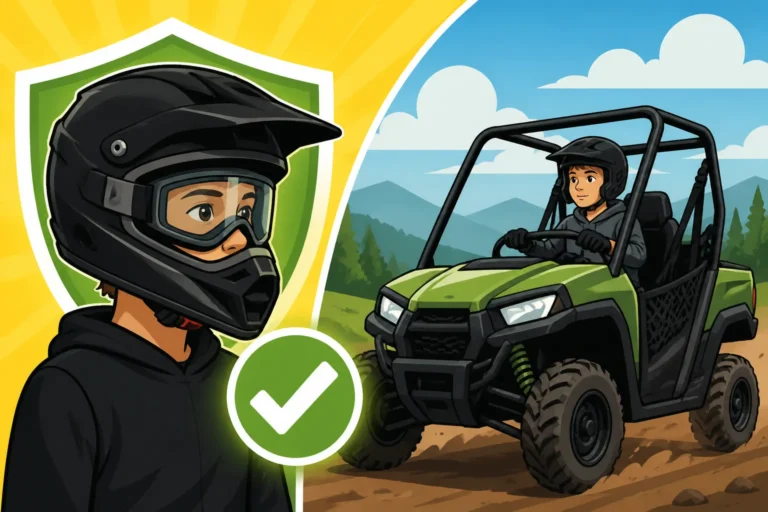
This is perhaps the most significant difference when it comes to age-based equipment rules: for riders under the age of 18, wearing an approved helmet and appropriate eye protection is mandatory. This isn't a recommendation; it's the law. The [North Carolina Helmet Law for ATV Riders] specifies that any person under 18 operating or riding as a passenger on an ATV must wear a safety helmet that meets federal standards (DOT approved). This means it can't just be any helmet; it needs to have that official DOT sticker. This regulation is rigorously enforced because head injuries are among the most serious and preventable outcomes of ATV accidents.
Alongside the helmet, [North Carolina Eye Protection Requirement] dictates that those under 18 must also wear eye protection. This could be goggles, a face shield integrated into the helmet, or safety glasses designed to protect against dust, debris, branches, and insects. Imagine hitting a patch of rough trail and having a rock kick up, or a low-hanging branch snap back – without eye protection, the risk of serious eye injury is incredibly high. For an adult, while strongly encouraged, these items become a matter of personal choice when riding off-road. But for anyone under 18, these are non-negotiable safety standards designed to shield them from the myriad hazards encountered during ATV and UTV operation. It's a critical distinction to remember before anyone under 18 hops on a machine in our state.
The Role of the Manufacturer's Age Warning Labels
While not equipment in themselves, the manufacturer's age warning labels on ATVs play a crucial role in establishing legal requirements for who can ride what, and therefore, what equipment might be deemed necessary. North Carolina law takes these labels seriously. If a manufacturer states that a particular ATV is not suitable for riders under a certain age (e.g., "Not Recommended for Riders Under 16"), North Carolina considers that a legally binding recommendation. [The Manufacturer's Age Warning Label in North Carolina] effectively sets a legal precedent for appropriate use, even if the state's minimum age to ride rule is different.
What this means in practice is that if a youth ATV is labeled for riders 12 and up, even if a 10-year-old could physically reach the controls, allowing them to ride it could be seen as a violation because it contradicts the manufacturer's safety recommendation. This indirectly influences equipment choices because these machines are designed with specific rider sizes and capabilities in mind, and the associated safety gear (like helmets and eye protection) is presumed. So, when you're looking at a machine, don't just consider the state's age laws; always [Reading an Age Warning Sticker] carefully and adhere to the manufacturer's guidelines, especially for younger riders. It adds another layer of safety and compliance to your riding experience.
Equipment Considerations That Become Optional for Adults
Once a rider in North Carolina turns 18, some of the mandatory equipment requirements shift from legal obligations to personal safety choices. This doesn't mean these items are any less important for safety, but the state gives adults the autonomy to decide for themselves when operating off-road.
Helmets: A Matter of Personal Choice (for 18+)
For ATV and UTV riders aged 18 and older, North Carolina law does not mandate the use of a helmet when operating off-highway. This is a significant distinction from the under-18 rule. While the state strongly encourages helmet use for all riders due to the inherent risks of off-road vehicle operation, adults have the legal discretion to ride without one on private land or designated trails.
However, just because it's not legally required doesn't mean it's a good idea to skip it. Head injuries are devastating, and a helmet provides critical protection in the event of an accident, even a low-speed tip-over. Many experienced riders, regardless of age, choose to wear a DOT-approved helmet for every ride, recognizing the invaluable protection it offers. The trails can be unpredictable – you might hit a hidden rut, encounter unexpected debris, or misjudge a turn. A helmet can literally be the difference between a minor shake-up and a life-altering injury. So, while it's your choice as an adult, it's a choice with potentially severe consequences, and most safety advocates will always recommend gearing up.
Eye Protection: Still Smart, No Longer Mandated (for 18+)
Similar to helmets, once you turn 18 in North Carolina, the legal mandate for eye protection when riding an ATV or UTV off-road disappears. For adults, wearing goggles, a face shield, or safety glasses becomes a matter of personal preference and risk assessment. The law trusts adults to make their own judgments about this particular piece of safety gear.
Despite this, opting out of eye protection is rarely a wise move. The very nature of off-road riding exposes you to a barrage of potential hazards. Dust and dirt are constantly being kicked up by your own machine or those of fellow riders. Low-hanging branches, flying insects, splashing mud, and unexpected debris are all common occurrences on trails, especially when exploring areas like the [Brown Mountain OHV Trail System]. An eye injury can not only ruin your ride but can have lasting consequences for your vision. Most riders, even experienced adults, will tell you that proper eye protection enhances visibility by keeping irritants out, making the ride more comfortable and much safer. So, while the law steps back for adults, common sense and a focus on personal safety should still dictate this choice.
Practical Implications and Safety Recommendations
Understanding the rules is one thing, but applying them practically and going above and beyond the minimum legal requirements is what truly defines a responsible rider. North Carolina's regulations provide a baseline, but true safety often involves more.
Equipping Your Machine for Safety
Beyond the legally mandated equipment, there's a whole world of accessories and upgrades that can significantly enhance safety and enjoyment, especially for adult riders who have more freedom in their equipment choices. For instance, investing in sturdy skid plates can protect critical undercarriage components from rocks and stumps, preventing costly breakdowns that could leave you stranded. Upgraded tires designed for specific terrain, like mud or rock, can improve traction and control, reducing the likelihood of losing grip in challenging conditions.
Companies like SuperATV offer a wide range of aftermarket parts designed not just for performance but also for bolstering the safety and durability of your machine. From heavy-duty bumpers that offer impact protection to winches that can get you out of a sticky situation, these additions can make a real difference. While none of these are legally required, they represent smart investments for any serious off-road enthusiast looking to maximize their safety and the longevity of their ATV or UTV. Think of them as insurance against the unexpected challenges the trail might throw your way.
Rider Training and Continuous Supervision
Equipment is only one piece of the safety puzzle; rider skill and awareness are equally, if not more, important. This is particularly true for young riders. North Carolina has specific [North Carolina Rules for a Rider Under 16], which often include requirements for continuous visual supervision by an adult. Simply having the right helmet and eye protection isn't enough if a young rider lacks the fundamental skills or judgment to operate the machine safely.
Many organizations offer ATV safety courses, covering everything from basic operation and turning to hill climbing and emergency braking. These courses are invaluable for riders of all ages, but especially for beginners and youth. For riders born on or after January 1, 1990, North Carolina requires an [North Carolina ATV Safety Certificate Requirements] if they intend to operate an ATV on public lands. Even if you're an adult and not riding on public land, taking a course can significantly improve your riding proficiency and hazard perception. Continuous training and adherence to [North Carolina Supervision Rules for Minors] ensure that riders are not only physically protected by their gear but also mentally prepared for the demands of off-road riding.
North Carolina ATV/UTV Age-Based Equipment Requirements
To help clarify the differences, here's a quick summary of key equipment rules based on age in North Carolina:
| Equipment Item | Riders Under 18 (Mandatory) | Riders 18 and Over (Legal Status) | Recommendations for 18+ Riders |
|---|---|---|---|
| DOT-Approved Helmet | Yes, legally required. | Not legally required (off-road). | Highly recommended for all rides. |
| Eye Protection | Yes, legally required (goggles/face shield). | Not legally required (off-road). | Highly recommended to prevent injury from debris. |
| Spark Arrester | Yes, legally required for all machines. | Yes, legally required for all machines. | Essential for fire prevention and environmental responsibility. |
| Functional Muffler | Yes, legally required for all machines. | Yes, legally required for all machines. | Maintains noise limits and responsible trail use. |
| Functional Brakes | Yes, legally required for all machines. | Yes, legally required for all machines. | Critical safety feature for stopping and control. |
| Headlamp (for night) | Yes, legally required for all machines when riding after dark. | Yes, legally required for all machines when riding after dark. | Essential for visibility and safety after sunset. |
| Taillamp (for night) | Yes, legally required for all machines when riding after dark. | Yes, legally required for all machines when riding after dark. | Essential for visibility to others after sunset. |
| Manufacturer's Age Label | Compliance is legally important for appropriate machine use. | Influences recommendations, but not direct equipment mandate. | Adhere to manufacturer recommendations for safety and machine fit. |
| Rider Safety Course | Recommended; required for public lands if born after 1990. | Recommended; required for public lands if born after 1990. | Great for skill development, awareness, and public land access. |
This table provides a quick reference, but remember that specific situations, such as riding on public roads where [North Carolina's Modified Utility Vehicle Route] might apply, or specific federal park rules, could introduce additional requirements. Always double-check the rules for your specific riding location before heading out.
Disclaimer
This article is for general informational purposes only and does not constitute professional advice. Laws, prices and regulations vary by location and change over time. Consult a qualified professional for guidance on your specific situation.