Why Interstates Are Closed in North Carolina
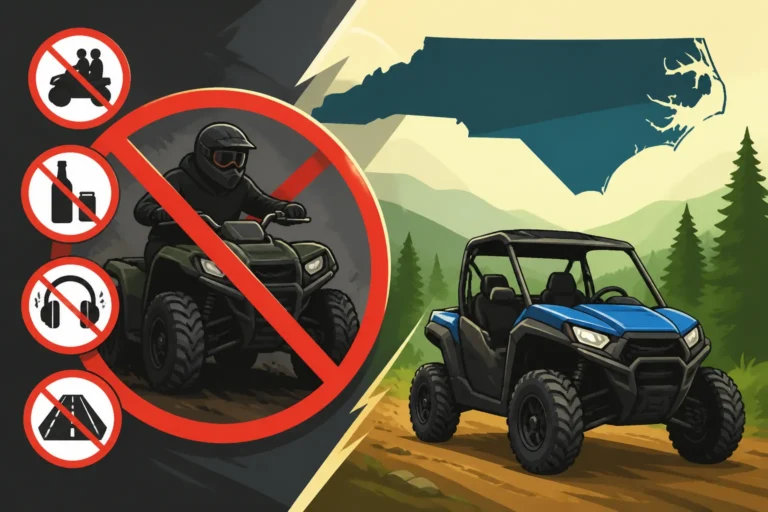
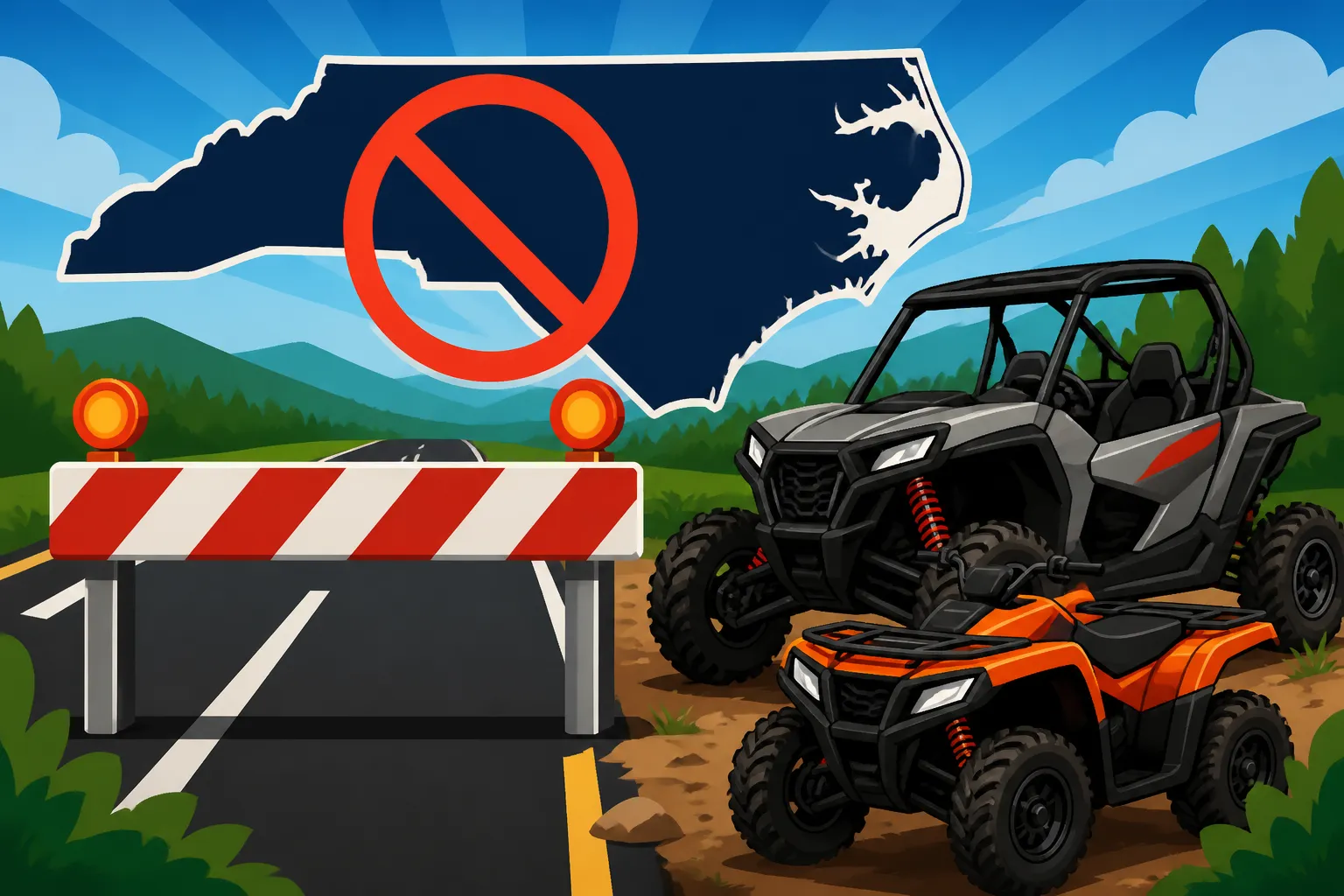
It's incredibly frustrating, isn't it? You've got your ATV or UTV, a powerful machine built for adventure, and you might even wonder why you can't just hop on the interstate to get from one great North Carolina riding spot to another. Many riders feel this way, especially if they're used to different rules in other states. This guide is going to break down exactly why interstates are off-limits for ATVs and UTVs in North Carolina, focusing on the legal definitions, safety concerns, and the distinct purpose of these major roadways.
The Core Legal Definition of an ATV in North Carolina
When we talk about ATVs and UTVs in North Carolina, we're immediately running into a legal wall regarding public roads, especially the biggest ones. The state defines these machines in a way that fundamentally separates them from vehicles designed for highway travel. It's not about how fast your machine can go, or how much horsepower it has; it's about its intended purpose and design from the factory.
What North Carolina Law Says About ATVs
In North Carolina, an ATV (All-Terrain Vehicle) is primarily considered an off-road machine. The legal definition usually focuses on characteristics like being designed for off-highway use, having low-pressure tires, a seat designed to be straddled by the operator, and handlebars for steering. Similarly, many UTVs (Utility Terrain Vehicles) fall under this same umbrella, even with their side-by-side seating and steering wheels, because their core design is for rugged, unpaved terrain. The state classifies them for recreation, utility work on private land, or agricultural purposes, not for traversing thousands of miles of high-speed pavement.
This designation means they simply don't fit the mold of a "motor vehicle" in the traditional sense required for highway operation. It's a key distinction that can be confusing, especially if you've recently moved to North Carolina from a state with more lenient street-legal rules. You might look at your robust SuperATV UTV with its beefy tires and powerful engine and think it's perfectly capable of cruising down I-40, but the law sees it differently. Understanding [What North Carolina Counts as an ATV] is the first step to grasping these restrictions.
Why Interstates Are Different from Other Roads
Interstates aren't just bigger roads; they are a completely different class of highway with specific design principles and legal purposes. They are built for high-speed, high-volume traffic, facilitating rapid transit across vast distances, connecting major cities. Think about it: limited access points, multiple lanes moving at 65 mph or more, and strict regulations on the types of vehicles allowed. These roads are engineered for cars, trucks, and other vehicles designed to maintain consistent high speeds, handle crosswinds from passing semi-trucks, and provide occupants with significant crash protection.
Contrast this with a quiet county road or even some secondary state highways where you might legally cross with an ATV under specific conditions. On those roads, speeds are lower, traffic is less dense, and visibility is often better for reacting to different vehicle types. An interstate, with its relentless flow of fast-moving vehicles, creates an inherently dangerous environment for anything not built to withstand those conditions. There’s a distinct and important difference between merely [North Carolina Rules for Crossing a Road] and traveling on an interstate.
Safety Concerns and Vehicle Capabilities
The primary reason behind the interstate ban for ATVs and UTVs boils down to safety – both for the riders and for everyone else sharing the road. These machines, while incredibly capable off-road, simply aren't designed for the unique demands of interstate travel.
Speed, Stability, and Roadworthiness
Let's be realistic about what an ATV or UTV is built for. Their suspension systems are designed to absorb bumps, rocks, and ruts, providing a comfortable ride over uneven terrain. Their tires are often low-pressure, knobby, and wide, excellent for traction on dirt, mud, and sand, but terrible for sustained high-speed pavement use. On asphalt, these tires offer less grip, wear down incredibly fast, and can make the machine feel squirrelly and unstable, especially when turning or braking suddenly. Imagine trying to make an emergency maneuver on an interstate at 70 mph with tires meant for mud—it's a recipe for disaster.
Furthermore, these machines lack the stability of a passenger car at high speeds. Their higher center of gravity, narrower track width compared to most cars, and the absence of a differential on many models (making turns on pavement difficult and potentially damaging) mean they are ill-suited for the constant forces and rapid changes of an interstate. While a UTV from a brand like SuperATV might have impressive off-road prowess, it doesn't translate to highway safety. Unlike cars that have crumple zones, airbags, and reinforced frames, ATVs and UTVs offer minimal occupant protection in a high-speed collision. Even if your machine can technically reach highway speeds, its roadworthiness for sustained highway travel is a different story entirely. [North Carolina Equipment Rules for ATVs] focus on off-road safety, not highway features.
The Risk of High-Speed Collisions
Picture this: you're cruising along I-85 in a UTV, perhaps maxing out its speed at 60 mph. Suddenly, a tractor-trailer passes you, creating a huge wind gust that buffets your lightweight machine. Or worse, traffic ahead slows down rapidly, and you need to brake. A passenger car designed for the interstate has robust braking systems and stability control to handle such situations. An ATV or UTV, even one with decent brakes, will react very differently on pavement. The chance of losing control, especially if the operator isn't accustomed to highway speeds on such a machine, is extremely high.
Now, consider the consequence of a collision. An ATV or UTV rider is largely unprotected, often only having a helmet and some riding gear. In a crash with a vehicle traveling at interstate speeds, the outcome for the ATV/UTV rider and any passengers is almost always catastrophic. North Carolina's laws are designed to prevent these types of accidents from ever happening, recognizing the immense public safety risk involved. It's a stark reality that sometimes convenience must take a backseat to the preservation of life and limb.
North Carolina's Modified Utility Vehicle (MUV) Exception
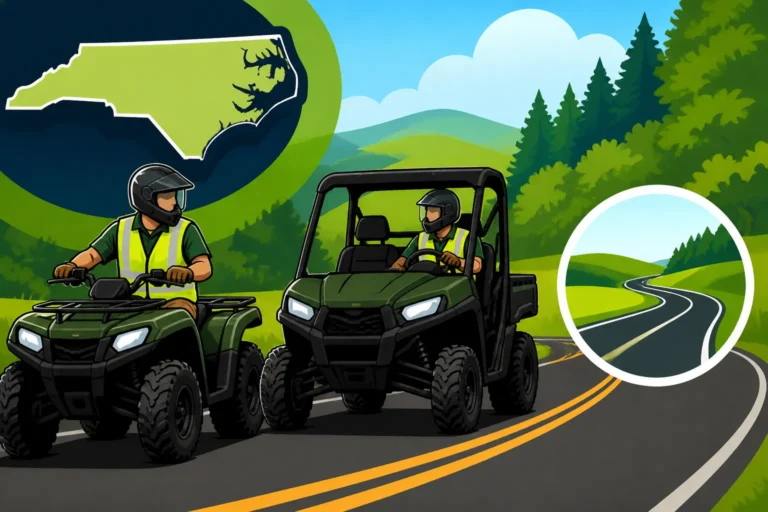
North Carolina does have a specific classification that allows certain UTVs to be considered "street legal" under very strict conditions: the Modified Utility Vehicle, or MUV. However, it's crucial to understand that while this opens up some public roads, interstates are absolutely not among them.
The MUV as a Limited "Street-Legal" Option
The MUV classification is a unique path in North Carolina that allows owners of certain UTVs to legally operate their machines on specific public roads. This isn't a free-for-all, though. To qualify as an MUV, a UTV must meet a laundry list of requirements: an engine displacement greater than 2,400 cubic centimeters, a length of 142 inches or more, a width of 58 inches or more, and a height of 70 inches or more. It also needs to be capable of exceeding 40 mph, and, critically, it must have a Vehicle Identification Number (VIN) assigned by the North Carolina DMV. Furthermore, MUVs must be equipped with standard safety features you'd expect on a road vehicle, such as headlights, taillights, brake lights, turn signals, mirrors, a speedometer, a parking brake, and seat belts.
So, while your robust UTV might be a powerhouse off-road, transforming it into an MUV is a significant undertaking that requires specific modifications and DMV approval. Even after all that effort, the "street-legal" status is very limited. This category exists for those who truly need to use their UTVs on public roads for specific purposes, often in more rural or agricultural settings, but it's not a back door to highway cruising. For a comprehensive overview, you can delve into [North Carolina's Modified Utility Vehicle Route].
Why MUVs Still Can't Go on Interstates
Despite all the modifications and the official "street-legal" designation that an MUV can achieve, the rules for interstates remain unyielding. MUVs are explicitly prohibited from operating on interstates, expressways, controlled-access highways, or roads where the posted speed limit is higher than 55 mph. This is a critical point that often surprises riders who have gone through the process of making their UTV an MUV. The reason, again, circles back to the fundamental safety and design differences discussed earlier.
Even an MUV, with its added safety features and larger dimensions, doesn't possess the inherent crashworthiness, stability, and handling characteristics of a passenger car or truck designed for interstate speeds and traffic volumes. Imagine an MUV, even a large one, alongside an 18-wheeler on I-95. The disparity in mass, speed capabilities, and protection is immense. The speed requirements for an MUV, such as [Why an MUV Has to Top 40 mph], are about ensuring it can keep up with some road traffic, not all road traffic, especially not the intense, high-speed flow of an interstate. [North Carolina MUV Insurance Requirements] are in place, but they don't erase the fundamental engineering differences.
Here's a quick look at the core differences:
| Feature | Typical ATV/UTV (Off-Road) | North Carolina MUV (Limited Road Use) | Passenger Car (Interstate) |
|---|---|---|---|
| Primary Design | Off-road recreation/utility | Modified UTV for specific road segments | High-speed, high-volume highway travel |
| Tires | Low-pressure, knobby, off-road | May be upgraded for pavement, still off-road origin | High-pressure, smooth-tread, highway-specific |
| Suspension | Long-travel for uneven terrain | Adapted, but still off-road focused | Tuned for stable, comfortable pavement ride |
| Speed | Varies, often less than highway speeds | Must exceed 40 mph for MUV designation | Designed for sustained interstate speeds |
| Crash Protection | Minimal (roll cage on UTVs) | Minimal, still no crumple zones/airbags | Extensive (crumple zones, airbags, etc.) |
| Interstate Access | NEVER | NEVER | Yes, primary purpose |
| Steering | Handlebars (ATV), Steering Wheel (UTV) | Steering Wheel | Steering Wheel |
Enforcement and Consequences
It's critical to understand that the rules against ATVs and UTVs on interstates in North Carolina are not suggestions; they are enforceable laws with real consequences. Ignoring these regulations can lead to significant headaches and expenses, far outweighing any perceived convenience of using the interstate.
What Happens if You Ride an ATV on an Interstate
If you decide to take your ATV or UTV onto an interstate in North Carolina, even for a short stretch, you are almost certainly going to get caught. Highway Patrol troopers are highly vigilant on these major arteries, and an off-road machine stands out like a sore thumb among the cars and trucks. The moment you're spotted, you can expect to be pulled over.
The repercussions can be quite severe. You'll likely face charges for operating an unregistered or unlawful vehicle on the highway, which can come with substantial fines. Beyond the ticket, your machine will almost certainly be impounded. This means you'll incur towing fees, daily storage fees, and the hassle of arranging for its retrieval. Imagine the stress of trying to get your machine back from an impound lot, possibly hours away from where you live or ride, all for a brief moment of rule-breaking. Depending on the exact circumstances and any additional infractions, you could also face points on your driver's license or even more serious charges. It's simply not worth the risk. [Who Writes an ATV Ticket in North Carolina] ranges from local law enforcement to the Highway Patrol, all of whom enforce these rules.
Alternative Ways to Transport Your Machine
Given the strict prohibition on interstates, the only safe, legal, and sensible way to get your ATV or UTV to an authorized riding area in North Carolina is by trailering it. This means loading your machine onto a proper trailer and towing it with a suitable vehicle. There are countless trailers available, from simple utility trailers to enclosed options, that can safely transport your pride and joy.
North Carolina boasts some fantastic riding opportunities, like the [Brown Mountain OHV Trail System] and the [Badin Lake OHV Trail Complex], but reaching them requires planning for transportation. Investing in a good trailer and learning proper towing techniques—like securing your machine correctly, balancing the load, and checking tire pressures—is part of being a responsible off-road enthusiast in North Carolina. Don't let the thought of trailering deter you; it's a small price to pay for legal and safe riding. By trailering, you avoid the heavy fines and impoundment costs, and more importantly, you ensure your safety and the safety of others on the road.
Common Misconceptions and Rider Frustrations
It's completely normal to feel a bit confused or even frustrated by these rules, especially if your UTV feels robust enough for the road. Many riders arrive in North Carolina with ideas shaped by experiences elsewhere or by comparing their machines to other small vehicles. Let's tackle some of those common thoughts.
"But It's Just Like a Small Car!"
This is a sentiment I hear often: "My UTV has a steering wheel, seat belts, even turn signals! It's practically a small car!" And yes, modern UTVs, especially those leaning towards the sport-utility side, are incredibly advanced. They offer comforts and features that blur the line with traditional vehicles. Brands like SuperATV offer extensive aftermarket accessories that can make a UTV even more capable and comfortable. However, despite these advancements, the fundamental design remains centered on off-road performance.
A UTV, even one with many car-like features, does not have the same structural integrity, chassis design, braking capability, or passive safety systems (like crumple zones or multiple airbags) as a vehicle manufactured to highway standards. Its suspension is typically softer and has more travel for absorbing impacts on rough terrain, which can make it less stable at high pavement speeds. The tires, while perhaps less aggressive than a pure mud tire, are still not highway-rated. The state's classification systems are based on these foundational engineering principles, not just on how many creature comforts your machine has. It’s a matter of inherent design versus bolt-on accessories. While [North Carolina MUV Street Legal Requirements] allow for some road use, they explicitly exclude interstates for these very reasons.
Comparing North Carolina to Other States
Another source of frustration is often the knowledge that some other states have different, and sometimes more permissive, laws regarding ATVs and UTVs on public roads. You might have friends who ride their UTVs on county roads or even secondary highways in Georgia or Tennessee. This can understandably lead to the thought, "Why not North Carolina?"
The truth is, every state has the right to set its own vehicle codes and traffic laws based on its unique geography, population density, historical precedent, and public safety priorities. North Carolina has chosen a more conservative approach when it comes to off-road vehicles on public paved roads, particularly high-speed ones. This isn't necessarily a judgment on other states' policies, but rather an assertion of North Carolina's commitment to the safety of its residents and visitors. When you're driving through a bustling area like Charlotte or Asheville, the density of traffic and infrastructure is very different from, say, parts of rural Wyoming. These factors contribute to how laws like [Are ATVs Street Legal in North Carolina?] are formed. It’s vital for riders, whether they're residents or just visiting, to understand and respect North Carolina's specific rules. Your familiarity with laws in other states simply doesn't apply here.
Disclaimer
This article is for general informational purposes only and does not constitute professional advice. Laws, prices and regulations vary by location and change over time. Consult a qualified professional for guidance on your specific situation.