Town Staff Riding a Road Posted 35 mph
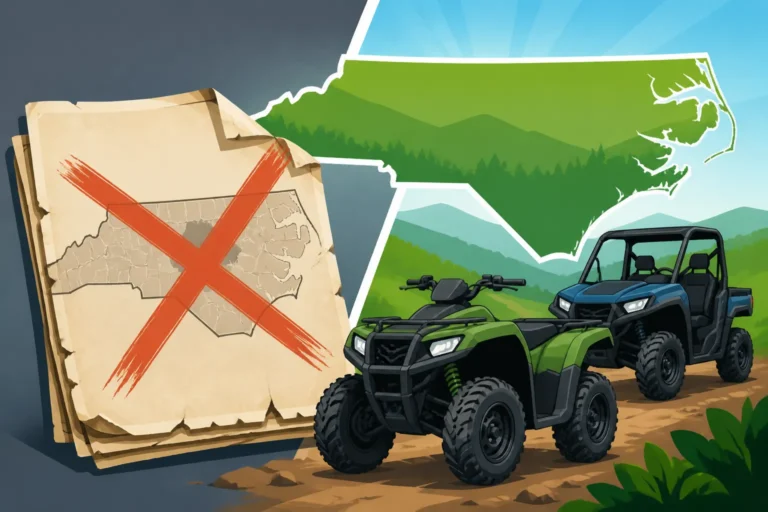
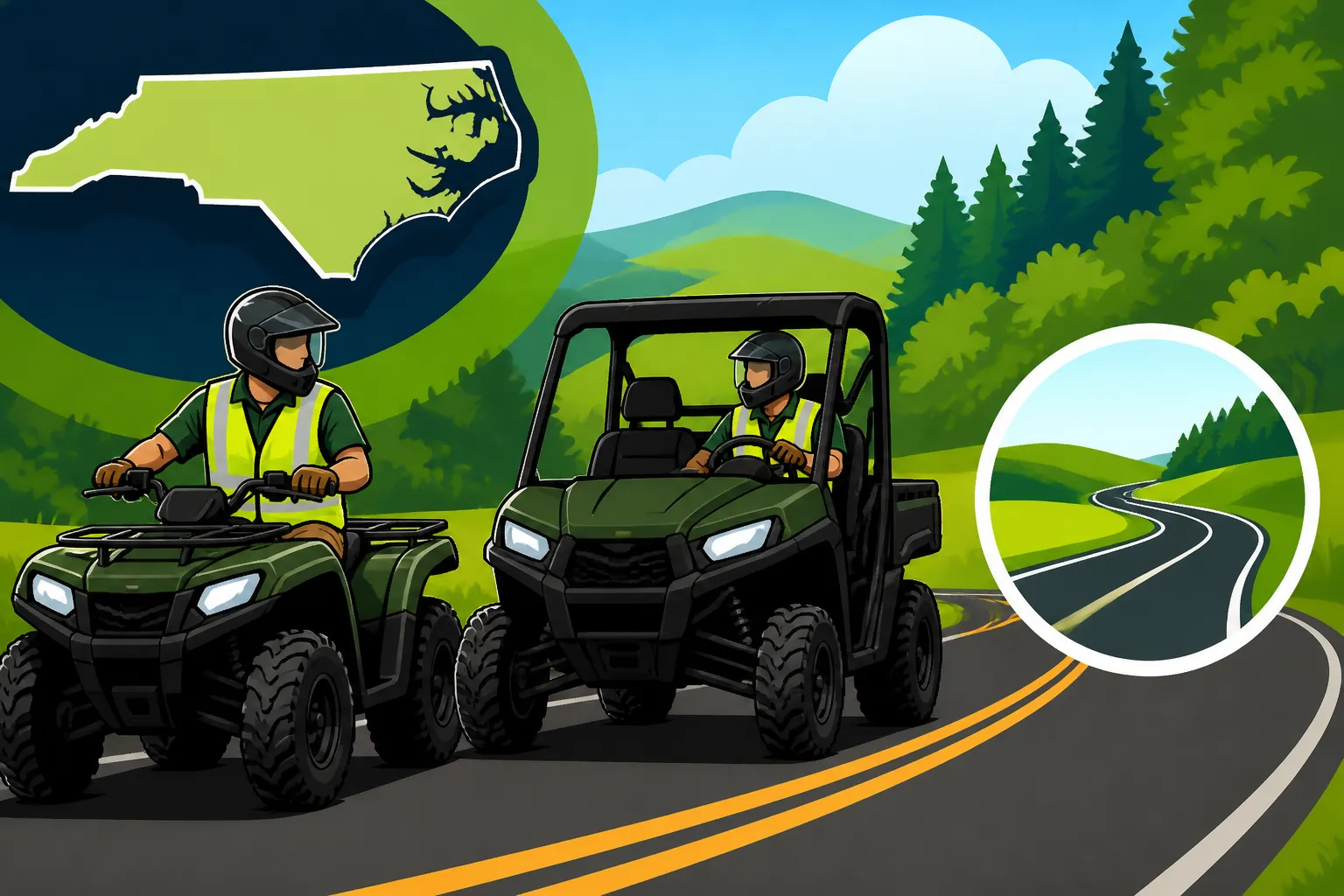
It can be incredibly confusing and even frustrating to be out on a public road in North Carolina and see a side-by-side or ATV being operated on the pavement, especially when you know the general rule is that these machines aren't street legal. This guide is going to clear up one very specific instance where you might see this happening: when town staff or municipal employees are riding these off-road vehicles on roads posted 35 mph or less as part of their official duties.
Understanding North Carolina's General Stance on ATVs on Public Roads
Let's get this out of the way upfront, because it’s the source of so much confusion for riders across the Tar Heel State. North Carolina generally considers ATVs and UTVs to be off-road vehicles. They are designed for trails, fields, and work sites, not for cruising down Main Street next to cars and trucks. This fundamental difference in design and intended use is why they typically aren't welcome on public roads.
The Baseline Rule: No Street Legal ATVs
For the vast majority of us who own an ATV or a side-by-side for recreation, farming, or hunting, the simple truth is that our machines are not street legal in North Carolina. It’s a bitter pill to swallow for many, especially those who just want to connect a few trail sections or run to the corner store without trailering. The state statutes are pretty clear: an ATV, as defined, is built for off-highway use. This means it lacks many of the safety features required for on-road vehicles, like turn signals, proper headlights, brake lights, and sometimes even mirrors, not to mention the structural differences that make them less safe in a collision with a passenger car.
You might hear whispers about the Modified Utility Vehicle (MUV) category, which does allow some UTVs to become street legal, but that's a whole different ballgame with a very specific set of requirements that most standard machines don't meet without significant, often costly, modifications. For now, just remember the default: your typical quad or side-by-side is for off-road adventures, not pavement. If you're wondering more about the general rules, check out [Are ATVs Street Legal in North Carolina?].
Limited Exceptions for Crossing Roads
While continuous riding on public roads is a no-go for most ATVs and UTVs, North Carolina does make very narrow exceptions for crossing a public road. This is strictly for getting from one field to another, or from a trail segment to the next, and only when it’s absolutely necessary. You can’t drive down the shoulder for a mile just to make your life easier. The intent is to allow a quick, direct traverse of the roadway, under very specific conditions, usually involving yielding to all traffic and taking the shortest path.
This isn't a license to travel any distance on the pavement. We're talking about literally crossing the road, like a deer darting from one side to the other. There are rules about visibility, yielding, and ensuring it's the most practical way to get from point A to point B on your off-road journey. It's a far cry from what you might see a town employee doing, and it's important not to confuse the two. For a deeper dive into these limited allowances, you might want to read [North Carolina Rules for Crossing a Road].
The "Official Business" Exemption for Municipalities and Law Enforcement
Now, this is where we get to the heart of the matter and why you might see a side-by-side or ATV being driven on a public road by someone in uniform or a marked vehicle. North Carolina law provides specific exemptions for certain vehicles when they are being operated by government entities for official purposes. This isn't about making ATVs street legal for everyone; it's about allowing public servants to do their jobs efficiently and safely.
Who Qualifies for This Exception?
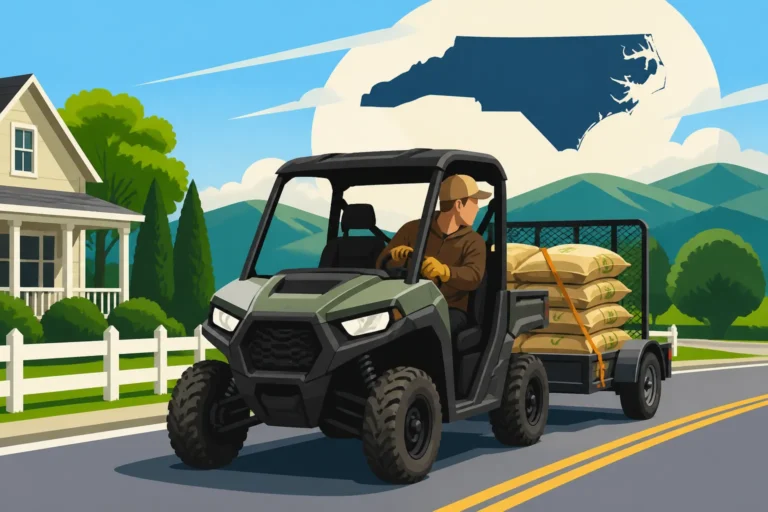
This exemption primarily covers employees of state, county, or municipal governments, as well as law enforcement and other public safety personnel. Think about the variety of tasks that local government staff perform. You might see park rangers using a UTV to patrol a local greenway or survey damage after a storm. Public works crews might need a quad to access remote water lines or utility easements that are difficult or impossible to reach with a standard truck. Local police or sheriff's deputies might use side-by-sides for patrol in large parks, crowded event spaces, or even during search and rescue operations in rugged terrain.
The key here is "official business." These machines aren't being used for personal errands or joyrides. They are integral tools for specific tasks that serve the public good. For instance, a small town's parks and recreation department might use a utility UTV to haul equipment, trim trees, or monitor the condition of walking paths. A zoning enforcement officer might use one to inspect properties in difficult-to-reach areas. The exemption is rooted in the practical necessity of allowing these agencies to do their jobs without being hampered by vehicle limitations.
Conditions for Riding on Roads Posted 35 mph
While these official vehicles get a pass, it’s not an "anything goes" situation. There are typically conditions and restrictions in place, often dictated by local ordinances and agency policies, even if not explicitly spelled out in state ATV statutes. One of the most common restrictions you'll encounter is that this type of official use is generally limited to roads that are posted 35 mph or less. This speed limit is a critical safety consideration, as ATVs and UTVs are not designed for higher-speed traffic. They accelerate and brake differently than cars, and their handling characteristics are unique.
The use must also be directly related to their official duties. A town employee can't take their work UTV home for the weekend just because it's convenient. It must be in the course of performing their job. Furthermore, these agencies often have their own internal policies requiring specific safety equipment, even if the state's general ATV laws don't mandate it for all riders. This could include things like flashing amber lights for visibility, specific mirrors, or even stricter helmet policies than what's required for private off-road use. It's all about balancing the necessity of the work with public safety.
To help clarify the differences, here's a quick comparison:
| Feature | Private ATV/UTV Use on Roads | Official ATV/UTV Use by Town Staff (on-duty) |
|---|---|---|
| Purpose | Recreational, personal transport, farm work (limited) | Official government business, public service, law enforcement |
| Road Type | Strictly crossing, farm exception (very limited), MUV route | Roads posted 35 mph or less, within jurisdiction, specific tasks |
| Street Legal? | Generally no, unless registered as an MUV (rare) | Exempt due to official function, not considered "street legal" in the same way |
| Equipment | Basic ATV requirements (e.g., spark arrester); MUVs have specific requirements | Agency-specific requirements (e.g., flashing lights, safety gear, specialized attachments) |
| Public View | Illegal if riding continuously, legal for a quick crossing | Legal, but may cause confusion for observers |
Practical Implications and Safety Considerations for Official Use
Seeing a municipal side-by-side operating on a low-speed road isn't just a legal curiosity; it has real-world implications for how these machines are utilized and how the public perceives their use. It brings up questions of training, safety, and accountability that are paramount for the agencies involved.
Agency Policies and Training
Any responsible government agency that deploys ATVs or UTVs for staff use will have robust internal policies and mandatory training programs in place. It's not enough to just buy a utility vehicle; you have to ensure the personnel operating it are properly trained for both on-road and off-road conditions, understanding the vehicle's capabilities and limitations. This training often goes beyond basic riding skills, covering things like safe operation with loaded cargo, towing procedures, and emergency maneuvers. They might even specify particular accessories, like heavy-duty winches or cargo beds that SuperATV offers, to ensure the machines are equipped for demanding tasks.
These policies typically outline when and where the machines can be used, what personal protective equipment (PPE) is required (such as helmets, eye protection, and reflective vests), and how to interact safely with other traffic and pedestrians. For instance, a parks department might have protocols for operating a UTV on a paved walking trail or a service road within a park, including speed limits, right-of-way rules, and communication procedures. It's about minimizing risk for both the operator and the public. These rules are essential for validating the need for the exemption and maintaining a good safety record.
Public Perception and Compliance
It's completely understandable why a private citizen might feel a pang of frustration or confusion seeing a town employee on a UTV driving down a road they themselves aren't allowed to use. This is where clear identification becomes crucial. Most municipal ATVs and UTVs will be clearly marked with agency logos, department names, and sometimes even official vehicle numbers. This helps the public understand that it’s not just a random person breaking the rules, but someone on official business.
Compliance isn’t just about the letter of the law; it's about adherence to those internal policies. Misuse of these vehicles by staff – say, an employee taking a shortcut through a residential area when not on official business, or operating one recklessly – can quickly erode public trust and lead to stricter regulations for everyone. That's why agencies are often very diligent about monitoring and enforcing their own guidelines. It's important to remember that this exception is for the function of the vehicle, not its inherent street legality. [North Carolina Rules for Riding a Public Street] further clarifies what private citizens can and cannot do.
Modified Utility Vehicles (MUVs) vs. Official Exemptions
While the focus here is on official government use, it’s worth taking a moment to distinguish this exemption from the Modified Utility Vehicle (MUV) category, which is another way some UTVs can legally access public roads in North Carolina. These are two completely separate pathways, often confused, but serving different purposes.
The MUV as a Separate Path to Street Legality
For private citizens who genuinely want to make their UTV street legal in North Carolina, the MUV designation is the primary route. This is a very specific vehicle classification defined by state law, with stringent requirements that go far beyond what a typical off-road UTV offers. To qualify as an MUV, a machine must meet precise criteria regarding engine size, dimensions (length, width, height), top speed capability, and must be able to obtain a Vehicle Identification Number (VIN) from the North Carolina DMV if it doesn’t already have one. Only then can it be titled and registered for road use, much like a car.
This route requires significant effort and often expensive modifications to bring a machine into compliance. It’s not something you do casually. It involves ensuring your UTV has proper lighting, mirrors, seatbelts, a speedometer, and all the other accoutrements necessary for safe on-road operation. For more details on the specific requirements, check out [North Carolina's Modified Utility Vehicle Route]. While some aftermarket companies like SuperATV produce accessories that might help a UTV meet certain MUV requirements (like specific lights or mirrors), the overall conversion process is complex and often requires professional help.
Why Most Standard UTVs Don't Qualify as MUVs
The reality is that most standard side-by-sides you see on trails or farms simply do not meet the strict criteria to be registered as an MUV. For example, the engine displacement requirement is often a hurdle, but even more commonly, it’s the physical dimensions. Many popular UTVs are too wide or too long to fit the MUV definition without drastic, and often impractical, alterations. Additionally, many lack the factory-installed safety features that would be required for street use, or the ability to easily add them.
This distinction is important because it highlights why the "official business" exemption exists. If municipal agencies had to convert every utility UTV they owned into a full-fledged MUV just to drive it a few blocks down a 35 mph road, it would be an enormous and unnecessary financial and logistical burden. The exemption acknowledges that these machines, while not inherently "street legal" for general public use, serve a vital public function and should be allowed to operate on low-speed roads when absolutely necessary for official duties. This is why you'll often see standard utility models, perhaps outfitted with some SuperATV protective gear or heavy-duty components, being used by town staff, rather than specially converted MUVs. For a deeper understanding of these limitations, [Why Most Side-by-Sides Miss the Mark] can provide more insight.
Disclaimer
This article is for general informational purposes only and does not constitute professional advice. Laws, prices and regulations vary by location and change over time. Consult a qualified professional for guidance on your specific situation.