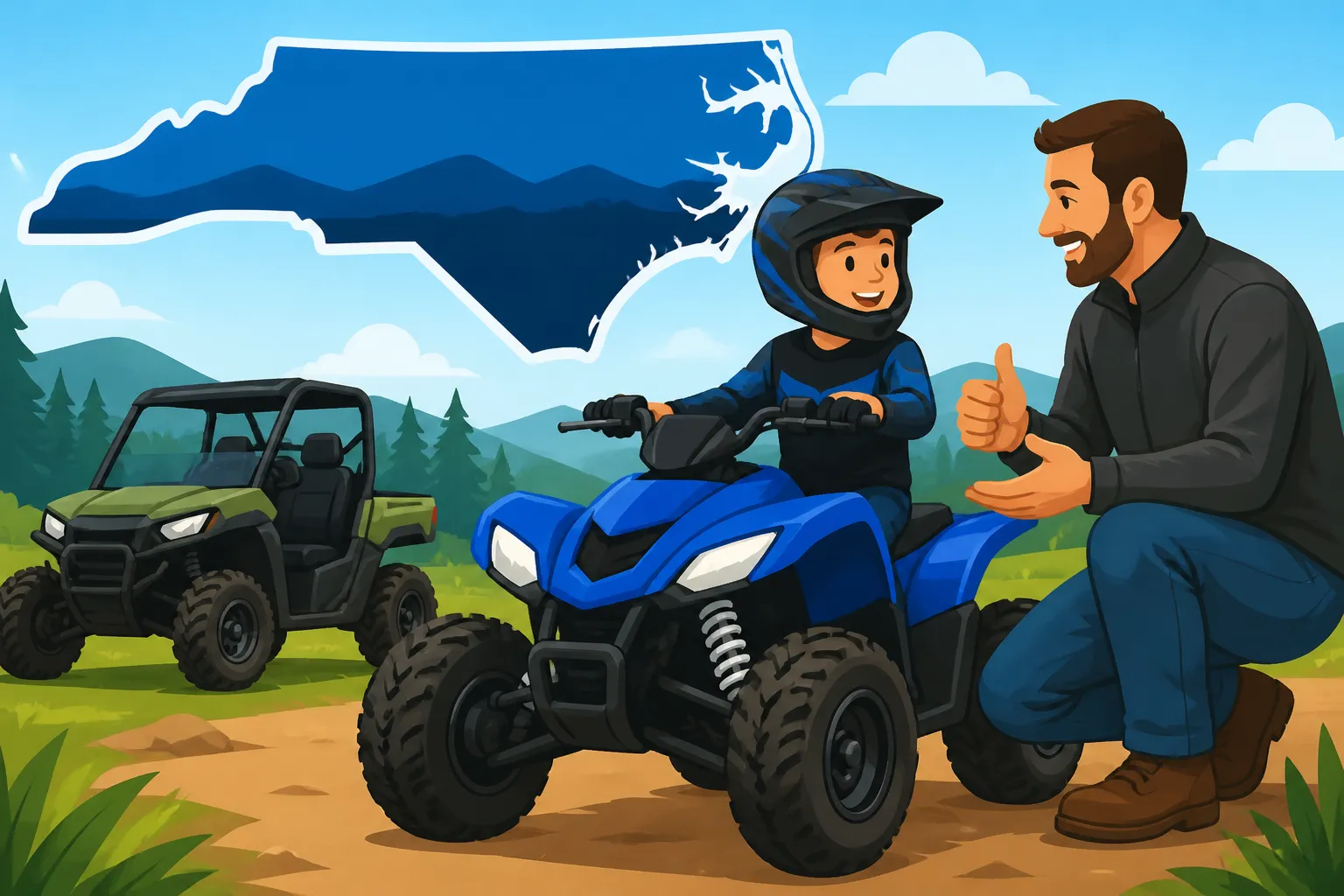
Selling a Quad for a Seven-Year-Old
It's a common scenario: you've got a seven-year-old with a sparkle in their eye for adventure, perhaps after seeing an older sibling or friend tear it up on an ATV. Naturally, as a parent or someone close to the family, you might be thinking about getting them their very own quad. However, the seemingly straightforward act of selling an ATV, even to a well-meaning adult for a young child, comes with some very real, and often overlooked, legal complexities here in North Carolina. This guide will walk you through the nuances of state law, what you need to be aware of if you're selling a machine that might end up in the hands of a young rider, and how to navigate these waters responsibly and legally.
The Legal Landscape for Young Riders in North Carolina
North Carolina takes the safety of young ATV riders seriously, and our state laws reflect this concern. Unlike some activities where age limits are merely recommendations, when it comes to ATVs, there are specific legal prohibitions that govern who can ride certain machines and, perhaps more surprisingly, who can sell them for a young child. It's not just about what happens on the trail; it starts right at the point of sale.
The intent behind these laws is to prevent serious injuries by ensuring that children are not put on machines that are too powerful or complex for their developmental stage. It’s about protecting the child, yes, but also about holding adults accountable for decisions that could lead to harm. Many folks assume that if they sell an ATV to an adult, their responsibility ends there. However, if the intent of the sale is clearly understood to be for a minor, especially one under the legal age, things can get tricky very quickly.
North Carolina's Age-Specific Prohibitions on ATV Use
One of the most critical aspects to understand is that North Carolina law directly addresses the use of ATVs by children. Specifically, it outlines that no one under the age of eight is allowed to operate an ATV. This is a hard-and-fast rule, not a suggestion. It means that even if a seven-year-old is incredibly coordinated, strong, or experienced for their age, they are legally prohibited from operating an ATV on any land other than private property with the express permission and direct supervision of a parent or guardian. But even then, the law aims to discourage putting machines in the hands of very young children.
This prohibition isn't just a slap on the wrist; it's a measure designed to prevent the kinds of accidents that can result in life-altering injuries. ATVs, even youth models, are powerful machines that require mature judgment, quick reflexes, and an understanding of risks that most seven-year-olds simply haven't developed yet. The law recognizes this developmental gap and sets a clear boundary. For a deeper dive into the age rules, check out [North Carolina's Under-Eight Ban] and [North Carolina Minimum Age to Ride an ATV].
The Manufacturer's Age Warning Labels and NC Law
It's easy to look at those warning labels plastered all over an ATV – "Not recommended for riders under 16," "For riders 10 and older" – as mere suggestions from the manufacturer. But here in North Carolina, these warnings carry legal weight. Our state law specifically states that an ATV is deemed "unsuitable" for a child if it's operated by a child who is younger than the age recommendation affixed to the machine by the manufacturer. This means that if you're looking at a quad with a "10+" sticker and you're thinking of a seven-year-old, you're already in conflict with what the state considers appropriate.
This isn't just about a manufacturer trying to cover their bases; it's about acknowledging that these machines are designed with specific rider capabilities in mind. A machine designed for a 10-year-old has different power, weight, and handling characteristics than one designed for a 16-year-old, let alone an adult. For a seven-year-old, even a small, low-powered machine might be beyond their capacity to control safely. The interaction between these labels and state law is crucial, as highlighted in [The Manufacturer's Age Warning Label in North Carolina].
Selling an ATV When a Young Child is the Intended Rider
Now, let's get to the crux of the matter: what if you, as a seller, know or suspect that the ATV you're selling is intended for a seven-year-old? This isn't a minor detail; it's a significant consideration that could potentially expose you to legal ramifications, even if you're not the one putting the child on the machine. North Carolina law explicitly addresses the responsibility of sellers in such scenarios.
The state doesn't want to see individuals or dealers knowingly facilitate the use of ATVs by children who are legally prohibited from riding them. This means that while you might technically be selling the machine to an adult, your understanding of its ultimate intended user can be a critical factor. It's not just a handshake and a bill of sale; there's an implied responsibility to promote safe and legal operation.
The Rule Against Selling a Quad for a Young Child
This is perhaps the most direct answer to the query: North Carolina has a specific rule against "selling a quad for a young child." While the letter of the law typically targets commercial sellers, the spirit of it extends to private transactions, especially if negligence can be proven. Essentially, it is illegal for a person to sell, lease, or rent an ATV to a person who is under 18 years of age and intends to operate it in violation of the age restrictions. More importantly for our scenario, it's also illegal to do so if the seller knows or reasonably should know that the ATV will be operated by someone under the legal age.
So, if you're selling a youth-model ATV and the buyer openly states it's for their seven-year-old, you're in a tricky spot. While you might complete the transaction with an adult, the state could interpret your action as knowingly facilitating an illegal act. This is a critical distinction and goes beyond simply transferring ownership. It adds a layer of due diligence for the seller. You can learn more about this specific prohibition in [The Rule Against Selling a Quad for a Young Child].
Navigating the Sale: Disclosure and Documentation
Given these legal realities, how do you protect yourself as a seller, even in a private transaction? Transparency and clear documentation are your best friends.
First, be direct. If you have any reason to believe the machine is for a child, especially a very young one, have a frank conversation with the buyer. Explain the North Carolina laws regarding age restrictions and manufacturer age recommendations. Make it clear that you are selling the ATV for adult use, or for use by a child who meets all legal age and manufacturer recommendations.
Second, document everything. A solid [North Carolina ATV Bill of Sale Requirements] should not only transfer ownership but can also include language that protects you. You might add a clause stating that the buyer acknowledges and understands North Carolina's ATV age and safety laws, and confirms that the machine will be operated in accordance with those laws, or only by individuals meeting the manufacturer's age recommendations. This isn't foolproof against all claims, but it demonstrates your effort to ensure responsible use.
Consider this hypothetical: You're selling a well-maintained youth quad. A buyer shows up, and as they're looking it over, they mention, "My seven-year-old is going to absolutely love this!" In this moment, you now have knowledge of the intended use. Instead of just taking the money, you would be wise to gently, but firmly, explain the state's eight-year-old minimum and the manufacturer's age recommendations. If the buyer still wishes to proceed, you might consider adding an explicit acknowledgement of this discussion to your bill of sale, ensuring they understand the legal limitations. This isn't about being confrontational, but about being responsible and protecting yourself.
Responsible Alternatives and Safe Practices for Families
So, if selling an ATV for a seven-year-old is legally problematic, what are the responsible pathways for families who want to introduce their children to the world of off-road riding? The answer lies in patience, education, and adhering strictly to safety guidelines. It's about ensuring the child is truly ready, physically and mentally, and that adults are providing the safest possible environment.
Many families dream of riding together, and that dream is absolutely achievable, but it needs to align with the laws and best practices for safety. It means waiting until the child is legally able to operate a machine, providing them with the right training, and equipping them with proper gear.
Gifting and Parental Responsibility
Let's say an adult does purchase an ATV for a young child, despite the legal advisories. The burden of responsibility then falls squarely on the parent or guardian. While you cannot legally sell an ATV for a seven-year-old, an adult can certainly purchase one. However, the child still cannot legally operate it on public lands, and even on private land, they are still subject to the eight-year-old minimum and the manufacturer's age recommendations. The law holds the supervising adult accountable for violations.
This is where [North Carolina Supervision Rules for Minors] come into play. Even when a child is old enough to ride, they must be under continuous visual supervision by an adult if they are under 16. For a seven-year-old, even if they're sitting on a machine that an adult bought, they simply cannot operate it. The adult who owns the machine and allows the child to operate it, even on private property, assumes significant liability and could face penalties if an accident occurs, particularly if the child is below the legal operating age for that machine type or any ATV.
Age-Appropriate Machines and Rider Training
When the time is right, and the child meets the legal age requirements, selecting an age-appropriate machine is paramount. This means choosing an ATV that aligns with their size, weight, and skill level, as per manufacturer recommendations. These aren't just suggestions; they are crucial safety guidelines. Brands like SuperATV offer a wide range of accessories and parts for various ATV sizes, but the fundamental machine choice must always respect the manufacturer's age guidelines.
Beyond the machine, comprehensive rider training is non-negotiable. Programs from the ATV Safety Institute (ASI) teach vital skills, safety awareness, and responsible riding practices. Here in North Carolina, new riders born on or after January 1, 1990, are required to hold a valid ATV safety certificate to operate an ATV on public lands. While a seven-year-old won't be taking this course immediately, it's something to plan for as they get older. Learn more about these requirements in [North Carolina ATV Safety Certificate Requirements].
Essential Safety Gear and Proper Supervision
Regardless of age, safety gear is not optional for ATV riding. For any rider in North Carolina, a properly fitted, DOT-compliant helmet is required. For riders under 18, [North Carolina Helmet Law for ATV Riders] specifically mandates a DOT-approved motorcycle helmet. Similarly, [North Carolina Eye Protection Requirement] mandates that all riders under 18 wear eye protection. This isn't just about avoiding a ticket; it's about preventing severe head and eye injuries that are all too common in ATV accidents.
Beyond gear, effective supervision is critical for all young riders. Continuous visual supervision means exactly what it sounds like: the supervising adult must be able to see the child operating the ATV at all times. This isn't about letting them ride off into the distance and checking in occasionally; it's about being actively present and ready to intervene if needed. For very young riders, this might even mean walking alongside the machine or riding a separate ATV in very close proximity. It's a significant commitment, but one that drastically reduces risk.
Table: North Carolina ATV Age Guidelines at a Glance
To help consolidate the information, here’s a quick overview of North Carolina's key age-related ATV rules:
| Category | Rule for North Carolina ATV Riders | Implications for a 7-Year-Old |
|---|---|---|
| Minimum Operating Age | 8 years old | Cannot legally operate an ATV |
| Manufacturer's Age Label | Follow manufacturer's recommendations | Most machines rated 10+ or 16+; unsuitable for a 7-year-old |
| Safety Certificate | Required for riders born 1/1/1990 or later (for public land use) | Not applicable yet, but essential for future riding |
| Helmet Requirement | DOT-compliant helmet for all riders; DOT motorcycle helmet for under 18 | Mandatory DOT motorcycle helmet, even as a passenger |
| Eye Protection | Required for all riders under 18 | Mandatory eye protection |
| Supervision | Continuous visual supervision for riders under 16 | Absolutely required for any future riding |
| Selling/Gifting | Illegal to sell/lease/rent if the seller knows the intent is for a prohibited minor | Seller assumes risk if knowingly selling for a 7-year-old |
Conclusion: Prioritizing Safety and Legal Compliance
The desire to share the thrill of ATV riding with a child is completely understandable. However, here in North Carolina, that desire must be balanced with strict legal requirements and an unwavering commitment to safety. Selling an ATV for a seven-year-old is fraught with legal pitfalls for the seller and significant safety risks for the child. Our laws are designed to prevent tragedies, not to stifle enjoyment.
Instead of trying to circumvent these rules, the most responsible path is to embrace them. This means waiting until your child is legally old enough to ride, investing in proper training, outfitting them with the right gear, and always, always providing diligent supervision. When these foundations are in place, the adventure can begin safely and legally. The goal is to create lasting, positive memories on the trails, and that starts with making smart, informed decisions off the trails.
Disclaimer
This article is for general informational purposes only and does not constitute professional advice. Laws, prices and regulations vary by location and change over time. Consult a qualified professional for guidance on your specific situation.