A Farm Lease and Riding Rights in North Carolina
It’s a common scenario in North Carolina: you’ve got access to some sprawling farmland, perhaps through a lease agreement, and you’re dreaming of using your ATV or UTV not just for work, but maybe for a little recreational riding too. But the lines can get blurry quickly when it comes to riding rights on leased property, leading to uncomfortable conversations or even legal headaches. This guide is here to help you navigate the ins and outs of farm leases and your ATV/UTV riding rights in the Tar Heel State, offering clarity and actionable advice for both lessees and landowners.
Understanding Farm Leases and Their Scope in North Carolina
When you lease farmland in North Carolina, you're essentially gaining temporary control over someone else's property for a specific purpose, usually agricultural production. But what that "control" entails, especially regarding recreational activities like ATV or UTV riding, isn't always as clear as the freshly plowed furrows in a spring field. Many folks assume that if they’re leasing the land, they can just ride to their heart's content, but it's rarely that simple. The specifics of your lease, and how well you've communicated with the landowner, make all the difference.
What Constitutes a Valid Farm Lease in North Carolina?
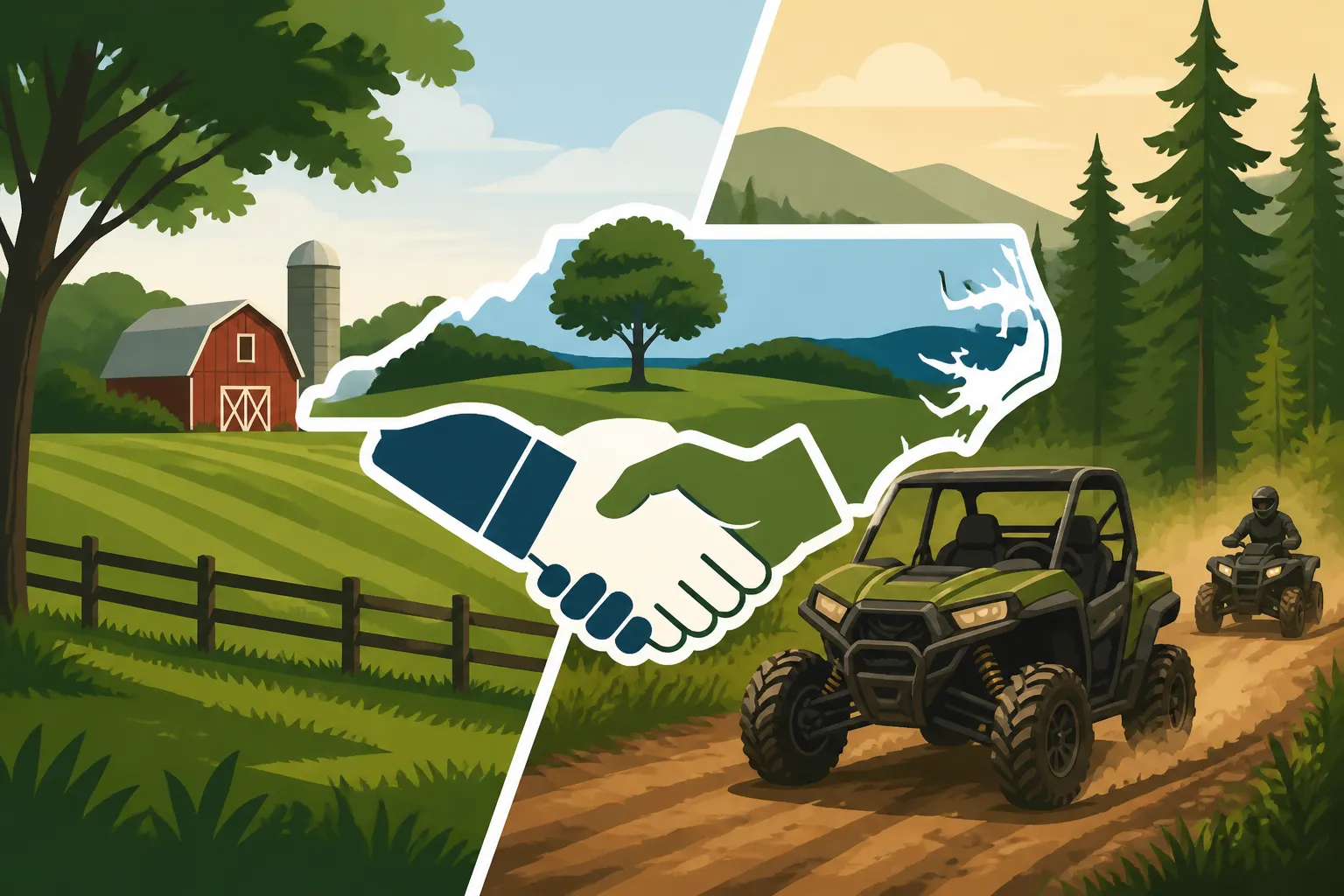
A farm lease in North Carolina, like any other property lease, is a legal agreement. It outlines the terms under which a tenant (the lessee) can use a landlord's (the lessor's) property for agricultural purposes. While a written lease is always, always preferable for clarity and enforceability, farm leases can sometimes be oral, especially between parties who know each other well or have a long-standing relationship. A written lease typically details the duration, rent payments, land use restrictions, maintenance responsibilities, and often, what happens at the end of the lease term. It's not just a handshake; it's a binding commitment. If you're wondering about the exact paperwork, think of it less like a casual agreement and more like a structured business arrangement that requires careful consideration.
When it comes to ATV or UTV use, a comprehensive written lease should ideally spell out what's allowed and what's not. For example, does the lease permit operating machines only for tilling fields, moving equipment, or checking livestock, or does it also extend to pleasure riding on established trails or open fields? Without this explicit language, you're leaving a lot open to interpretation, which can lead to disputes down the road. It's like buying a piece of equipment without reading the manual – you might get by for a while, but eventually, you're going to hit a snag.
Beyond the Written Word: Oral Agreements and Their Limits
In North Carolina, oral farm leases are indeed recognized, especially for terms less than three years. Many rural areas still rely on verbal agreements, built on trust and generations of neighborly relations. The problem, of course, is that memories can fade, interpretations can differ, and circumstances can change. What you understood as "you can ride your quad around" might be interpreted by the landowner as "you can use your quad for farm work, but not tear up my pastures for fun." This is where the lack of a written record really bites.
If your lease is oral, and there's no specific mention of ATV/UTV use, you're in a tricky spot. You might believe you have implied permission because you've seen others ride, or because the landowner never explicitly said "no." However, implied permission is a shaky foundation, particularly if any damage occurs or if the landowner decides they no longer want machines on their property for liability reasons. For example, a landowner might be happy for you to use your UTV to haul fence posts from [The North Carolina DMV and Off-Road Machines] to a repair site, but might draw the line at recreational trail riding that could damage crops or create new ruts. It's always best to err on the side of caution and get clarification in writing, even if it means a simple addendum to an existing oral agreement.
When Is the Farm Exception Relevant?
North Carolina law does offer certain exceptions for ATVs and UTVs used specifically for farming operations. This is a crucial distinction. The [North Carolina's Farming Operations Exception] allows machines to operate on public roads, under very specific conditions, when engaged in legitimate farm business. This exception is not a blanket permission to ride recreationally on public roads, nor does it automatically extend to all activities on leased private land. It specifically relates to instances like crossing a public road between two fields or driving a short distance on a roadway to reach another part of the farm.
For riding on the leased land itself, the farm exception reinforces the idea that use for "farm business" is generally understood and often implicitly accepted. This means using your ATV to check fences, move irrigation equipment, transport tools, or assist with livestock. However, the moment that ride shifts from a practical farming task to a leisure activity – like joyriding, mudding, or simply exploring the property for fun – you step outside the protective umbrella of "farm business." This distinction is not just semantic; it has real implications for landowner liability, insurance coverage, and your standing with the landowner.
Clarifying Riding Rights: Express vs. Implied Permissions
The biggest hurdle for many ATV and UTV riders on leased farmland is the lack of clear, written communication about where and when they can ride. It’s easy to assume, especially if you have a good relationship with the landowner, but assumptions can be costly. Understanding the difference between express and implied permission is vital for avoiding conflict and ensuring everyone is on the same page.
The Power of Explicit Permission in Your Lease
The gold standard for riding rights on leased farmland is express permission. This means the right to ride your ATV or UTV is explicitly stated, in clear language, within your written farm lease agreement. An ideal clause might specify: "Lessee is permitted to operate ATVs/UTVs on designated farm roads and trails for both farm business and recreational purposes, provided such operation does not interfere with agricultural production or cause undue damage to the property. Any damage caused will be the responsibility of the Lessee." This leaves no room for doubt and protects both parties.
With explicit permission, you have a solid foundation. You know exactly what’s allowed, and the landowner has agreed to it. This also makes it easier to understand if you need to adhere to specific rules, like using a particular type of spark arrester, or if certain areas of the farm (like sensitive crop fields or wet pastures) are off-limits for recreational riding. If you're purchasing a new machine, perhaps even some heavy-duty accessories from SuperATV for your UTV to make farm tasks easier, ensuring you have the right to use it for both work and play in the lease is paramount. It gives you peace of mind and clarity, which is invaluable in any long-term arrangement.
Navigating Ambiguity: When Rights Aren't Spelled Out
When your lease is silent on ATV/UTV riding, you're in the realm of ambiguity. This is where "implied permission" often comes into play, and it's a dangerous place to be. Implied permission generally arises from past actions or the landowner's inaction. For example, if you've been riding your ATV on the property for years for recreational purposes, and the landowner has seen you and never objected, you might feel you have implied permission. However, this is not a legally binding right. The landowner can revoke that implied permission at any time, or deny it ever existed, particularly if problems arise.
Consider a scenario where you've been routinely riding your side-by-side on a wooded section of the leased land, and the landowner has never said anything. Then, one day, you accidentally cause some significant erosion, or a gate is left open, and livestock escape. Suddenly, the landowner might claim you never had permission for recreational riding, only for farm-related tasks. Without explicit permission, you have very little to stand on. This is precisely why relying on what "has always been done" or what "everyone else does" is a recipe for potential disputes. It's a bit like driving without a clear destination – you might get somewhere, but it might not be where you intended, and you could hit a lot of detours.
Avoiding Misunderstandings: Communication Is Key
The simplest and most effective way to avoid misunderstandings about riding rights on leased farmland is through open, honest, and regular communication with the landowner. Before you even think about firing up your ATV for a joyride, have that conversation. Don't wait for an issue to arise. Ask direct questions: "Am I allowed to ride my ATV for recreational purposes on the property?" "Are there any specific areas where riding is not permitted?" "Are there any times when riding is not allowed, such as during hunting season or when crops are actively growing?"
Even if you have a written lease, a quick chat can clarify gray areas or address new circumstances. If you're building a new trail or planning a group ride, discussing it beforehand can prevent future issues. If the landowner agrees to recreational riding, even if it's an oral agreement, consider following up with a simple email summarizing your conversation. This creates a written record of the agreement, reinforcing the terms. Something as simple as, "Following our conversation today, I understand I can use my ATV for recreational riding on the designated trails, and I'll be sure to avoid the newly planted fields," can go a long way. This transparency builds trust and solidifies your understanding.
Practical Steps for Riders and Landowners on Leased Farms
Navigating ATV/UTV use on leased farmland requires proactive steps from both the person leasing the land (the lessee) and the landowner. It’s not just about what the law says, but also about building and maintaining a good working relationship, which is often as valuable as any written contract. Taking these practical steps can prevent disputes and ensure that the use of these machines benefits everyone involved.
Before You Ride: Due Diligence for Lessees
As a lessee, your first step is always to review your lease agreement with a fine-tooth comb. If the document is silent on ATV/UTV use, or if your agreement is oral, it’s time to have a direct conversation with the landowner. Don’t make assumptions. Ask for clarity on what’s permitted, where, and when. If recreational riding is important to you, push to have it explicitly included in the lease or as a written addendum. This could be a simple, signed document stating, for example, "The parties agree that the lessee may operate all-terrain vehicles and utility task vehicles on existing farm roads and designated trails for personal recreation, provided all applicable North Carolina laws are followed."
Beyond the lease itself, consider the condition of the land. Are there any environmentally sensitive areas? Active farming operations that could be disturbed? Livestock present? Being respectful of the property's primary use (farming) is crucial. Also, ensure your machine is in good working order and complies with all state regulations, such as having a [North Carolina Spark Arrester Requirement] if you're riding in wooded areas to prevent wildfires. It’s also wise to check your insurance policy. Does it cover you for riding on leased land, especially for recreational use? Many policies have exclusions for certain activities or locations.
For Landowners: Setting Clear Boundaries
Landowners have a responsibility to be clear about their expectations for ATV/UTV use on their property. If you have a written lease, ensure it addresses this specific issue. If you're comfortable with recreational riding, state the conditions: designated trails only, no riding during wet conditions, specific hours, etc. If you absolutely do not want recreational riding, state that clearly as well. This protects your property from damage and limits your liability. If a lessee is using their machine with a robust winch from SuperATV for heavy farm tasks, that's one thing; if they're tearing up a field for sport, that's another.
Consider potential liability. If you allow recreational riding, you might be taking on additional risk. Discuss this with your insurance provider. You might need specific liability waivers or additional coverage. Post "No Trespassing" signs if you want to restrict access to certain areas, even for a lessee, and ensure your communication is consistent. A clear line in your lease stating, "ATV/UTV use is strictly limited to direct farm operations and maintenance. Recreational riding is prohibited," leaves no room for misinterpretation. This proactive approach saves you headaches and preserves your relationship with your lessee.
Documentation: Your Best Friend
Whether you are the lessee or the landowner, documentation is your best friend. For lessees, if you have an oral agreement about riding, send a follow-up email or letter summarizing the conversation and the agreed-upon terms. Ask the landowner to reply and confirm. For landowners, ensure any permissions or restrictions are written into the lease or an addendum. Keep copies of all signed documents. This creates a paper trail that can be invaluable if a dispute ever arises.
| Agreement Type | Clarity of Riding Rights | Enforceability | Recommendations |
|---|---|---|---|
| Explicit Written Lease | High (if included) | High | Best practice. Details all conditions, areas, and purposes. |
| Written Lease (Silent) | Low | Ambiguous | Seek written addendum for clarity. Relying on implied permission is risky. |
| Oral Agreement (Clear) | Moderate (depends on memory) | Low | Follow up with a summary email/letter for written record. |
| Oral Agreement (Vague) | Very Low | Very Low | Avoid. Get clarity immediately, preferably in writing. |
Photographs can also be a form of documentation. Before and after photos of trails or sensitive areas can prove whether damage occurred during a lease period. If you're ever in a situation where you need to prove your ownership of a machine, you'll be glad you kept your [North Carolina ATV Bill of Sale Requirements] and your title paperwork in order, regardless of where you're riding. This diligence might seem like overkill initially, but it’s a small investment for significant peace of mind.
The Role of Equipment and State Regulations on Farm Use
Beyond the lease agreement itself, understanding how your ATV or UTV is categorized and regulated in North Carolina, especially when used for farm purposes, adds another layer of complexity. It’s not just about permission; it's about compliance with state law, which often distinguishes between recreational riding and legitimate agricultural use.
Defining "Farm Business" for ATV/UTV Use
North Carolina law has specific provisions, like [North Carolina's Farming Operations Exception], that pertain to the use of ATVs and UTVs for "bona fide farm purposes." This is a critical distinction. Generally, "farm business" means using the machine for activities directly related to the operation of a farm. This could include:
- Inspecting crops or livestock: Riding to check on fields, fences, or animal health.
- Transporting tools or supplies: Hauling feed, fencing materials, or small equipment across the property. Many riders will outfit their UTVs with cargo management solutions from SuperATV for this very reason.
- Towing small trailers: Moving hay bales, brush, or other agricultural goods within the farm.
- Accessing remote areas: Reaching parts of the farm that are difficult to access with larger vehicles for maintenance or supervision.
What generally doesn't fall under "farm business" is using the machine purely for recreation – joyriding, trail riding for pleasure, mud bogging, or simply driving around for entertainment. While these activities might happen on a farm, they are not usually considered essential to its operation. This distinction is vital because the legal protections and permissions granted by state law, such as the ability to cross a public road, are typically tied to this "farm business" definition.
Equipment Modifications for Farm Work
Many ATVs and UTVs can be modified to enhance their utility for farm work. For example, adding a front-end loader, a spray rig, or a cargo box can transform a recreational machine into a highly efficient farm helper. Brands like SuperATV offer a vast array of accessories designed to make these machines more robust and capable for demanding tasks, from heavy-duty axles to winches and plows. When making such modifications, ensure they are compatible with the machine's original design and don't compromise safety or legality.
It's also important to consider how modifications might affect any existing warranties or how the machine is perceived by regulatory bodies. While the state generally supports the use of ATVs and UTVs in farming, drastic modifications might, in rare cases, alter how the machine is classified. For instance, if you're using your machine primarily for towing heavy loads, you'll want to ensure your tires, suspension, and engine are up to the task, potentially upgrading parts through reputable manufacturers.
Safety and Liability Considerations
Regardless of whether you're riding for farm business or recreation, safety is paramount. North Carolina has specific [North Carolina Helmet Law for ATV Riders] and [North Carolina Eye Protection Requirement] for riders, especially those under 18. Always wear appropriate safety gear, and ensure your machine is well-maintained.
From a liability standpoint, both landowners and lessees need to be aware. If you're a landowner allowing ATVs/UTVs on your property, even for farm use, you have a duty of care. If someone is injured due to a hazard you knew about and failed to address, you could be held liable. This is why clear communication about safe riding practices and designated areas is so important. Similarly, as a lessee, you are typically responsible for any damage you cause to the property or injuries you incur due to your own negligence. Your personal insurance policy might cover some aspects, but it's crucial to verify this.
Ultimately, understanding the nuances of your farm lease, the explicit and implied permissions for riding, and the state's definitions for farm use will serve both landowners and lessees well. Proactive communication and clear documentation are the keys to a harmonious relationship and safe, enjoyable ATV/UTV use on North Carolina farmlands.
Disclaimer
This article is for general informational purposes only and does not constitute professional advice. Laws, prices and regulations vary by location and change over time. Consult a qualified professional for guidance on your specific situation.