Riding With Children at a North Carolina Park
Taking children to ride at a North Carolina park can turn stressful fast if the trail is too difficult, the machine does not fit the rider, or the rules are unclear. This guide explains how to choose a suitable riding area, prepare young riders, and check the key safety and access details before you load the trailer.
Choose a North Carolina riding area that fits your family
Start with the kind of ride your child can handle
A child’s first off-road ride is usually better when it is short, predictable, and easy to pause. A rough trail with steep climbs, exposed rocks, deep ruts, or frequent blind turns can feel overwhelming even to a confident young rider. The goal is not to cover the most ground; it is to finish with enough energy and enthusiasm for another trip.
Think about your child’s experience, attention span, and comfort around noise and dust—not just age. A child who enjoys a short ride on private land may be unsettled by a busy public trailhead, passing machines, or a long stretch without a place to stop. If your child is new to riding, choose a manageable route and build confidence gradually.
North Carolina has several public riding areas, but their trails and access rules differ. Brown Mountain OHV Trail System, Badin Lake OHV Trail Complex, and Wayehutta OHV are among the places riders may research. Before choosing one, confirm that the specific trails are open to your type of machine and that the route suits your group. The North Carolina Trails for Beginners can help you think through what makes a first outing more manageable.
Compare the main planning factors
Trail names and difficulty ratings can help, but they do not replace a realistic family plan. A route that feels comfortable to an experienced adult may be tiring or intimidating for a child, especially when weather has changed the surface. Make decisions based on the least experienced rider in your group.
| Planning factor | What to check before you go | Why it matters with children |
|---|---|---|
| Trail difficulty | Ratings, steep sections, rocks, roots, and narrow spots | A trail that is too challenging can create stress and increase risk |
| Machine access | Whether the trail allows your ATV or UTV and its dimensions | Some routes may not suit every machine |
| Trail conditions | Recent closures, rain damage, mud, and water crossings | Conditions can change the difficulty of a familiar route |
| Trip length | Distance, expected riding time, and turnaround points | Children may need breaks sooner than adults expect |
| Facilities | Parking, restrooms, fuel, and nearby help | Small practical comforts can make a family day easier |
| Permit requirements | Whether each machine needs a permit and how to obtain it | A missing permit can disrupt the day before riding begins |
For route planning, onX Offroad can help you review mapped trails and think through distance, junctions, and nearby roads before leaving home. Treat any mapping app as a planning aid, not the final authority on access or closures. Confirm trail status and permitted machine types through the relevant land manager before driving to the trailhead.
Prepare young riders for safe, comfortable riding
Match the rider to the machine
A machine that is too large, powerful, or difficult to control can make a child’s first ride unnecessarily hard. Consider whether the rider can comfortably reach and operate the controls, understand how to stop, and follow directions without being rushed. Manufacturer age labels and operating instructions are important starting points, but they do not replace a parent’s judgment about a child’s readiness.
North Carolina has age-related ATV rules, and the details can depend on what the young person is doing and what type of machine is involved. Do not assume that rules for operating a youth ATV automatically answer questions about riding as a passenger in a side-by-side. Review North Carolina Rules for Riders Under 16 and North Carolina Passenger Rules on an ATV before deciding who may ride or operate a particular vehicle.
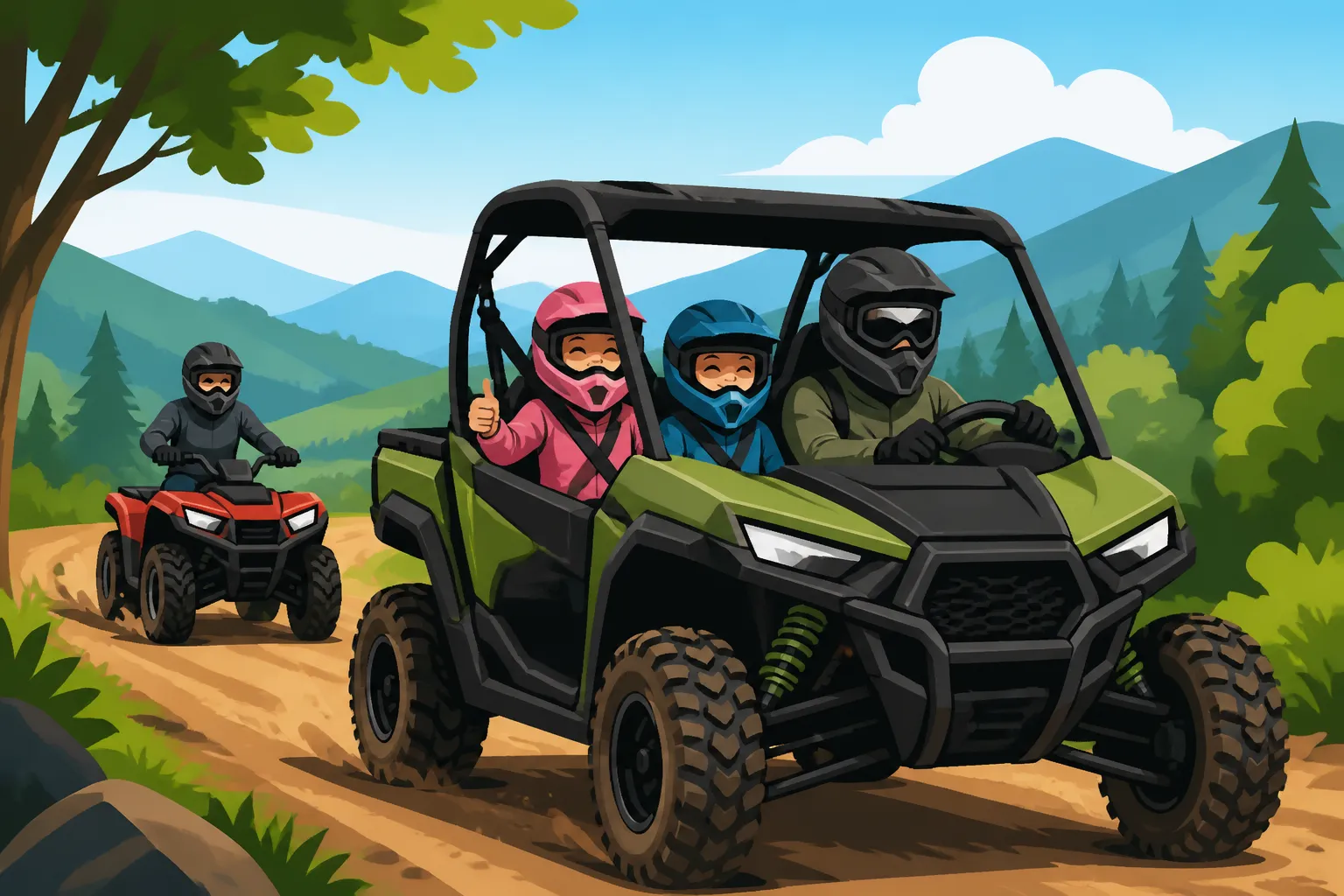
A passenger should ride only in a machine designed and equipped for passengers. Never improvise a second seat on a single-rider ATV or let a child sit somewhere that interferes with steering, balance, or controls. In a UTV, use the proper seat and restraint system, and make sure the child can be secured as the manufacturer intends.
Make protective gear nonnegotiable
A helmet that fits correctly matters more than one that is merely available in the truck. Check that it is designed for the activity, sits securely, and does not shift when the rider moves their head. Eye protection helps keep dust, grit, and branches out of the eyes; gloves, long sleeves, long pants, and sturdy footwear add practical protection from brush, heat, and minor contact with the machine.
North Carolina has protective-equipment requirements for young riders. Review North Carolina Helmet Law for ATV Riders and North Carolina Eye Protection Requirement before the trip, rather than relying on what another family wore at a different park. Rules can vary by age and circumstances, and a trailhead conversation is a poor time to discover that a required item is missing.
For UTV passengers, helmets and seat belts serve different purposes; one does not replace the other. Check that the belt fits the child properly and that the child can remain seated with the belt fastened throughout the ride. If the restraint does not fit, do not assume that a cushion or improvised adjustment makes the seat safe.
Check rules, permits, and trail conditions before leaving
Confirm access for the park and machine
“Going to an OHV area” does not automatically mean every trail is open to every off-road vehicle. Confirm which vehicles are permitted, whether there are width or other equipment limits, and whether a particular trail is closed. This is especially important for side-by-sides, which may be wider than the trails available to smaller machines.
Public forest riding areas may require permits, and requirements can differ by riding area and permit type. Check whether a permit is needed for each vehicle, where it must be displayed, and whether the riding area accepts a day permit or a season permit. The guide to Do You Need a Permit for North Carolina Forest Trails? is a useful starting point for sorting out the general permit question.
Also check whether a young rider needs to carry a safety certificate for the type of public-land riding you plan to do. North Carolina’s certificate requirement is tied to rider birth year in relevant settings, so do not guess based on whether a child has taken a course. Read North Carolina ATV Safety Certificate Requirements and confirm the rule for your specific trip.
Check conditions and plan a flexible route
Trail conditions can change after heavy rain, storms, or maintenance work. A route that was manageable on a dry weekend may become slippery, rutted, or blocked after bad weather. Before loading up, look for current notices from the responsible land manager and be ready to choose another area or postpone the ride if a closure affects your plan.
Use a map to identify trail junctions, staging areas, and possible turnaround points, but do not treat a mapped line as proof that a trail is open. onX Offroad can be useful for reviewing a proposed route and keeping your group oriented, especially when a trail network has multiple intersections. Check the official notice board or land-manager information as well, and keep the group together rather than sending a child ahead to find the next turn.
Build a conservative schedule. Include time to gear up, take breaks, eat, and return before anyone is tired or pressured to ride faster. If the child is uncomfortable, the trail is harder than expected, or the weather changes, turning around is a sensible decision—not a failed outing.
Make the day easier for children and adults
Set expectations before the first mile
Talk through simple rules while everyone is still parked. Children should know to stay with the group, stop when instructed, keep a safe distance from other machines, and avoid riding ahead or leaving the marked route. Adults should agree on who leads and who follows so a child is not left between vehicles or unsure which way to go.
A short practice session can reveal problems before the group reaches a busy trail. Let a young rider get used to the helmet, controls, and stopping routine in a permitted, appropriate area. For a child riding as a passenger, explain how to sit, hold on, keep hands and feet inside the vehicle, and use the belt correctly. Keep instructions calm and brief; a long lecture just before departure is unlikely to stick.
If you are riding with several families, agree on a pace and regrouping points. A fast adult should not set the speed for a young rider simply because the rest of the group is ready to go. For more ideas on choosing manageable routes and keeping the ride comfortable, see Riding With Children at a North Carolina Park and North Carolina Trail Etiquette on Narrow Trails.
Pack for breaks and changing conditions
Children may need more frequent water, food, bathroom, or comfort breaks than adults expect. Pack water, snacks, suitable layers, basic first-aid supplies, and any personal medication your family may need. Keep items secured so loose gear cannot fall into the trail or interfere with the machine.
Dust, heat, cold, and changing weather can affect a child’s mood and concentration. Pay attention to signs that the rider is becoming tired, overheated, anxious, or uncomfortable. A child may not clearly say, “I need to stop”; they may become quiet, impatient, or distracted instead. Build breaks into the plan rather than waiting for someone to reach their limit.
Before the trip, tell someone where you are going and when you expect to return. Carry a charged phone, but do not depend on reception throughout a forest or mountain area. onX Offroad may support navigation planning, but download or prepare the information you need before entering places where service is unreliable, and follow posted directions and official trail information while riding.
A successful family ride is one where the route matches the group, everyone has the right gear, and nobody feels pushed to continue when conditions or confidence change. Check the rules and trail status before you leave, keep the plan flexible, and let the child’s comfort help set the pace.
Disclaimer
This article is for general informational purposes only and does not constitute professional advice. Laws, prices and regulations vary by location and change over time. Consult a qualified professional for guidance on your specific situation.